Executive Summary:
The stock market reacted to the Democrats’ midterm election sweep in zig-zag fashion, with a crisis-aversion relief rally on Wednesday, a plunge on Thursday as the thought of AI data center roadblocks chilled investor optimism, and a bit of a recovery Friday as leveler heads prevailed (speed bumps yes, roadblocks no). … Also: The AI race faces three intensifying constraints—financial, political, and physical, the first two becoming acute. Will the boom continue? Elias and Ed share why they think it will but at a slower pace. … And: AI is making, not taking, jobs—at least so far. They also share four cheery takeaways from the employment report for October. … Check out our chart collection.
Stock Market: Three Stages of Midterm Reaction
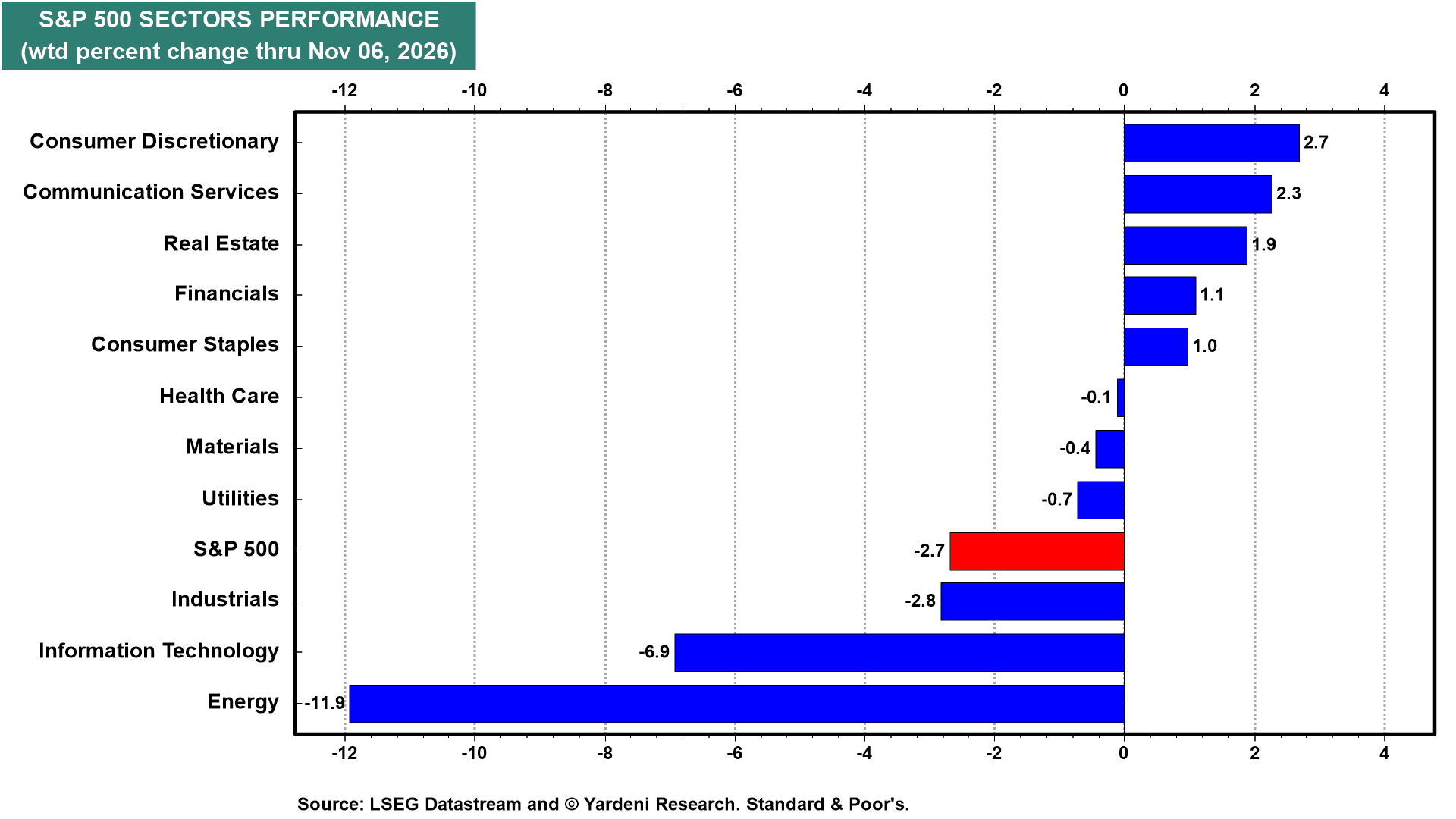
The Democrats’ sweeping victory in last week’s midterm elections delivered control of both chambers of Congress, with seven Senate seats and five governorships flipping from red to blue, including in Texas. Wall Street’s reaction is worth a closer look. The S&P 500 fell 2.7% last week, but the selloff wasn’t broad-based.
 ▌View Related Live Charts: US - S&P 500 Share of Stocks Above 50-Day Moving Average by Sector
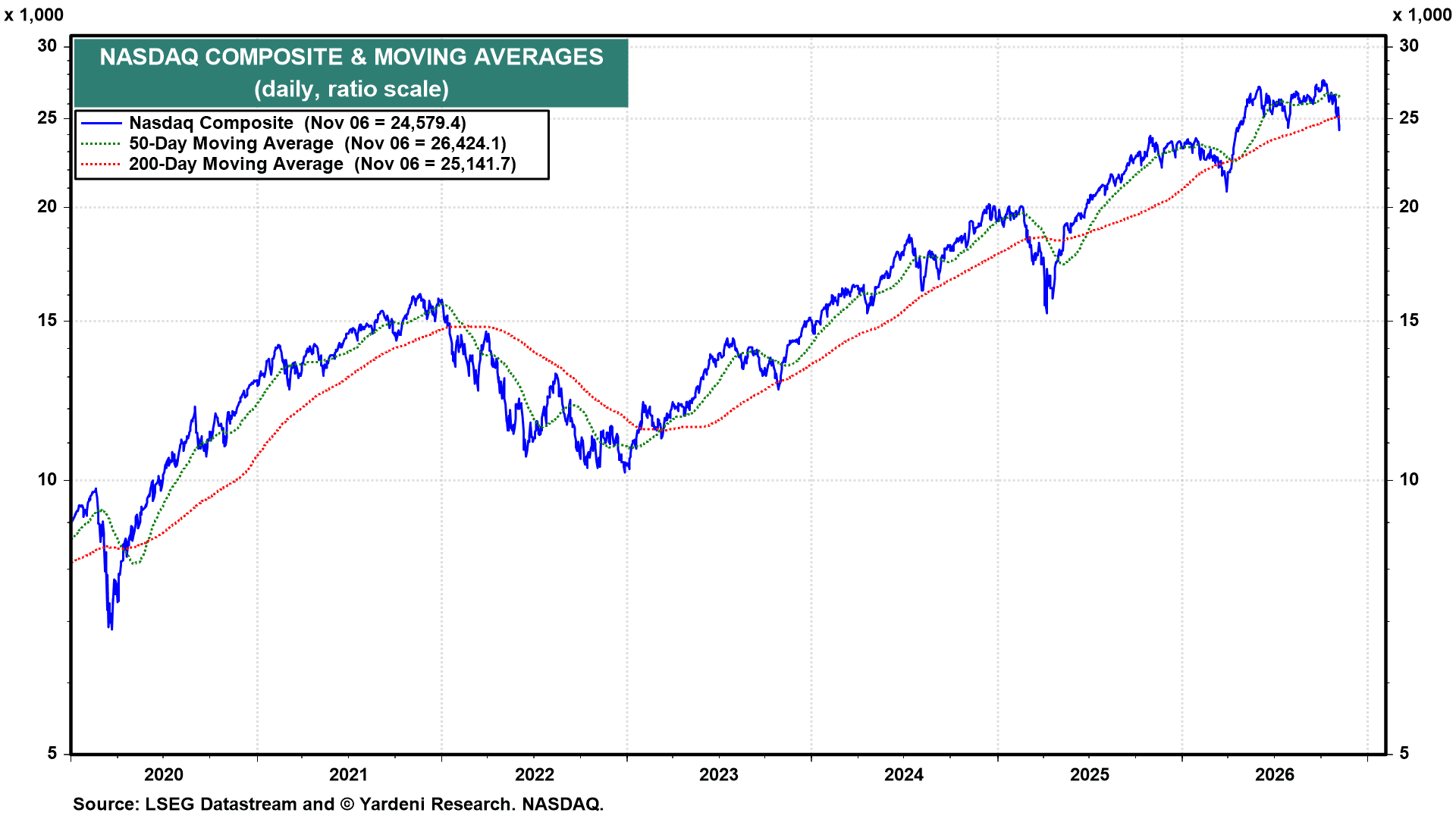
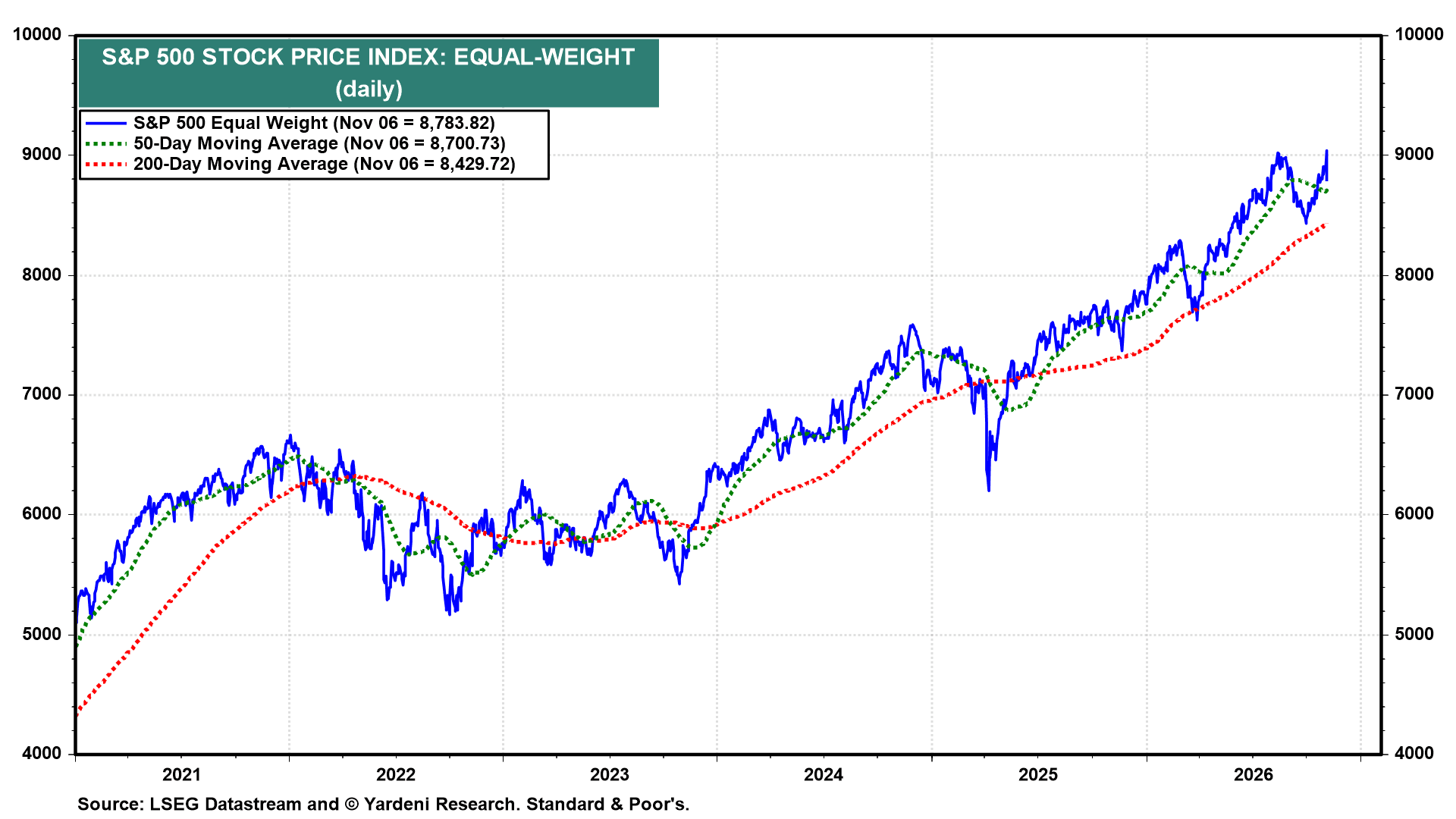
Five of its 11 sectors rose, led by Consumer Discretionary (2.7%), Communication Services (2.3%), and Real Estate (1.9%). Energy (-11.9%), Information Technology (-6.9%), and Industrials (-2.8%) posted the biggest losses. The Nasdaq Composite ended below its 50-day and 200-day moving averages, while the S&P 500 Equal Weight index remains above both.
 ▌View Related Live Charts: US - NASDAQ 100 Stocks Above 50-Day & 200-Day Average
 ▌View Related Live Charts: US - S&P 500 Stocks above 200-Day Average
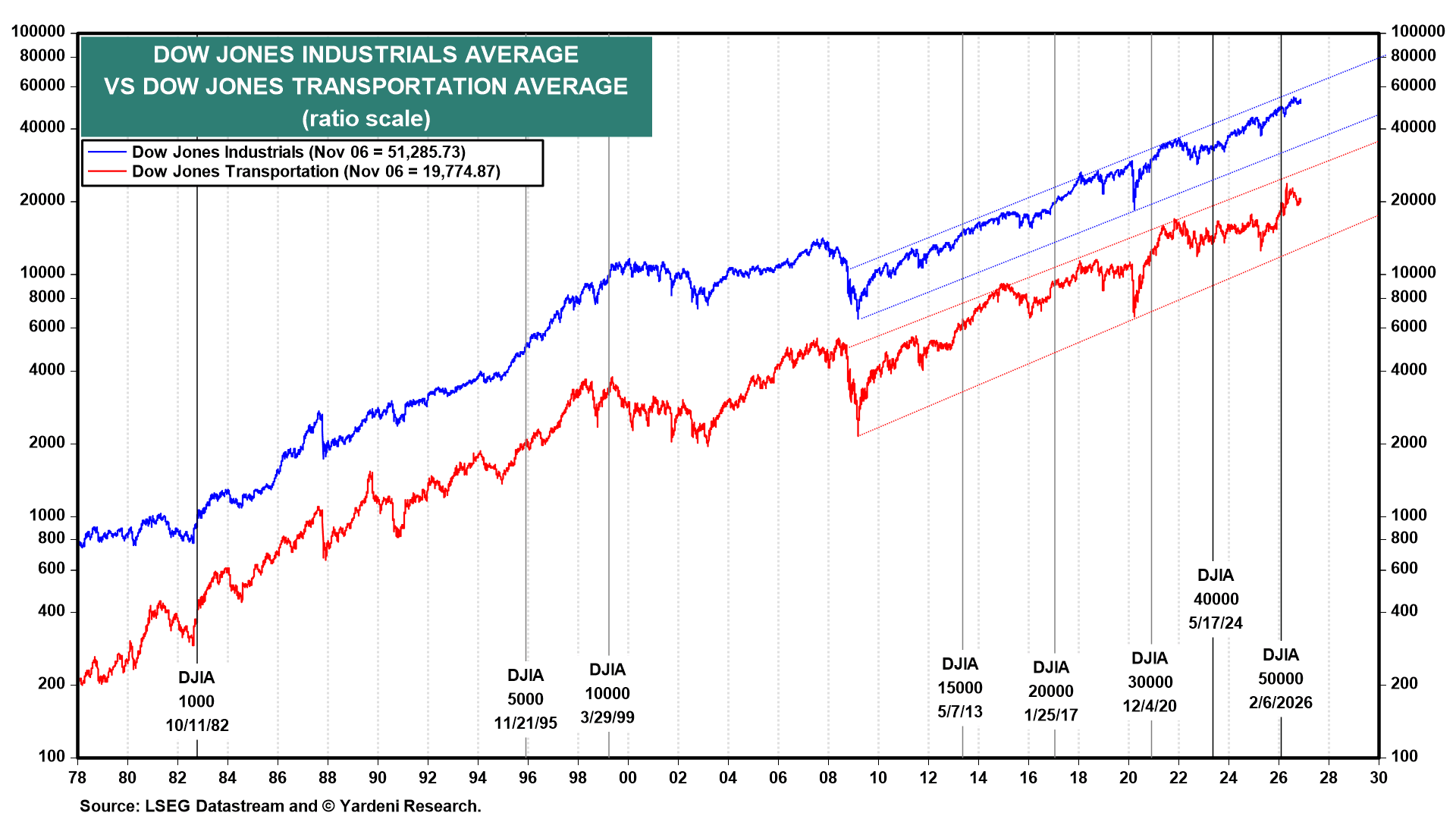
The Dow Jones Industrial Average is also holding up well near its highs.
 ▌View Related Live Charts: US - S&P 500
The market’s performance showed FOJO (fear of jumping out): Investors rotated within equities, not wanting to...
Already a subscriber? Click here to log in.
Full Access to Our Services

Comprehensive data at your service
with key indicators for investment insights

Exclusive flash reports
on key events and data

Create your own charts and analysis
including performance backtesting

Hub of professionals to engage
in meaningful discussions and insights
 Get answers from MM AI.
-
How did the S&P 500 sectors react to the Democrats' midterm election victory last week?
💡The S&P 500 fell 2.7% last week following the Democrats' midterm election victory, yet the selloff was not broad-based. Five of its 11 sectors rose, with Consumer Discretionary leading at 2.7%, followed by Communication Services (2.3%), and Real Estate (1.9%). Conversely, Energy experienced the largest decline at -11.9%, Information Technology fell by -6.9%, and Industrials lost -2.8%. This indicates a rotation within equities rather than a complete abandonment, driven by resilient earnings, as the S&P 500's blended Q3 EPS growth rate increased to 25.9% year-over-year.
-
What were the three stages of Wall Street's reaction to the midterm election results?
💡Wall Street's reaction to the midterm election results unfolded in three distinct stages. First, on Wednesday, a relief rally characterized by short covering occurred, with the S&P 500 jumping 1.6% and the Dow Jones Industrial Average surging 3.0%, as risks of a constitutional crisis and Iran war escalation receded. Second, on Thursday, the S&P 500 plunged 4.4% due to concerns over potential roadblocks to the AI investment boom, specifically investor frets about local opposition to data centers. Third, on Friday, the S&P 500 recovered 0.3% as investors reconsidered these concerns as
-
Why did the S&P 500 plunge on Thursday after the midterm elections?
💡The S&P 500 plunged 4.4% on Thursday after the midterm elections because investors became concerned that the new political landscape could impede the AI investment boom, particularly regarding data center development. This fear stemmed from striking backlash against data centers, evidenced by NBC exit polls showing 76% of voters opposed new facilities in their communities, and local ballot propositions restricting data center development winning in 40 out of 41 cases. Goldman Sachs estimates that states facing potential restrictions account for approximately 45% of planned US data center capacity, including about one-quarter in Texas, leading investors to worry about the US economy's AI-driven growth.
-
What eased investor concerns on Friday regarding the AI data center buildout?
💡Investor concerns regarding the AI data center buildout eased on Friday as investors reconsidered whether the political backlash would halt or merely slow the expansion, viewing potential roadblocks as
-
What are the three intensifying constraints facing the AI investment boom?
💡The AI investment boom faces three intensifying constraints: financial, political, and physical, with the first two becoming particularly acute. Financial constraints involve increasing costs as investors demand clearer returns on large commitments, alongside the need for expanding financing toolkits. Political constraints are evident in rising local opposition to data center construction, requiring developers to shoulder more infrastructure costs and deliver greater community benefits. Physical constraints include power shortages, interconnection delays, and equipment bottlenecks, which prolong project timelines and extend the wait for positive free cash flow, collectively adding friction and delaying projects.
-
What suggests the speed of the AI investment boom will slow down?
💡The speed of the AI investment boom will slow down because political opposition is making data center construction more conditional, requiring developers to increasingly fund grid upgrades, protect local resources, and deliver tangible benefits to host communities. Additionally, financing is becoming costlier as investors demand clearer returns on hyperscalers’ enormous commitments. Finally, physical limitations such as power shortages, interconnection delays, and equipment bottlenecks cannot be resolved quickly. These three constraints collectively add friction, delay projects, and extend the wait for positive free cash flow, thus decelerating the boom without necessarily ending it.
-
What does the S&P 500's forward P/E ratio indicate about investor sentiment regarding AI?
💡The S&P 500's forward P/E ratio, which has fallen to 17.6, below its Liberation Day level of 18.1, indicates that stock investors are discounting speed bumps in the AI investment boom. This suggests that investors increasingly recognize that financial, political, and physical constraints make earnings harder to forecast and existing forecasts more challenging to achieve. The decline reflects a more cautious sentiment, implying that while the AI boom is expected to continue, its pace and profitability might be affected by these growing limitations, leading to a more conservative valuation of future earnings.
-
What is the Treasury market indicating about the potential economic impact of a slowed AI boom?
💡The Treasury market appears to anticipate a potential economic slowdown following a cooling of the AI investment boom, as indicated by falling yields. The 10-year Treasury yield declined 8 basis points last week to 4.84%, and the 2-year yield fell 5 basis points to 4.46%. This narrowing of the spread relative to the effective federal funds rate of 3.88% suggests bond investors are starting to consider that mounting constraints on the AI investment boom could weigh on overall economic growth. Additionally, the futures market's expectations for Federal Reserve tightening dropped, anticipating only 1.4 quarter-point hikes over the next six months and 1.9 over the next 12 months.
-
How did the AI investment boom contribute to job growth in October?
💡The AI investment boom contributed to job growth in October through several sectors. Manufacturing added 19,000 jobs, including 6,700 in computer and electronic products, 3,300 in semiconductors and electronic components, and 3,900 in machinery. Additionally, nonresidential specialty-trade contractors, a category that includes workers involved in data center construction, contributed another 7,900 jobs. This indicates that the buildout of AI infrastructure and related industries is directly creating employment opportunities, making a notable mark on the US labor market's resilience.
-
What factors suggest strong consumer spending will continue in the US economy?
💡Strong consumer spending will continue in the US economy due to a robust labor market and a surge in household net worth. The US labor market is resilient, with accelerating jobs growth, declining unemployment, and rising wages, as evidenced by a 0.5% month-over-month increase in the Earned Income Proxy in October. Concurrently, household net worth surged to a record $185.6 trillion in Q2, marking the largest quarterly gain on record at $12.5 trillion, with Baby Boomers commanding the majority of this wealth. These factors collectively provide a solid foundation for sustained consumer expenditure.

