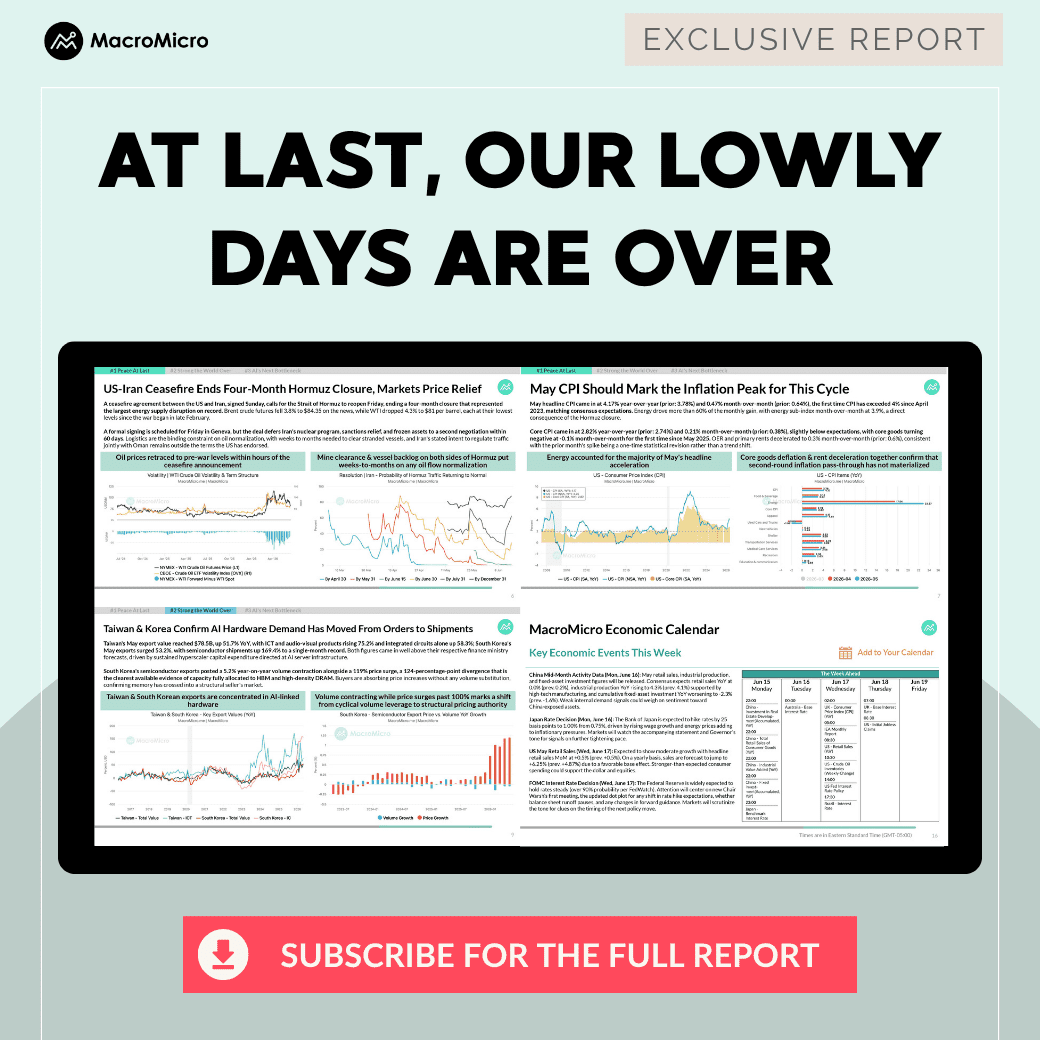
Global equities rallied broadly on signs of progress in US-Iran negotiations. On Monday, US equity futures rebounded, while Japan’s Nikkei even reached a record high. Oil prices fell further below US$90 per barrel as markets priced in the improved US-Iran outlook, while the US Dollar Index and the 10-year Treasury yield also moved lower. Markets are now awaiting this week’s FOMC rate decision and Warsh’s first meeting as Fed Chair. In this week’s report, we highlight three key points to watch.
Key Focus of This Week’s Analysis
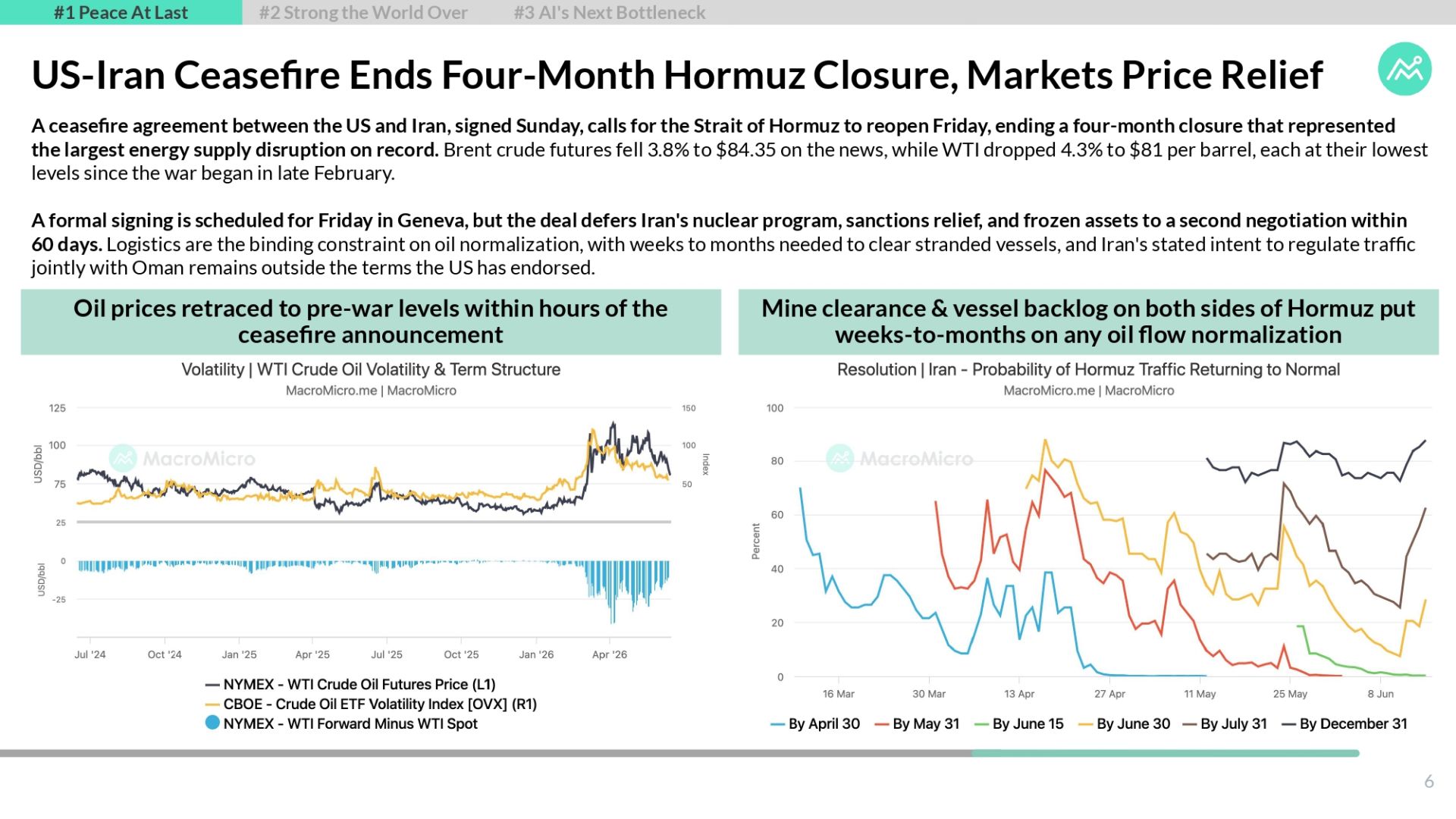
- US-Iran Deal Triggers Oil Reversal and Equity Relief Rally: Trump’s announcement that a US-Iran agreement will be signed on Friday has triggered a sharp reversal across global markets. The deal is expected to reopen the Strait of Hormuz after a four-month closure, easing the largest energy supply disruption on record. Oil prices immediately retraced toward pre-war levels, with Brent and WTI falling sharply as markets priced in lower geopolitical risk and a faster decline in energy-driven inflation. Equities rallied on the same logic: if oil prices continue to normalize, inflation pressure should fade, reducing the need for aggressive central bank tightening.
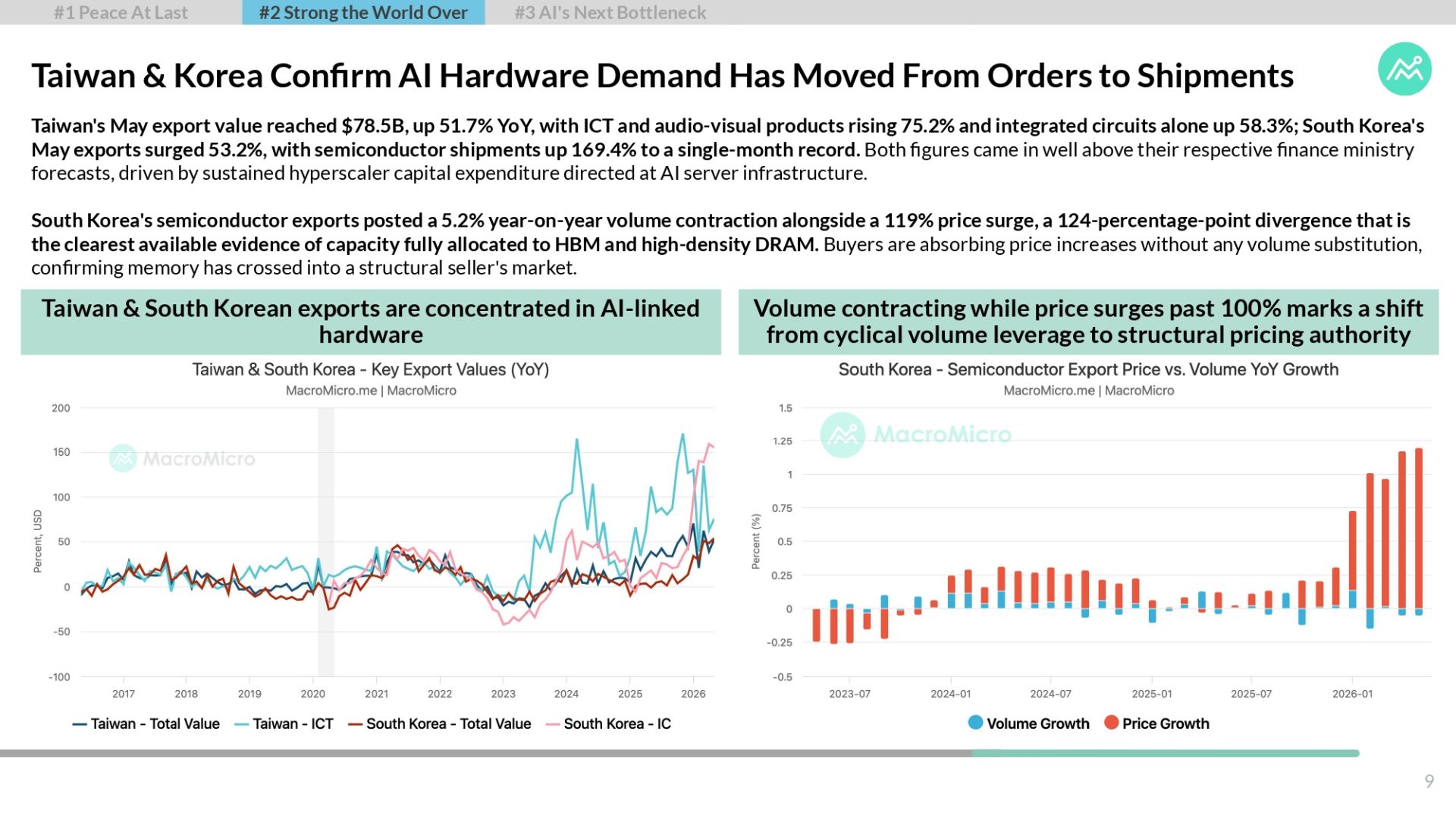
- Asian Export Surge Confirms AI Supply Chain Shortage: Asia’s export data shows that the AI hardware cycle has moved from orders into actual shipments. Taiwan’s May exports surged, led by ICT products and integrated circuits, while South Korea’s semiconductor exports reached record levels. China’s export recovery also strengthened, especially in integrated circuits, although much of the growth came from higher prices rather than larger shipment volumes. Across East and Southeast Asia, the data suggests two forces are working together: China-led re-export chains and US-led AI infrastructure demand.
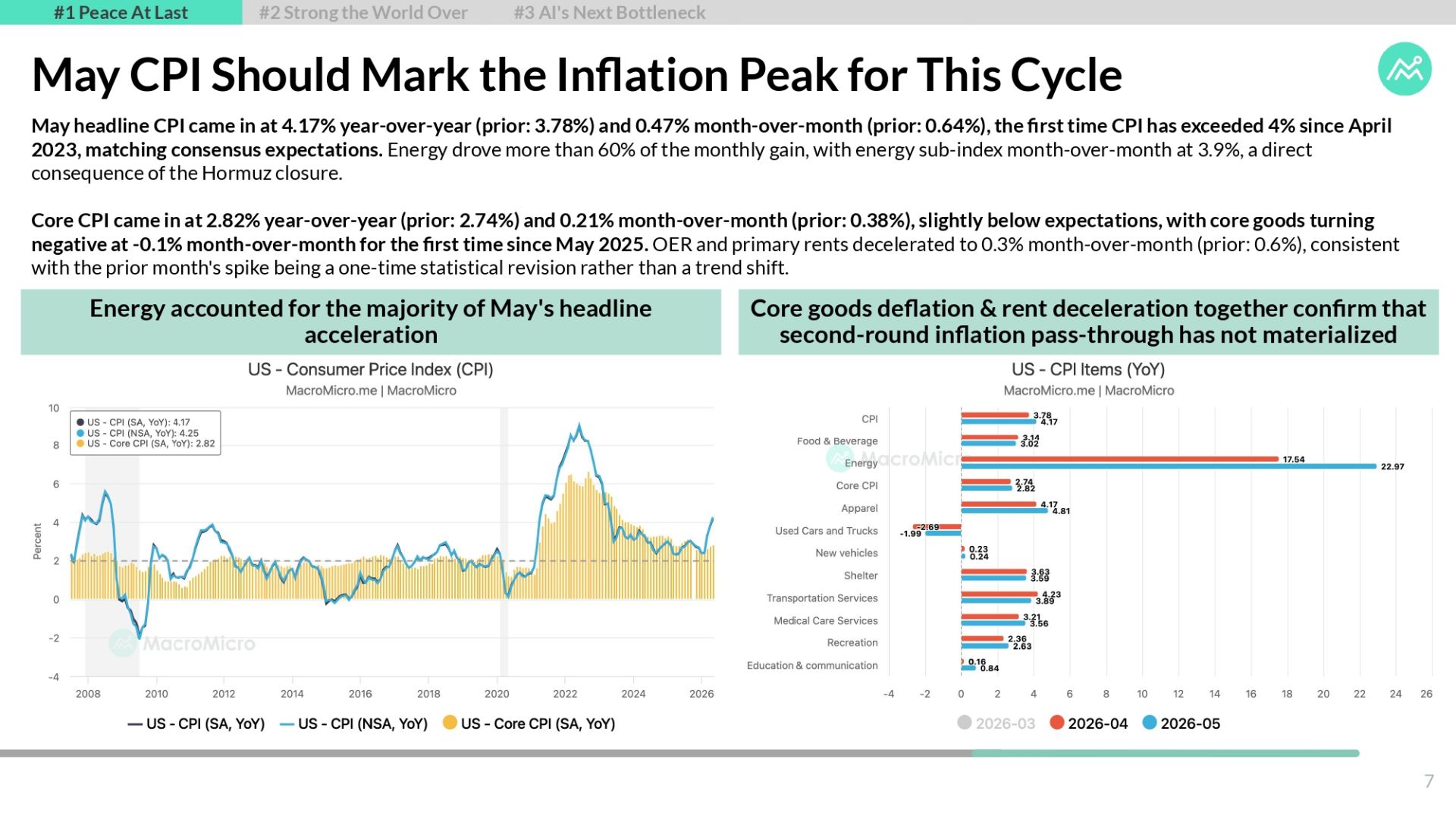
- May Inflation Likely Peaked; Warsh’s First FOMC in Focus: US May CPI likely marks the inflation peak for this cycle, as the acceleration was mainly driven by energy prices linked to the Hormuz disruption. Headline CPI rose above 4%, but core inflation remained more contained, with core goods turning negative and rent indicators decelerating. This suggests that second-round inflation pressure has not yet materialized. Warsh’s first FOMC meeting will focus on three issues: whether the dot plot shows a possible 2026 rate hike, whether the Fed signals a pause or end to balance sheet expansion, and whether forward guidance becomes less hawkish. The key market question is whether the Fed treats May inflation as a temporary energy shock or a more persistent policy risk.
About Weekly Economic and Financial Commentary (WEFC)
The MacroMicro WEFC is published weekly, delivering rigorous analysis and in-depth insights on the most critical market-moving events. Coverage spans equities, foreign exchange, bonds, commodities, global central banks, geopolitics, and the international political economy.
At its core is a concise, roughly 20-page Chart Pack designed to help you grasp market trends at a glance. Subscribe Now » to download the full PDF report.
Already a subscriber? Click here to log in.
Full Access to Our Services

Comprehensive data at your service
with key indicators for investment insights

Exclusive flash reports
on key events and data

Create your own charts and analysis
including performance backtesting

Hub of professionals to engage
in meaningful discussions and insights
 Get answers from MM AI.
-
How did the US-Iran deal impact oil prices and global equities?
💡The US-Iran deal triggered a sharp reversal in global markets, causing oil prices to retrace toward pre-war levels with Brent and WTI falling, while global equities rallied due to reduced geopolitical risk and expectations of fading energy-driven inflation. This deal, expected to be signed on Friday, implies a reduction in central bank tightening needs as inflation pressures ease with normalizing oil prices.
-
How did Asian export data confirm an AI supply chain shortage?
💡Asian export data confirmed an AI supply chain shortage by demonstrating that the AI hardware cycle has moved from orders into actual shipments, revealing significant demand. Taiwan's May exports surged, led by ICT products and integrated circuits, and South Korea's semiconductor exports reached record levels, indicating robust activity in the AI component sector.
-
How did China's export recovery strengthen, especially in integrated circuits?
💡China's export recovery strengthened, particularly in integrated circuits, confirming the robust demand within the AI supply chain. However, much of this growth stemmed from higher prices rather than increased shipment volumes, indicating a supply-constrained environment where pricing power is enhanced due to strong demand for critical components.
-
What two forces are driving East and Southeast Asian export data?
💡Two primary forces are driving East and Southeast Asian export data: China-led re-export chains and US-led AI infrastructure demand. This synergistic interaction highlights the region's pivotal role in global trade, where Chinese manufacturing and re-export capabilities combine with robust American demand for AI-related hardware, pushing export volumes and prices higher.
-
What was the primary driver of the acceleration in headline CPI?
💡The primary driver of the acceleration in headline CPI was energy prices, directly linked to the Strait of Hormuz disruption. This external shock pushed headline inflation above 4%, but core inflation, which excludes volatile energy and food prices, remained more contained, suggesting that broader inflationary pressures were less severe beyond this specific component.
-
Will the dot plot from Warsh's FOMC meeting show a 2026 rate hike?
💡The text states Warsh's first FOMC meeting will focus on whether the dot plot shows a possible 2026 rate hike, implying it is a key question for markets. The outcome, however, is not specified within the provided information, as the meeting is still in focus and its results are awaited.
