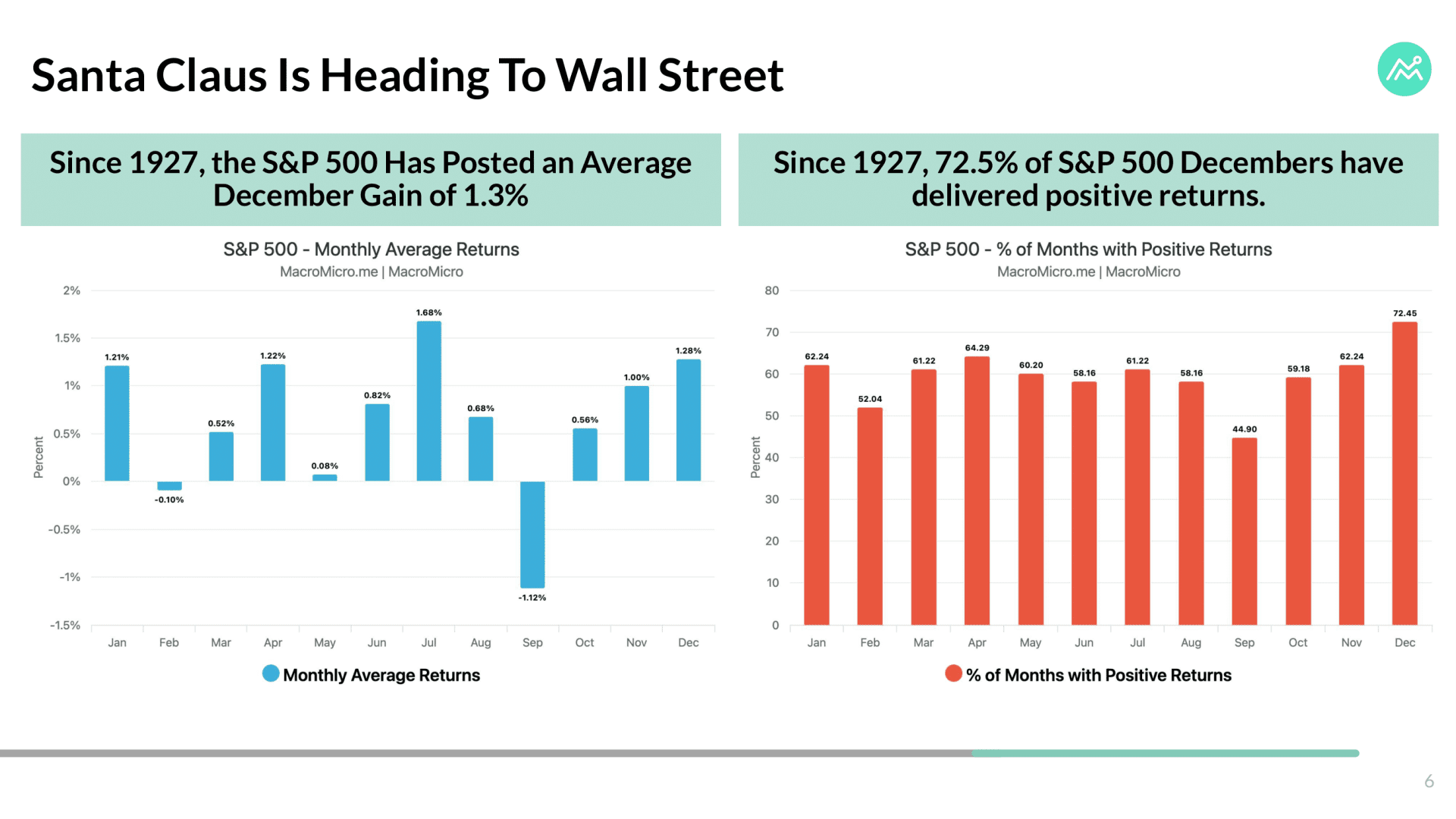
December is typically one of the strongest months of the year for markets. Since 1927, the S&P 500 has averaged a 1.3% gain in December, and 72.5% of all Decembers have finished in the green. So, can we expect a Santa Claus rally this year?
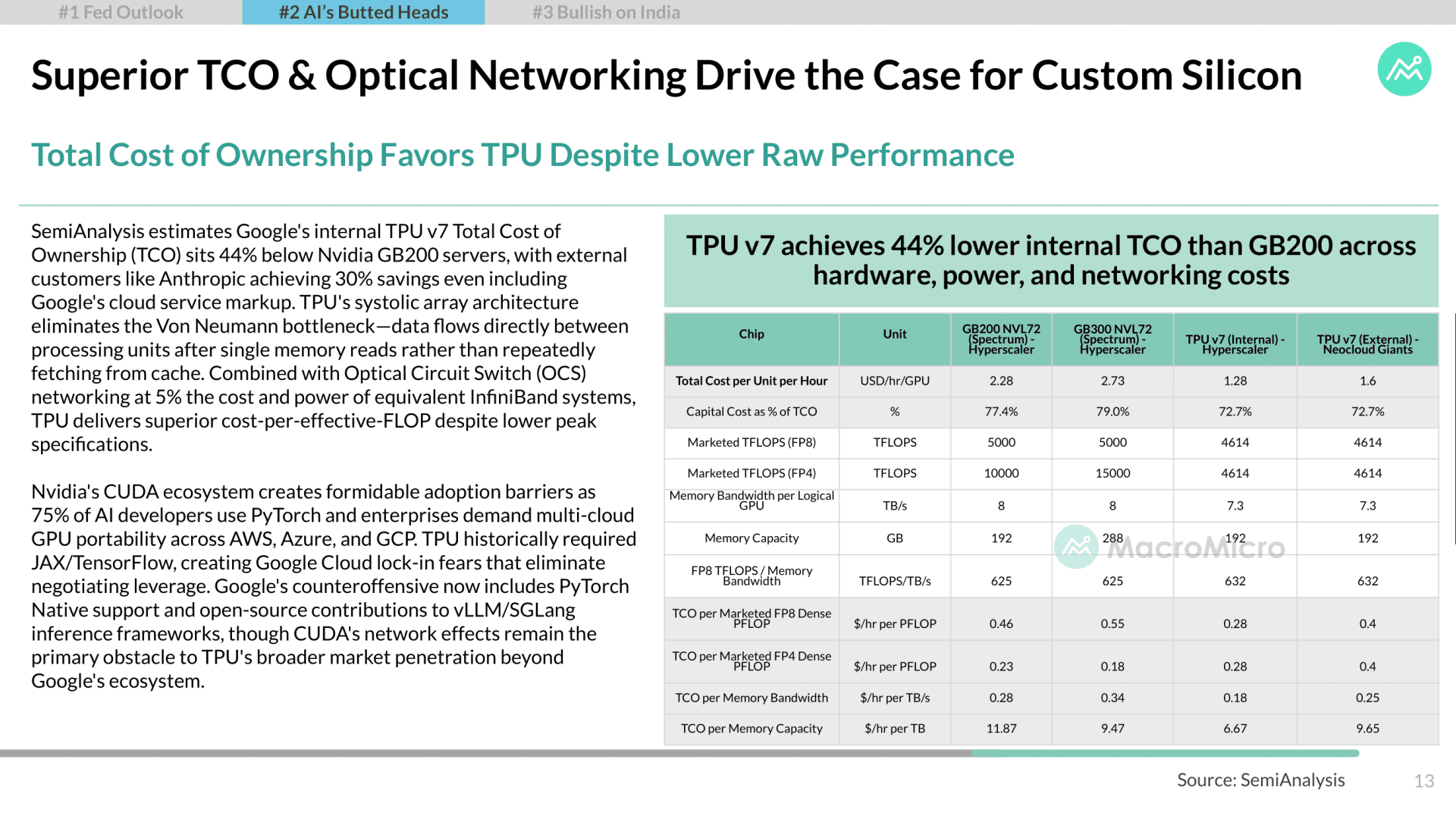
At the same time, the debate over Google’s TPUs and Nvidia’s GPUs is heating up. Could this rivalry reshape investment trends among tech giants and chipmakers?
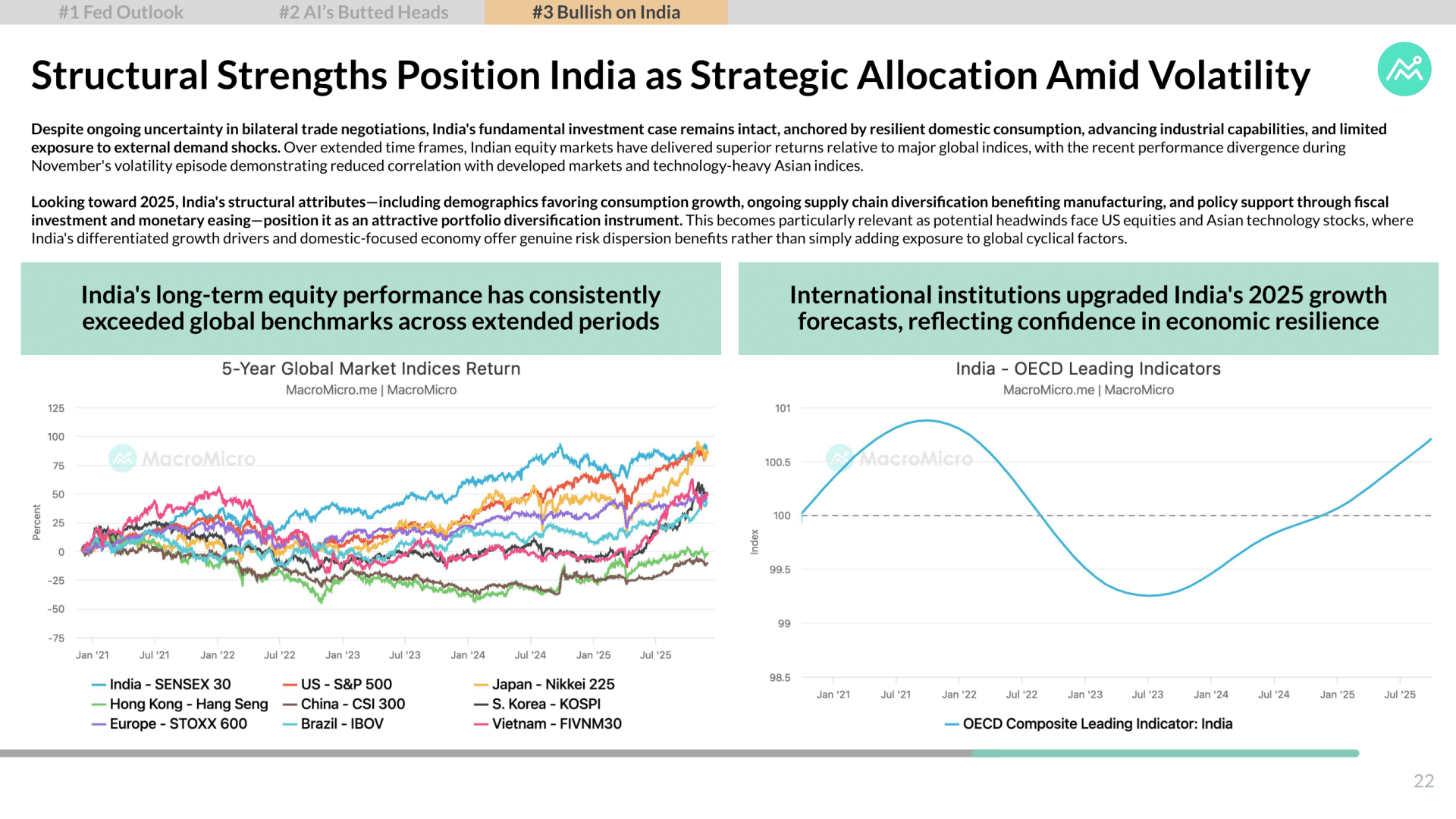
Meanwhile, India’s equity market has quietly notched fresh all-time highs, even as global markets remain volatile.
For deeper insights into these topics, see this week’s WEFC analysis.
⏰ Last chance to get 50% off in our best offer ever—once it's gone, it's gone!


Fed Likely to Cut Despite Data Gaps
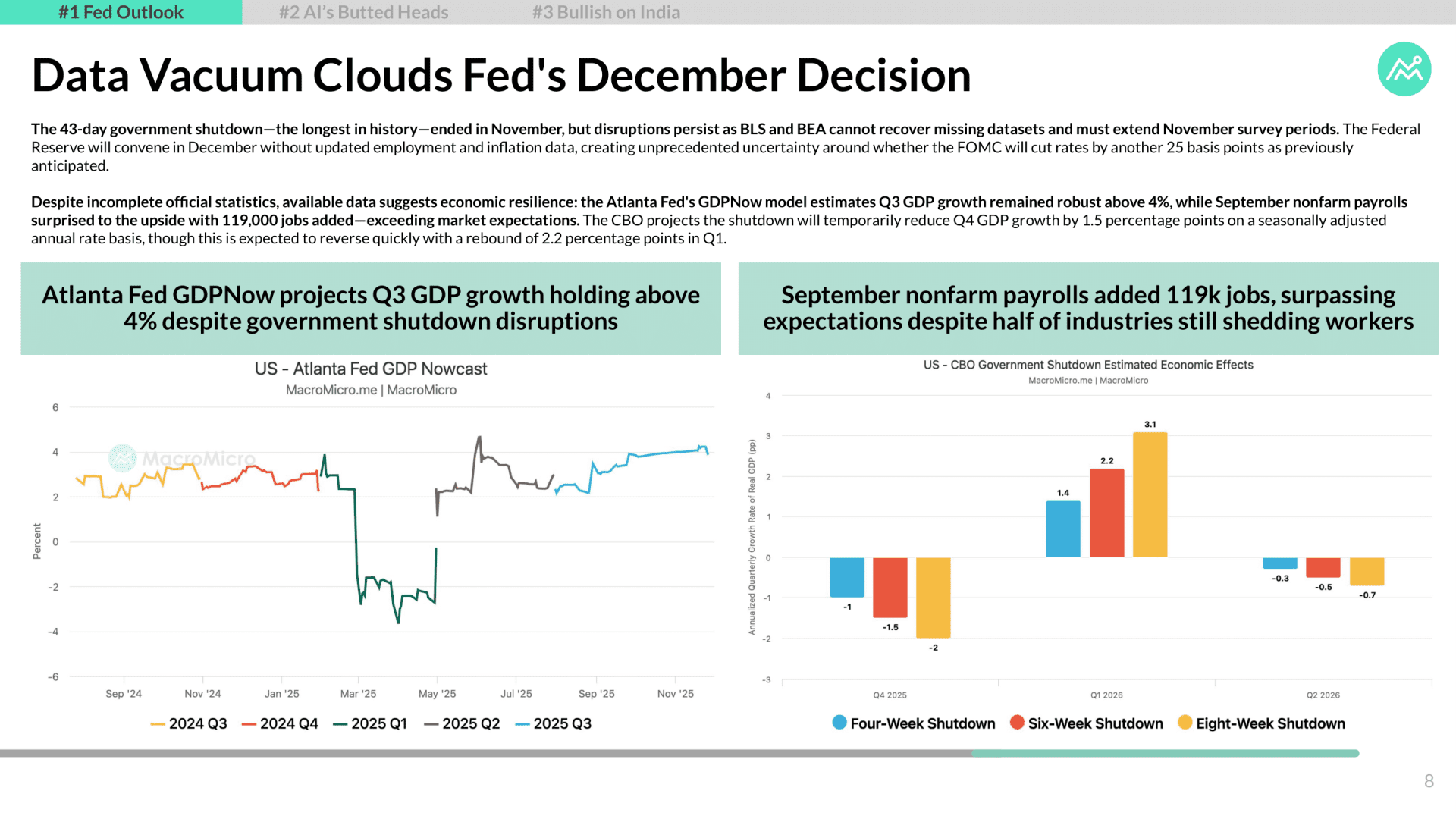
The Fed enters its December meeting without complete employment or inflation data due to the 43-day government shutdown, but alternative indicators point to ongoing resilience. GDPNow still estimates Q3 growth above 4%, and September payrolls added a better-than-expected 119,000 jobs, with higher unemployment driven by labor-force expansion rather than layoffs. Inflation also appears contained: the Cleveland Fed’s core PCE nowcast is 2.9%, but excluding tariff effects brings it closer to 2.2–2.4%, near target. Long-term inflation expectations remain anchored. With risks broadly unchanged since September, markets assign an 80–90% chance of a 25bp cut, and the Fed is expected to continue its gradual easing path into 2026.
Why India Remains a Long-Term Winner Amid Global Volatility
India has outperformed global markets, with the Sensex30 rising 5.8% in two months as investors seek diversification amid volatility. Initial U.S. tariff pressure softened sentiment, but improving diplomacy and a new 10-year defense partnership have stabilized expectations. Domestically, India’s Q3 GDP accelerated to 8.2%, driven by private consumption, easing inflation, and earlier rate cuts. Rural demand strengthened thanks to favorable monsoon output and CPI near zero. GST tax cuts boosted festive spending, sending October vehicle registrations to record highs. Structurally, India’s manufacturing base is expanding, though high-end iPhone production remains China-centric. Long-term, India’s demographics, domestic-driven growth, and supply-chain diversification support continued equity outperformance.
Google’s TPU Challenge to Nvidia Enters a New Phase
Google’s TPUs now pose a credible challenge to Nvidia’s dominance. Gemini 3 Pro—trained entirely on TPUs—topped benchmarks, and Google secured commitments for up to one million chips from Anthropic while engaging Meta. TPU v7 nearly matches Nvidia’s B200 in memory and bandwidth while offering improved energy efficiency. Crucially, TPU v7 delivers 30–44% lower TCO than Nvidia GB200 systems due to its systolic architecture and low-cost optical networking. However, Nvidia’s CUDA ecosystem remains a powerful moat: most developers use PyTorch and rely on GPU portability across major clouds. Google’s new PyTorch-native support narrows the gap but does not eliminate CUDA’s entrenched advantage.
⏰ Last chance to get 50% off in our best offer ever—once it's gone, it's gone!
Already a subscriber? Click here to log in.
Full Access to Our Services

Comprehensive data at your service
with key indicators for investment insights

Exclusive flash reports
on key events and data

Create your own charts and analysis
including performance backtesting

Hub of professionals to engage
in meaningful discussions and insights

