Trump’s List of “Friends” Keeps Shifting — From Putin, to Zelenskyy, to Modi, Elon Musk, Jerome Powell, and now Intel CEO Lip-Bu Tan.
In this week’s report, we examine how Powell’s Jackson Hole speech may reshape the path for future rate cuts, whether a Russia–Ukraine ceasefire is finally within reach, why trade talks between the U.S. and India failed to produce a formal agreement, and whether the AI boom is starting to look like a bubble.
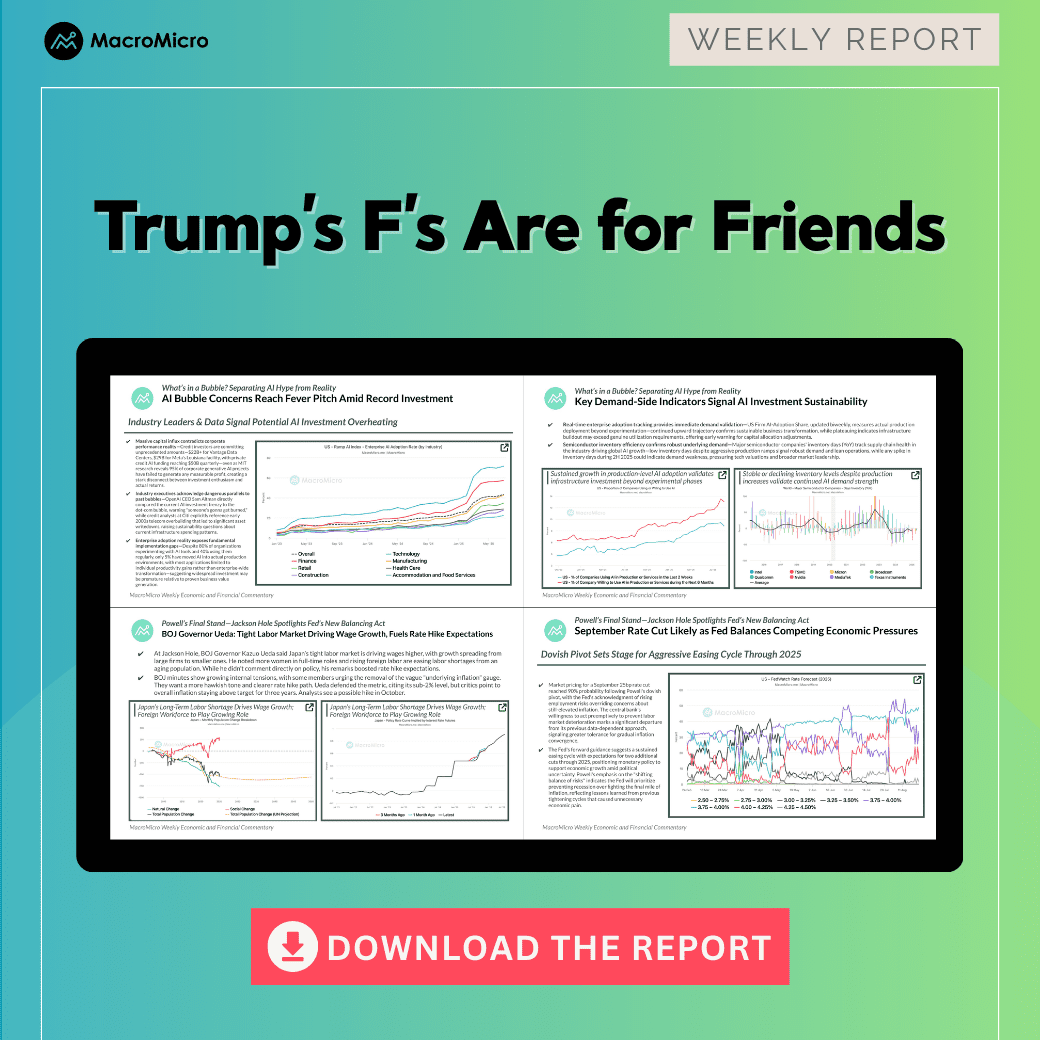
🟡 This report is available exclusively to MacroMicro Subscribers. If you're not yet a subscriber, you're welcome to use a 14-day access code "MAX14D" to download this report for free. 🎟️ Only 15 codes remaining—hurry! → 🔗 Claim Your Trial Code

Powell Signals Dovish Shift at Jackson Hole, September Rate Cut Likely
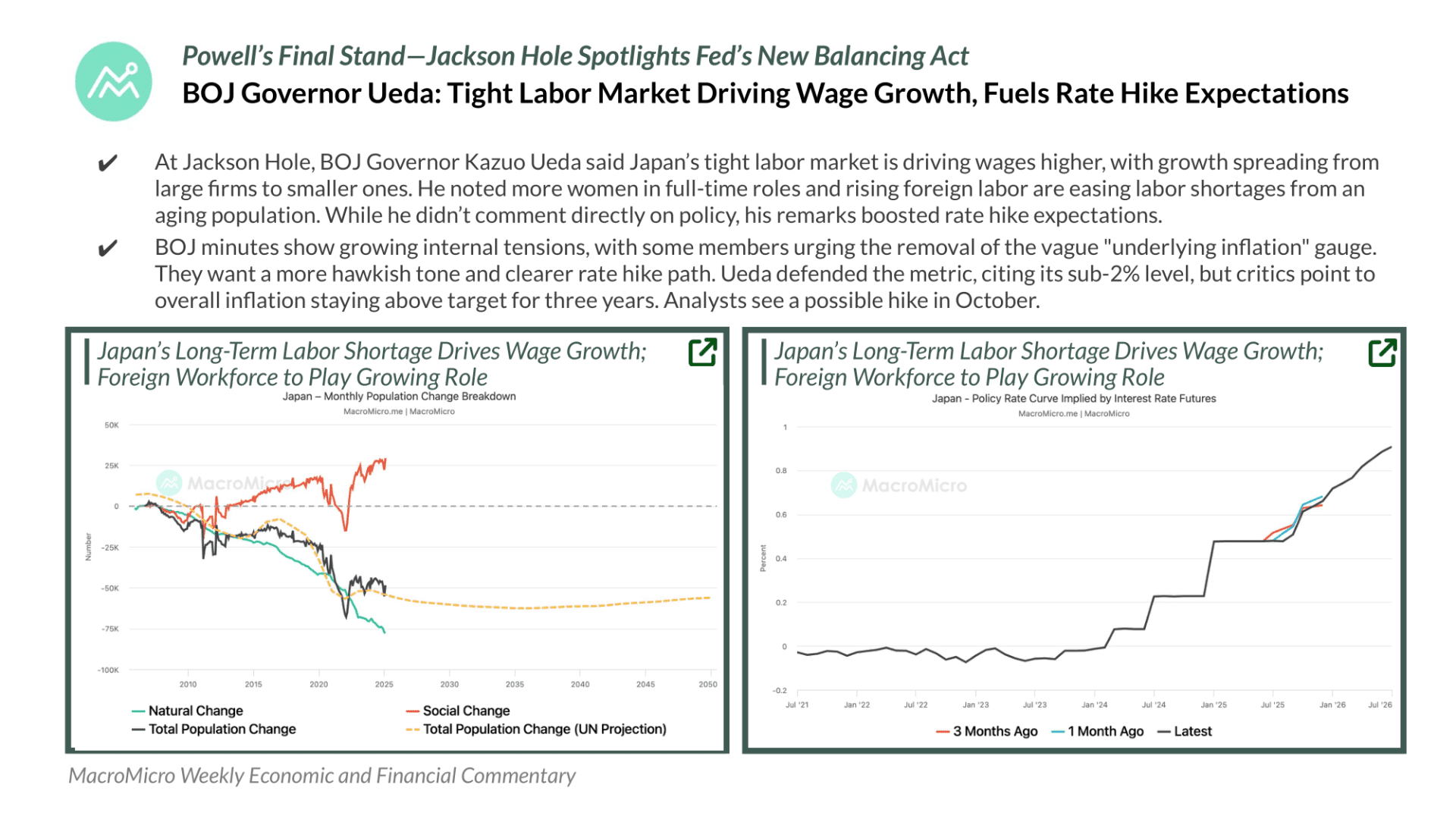
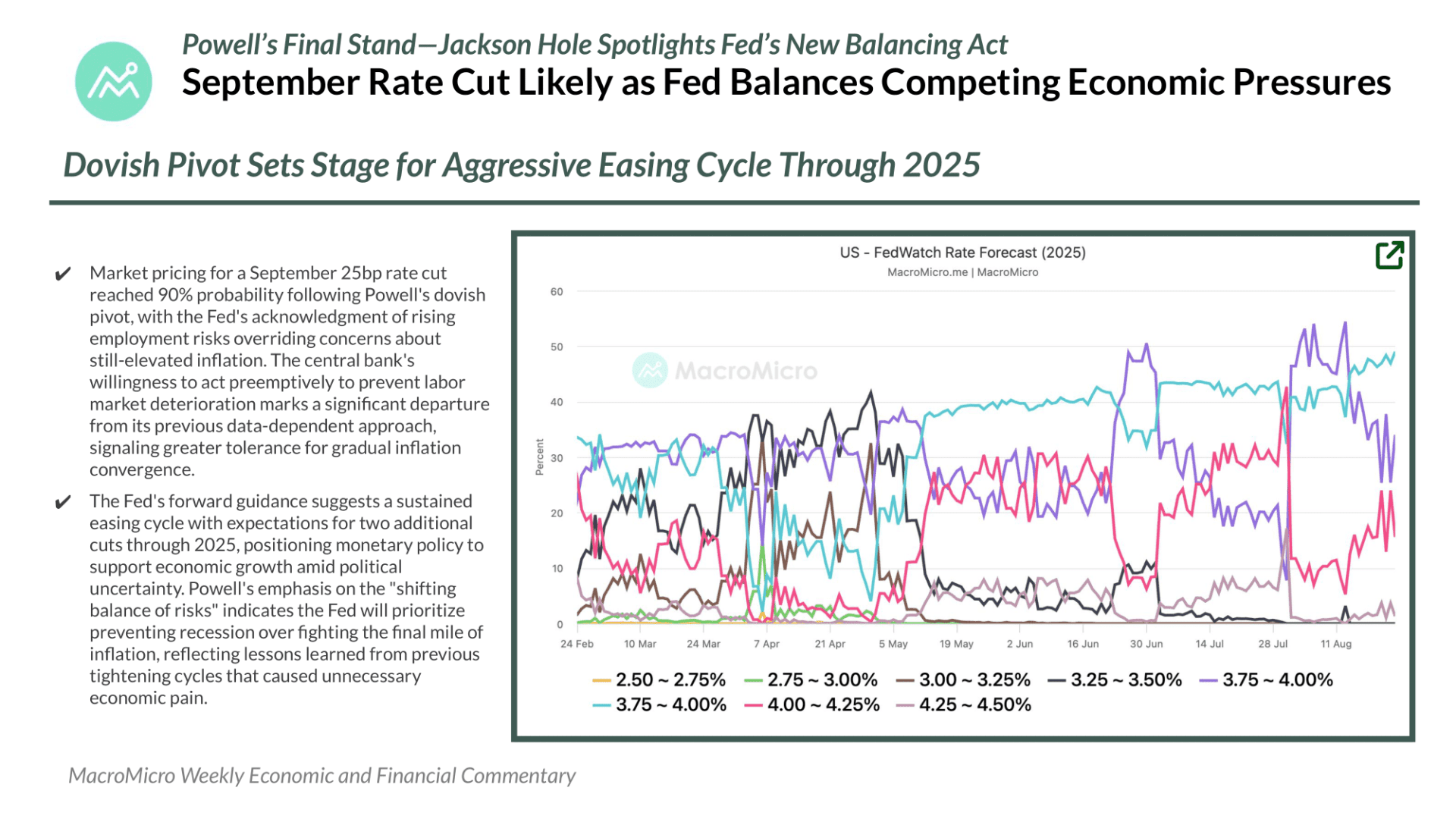
Fed Chair Jerome Powell’s Jackson Hole speech highlighted rising risks in the job market, signaling the Fed is open to cutting rates even with inflation still above target. He introduced a move to “Symmetric Flexible Inflation Targeting,” giving the Fed more room to respond to weakening employment. Markets quickly priced in a 90% chance of a September cut, with expectations of more easing through 2026. The Fed’s shift shows a stronger focus on protecting jobs rather than aggressively lowering inflation—setting up a steady rate-cut cycle.
Russia–Ukraine Talks Gain Ground, But Ceasefire Outlook Still Uncertain
Diplomatic momentum has picked up after President Trump met separately with Putin and Zelensky this month, but the outlook for a ceasefire remains highly uncertain. Moscow demands Ukraine drop NATO ambitions and recognize occupied regions—terms Kyiv won’t accept without a referendum. The battlefield remains mostly static. Russia’s sanctions-resistant economy and growing energy ties with Asia give it room to hold firm, while Ukraine, backed by U.S. military and economic support, continues to push back. A three-way summit could take shape soon, but core issues remain unresolved.
U.S.–India Trade Tensions Reflect Political Limits Despite Strategic Ties
After months of rising tariffs, trade talks between the U.S. and India failed to produce a formal agreement. Hopes for deeper integration collapsed when India refused to open its agricultural sector—key to its voter base. In response, the U.S. imposed retaliatory tariffs on Indian energy exports. Despite the setbacks, Washington still views India’s growing middle class as a key market, while India continues to position itself as the leading “China +1” supply chain hub. The episode underscores how domestic politics often block trade liberalization, even between strategic partners.
Soaring AI Investment Fuels Bubble Worries Amid Weak Returns
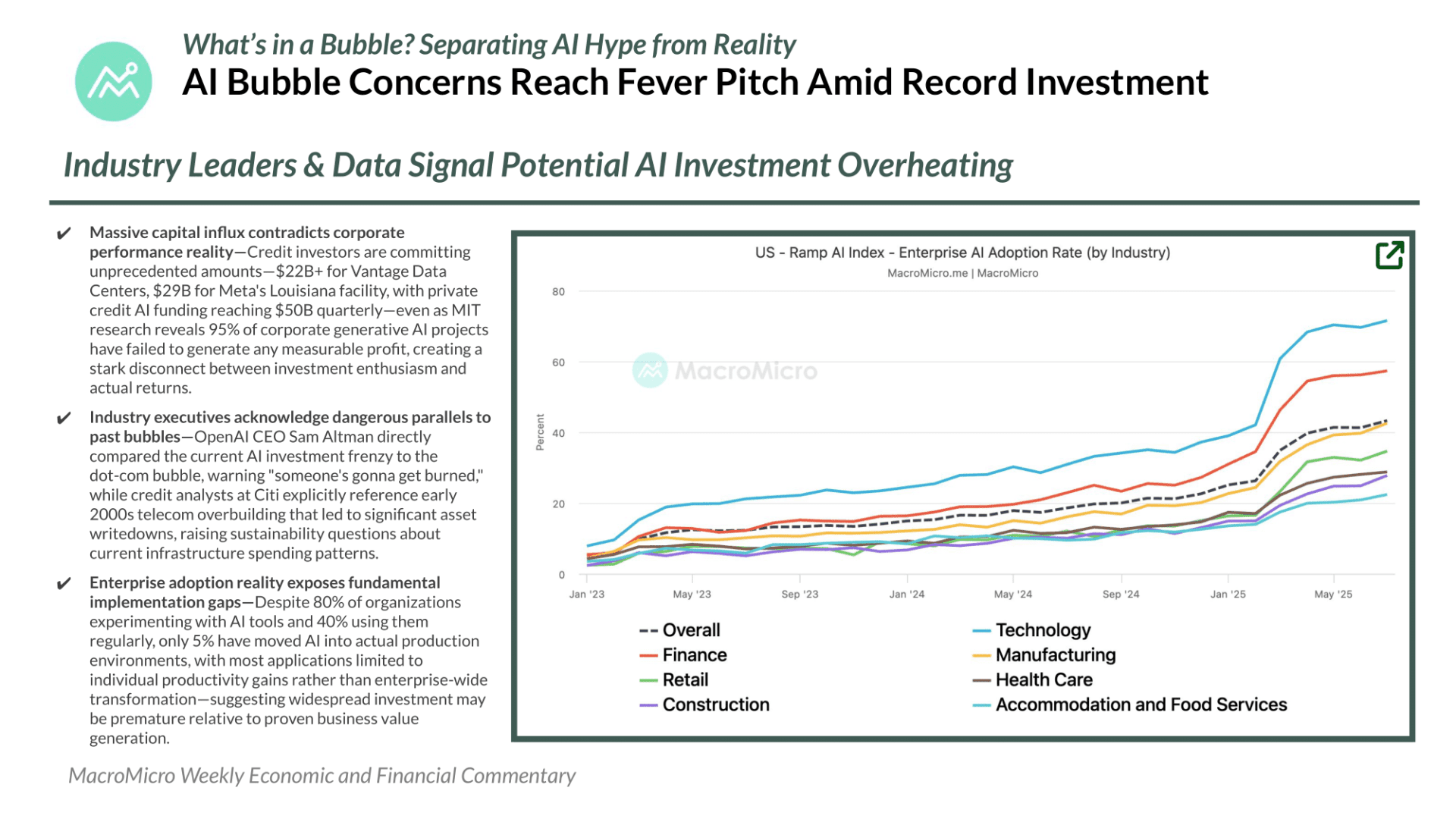
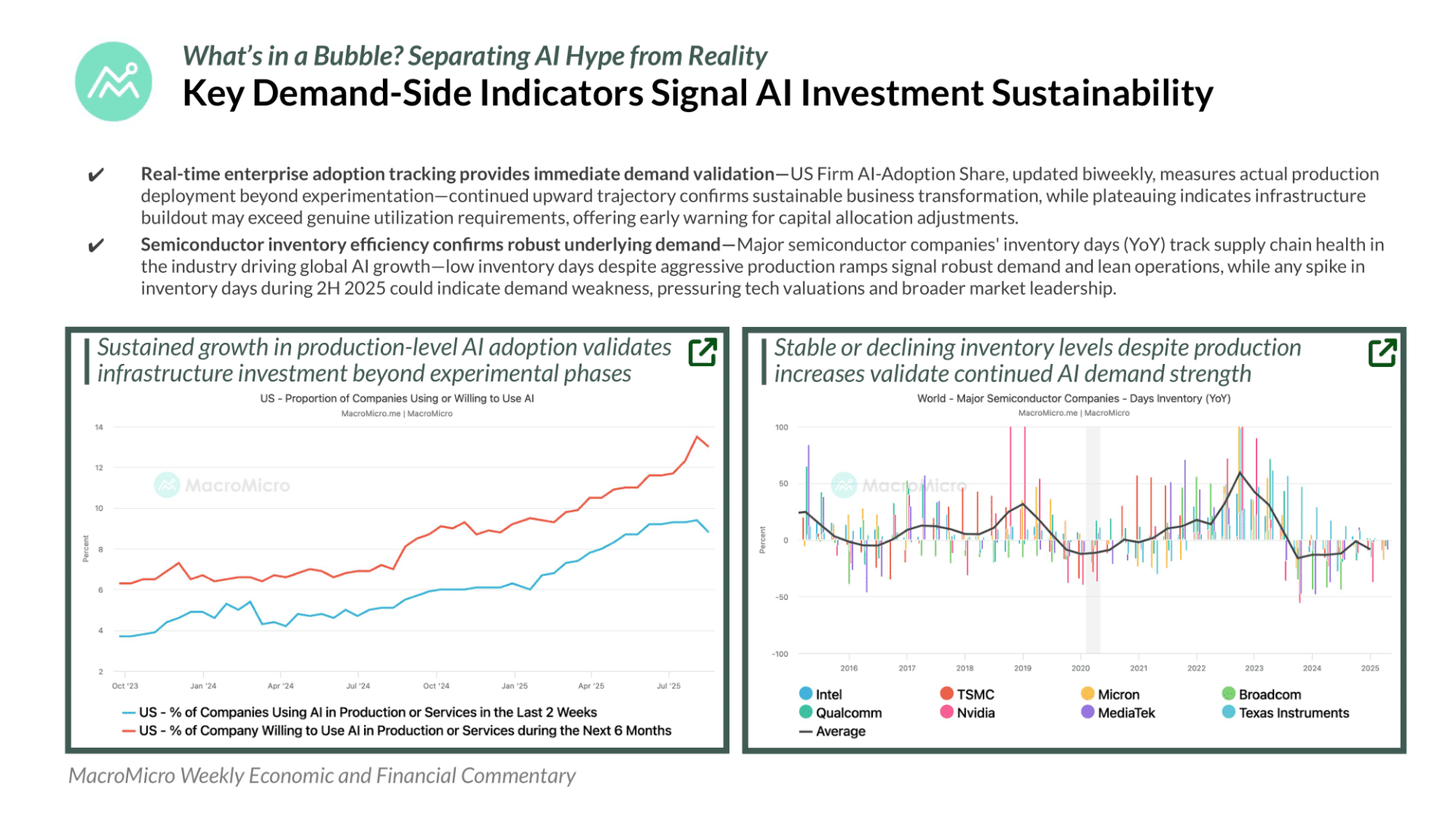
Massive AI spending has raised bubble concerns, with billions flowing into data centers and credit markets despite poor profits. MIT research finds 95% of AI projects haven’t made money. Business leaders are comparing the hype to the dot-com era. While 80% of firms are testing AI, only 5% use it at scale—casting doubt on whether the spending is justified. Still, we believe “AI bubble” might be the wrong question—our analysis points to several indicators that suggest otherwise.
🟡 This report is available exclusively to MacroMicro Subscribers. If you're not yet a subscriber, you're welcome to use a 14-day access code "MAX14D" to download this report for free. Only 50 codes are available, so act quickly to secure your access.
Already a subscriber? Click here to log in.
Full Access to Our Services

Comprehensive data at your service
with key indicators for investment insights

Exclusive flash reports
on key events and data

Create your own charts and analysis
including performance backtesting

Hub of professionals to engage
in meaningful discussions and insights
