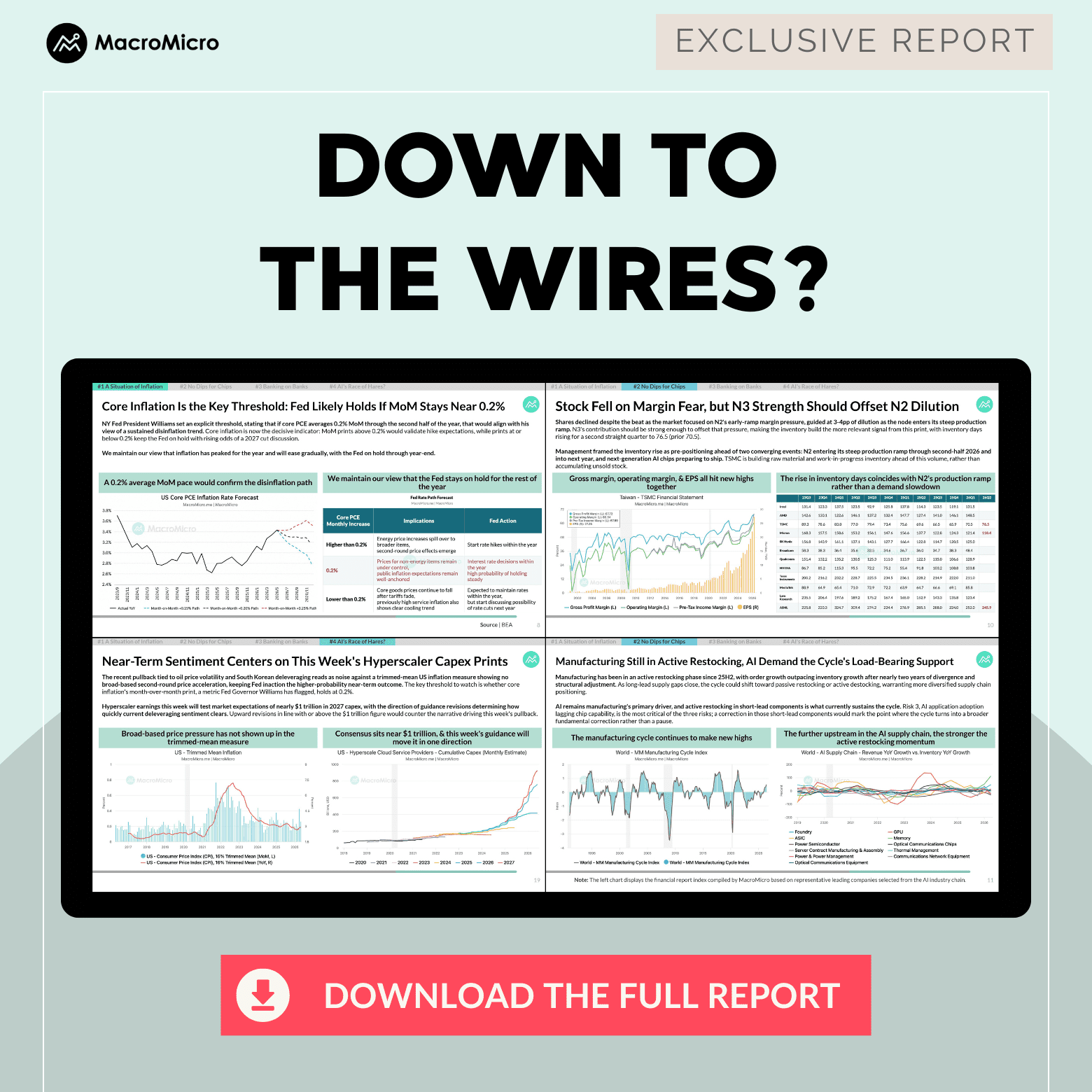
Global markets pulled back as the Iran-Israel ceasefire collapsed and renewed pressure on the Strait of Hormuz pushed WTI crude back above $80. But the more important signal came from the AI cycle: TSMC raised its 2026 growth outlook despite near-term margin pressure, while record capital markets activity and China's latest frontier model showed how the AI boom is broadening beyond hyperscaler spending and shifting toward value-chain economics. Read the full report for our latest analysis.
Key Focus of This Week’s Report
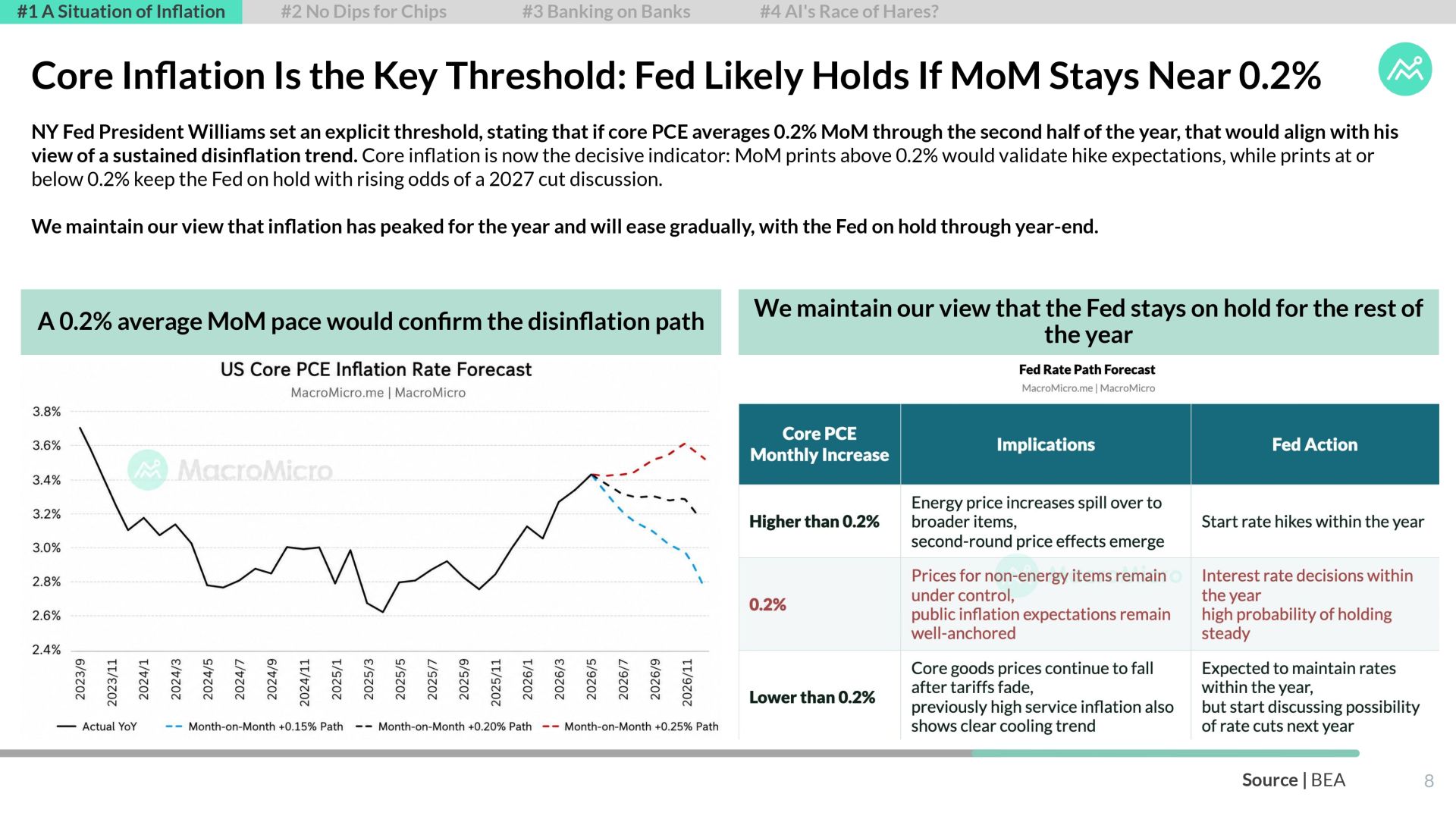
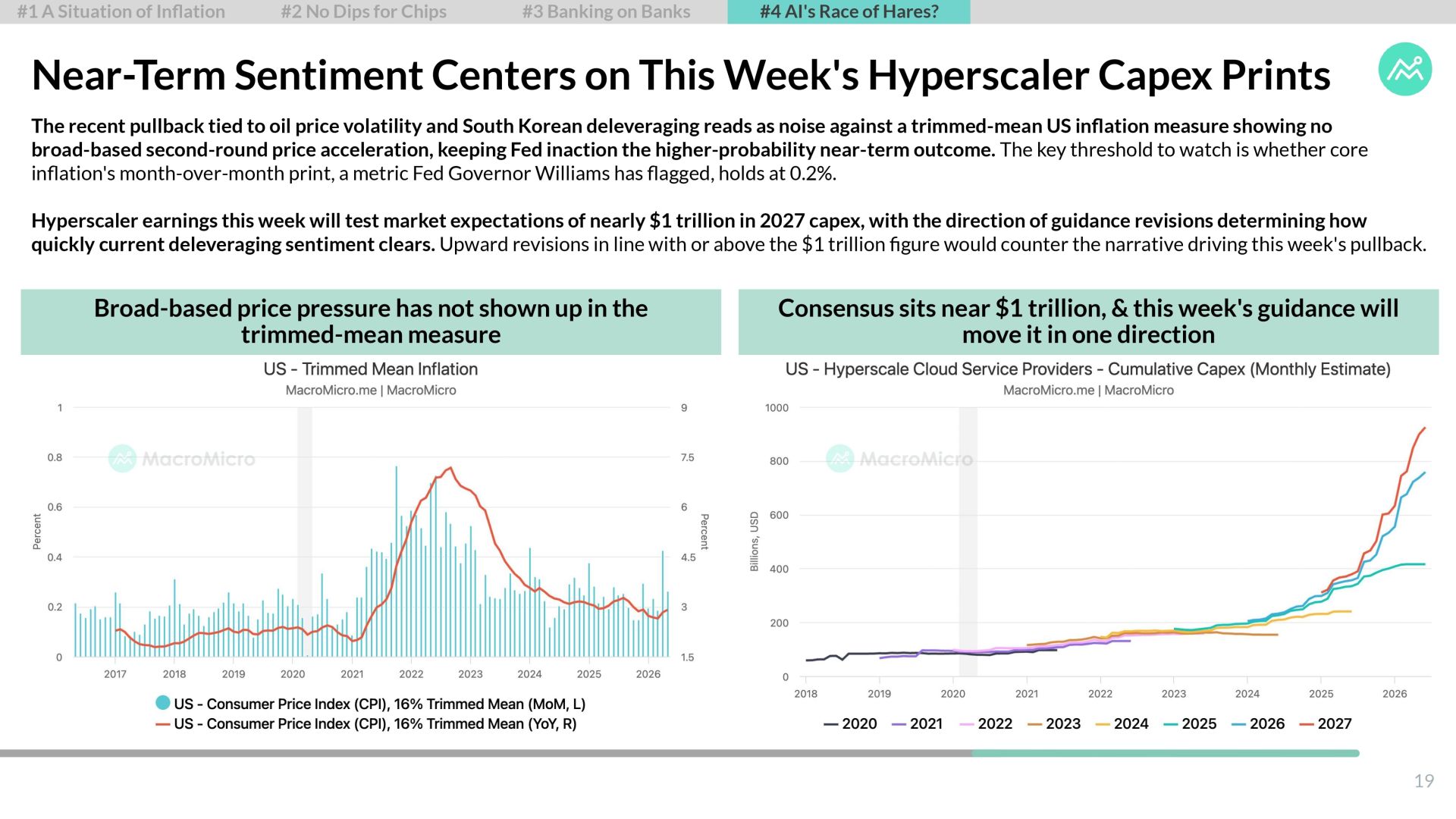
- Inflation Is Easing Despite Renewed Oil Risk: The collapse of the June ceasefire has pushed Strait of Hormuz shipping lower again just as peak summer driving season raises the market's sensitivity to oil disruptions. However, the renewed geopolitical risk has not yet translated into a second inflation wave: core goods, shelter, and services excluding rent all cooled in June, while core inflation outside energy remains contained. With inflation having likely peaked for the year, the Fed can remain on hold as long as monthly core inflation stays near the 0.2% pace consistent with continued disinflation.
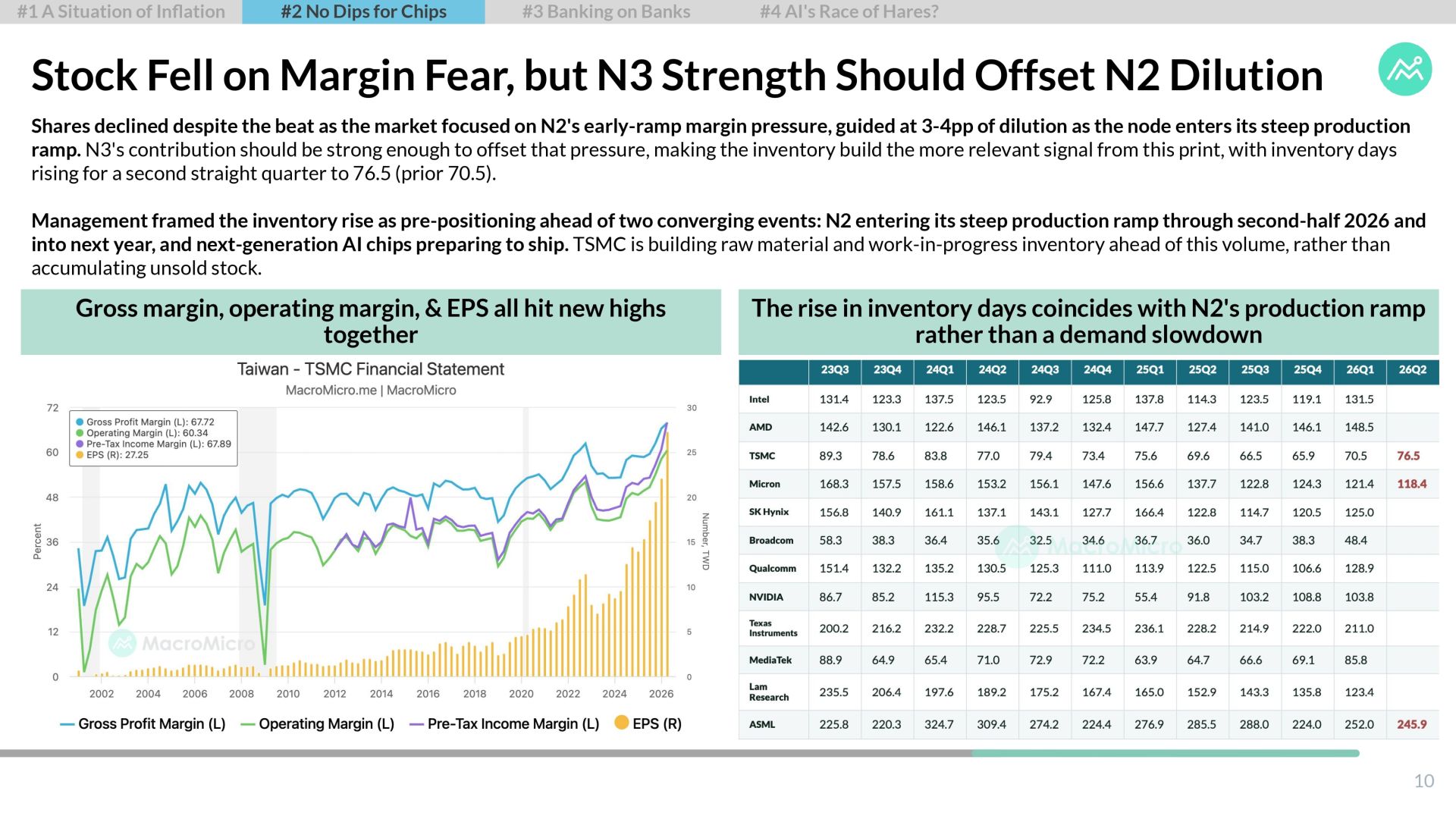
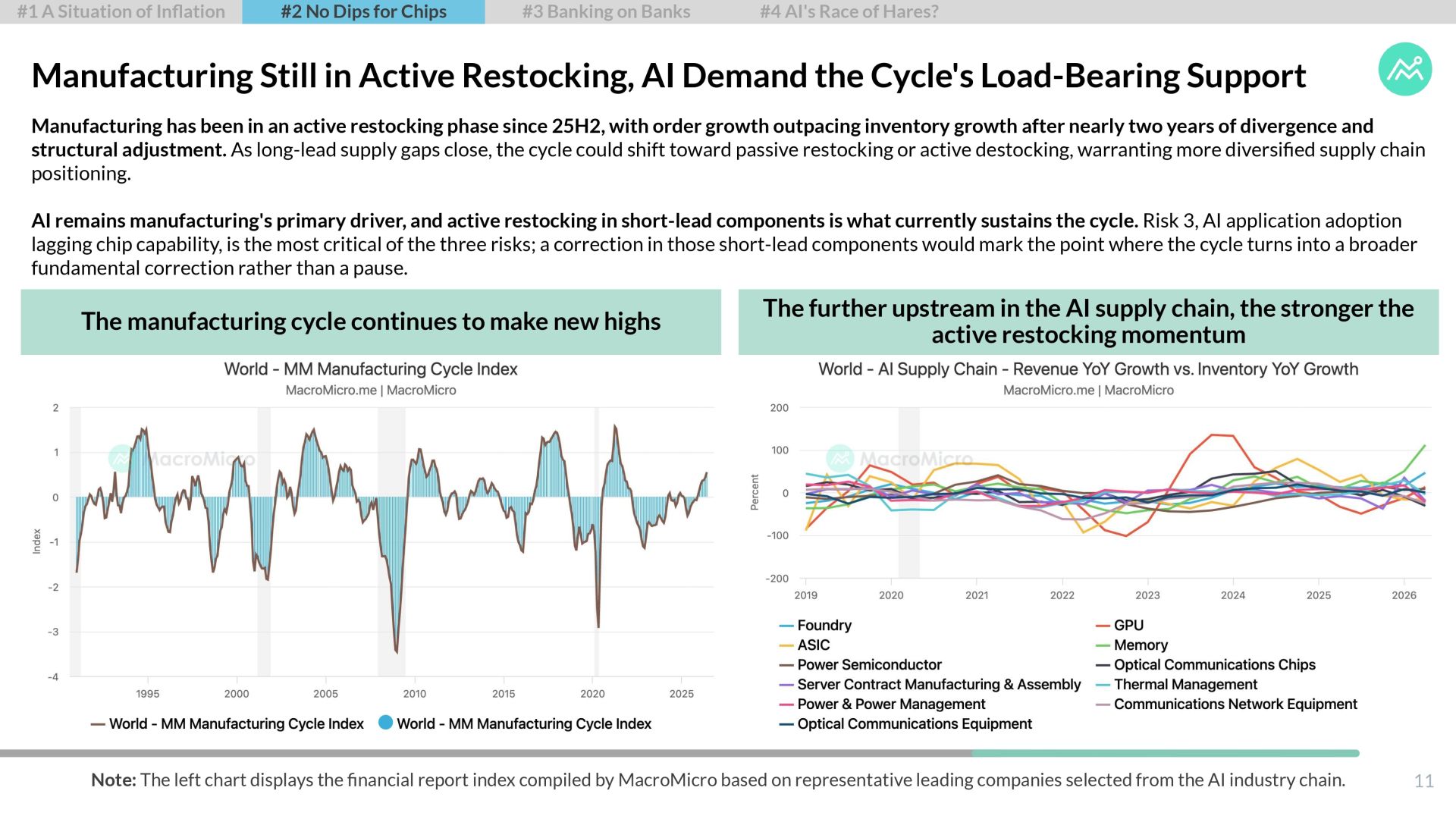
- TSMC's Strong AI Beat Shifts the Debate From Demand to Inventory: TSMC raised its 2026 revenue growth outlook to slightly above 40% and lifted capex guidance to $60–64 billion, confirming that AI demand remains the core engine of the semiconductor cycle. The market nevertheless focused on N2's 3–4 percentage-point margin dilution during its ramp and a second consecutive rise in inventory days. The key risk is no longer whether AI demand exists, but whether application adoption can keep pace with chip capacity. A correction in currently constrained short-lead components would be the clearest signal that restocking is turning into a broader cycle downturn.
- AI's Economic Value Is Moving Down the Stack: Kimi K3 has compressed the US–China frontier-model gap to weeks while pushing token prices lower through architectural efficiency and China's lower-cost power ecosystem. This is accelerating the commoditization of the model layer, but not necessarily weakening the AI investment cycle: massive model weights and communication-intensive inference still require advanced chips, rack-scale systems, and cloud infrastructure. At the same time, record capital markets activity and resilient consumer spending show that the AI cycle is increasingly feeding through to banks, IPOs, and the broader economy. The next phase of the AI race may be determined less by who builds the most capable model than by who captures the economics across the value chain.
About Weekly Economic and Financial Commentary (WEFC)
The MacroMicro WEFC is published weekly, delivering rigorous analysis and in-depth insights on the most critical market-moving events. Coverage spans equities, foreign exchange, bonds, commodities, global central banks, geopolitics, and the international political economy. At its core is a concise, roughly 20-page Chart Pack designed to help you grasp market trends at a glance.
WEFC Feedback Survey
We value your input! Your feedback helps us enhance our WEFC to better meet your needs. Please take a moment to share your thoughts. Thank you for being a valued reader!
