CEO House View | Stocks Rebound, Yields Hit New Highs, but the Dollar Weakens: Making Sense of the Divergence
Dear all,
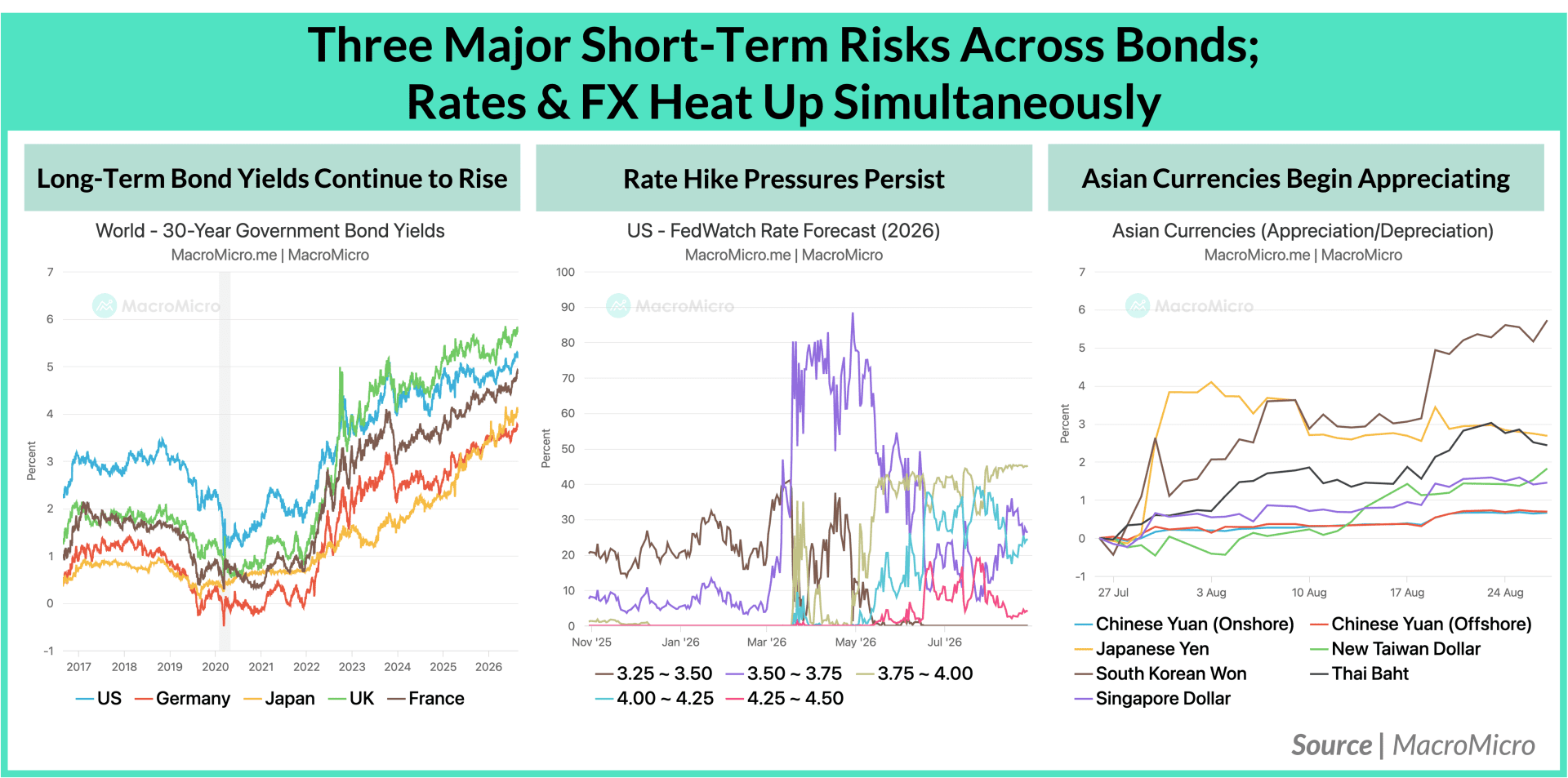
Amid the market shifts in August, US long-term Treasury yields moved higher while the dollar weakened against the trend, and gold rebounded sharply. Several major asset classes are pointing to the same overarching theme: markets have once again begun to worry about the sustainability of US and global debt, as well as the pressure from increased bond issuance. At the same time, global equities staged a significant rebound following last month's sharp decline, with resilient economic conditions and better-than-expected earnings remaining the most important sources of support.
This month, I would first like to spend some time highlighting three risks that are concerns for the market in the "short term." After breaking them down one by one, however, we will ultimately return to the common solution to all these risks: fundamentals.
I. Short-Term Risks: Three Sources of Pressure from Bonds, Interest Rates, & FX
Risk 1: Long-Term Bond Liquidity: Corporates and Governments Are Both Issuing Debt. Recent observations show that long-term bond yields have continued to rise, with 30-year US Treasury yields breaking above 5.2% and Japan's also surpassing 4%. Corporate bonds even briefly exhibited the unusual phenomenon of AAA yields exceeding AA yields. What these developments have in common is the continued debt issuance by both corporations and governments this year. On the corporate side, AI infrastructure-related bond issuance has approached US$500 billion this year, with major CSPs accounting for nearly half, at around US$220 billion, far above last year's US$12.5 billion. The weighted average issuance maturity has also reached around 15 years, directly diluting demand for long-duration government bonds. On the government side, US federal debt has surpassed US$40 trillion, while Japan and Europe have likewise increased debt issuance in response to fiscal expansion. Rising term premiums and the simultaneous widening of stock-bond spreads are also increasing the opportunity cost of investing in equities.
Risk 2: No Rate Hike in September, But the Story Is Not Over Yet. Can Short-End Liquidity Ease Pressure at the Long End? Looking closely at...
Already a subscriber? Click here to log in.
Full Access to Our Services

Comprehensive data at your service
with key indicators for investment insights

Exclusive flash reports
on key events and data

Create your own charts and analysis
including performance backtesting

Hub of professionals to engage
in meaningful discussions and insights
 Get answers from MM AI.
-
What is driving the recent concern over US and global debt sustainability in financial markets?
💡The recent concern over US and global debt sustainability in financial markets is driven by several factors, including rising US long-term Treasury yields, a weakening dollar against the trend, and a sharp rebound in gold. These indicators collectively point to renewed market worries about the sustainability of US and global debt, as well as the pressure from increased bond issuance from both corporations and governments.
-
How has AI infrastructure bond issuance impacted demand for long-duration government bonds this year?
💡AI infrastructure bond issuance has significantly impacted demand for long-duration government bonds this year by approaching US$500 billion, with major CSPs contributing nearly half, around US$220 billion. This figure is substantially higher than last year's US$12.5 billion. The weighted average issuance maturity reaching approximately 15 years directly dilutes demand for long-duration government bonds, contributing to rising long-term yields.
-
Which factors suggest the Federal Reserve will likely maintain current interest rates in September?
💡The Federal Reserve will likely maintain current interest rates in September due to temporarily safe inflation data. The core PCE rose 0.25% MoM and held steady at 3.3% YoY in July, while August core CPI is projected to rise 0.2% MoM, with YoY growth holding steady at 2.47%. These figures suggest that the immediate pressure for a rate hike has not materialized.
-
Why might Asian currencies like the Korean won and Taiwanese dollar appreciate in the second half?
💡Asian currencies like the Korean won and Taiwanese dollar might appreciate in the second half due to several factors. The Bank of Korea initiated Asia's rate-hike cycle by raising rates by 25bp in July, leading to the Korean won surging by more than 5%. Taiwan's real interest rate is significantly low while GDP is growing at a double-digit pace, increasing the probability of a 50bp rate hike, thus accumulating momentum for appreciation.
-
How do rising long-term bond yields in the US and Japan reflect current market pressures?
💡Rising long-term bond yields in the US and Japan reflect current market pressures stemming from continued debt issuance by both corporations and governments. US 30-year Treasury yields have broken above 5.2%, and Japan's have surpassed 4%. This trend indicates increased supply of long-term debt, which dilutes demand and raises the cost of financing, alongside rising term premiums and widening stock-bond spreads.
-
What is the 'R < G' formula and how does it relate to debt sustainability?
💡The 'R < G' formula, where 'R' represents the cost of financing and 'G' represents nominal economic growth, relates to debt sustainability by indicating that as long as economic growth is strong enough, it can absorb the pressure from interest rates. This formula highlights that debt is sustainable if a country or company has sufficient capacity to repay its debt through robust economic expansion, spending cuts, or improved bond liquidity.
-
How do strong economic fundamentals in the US and Taiwan help absorb debt and interest rate pressures?
💡Strong economic fundamentals in the US and Taiwan help absorb debt and interest rate pressures by ensuring sufficient capacity to repay debt. In the US, balanced employment supply and demand, low initial jobless claims, and new highs in real consumer spending on goods and services demonstrate robust growth. Taiwan's manufacturing cycle is upward, and exports are projected to maintain over 40% growth, providing strong economic expansion to counter financing costs.
-
Why is MacroMicro suggesting avoiding long-term bonds while recommending gold allocation?
💡MacroMicro suggests avoiding long-term bonds while recommending gold allocation because of the overarching major debt cycle and concerns over debt sustainability. The three major risks—long-term bond liquidity, increased debt issuance pressure, and market volatility—reinforce this framework, making long-term bonds less attractive due to diluted demand and rising yields, while gold's rebound confirms its value as a hedge against debt concerns.
-
How much has US federal debt surpassed, and what is the impact of increased government debt issuance?
💡US federal debt has surpassed US$40 trillion, and the impact of increased government debt issuance, alongside corporate debt, is the continued rise in long-term bond yields. This issuance dilutes demand for existing bonds, increases the cost of financing, and contributes to rising term premiums and widening stock-bond spreads, increasing the opportunity cost of investing in equities.
-
Why does MacroMicro view potential market pullbacks in September as buying opportunities?
💡MacroMicro views potential market pullbacks in September as buying opportunities rather than signals of a trend reversal because the underlying economic fundamentals remain strong and intact. Despite short-term risks from bonds, interest rates, and FX, robust growth momentum, an upward manufacturing cycle, and a balanced labor market indicate that these disturbances will ultimately fade, allowing the market to return to fundamentals.
