In June, the MM Emerging Market Fundamental Index and emerging market (EM) equities continued to experience volatility. EM central banks have signaled monetary policy easing in the near future. Meanwhile, the Indian stock market outshone its global peers. In the market commentary below, we delve into key developments that shaped the EM landscape.

Brazil as the first to signal rate cuts ahead, alleviating EM capital tensions
As EM economies are mainly driven by manufacturing, goods inflation is a larger component of inflation in emerging markets. This is why inflation is cooling faster in EMs compared to DMs, most of which are still battling against elevated core inflation. From the 2023-2024 global monetary policy timeline observed in June, we can see that most developed economies have pushed back the time to end rate hikes, while the timeline for policy easing in EMs remained mostly unchanged.
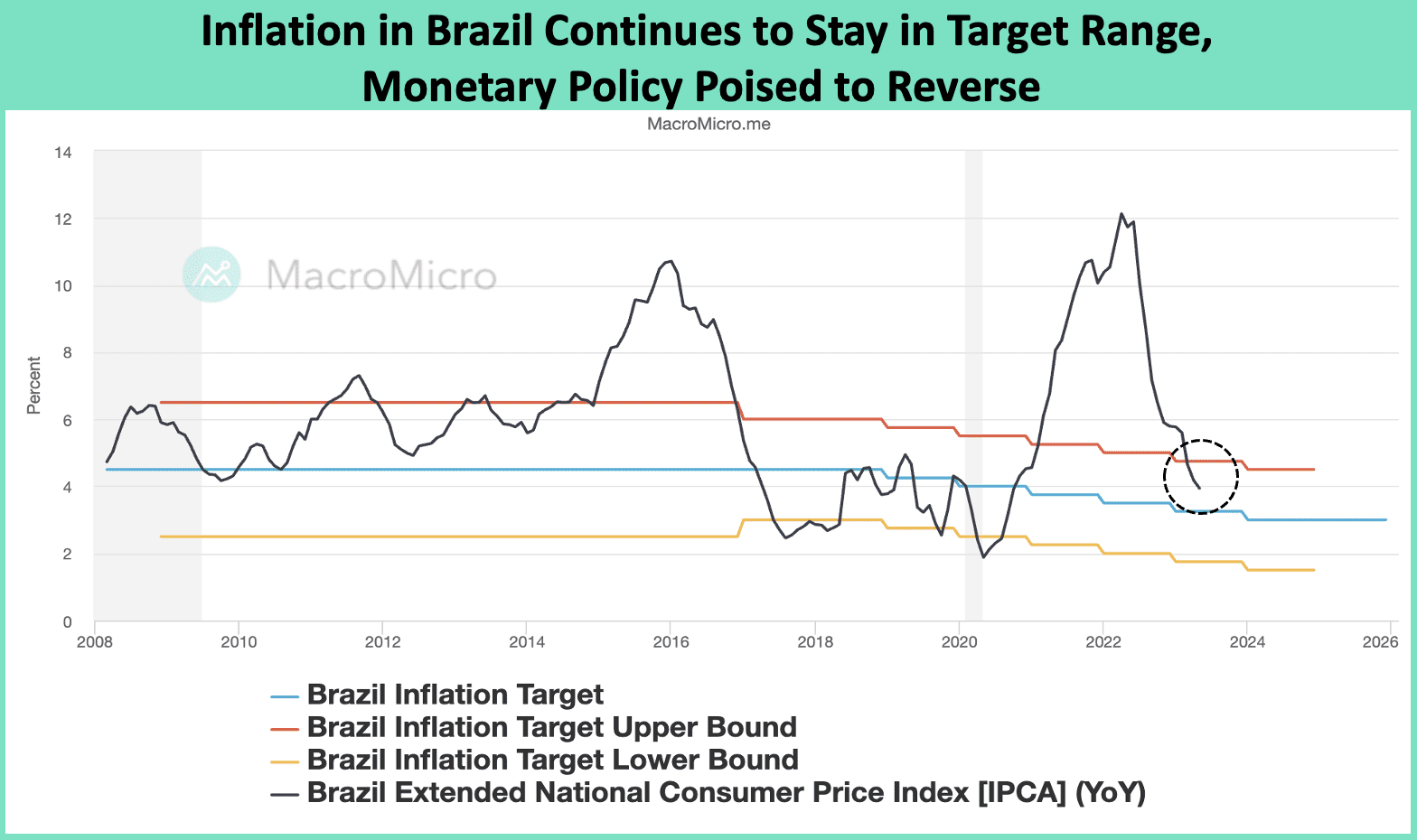
As one of the first countries to raise interest rates in this global tightening cycle, Brazil's IPCA inflation stood at 3.94% in May (vs. 4.18% in April), marking the third consecutive month where inflation stayed within the central bank's target range. In mid-June, the President of Brazil's central bank, whose stance serves as a leading indicator of policy adjustments, commented that “an environment is opening up for us to work with lower interest rates at some point in the future.” The market now anticipates a possible rate cut in Brazil as early as Q3 of 2023, which will support the already improving capital conditions in the emerging markets.
Stocks hit record-highs in Taiwan, Korea and India, with India benefiting from long-term structural advantages
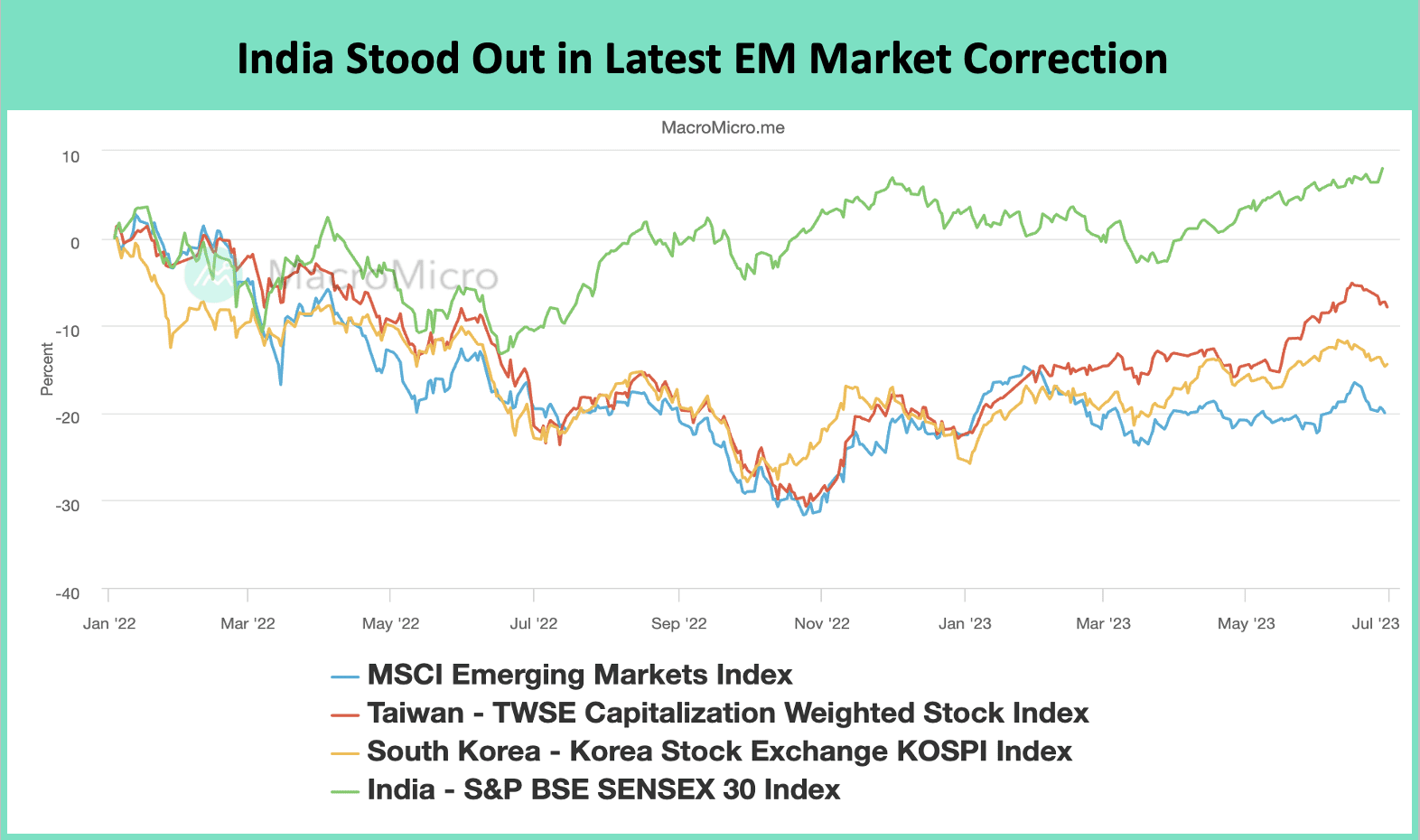
Taiwan, South Korea, and India emerged as the key drivers of the recent rally in EM equities. Since the tech sector accounts for 70.59%, 48.48%, and 14.07% of the MSCI index of Taiwan, South Korea and India, respectively, the Taiwanese and South Korean stock markets both hit one-year highs recently with tech stocks enjoying a valuation boost on interest surrounding AI and rate hikes nearing an end. As for India, in addition to hitting an all-time high this month, the BSE Sensex index has been on a consistent upward trend since 2022, reflecting a growth momentum beyond tech trends.
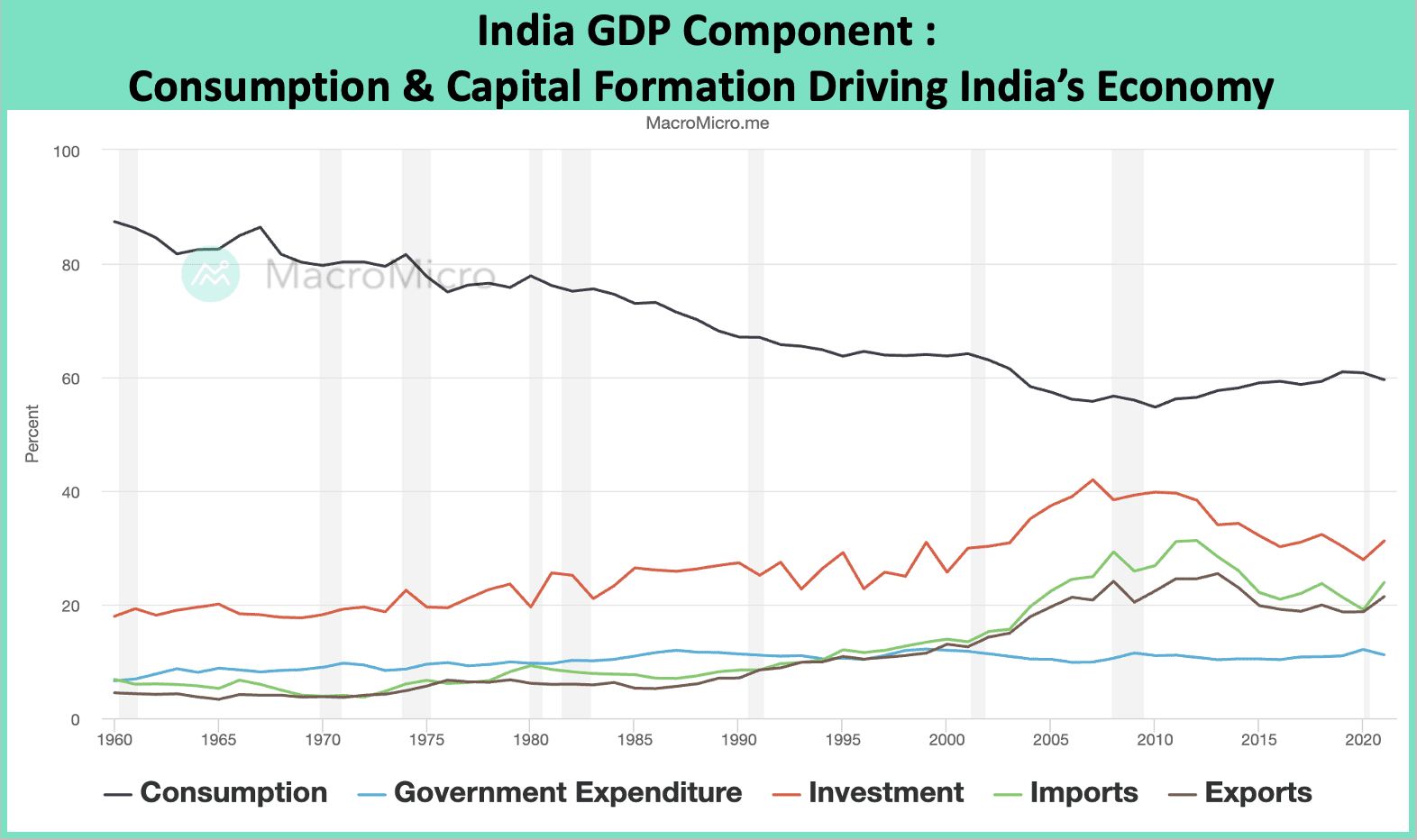
Strong performance of the Indian stock market can be attributed to two key economic drivers: private consumption and fixed capital formation, which account for 60% and 30% of the country's GDP, respectively. Of India’s better-than-expected 6.1% GDP growth rate in 2023 Q1 (vs. 4.5% in 2022 Q4), over 4% was contributed by consumption and capital formation.
India is benefiting from the “Make in India” initiative launched in 2015 as well as the supply chain shift from China, with the Indian economy entering a positive cycle of structural change, where investment fuels upgrading of the manufacturing sector, which boosts domestic demand, which then attract more investment. The positive cycle is in motion against healthy economic conditions: India has witnessed consistently low unemployment rates since the pandemic ended. The Future Expectations Index (FEI), a gauge of consumer confidence, has also remained above 100 baseline, reflecting a prevailing sense of optimism. Concurrently, foreign direct investment (FDI) in the manufacturing sector has shown steady growth.
MM Perspective: Indian Equities Hitting Record Highs
Following the growing number of EM central banks that have paused rate hikes as early as 2022 Q4, Brazil has now signaled the possibility of a rate cut ahead, which solidifies the direction of improving capital conditions in the emerging markets. On fundamentals, China's performance in the recent 618 shopping festival signifies a slow recovery in the country's manufacturing sector, while India is expected to continues to stand out on the back of favorable long-term structural strengths.
MacroMicro Reader Feedback Survey

