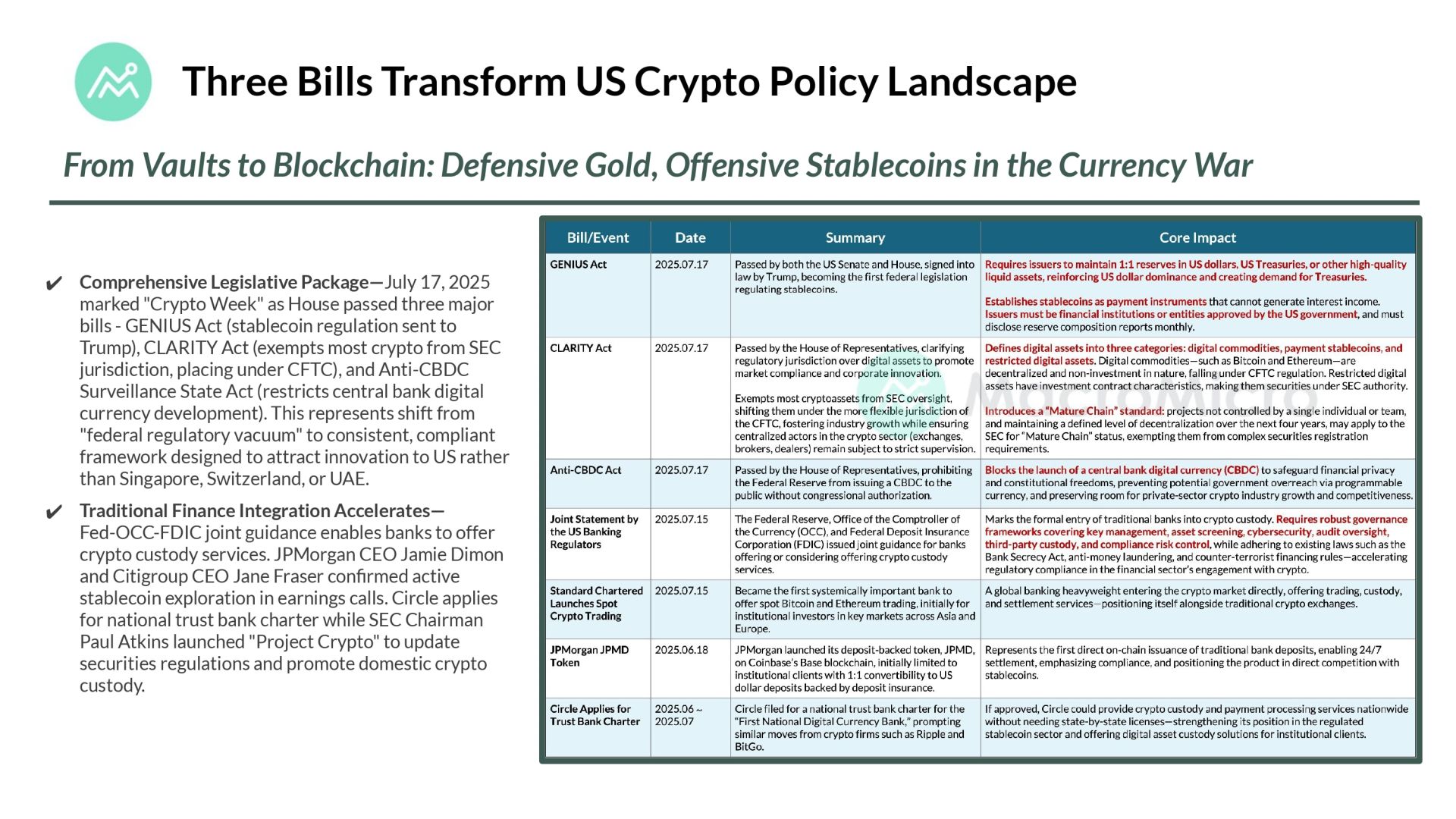
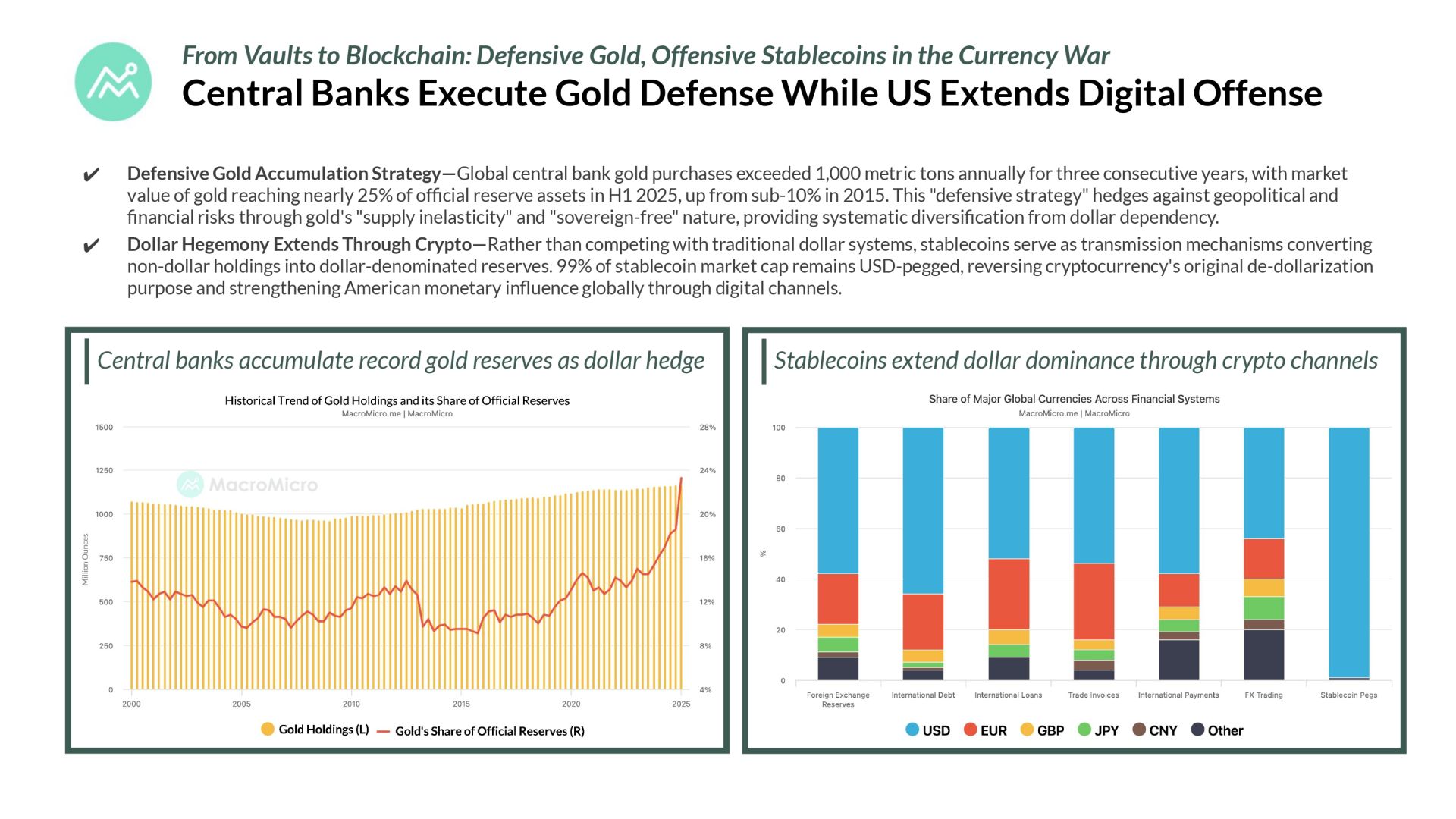
Almost a month has passed since the GENIUS Act became law, and while the immediate market reaction was muted, a deeper strategic picture is now coming into focus. In our previous analysis, we explored the theoretical framework of how this legislation could weaponize stablecoins for monetary policy. This follow-up report examines the broader geopolitical chess match unfolding—where America's offensive digital strategy directly counters the world's defensive gold accumulation, creating an unprecedented currency war playing out across both physical vaults and blockchain networks.

How Does America's "Offensive" Stablecoin Strategy Counter Global "Defensive" Gold Moves?
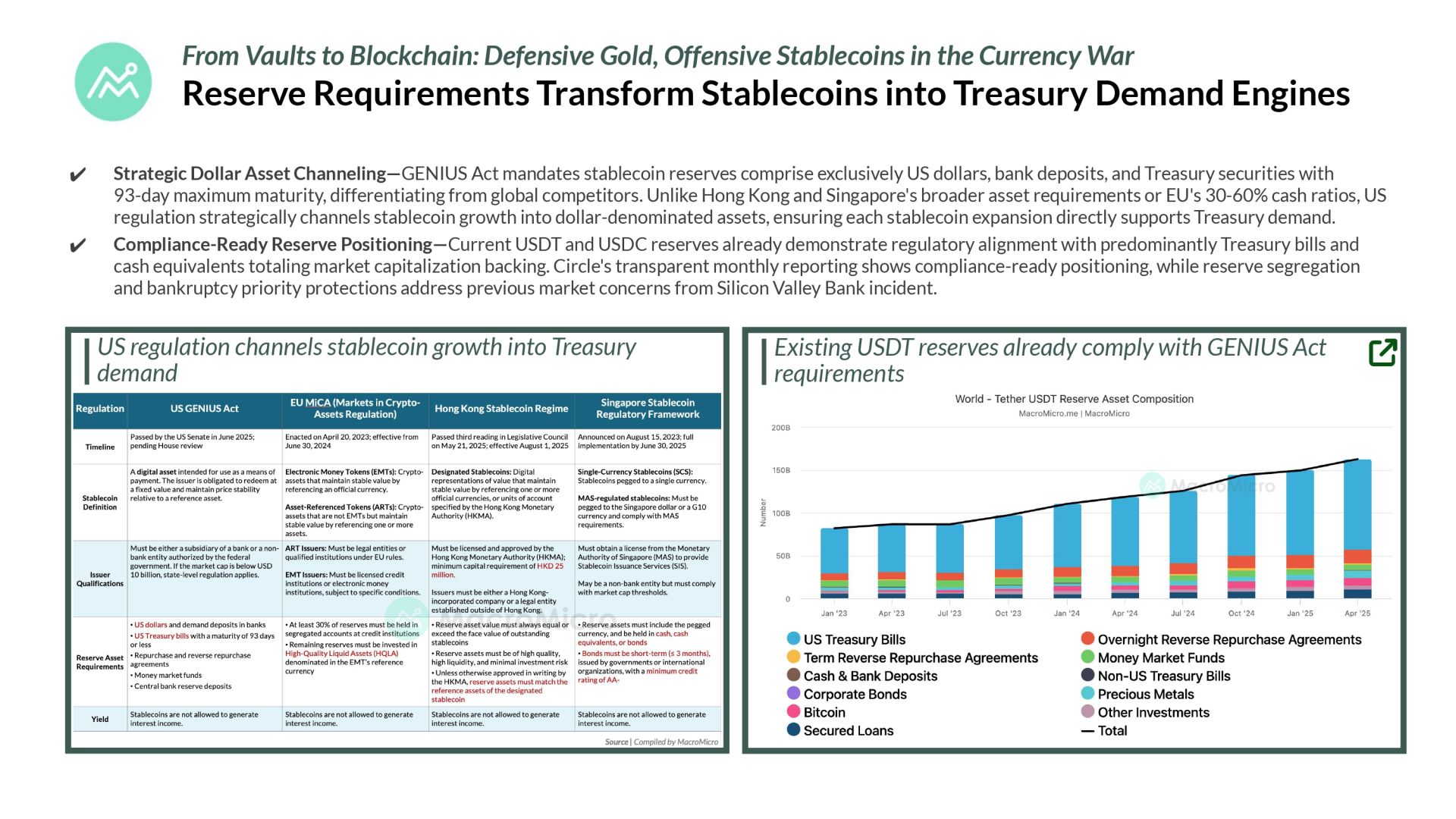
While headlines focus on regulatory compliance, the real story lies in the strategic timing and design of US crypto policy. As central banks worldwide execute what can only be described as defensive positioning through record gold accumulation, America has quietly launched a counter-offensive through digital channels. The framework established by the GENIUS Act—particularly its reserve requirements—creates something unprecedented: a regulatory structure that transforms every stablecoin expansion into structural Treasury demand. But the full implications of this design become clear only when viewed alongside concurrent global monetary strategies.
What Makes This Currency War Different from Previous Decades?
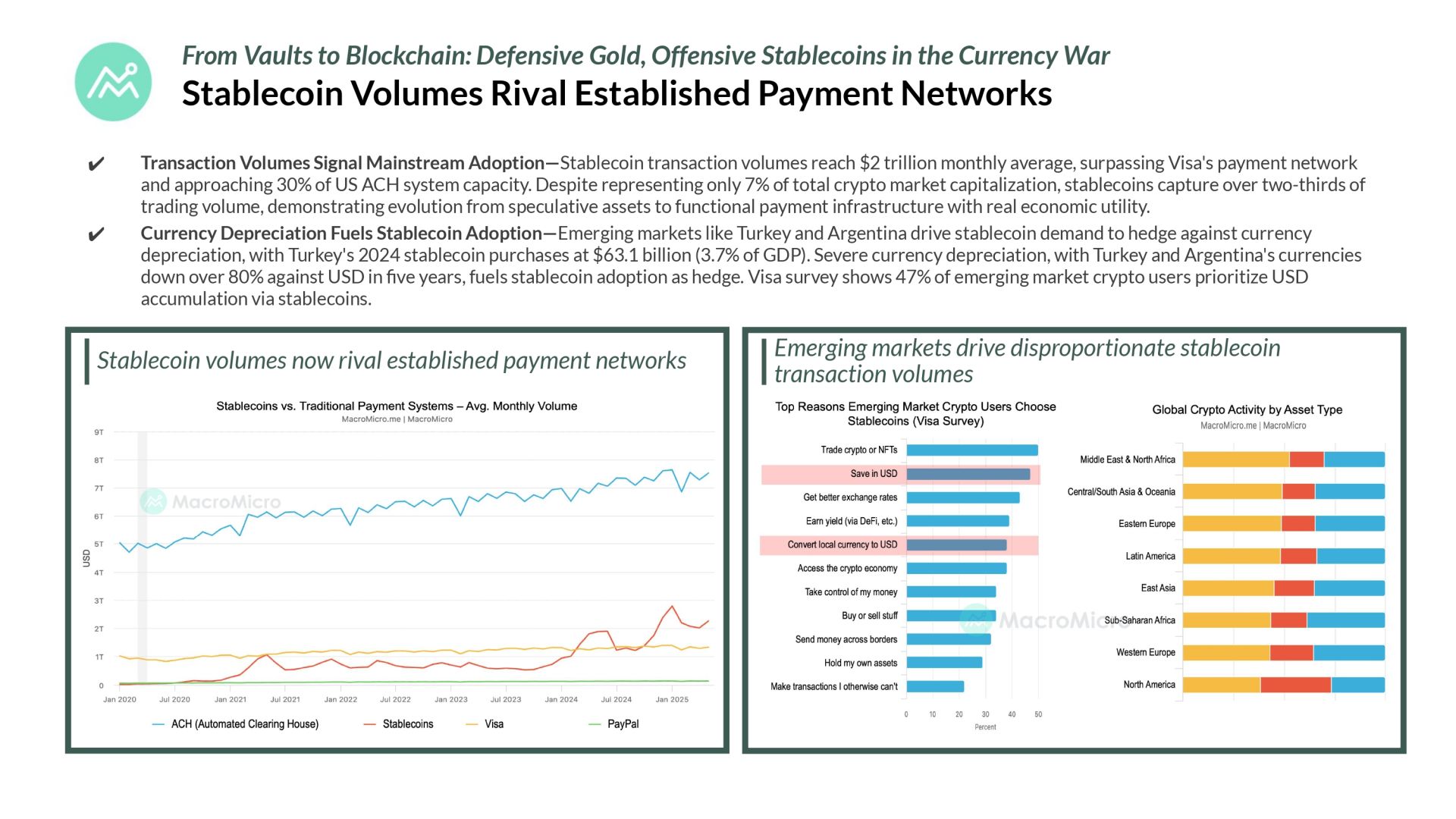
The traditional tools of monetary influence are being supplemented by entirely new transmission mechanisms. Our analysis reveals how stablecoin transaction volumes now rival established payment networks, while emerging market adoption patterns suggest something more profound than simple crypto speculation. The data points to a fundamental shift in how monetary hegemony operates in the digital age—where influence flows through code as much as conventional policy. Understanding these new dynamics requires looking beyond surface-level regulatory changes to the underlying architecture being constructed.
What Does the Treasury Borrowing Advisory Committee's $1 Trillion Projection Mean for Markets?
The Treasury Borrowing Advisory Committee's projections of potential expansion to $2 trillion by 2028 represent more than market growth—they suggest a fundamental shift in how global liquidity flows intersect with US debt markets. The infrastructure supporting this ecosystem spans four distinct layers, each presenting different investment considerations as traditional financial institutions navigate the evolving regulatory landscape established through the July legislative package.
Already a subscriber? Click here to log in.
Full Access to Our Services

Comprehensive data at your service
with key indicators for investment insights

Exclusive flash reports
on key events and data

Create your own charts and analysis
including performance backtesting

Hub of professionals to engage
in meaningful discussions and insights
