[Open Access] The AI Productivity Revolution! A New Industry Dashboard Tracking Real-World Supply and Demand
We are excited to share that MacroMicro has launched a brand-new AI Industry Dashboard, integrating all AI-related data and charts in one place. The goal is to help users track AI’s development—covering adoption rates, cross-country comparisons, corporate earnings metrics, and supply chain dynamics—through systematic data and visualizations. This report also outlines our latest views on the current state and future trajectory of AI.
Key Takeaways:
-
AI Model Development: Applications are broadening, competition is intensifying.
-
AI Demand: Adoption is spreading faster than the internet, but industry divergence is clear.
-
AI Supply Chain: Supply remains constrained, with certain sectors standing out.
-
Earnings Verification: Corporate financials in AI infrastructure and software continue to confirm the trend.

All charts featured in this report are included in our new AI Industry Dashboard, with automatic data updates. We invite you to revisit frequently to track evolving trends!
I. AI Model Development: Applications Expanding, Competition Intensifying
First, through our AI Model Development charts, we can track how models are evolving and how countries are progressing.
AI Applications are Broadening:
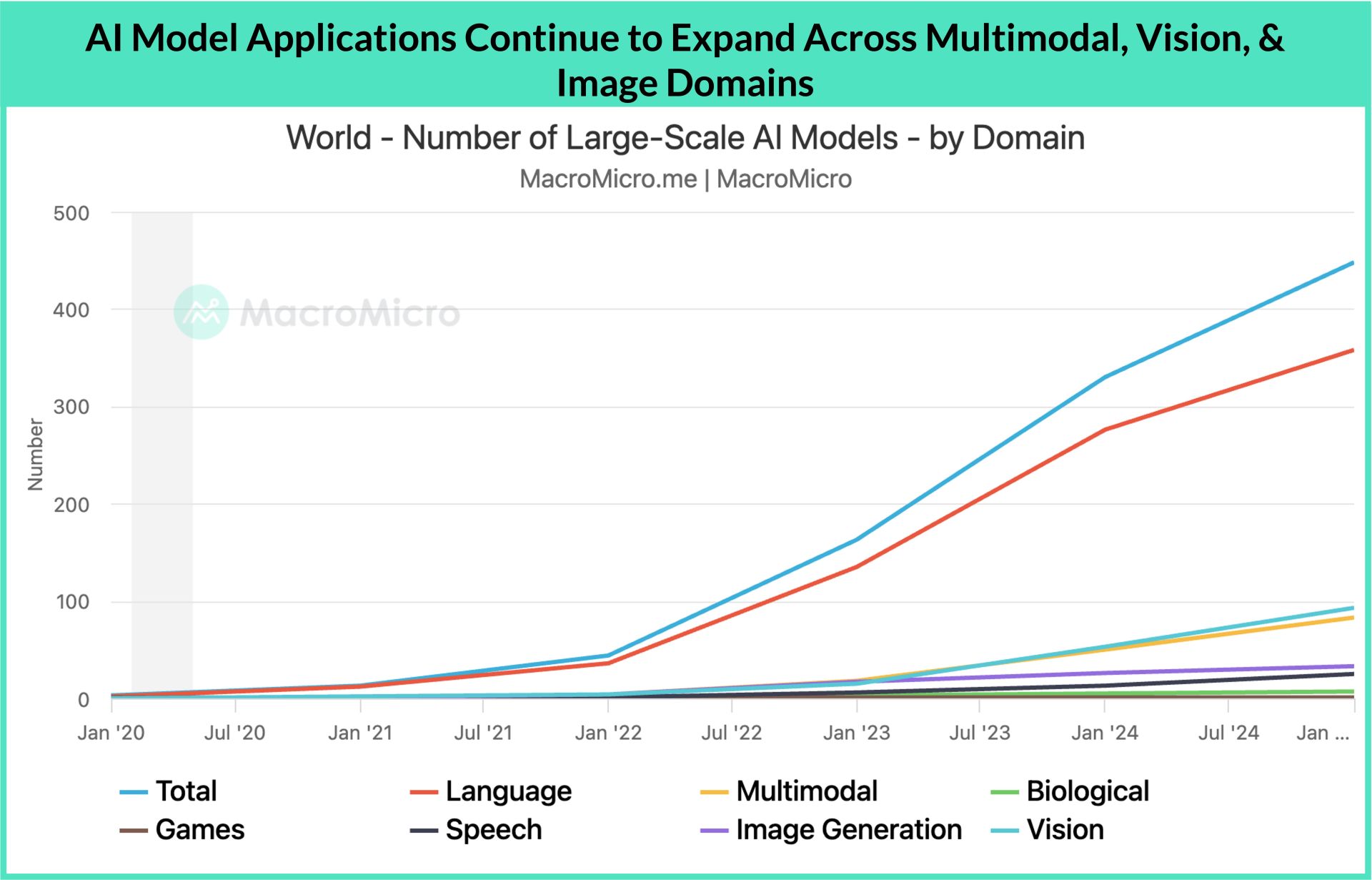
The number of AI models reflects the maturity of different application areas. Since ChatGPT triggered the wave of generative AI in 2022, "language" models have dominated development. But as the chart shows, this year has seen increasing releases of multimodal, vision, and image-generation models. This reflects AI’s maturation across broader domains—shifting beyond language toward multimodal, multifunctional, and domain-specific use cases.
Global Competition is Heating Up:
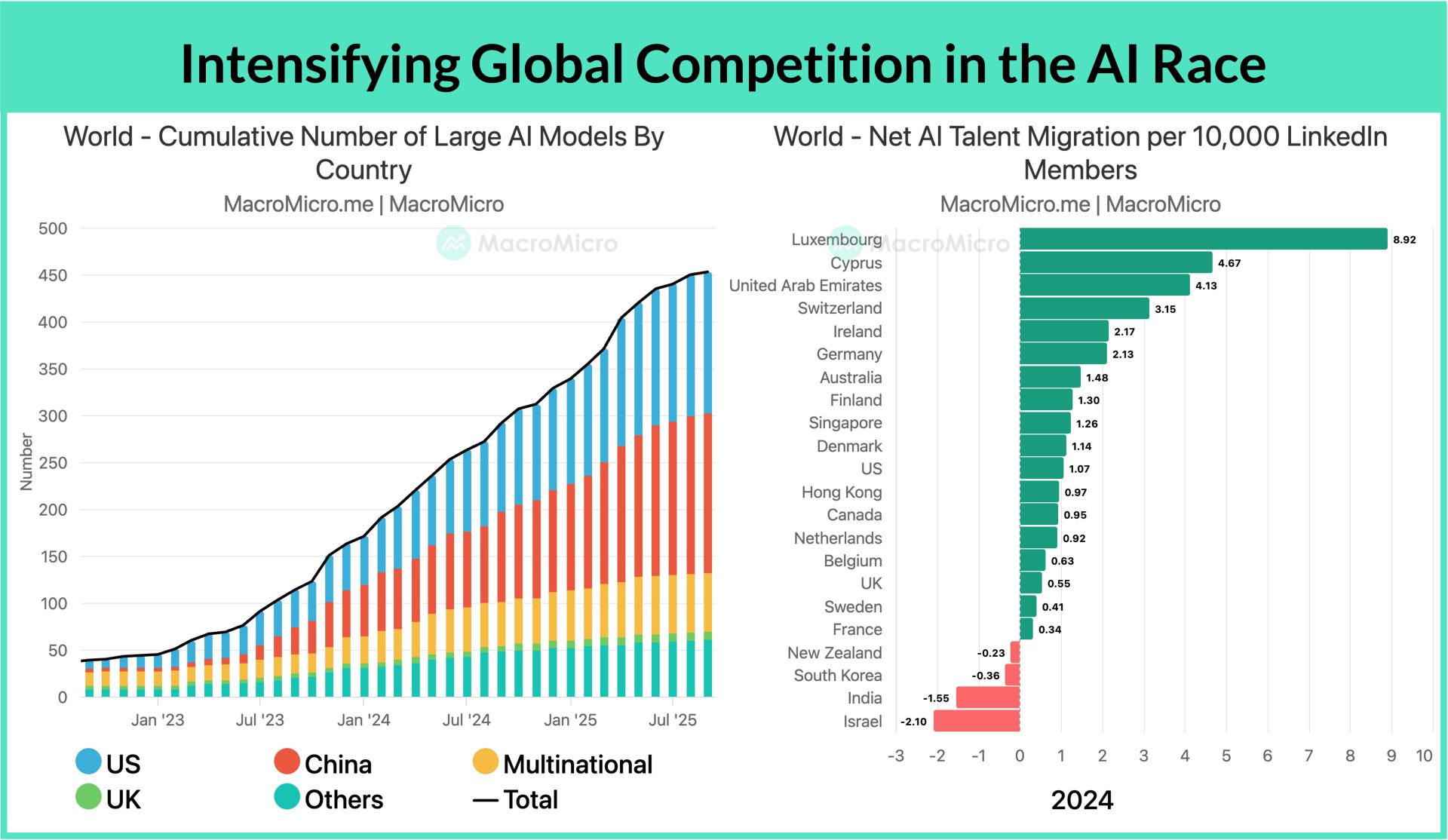
Countries worldwide are racing to develop AI. Patent filings, model counts, and private investments are all hitting record highs. Since AI is viewed as a critical strategic industry, governments are competing to attract resources and talent. For instance, the chart on “Net Migration of AI Talent per 10,000 LinkedIn Members” highlights countries such as Luxembourg, Cyprus, and the UAE, which are emerging as global AI talent magnets. Generally, countries with higher “AI readiness” also attract more talent, reflecting stronger ecosystems across policy, infrastructure, and innovation.
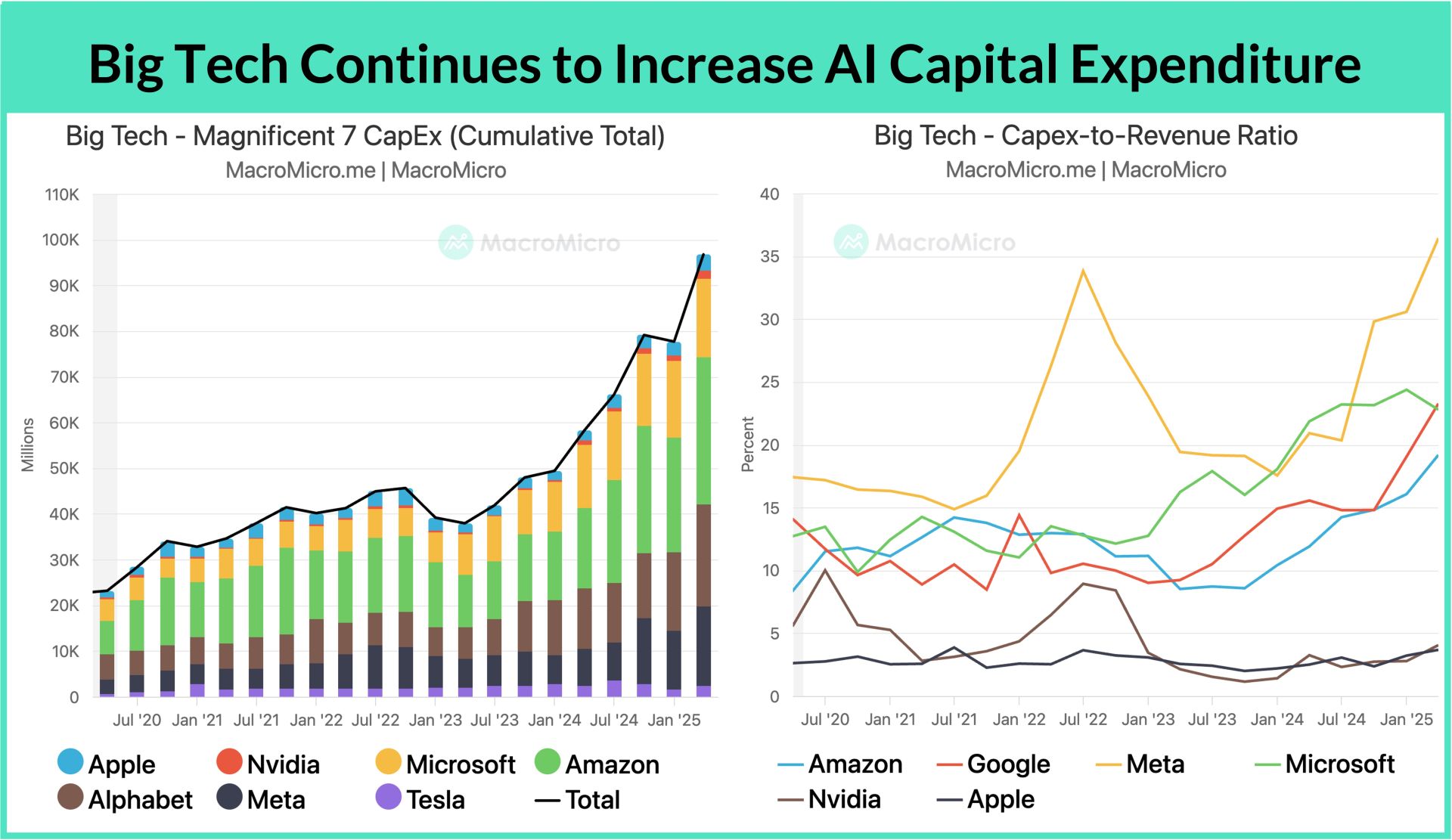
Overall, AI development is accelerating globally. This “AI productivity revolution” is spurring governments and corporations to invest aggressively. However, it also raises the market’s concern: is resource investment running ahead of monetization? As shown in the chart, big tech’s capex-to-revenue ratios keep climbing. We turn next to demand-side indicators for further perspective.
II. AI Demand: Adoption Outpacing the Internet, But Uneven Across Industries
Next, we provide multiple indicators to monitor AI demand, attempting to answer the market's most pressing questions: "Is AI application truly continuing to expand?" "Is AI a massive bubble?" We have selected the following key data points for explanation:
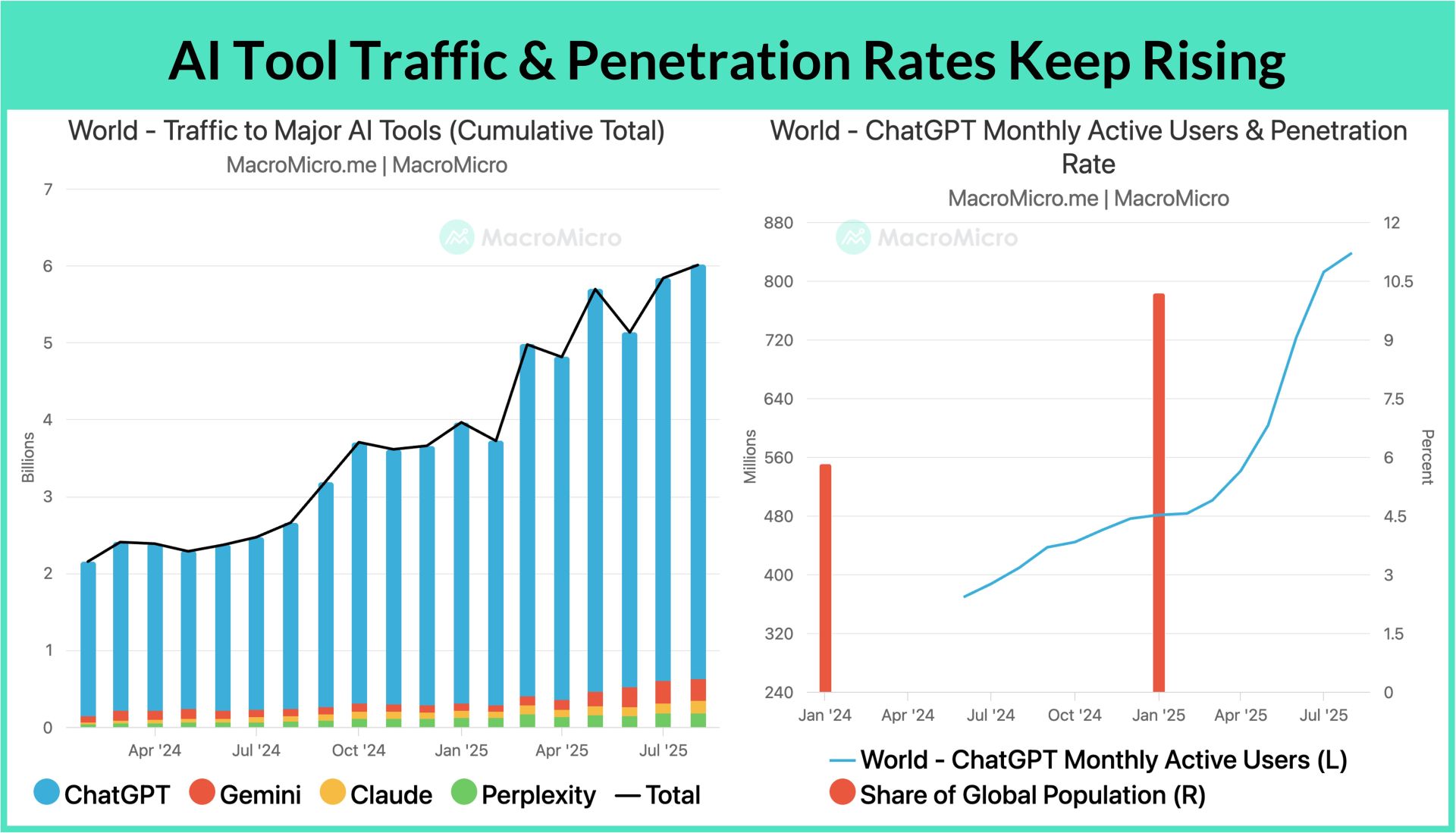
Firstly, traffic to AI tools and active user counts provide important signals. Traffic reflects total visits across devices, while monthly active users (MAUs) approximate the number of unique users. For instance, ChatGPT’s global MAUs are currently around 800 million, representing about 10.2% of the global population.
Crucially, AI adoption is moving far faster than prior technologies. In the US, household AI usage reached nearly 50% within 3 years of commercialization. By comparison, the internet took roughly 12 years to achieve the same.
Secondly, we also track how many US businesses are already using AI—or plan to within six months. Based on survey data covering ~1.2 million firms, with ~160,000 effective responses every two weeks, adoption stands at roughly 10%, concentrated in IT, professional services, management, and finance, where data and technical capacity are strong. Traditional industries like manufacturing, retail, and food services still lag.
A separate dataset from Ramp, based on corporate card and payment transactions, tracks actual paid subscriptions to AI products such as those from OpenAI, Anthropic, xAI, and Google. Across 40,000+ US firms, adoption is highest in technology and finance.
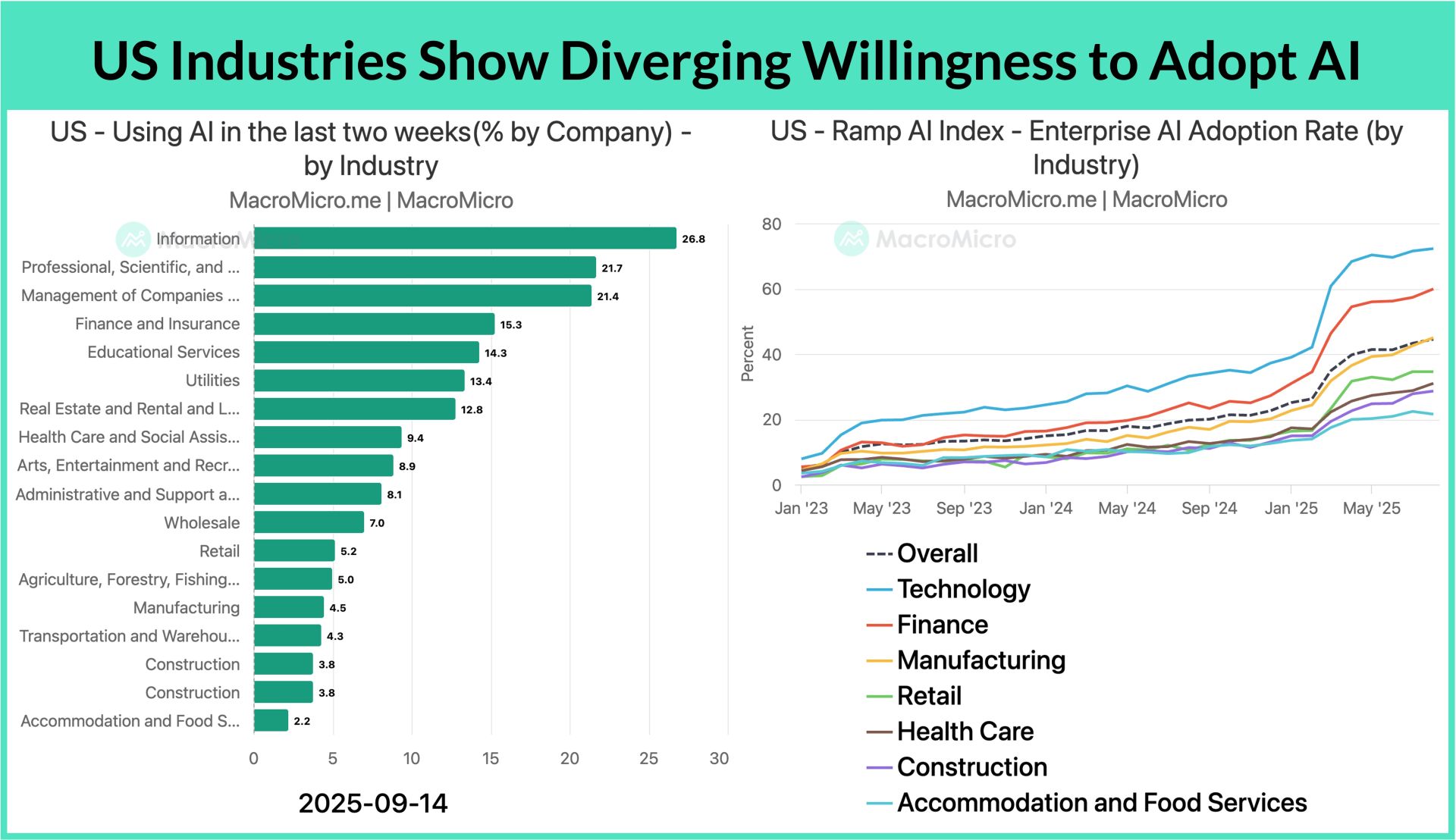
AI still has significant growth potential across both consumer and enterprise fronts. We can identify the current bottlenecks: costs and the need for models with memory and learning capabilities. With model prices falling and performance improving, adoption is set to broaden further.

Limited-Time Offer | Become an MM Max Annual member to receive exclusive AI insider data and semiconductor reports!
III. AI Supply Chain: Demand Outstripping Supply, Key Segments Outperform
With demand clearly established, supply becomes the potential bottleneck. Certain supply-chain segments are seeing particularly strong performance:
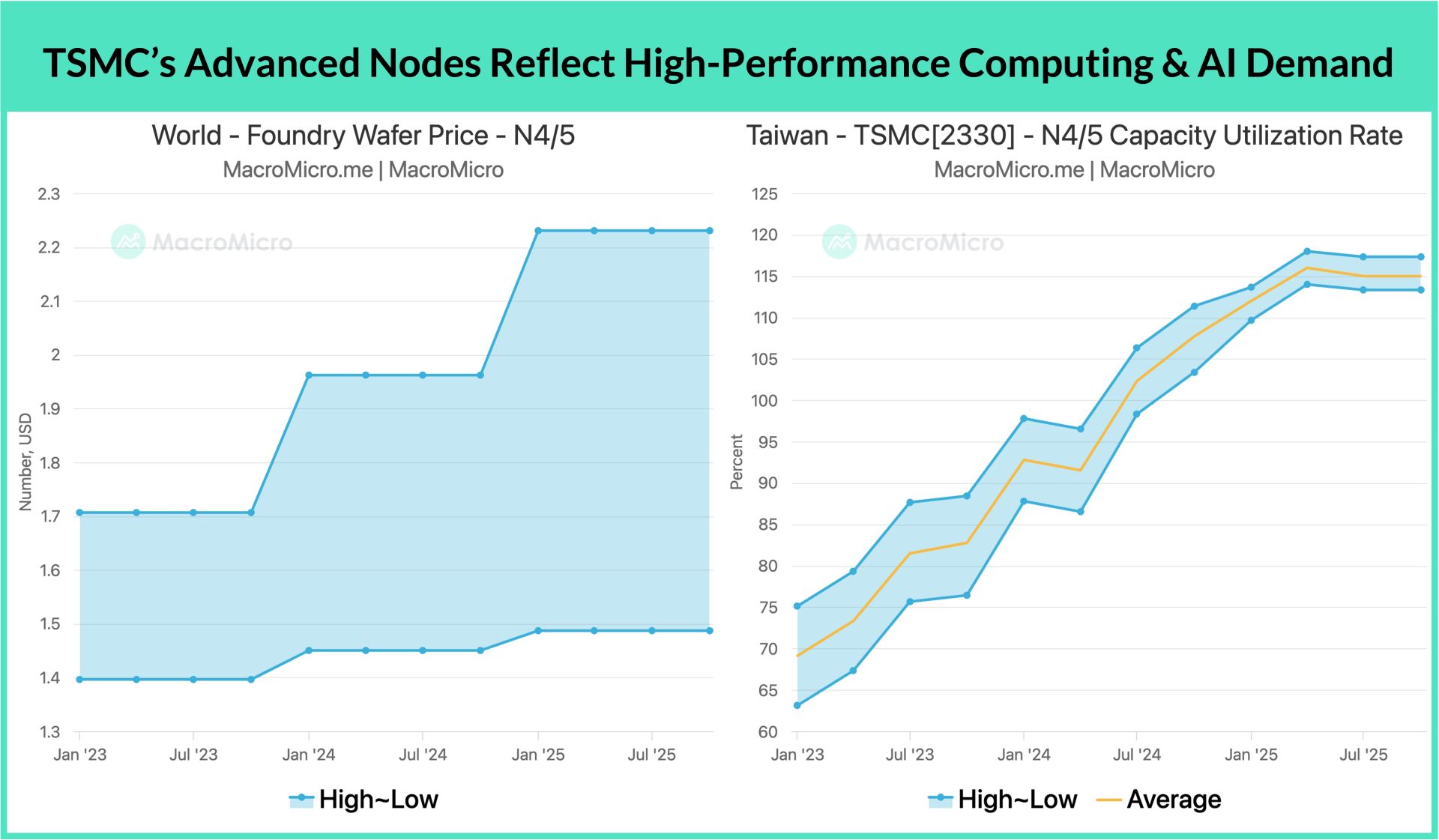
Semiconductor foundries: AI models depend on chips such as GPUs and ASICs, which in turn rely on wafer fabrication. Observing advanced process nodes (e.g., N4/5) helps gauge AI and HPC demand. Rising utilization rates imply stronger demand and higher pricing, while declines suggest easing. (Charts provided by Isaiah Research—Join MM Max Annual for exclusive acces to this Semiconductor Sector Intelligence!)
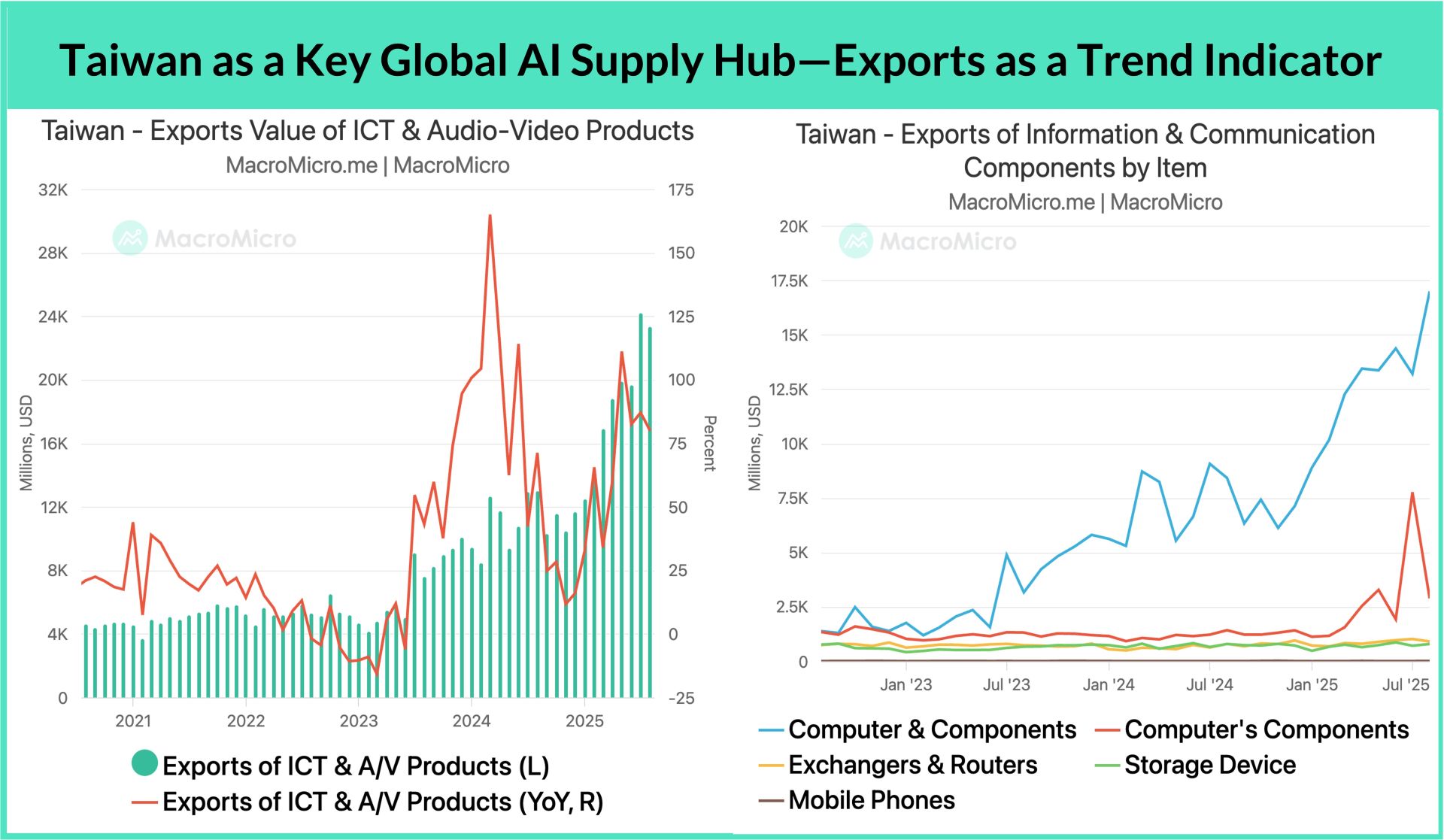
Taiwan exports: Taiwan is a critical AI supply-chain hub, covering chip foundries, server assembly, cooling, and power systems. Export data for electronic components and ICT products serve as leading indicators. In August, exports of electronic components hit record highs (+34.6% YoY), while ICT exports recorded their second-highest level ever (+79.8% YoY), underscoring robust AI-driven shipments.
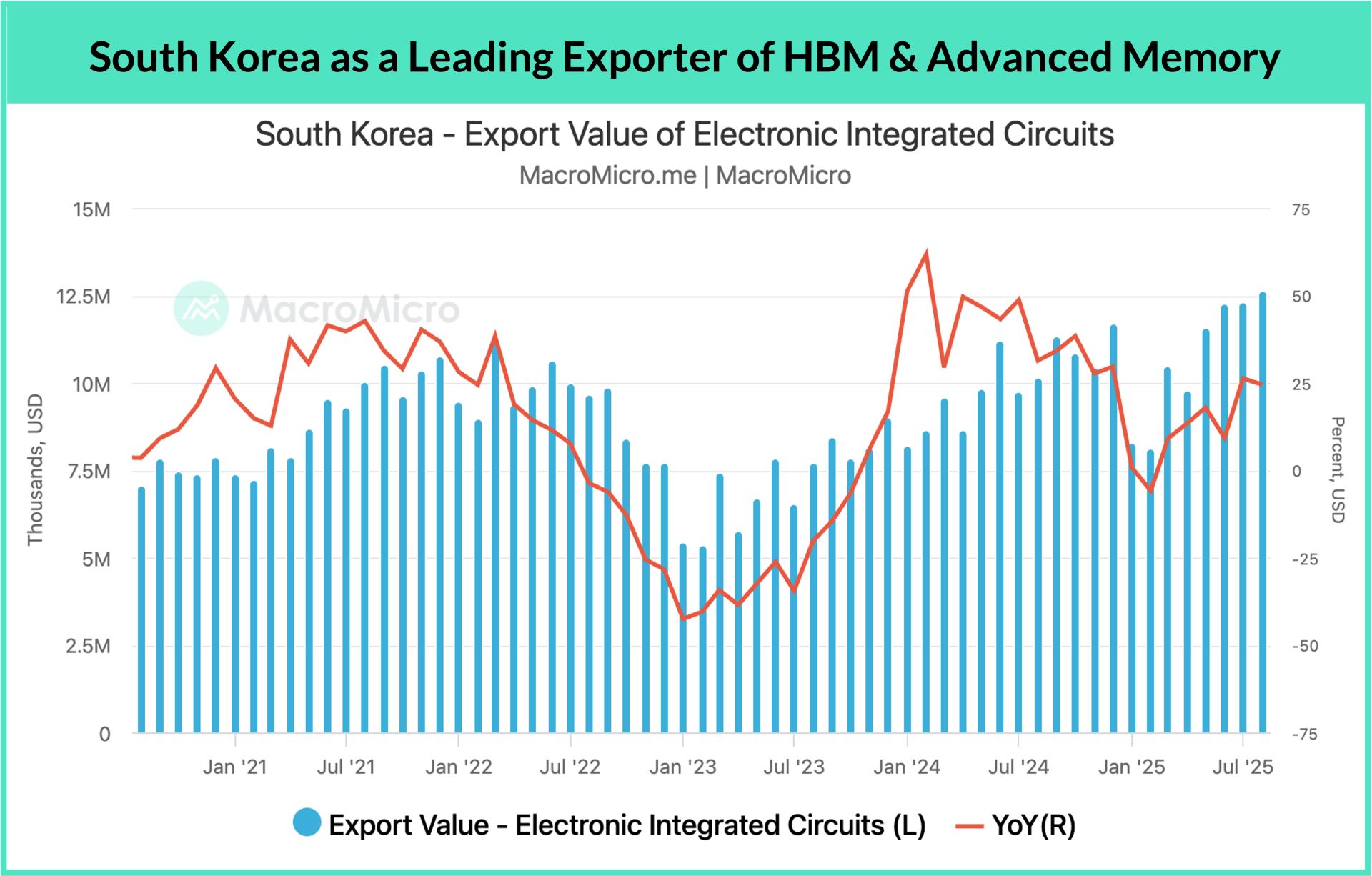
South Korea exports: Korea’s integrated circuit exports (HS 8542)—including processors, memory, controllers, and amplifiers—have surged since bottoming in 2023. This reflects booming demand for high-bandwidth memory (HBM), a critical AI server component supplied by SK Hynix and Samsung. August semiconductor exports hit record highs, with tight supply not only in HBM but also in DDR4 and NAND due to capacity constraints and low inventories.
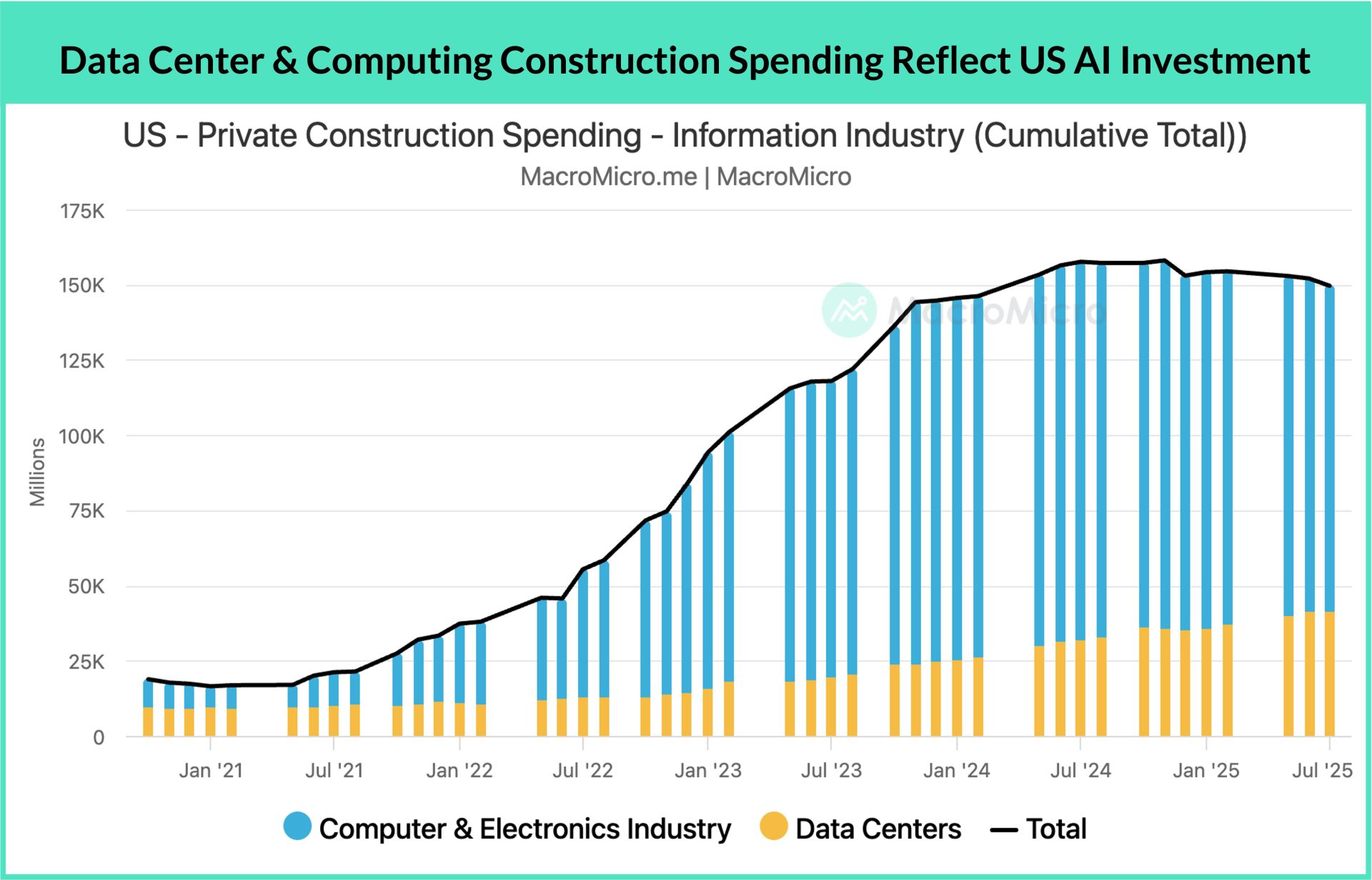
US infrastructure construction: Private construction spending on data centers tracks investment in facilities for storing, processing, and transmitting digital information, including GPU servers. Spending on computer and electronics facilities reflects investments in manufacturing equipment and fabs, such as TSMC’s Arizona plant and Intel/Samsung facilities. Data center spending has accelerated since late 2022, signaling rising investment in AI infrastructure.
IV. Earnings Verification: Bottom-Up Confirmation
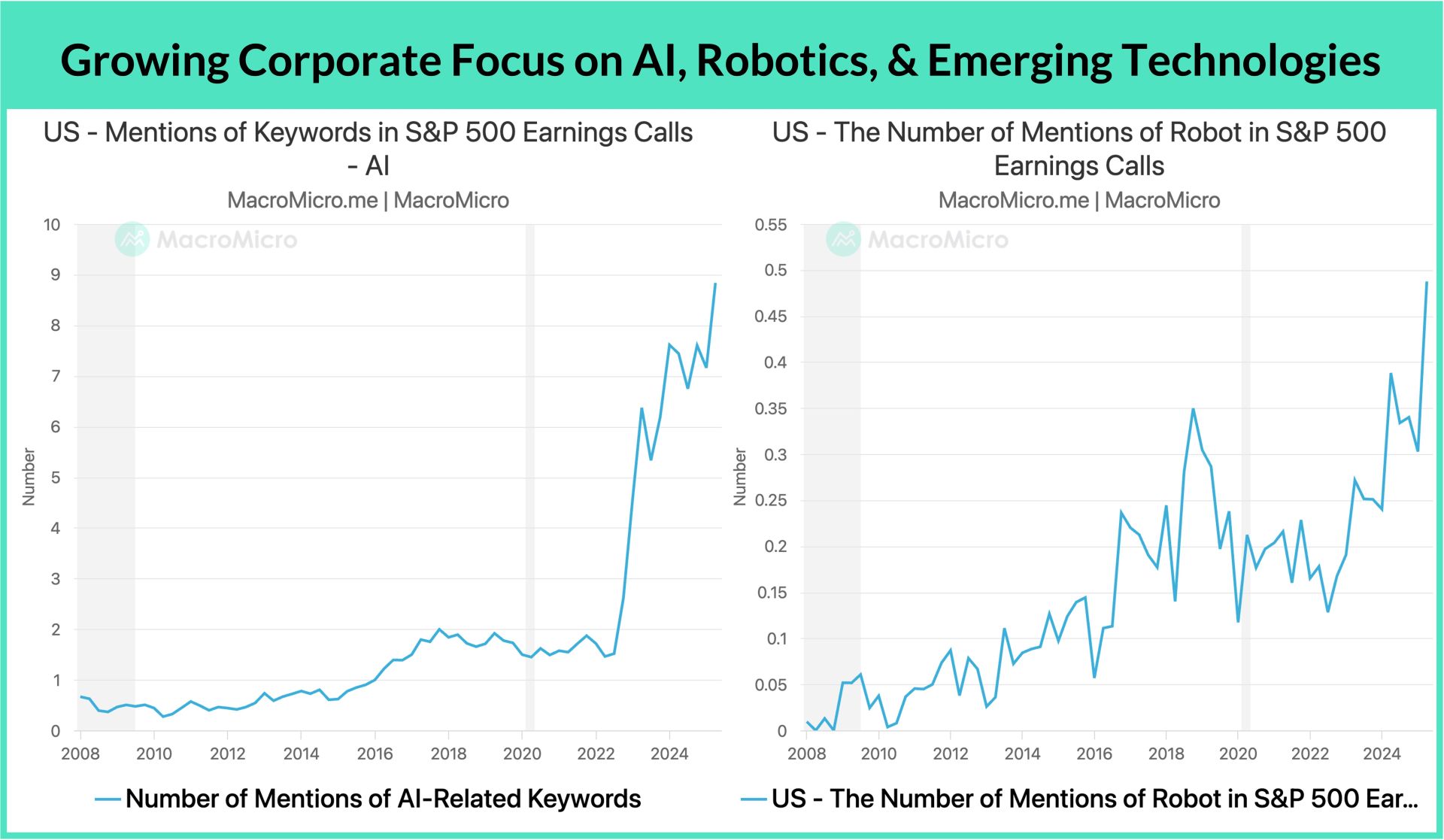
Finally, company earnings provide bottom-up validation of AI’s trajectory. Beyond tracking the frequency of “AI” mentions in earnings calls, we now systematize revenue and margin data across key players in three categories:
AI Infrastructure Providers
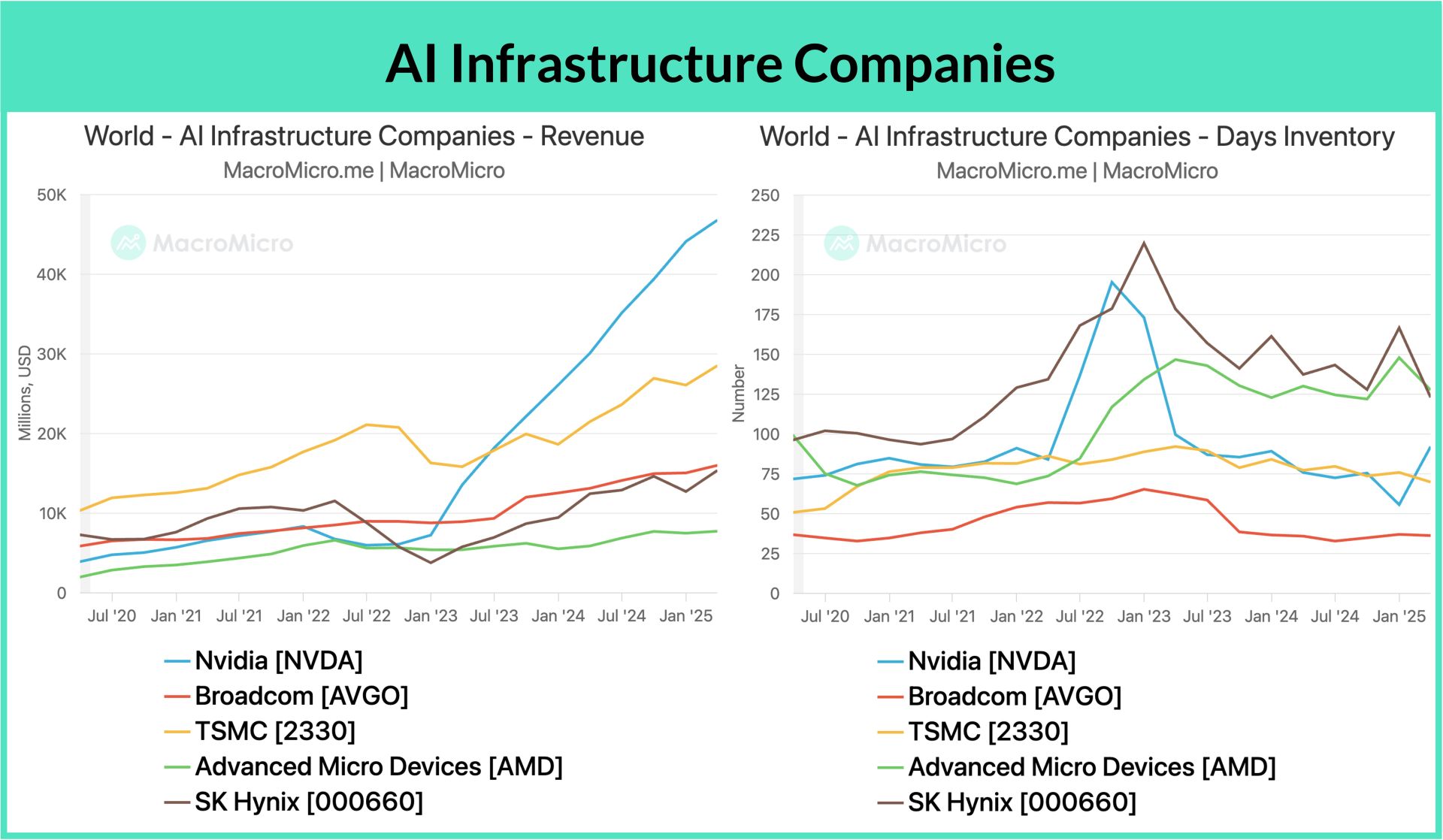
These include GPU and ASIC makers, network chip suppliers, HBM producers, power systems, and cooling providers—firms such as NVIDIA, Broadcom, AMD, TSMC, and SK Hynix. All reported record Q2 revenues, driven by AI servers and chips. Inventory days remain low, underscoring robust demand.
AI Software Firms
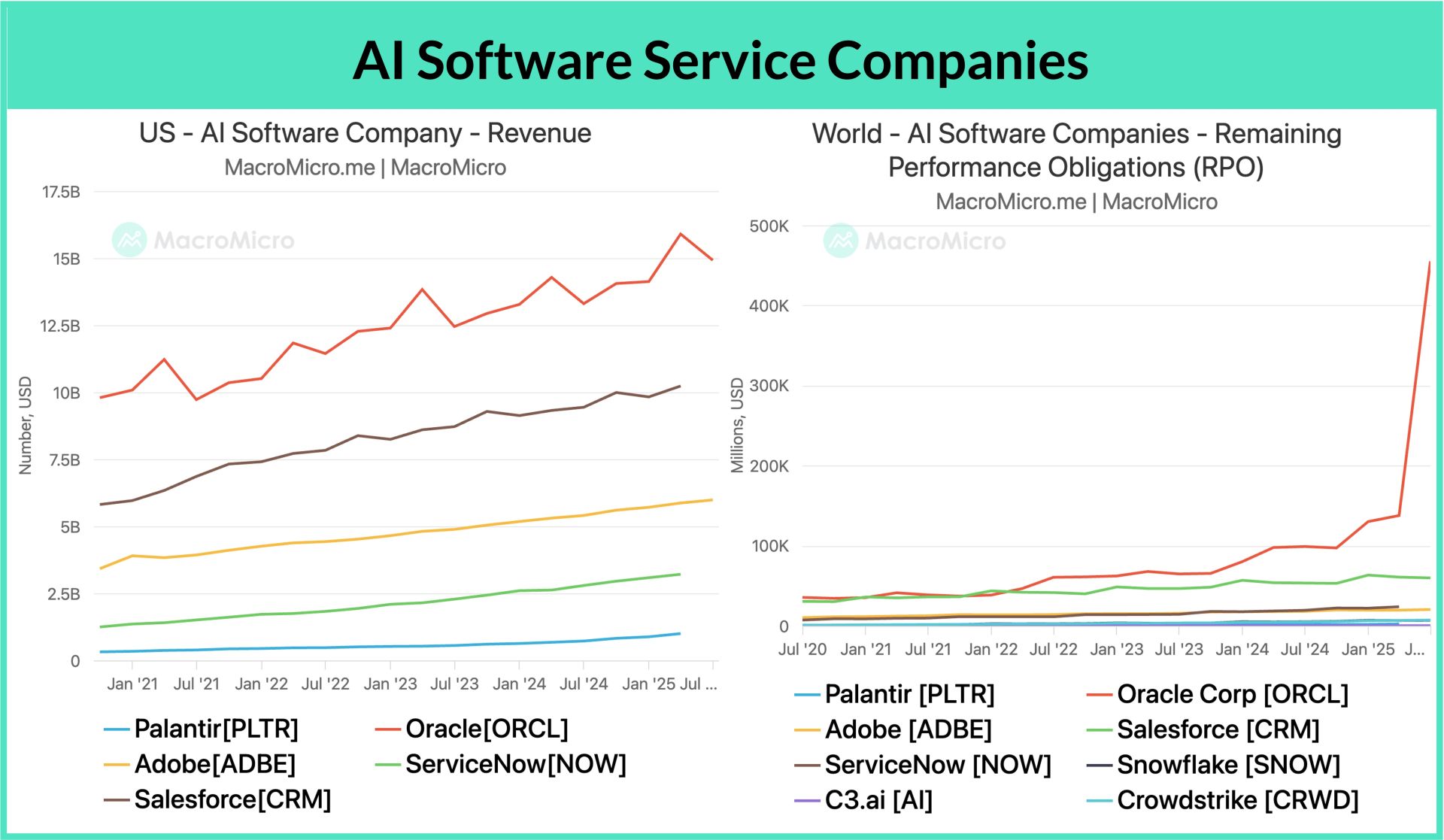
While hardware lays the foundation, software companies are critical for commercializing AI. In addition to revenue and margin trends, we highlight Current Remaining Performance Obligations (CRPO)—contracted but not yet recognized revenues. For example, Oracle reported CRPOs soaring to $455 billion in FY2026 Q1 (+359% YoY), reportedly tied to a massive OpenAI data center contract (~$300 billion). This boosted Oracle’s stock by 30% in a single day. Other key firms include Palantir, Oracle, Adobe, ServiceNow, Salesforce, Snowflake, and CrowdStrike.
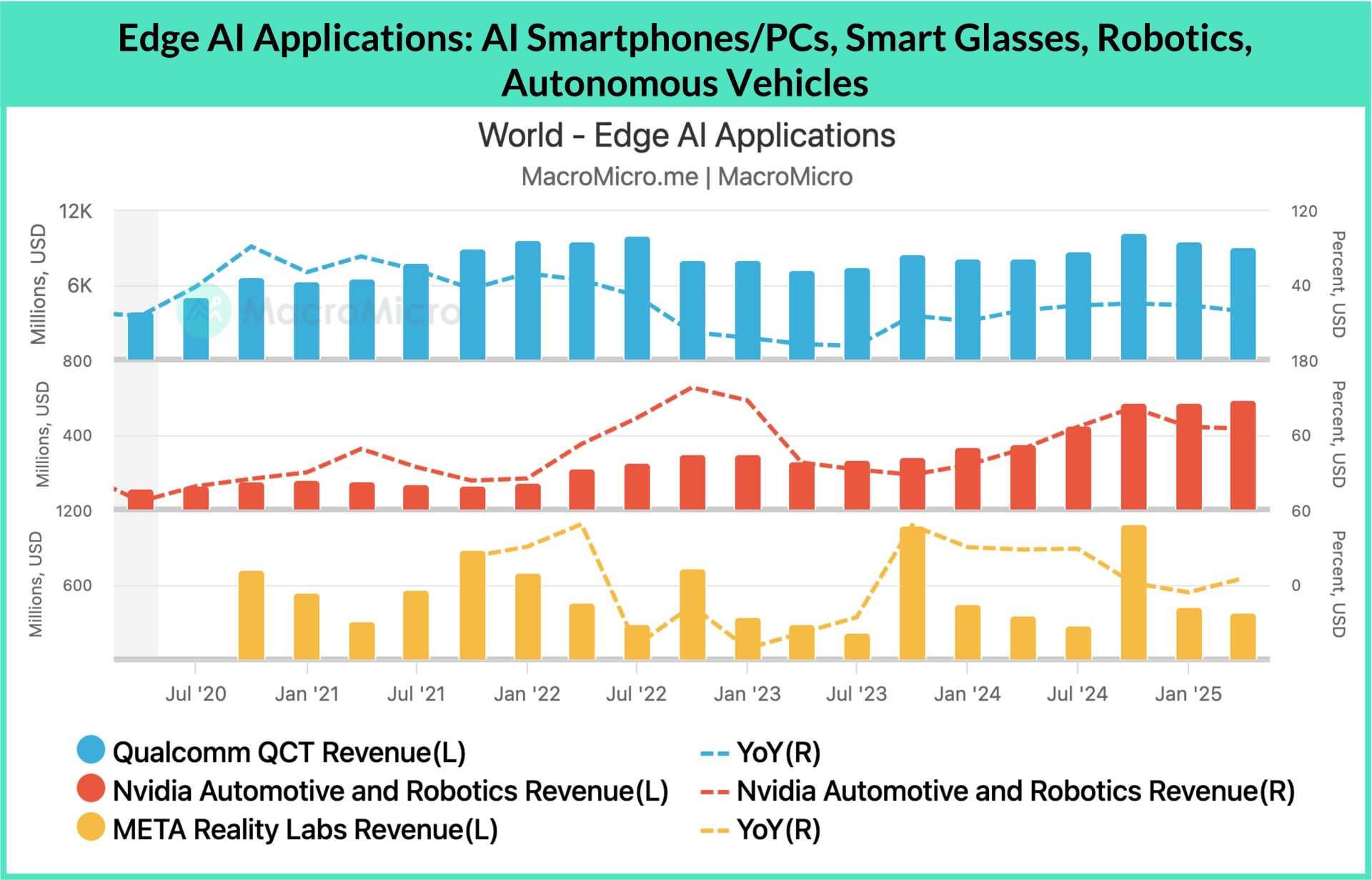
Edge AI Applications
As AI becomes cheaper and more efficient, adoption is spreading to end-user devices:
- AI Smartphones/PCs: Qualcomm’s Snapdragon 8 series targets high-performance, AI-accelerated phones, with long-term expansion into PCs, IoT, AR/XR, and automotive—potentially a $900B market by 2030.
- Autonomous Driving & Robotics: NVIDIA’s Orin and Thor chips power self-driving and robotics workloads. Rising “auto & robotics revenues” confirm deeper adoption.
- AI Glasses: Meta’s Ray-Ban AI smart glasses (launched Oct 2023) have sold strongly, feeding into Reality Labs revenue. At its Sept 2025 Meta Connect event, Meta launched new AI wearables, expected to further boost revenue.
Conclusion
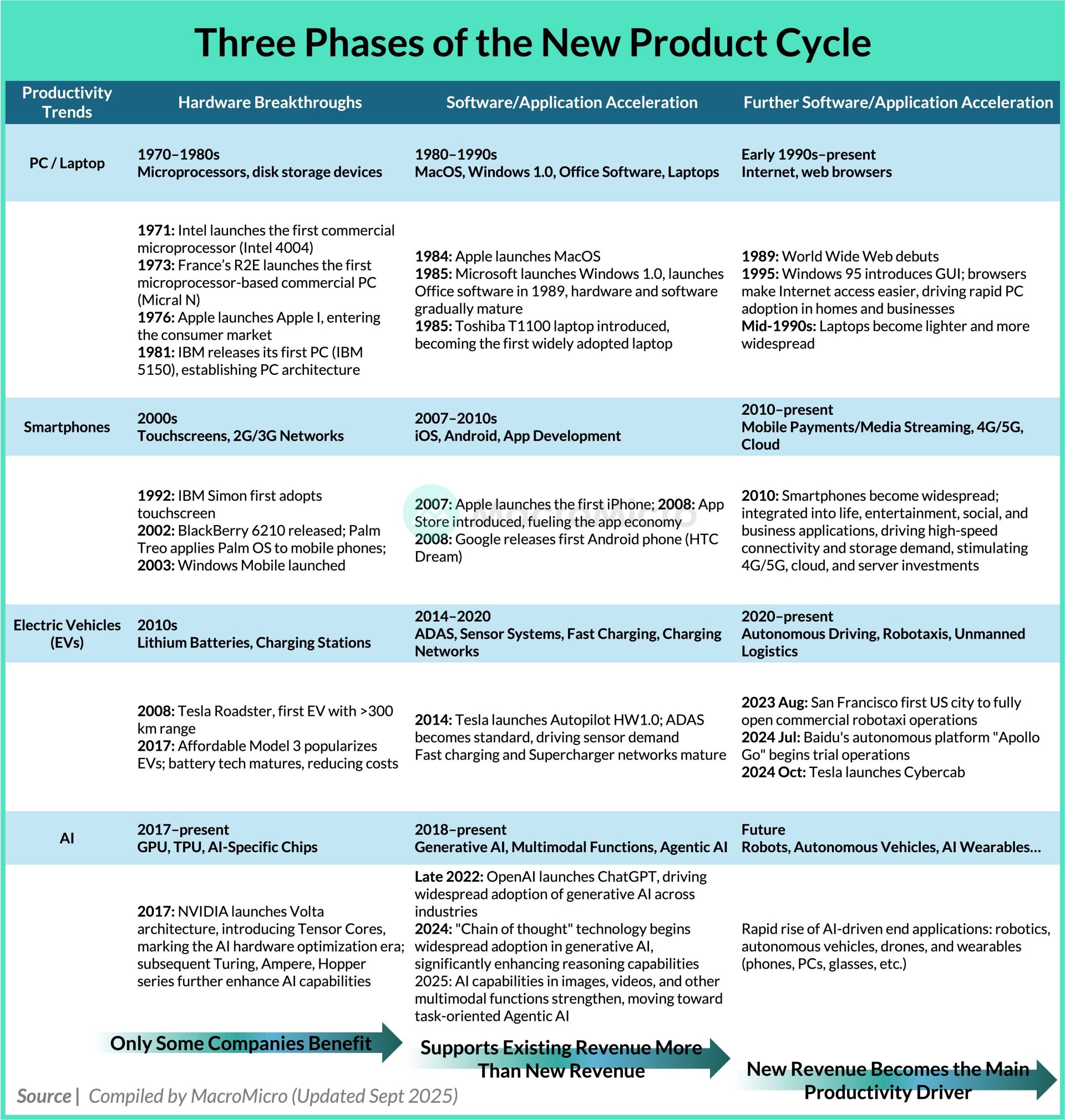
Through our new AI Industry Dashboard, you can systematically track the AI ecosystem—from model development, to demand and supply dynamics, to corporate earnings—validating our earlier conclusion: AI remains in the second phase (software acceleration), gradually shifting toward the third phase. All charts and datasets are available in this new Dashboard, alongside additional indicators for deeper monitoring. In partnership with Isaiah Research, our new Semiconductor Dashboard is also live.
MM Max Annual members gain exclusive access to 155 industry datasets plus weekly semiconductor and smartphone reports and FAQs—helping you stay ahead of the market.
