Outlook 2026 Series | VI. Japan’s “Takaichi Trade”: Big Fiscal Stimulus Raises Growth Hopes—and Debt Concerns
Japan’s new Prime Minister, Sanae Takaichi, wasted no time unveiling a massive ¥21.3 trillion stimulus package, sparking a market rally now dubbed the “Takaichi Trade.” Her policy approach—centered on aggressive fiscal spending and easing—has drawn comparisons to Abenomics.
Paradoxically, Japan’s latest fiscal package relies on heavy subsidies to curb inflation. Unlike previous expansions supported by aggressive easing, this stimulus coincides with a rate-hiking cycle. This shift has reignited concerns over debt sustainability, pushing 10-year JGB yields above 2% for the first time in two decades—even as the Yen remains weak.
Meanwhile, Japanese equities continue to hover near record highs. Looking toward 2026, the key trajectory for the Yen and the Nikkei depends on one question: Can Japan leverage the AI and semiconductor boom to complete its economic transformation, or will structural headwinds persist? This report analyzes these critical drivers.
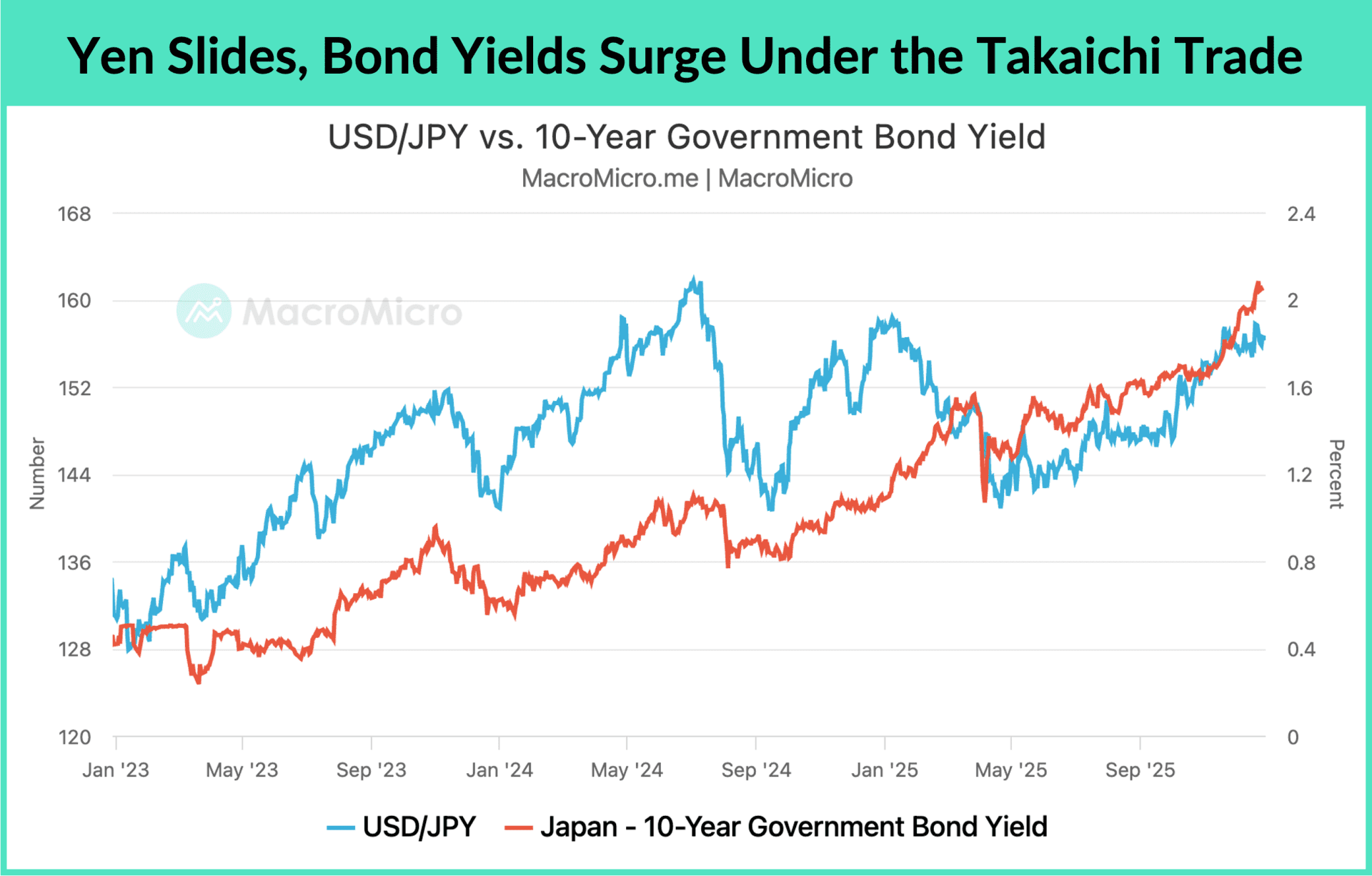
Key Takeaways:
- Takaichi’s stimulus boosted stocks, but with the yen weakening and yields surging, the economy isn’t yet in a virtuous cycle.
- Japan faces three structural headwinds: weak corporate investment, aging demographics, and low AI adoption.
- We analyze both short- and long-term outlooks for Japanese equities and the yen.
Takaichi vs. Ueda: A Policy Split Ahead of 2026
With Takaichi’s cabinet in place, the policy focus has shifted to “responsible and proactive fiscal policy.” At the same time, the BOJ raised rates by 25 bps to 0.75% on December 19—the highest in 30 years—highlighting a growing divergence between fiscal and monetary policy.
Fiscal Plan: Estimated to Add 0.5pp to GDP Growth in 2026
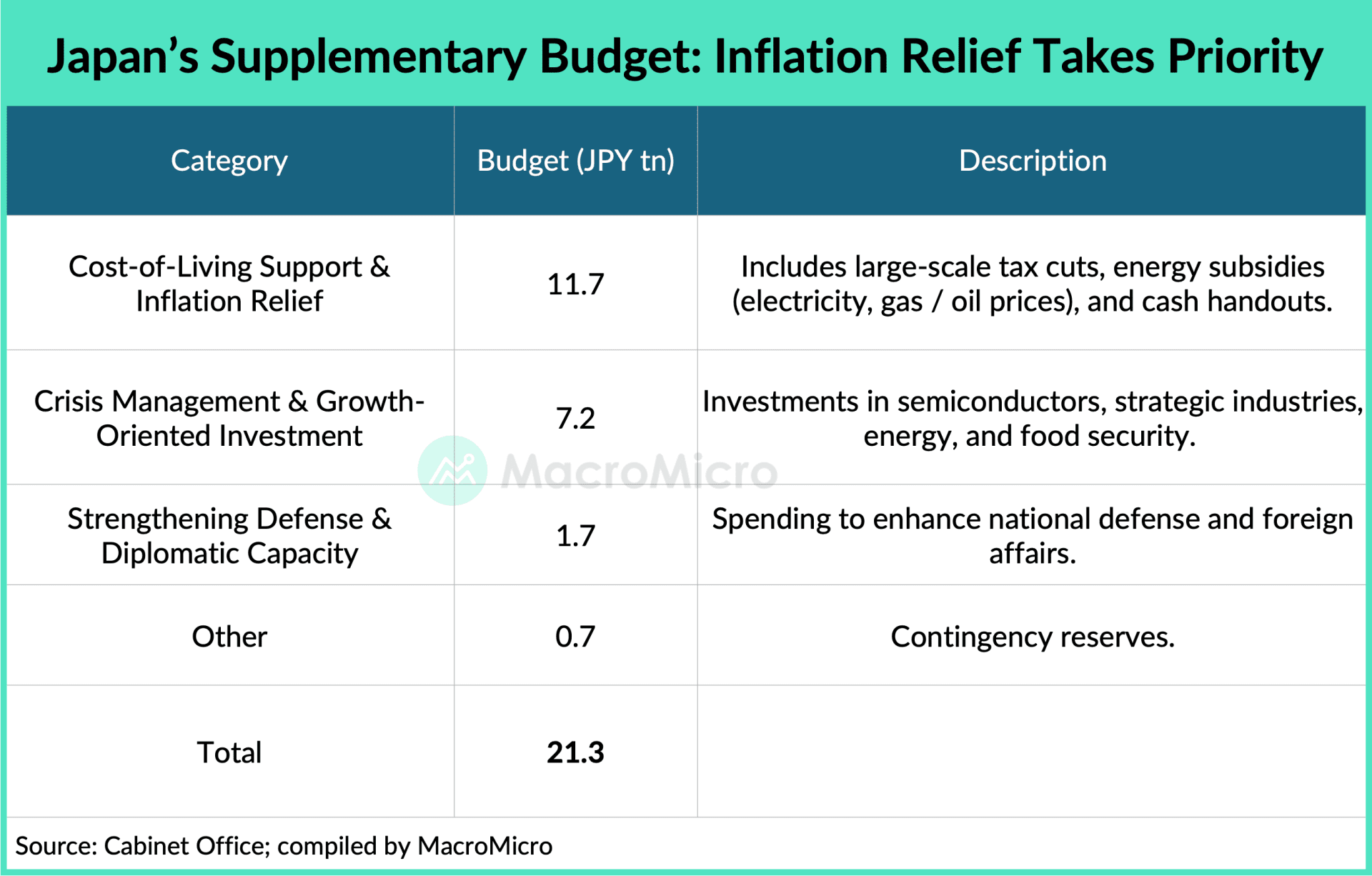
The Takaichi government’s ¥21.3 trillion stimulus package focuses on three pillars:
- Cost of Living Support: ¥11.7 trillion to offset rising prices. Measures include scrapping the gasoline tax surcharge, reviving energy subsidies, and boosting wage support.
- Strategic Investment: ¥7.2 trillion for 17 priority sectors like AI, semiconductors, and quantum tech.
- Defense & Diplomacy: ¥1.7 trillion to strengthen national security.
Beyond this supplementary FY2025 budget, markets are watching the upcoming FY2026 initial budget, expected to exceed ¥120 trillion—another record high.
BOJ Tightening Likely to Slow in 2026
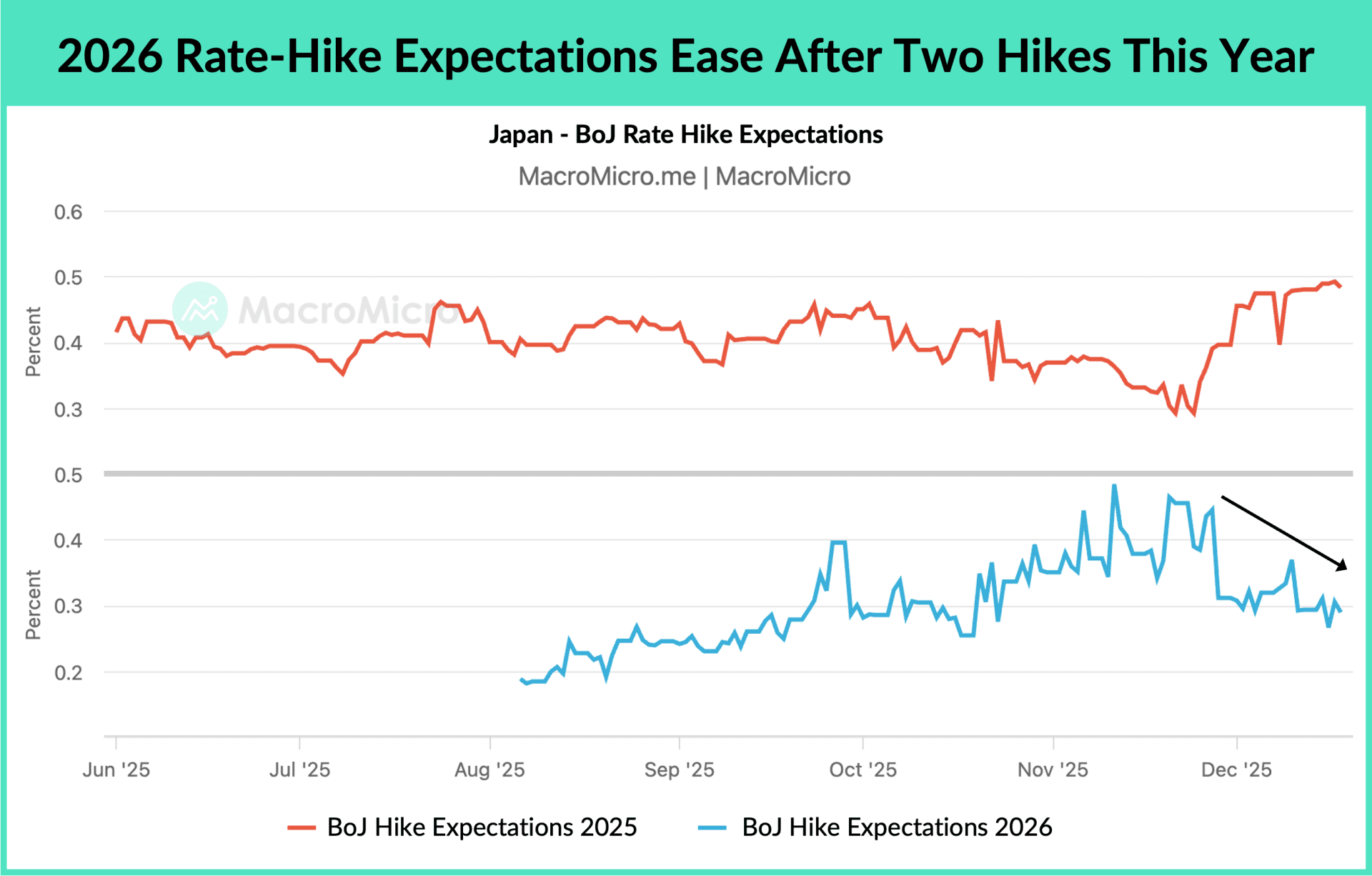
While fiscal policy expands, the BOJ is cautiously tightening. After hiking rates in December, the central bank is facing persistent inflation—November’s CPI was 2.9%, with core inflation (excluding food and energy) higher than in the U.S.
**We expect the BOJ to
Already a subscriber? Click here to log in.
Full Access to Our Services

Comprehensive data at your service
with key indicators for investment insights

Exclusive flash reports
on key events and data

Create your own charts and analysis
including performance backtesting

Hub of professionals to engage
in meaningful discussions and insights

