What You Should Know
In last year's outlook, we first introduced the "AI Three-Stage" framework. Starting from the GPU hardware breakthroughs between 2015 and 2017, followed by the acceleration of generative AI software applications driven by ChatGPT at the end of 2022, various AI models have continued to evolve rapidly. This includes enhancements in general knowledge and reasoning capabilities, as well as multimodal abilities (vision, video understanding, and generation).
As we approach the end of 2025, recent market discussions have increasingly focused on the debt issues surrounding the AI perpetual motion machine. At the same time, the US-China AI arms race has drawn attention following the lifting of restrictions on H200 exports. In this latest edition of our 2026 Outlook Series, we continue the discussion by outlining four major themes shaping AI development in 2026: Which stage of AI development are we currently in? Is there an AI bubble, and how serious are the debt-related concerns? What of the battle among tech giants to define the AI ecosystem? The evolving US–China AI competition?
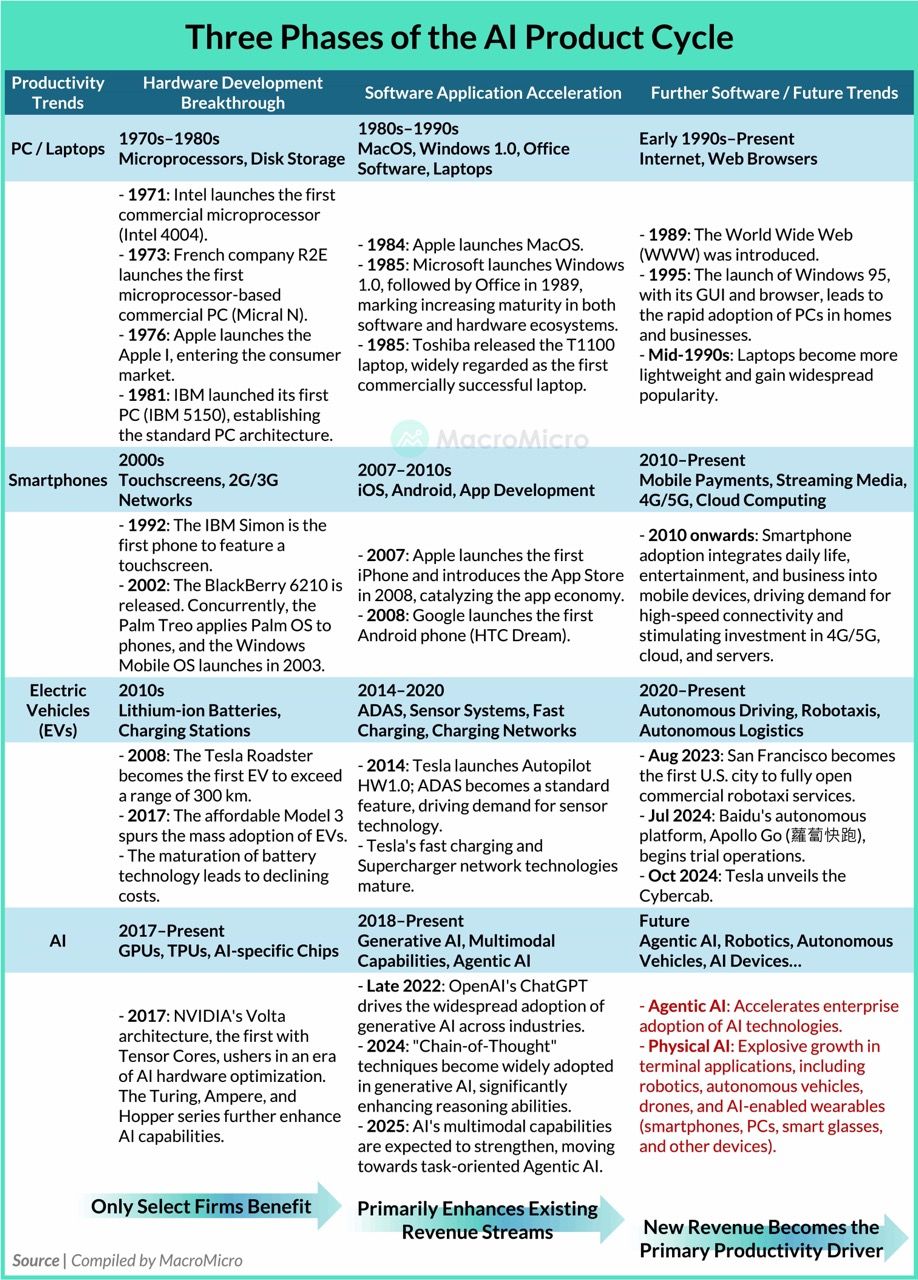
Key Takeaways:
- AI profits are shifting, competition among "shovel sellers" is changing, agent AI and edge AI applications are expanding rapidly, and we are transitioning from productivity stage two to three.
- Two perspectives on AI bubble concerns and debt issues, focusing on the current financial health of tech giants and how to view competition among them.
- US-China AI arms race: Who will win the ultimate battle between open-source and closed-source models?
I. AI Is Undergoing a “Profit Migration”
2025 has been a pivotal year for AI. We have witnessed significant capability leaps in large language models such as ChatGPT, Gemini, and Grok, positioning AI as the core of global technological and productivity competition. To determine which stage AI has currently reached, we can examine the financial reports of tech giants and related trends:
i. AI Hardware Competition Broadens, Profits Diffuse Toward Software & Services
NVIDIA, as the current leader in global AI accelerator chips, holds over 80% market share in the training accelerator segment and approximately 75% in the inference market. This has driven sustained high growth in NVIDIA's data center revenue, with Q3 growth at 66% (up from 56% previously). However, since the second half of this year, the market has progressed from the initial "single shovel seller" phase to one where "multiple competitors are joining", including Google's TPU and ASIC providers like Broadcom. In particular, the success of Google's TPU has further encouraged the market to advance toward "in-house chip development".
At the same time, we are also seeing parallel developments in software. Tech giants such as Google, Amazon, and Meta have integrated AI into their existing software businesses, once again driving accelerated growth. Q3 advertising-related revenue growth for Google, Amazon, and Meta generally accelerated and exceeded expectations: 13.8% (up from 11.7%), 22%...
This article is exclusive to subscribers. As we celebrate 10 years of MacroMicro, we're giving back. If you're not a subscriber yet, take advantage of this special anniversary gift — join MM Max Annual and gain full access to all our charts, reports, including the 2026 market outlook, and more. Subscribe Now»
Already a subscriber? Click here to log in.
Full Access to Our Services

Comprehensive data at your service
with key indicators for investment insights

Exclusive flash reports
on key events and data

Create your own charts and analysis
including performance backtesting

Hub of professionals to engage
in meaningful discussions and insights
