What You Should Know
Last week, Nvidia joined forces with Wall Street giants to launch a financing initiative worth US$500 billion. At the same time, the CME launched its first computing power futures contracts, signaling that AI computing power is moving beyond physical infrastructure and toward financialization. The "era of computing power securitization" has officially begun.
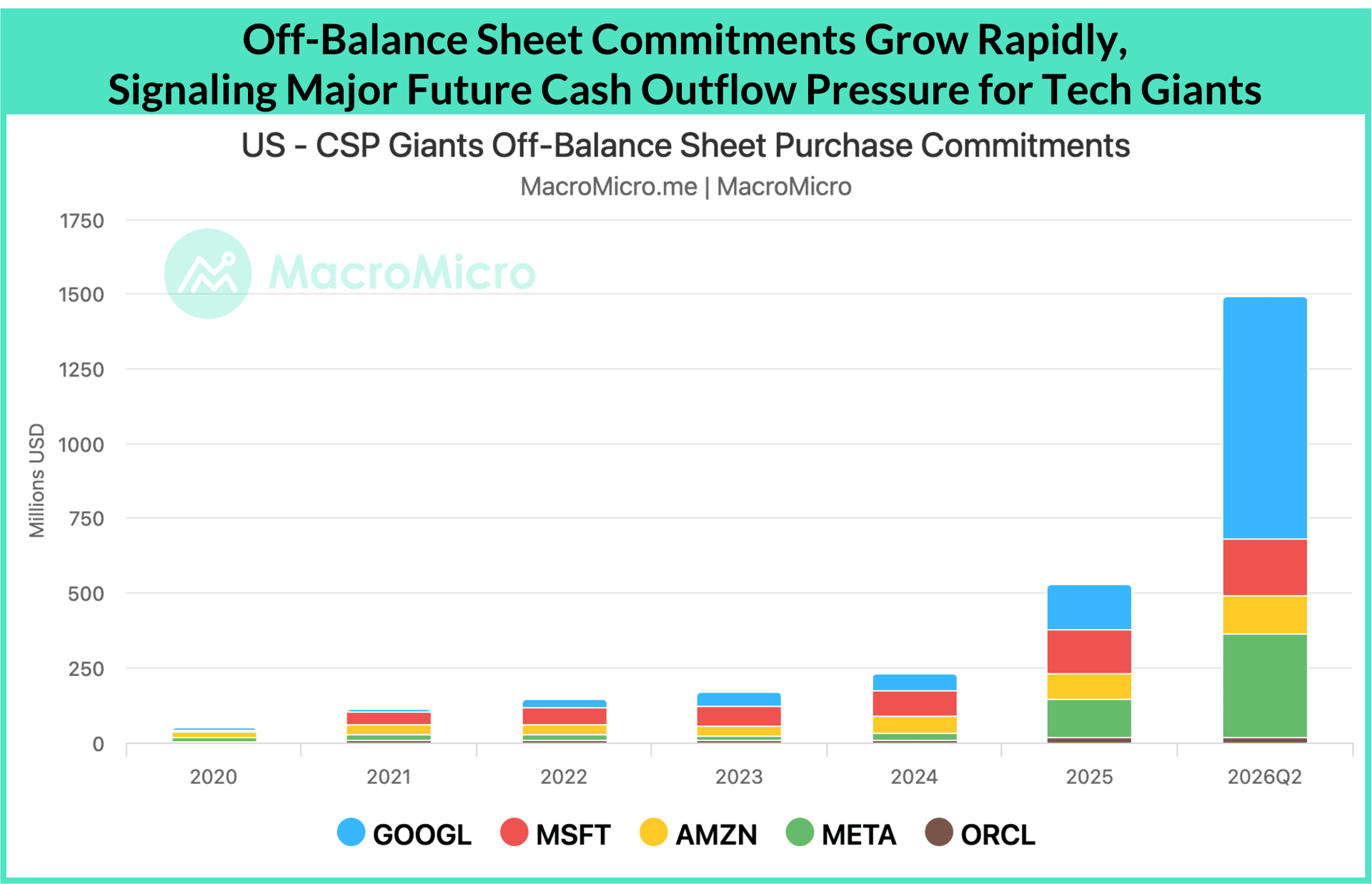
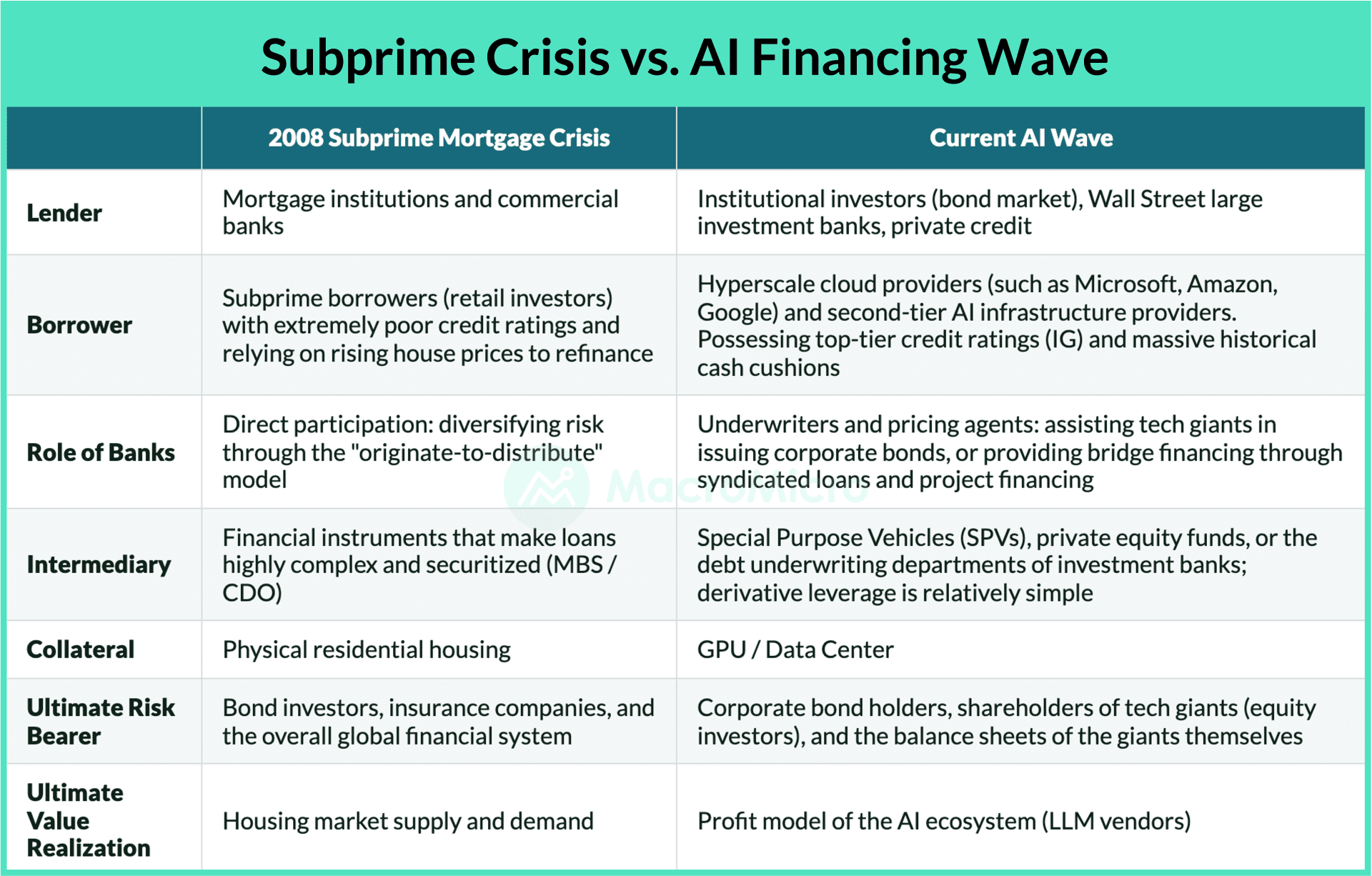
However, as leveraged financing, asset securitization, and derivatives rapidly penetrate the AI supply chain, concerns are also emerging. With highly overlapping participants, interconnected trading relationships, and even concerns over circular revenue recognition, could a cooling in demand for computing power or a reversal in asset prices trigger a chain reaction of deleveraging and send the market down the same path as the 2008 subprime crisis? On the surface, both episodes do indeed exhibit layers of leverage and the rapid expansion of financial engineering. But a closer examination reveals four structural differences between AI infrastructure and the subprime system of that era. This report takes you through each of them.
Key Takeaways
- The Era of Computing Power Securitization Has Arrived: From Nvidia bringing in US$500 billion of third-party capital and providing residual value guarantees for GPUs, to the CME launching computing power futures, we believe the "era of computing power securitization" has officially arrived.
- The AI Credit Cycle: As the cycle shifts from expansion to contraction, industries often experience an extremely steep cliff-like transition at the moment a shock is triggered. As the AI industry enters a financing race increasingly dependent on credit and private capital, close attention should be paid to whether the margin for error is rapidly narrowing.
- Could a Financial Crisis Return?: The current AI financing cycle and the financial crisis ultimately triggered by the subprime crisis 20 years ago share similar trajectories, but their underlying industry dynamics are fundamentally different. We have identified four key structural differences.
I. AI's Latest Milestone: The Era of Computing Power Securitization Has Officially Arrived!
What Exactly Happened?
On August 10, 2026, Nvidia announced that it had signed memorandums of understanding with six major Wall Street financial institutions (Goldman Sachs, BlackRock, Blackstone, Apollo, KKR, and Brookfield), with the goal of mobilizing more than US$500 billion in third-party capital and establishing a series of financing platforms to provide funding for AI infrastructure. Notably, Nvidia will provide a residual value guarantee of up to 25% for certain financing projects, reducing financial institutions' concerns over rapid GPU technology cycles, equipment depreciation, and future resale prices. In other words, Nvidia is gradually taking on a role resembling an "AI Federal Reserve." It is not directly providing liquidity to the market, but rather using residual value guarantees to establish a final credit backstop for GPU assets, reducing financial institutions' concerns over the rapid depreciation of computing power assets and, in turn, unlocking greater inflows of financial capital.
At the same time, CME announced a partnership with GPU market data company Silicon Data to launch its first futures contracts linked to computing power costs. Subject to regulatory approval, CME plans to initially launch two contracts on October 5 that track the rental costs of Nvidia's H100 and B200 GPUs, using Silicon Data's tracked hourly GPU rental prices as the underlying reference. For AI infrastructure operators, computing power futures will provide a tool for managing fluctuations in GPU rental costs. For financial institutions, they will...
Already a subscriber? Click here to log in.
Full Access to Our Services

Comprehensive data at your service
with key indicators for investment insights

Exclusive flash reports
on key events and data

Create your own charts and analysis
including performance backtesting

Hub of professionals to engage
in meaningful discussions and insights
 Get answers from MM AI.
-
How does Nvidia's US$500 billion financing initiative with Wall Street signal the start of computing power securitization?
💡Nvidia's US$500 billion financing initiative with six Wall Street financial institutions signals the start of computing power securitization by mobilizing third-party capital for AI infrastructure and notably, Nvidia will provide a residual value guarantee of up to 25% for certain financing projects. This guarantee reduces financial institutions' concerns over rapid GPU technology cycles and depreciation, thereby unlocking greater inflows of financial capital, effectively establishing a final credit backstop for GPU assets and marking the official beginning of the 'era of computing power securitization' alongside CME's launch of computing power futures.
-
What role do CME's new computing power futures contracts play in the financialization of AI infrastructure?
💡CME's new computing power futures contracts, planned to launch on October 5 and track the rental costs of Nvidia's H100 and B200 GPUs using Silicon Data's hourly rental prices, play a crucial role in the financialization of AI infrastructure by providing a tool for managing fluctuations in GPU rental costs for operators. For financial institutions, these futures enable more transparent assessments of the returns and risks associated with computing power assets, ultimately increasing their willingness to allocate capital to such assets and supporting the securitization trend.
-
Why are Nvidia and CME currently prioritizing the securitization of computing power assets?
💡Nvidia and CME are prioritizing the securitization of computing power assets due to two main factors: "scale" and "speed." The capital expenditure required for AI infrastructure is rapidly expanding, exceeding what technology giants and cloud providers can support through their operating cash flows, with spending expected to exceed US$1 trillion by 2027. "Speed" is crucial as AI infrastructure aims to deploy nearly US$3 trillion in investment within five years, a pace significantly faster than historical infrastructure cycles, necessitating securitization to monetize future long-term rental income in advance and shorten capital recovery periods.
-
What is Nvidia's 'AI Federal Reserve' role in providing residual value guarantees for GPUs?
💡Nvidia's 'AI Federal Reserve' role involves providing a residual value guarantee of up to 25% for certain financing projects that fund AI infrastructure. This guarantee is crucial because it reduces financial institutions' concerns over the rapid GPU technology cycles, equipment depreciation, and future resale prices. By absorbing part of the value shortfall when actual residual values fall below expected levels, Nvidia establishes a final credit backstop for GPU assets, thereby unlocking greater inflows of financial capital and acting as a guarantor of asset value rather than directly providing liquidity.
-
What four fundamental questions must financial institutions answer for computing power to become a capitalizable commodity?
💡For computing power to become a capitalizable commodity, financial institutions must address four fundamental questions: the economic life of the asset, its estimated future residual value, its standardization and transferability between different holders, and its compliance with existing regulatory requirements. Historically, significant uncertainty surrounding these aspects made GPUs and AI data centers difficult to use as collateral for large-scale financing. However, collaborations involving Nvidia, CSPs, AI supply chain participants, and financial institutions are gradually clarifying these barriers, making securitization more viable.
-
How does Nvidia's AI Factory Reference Architecture address the standardization challenge in data center financialization?
💡Nvidia's AI Factory Reference Architecture addresses the standardization challenge in data center financialization by integrating computing, power, cooling, networking, and data center infrastructure into a replicable architecture. This initiative aims to reduce the significant variation across data center facilities, which traditionally made consistent value assessment and ownership transfer difficult for financial institutions. By evolving data centers from standalone customized projects into modular, replicable, and verifiable AI factories, Nvidia's architecture makes these assets more predictable and easier for financial institutions to evaluate and securitize.
-
What regulatory exemptions make data center asset-backed bonds more appealing for AI infrastructure financing?
💡Regulatory exemptions make data center asset-backed bonds more appealing for AI infrastructure financing because, according to a recent letter from the US Securities and Exchange Commission (SEC), these bonds do not fall under the traditional definition of "asset-backed securities (ABS)." This exemption frees them from the stringent securitization regulations implemented after the 2008 financial crisis, reducing both bond issuance costs and complexity. Consequently, this regulatory clarity allows more fixed-income capital to participate in AI infrastructure financing, lowering barriers for institutional investment.
-
What is the 'Prisoner's Dilemma' that technology giants face in the AI financing race?
💡The 'Prisoner's Dilemma' that technology giants face in the AI financing race is a "move forward or fall behind" scenario. If they believe the AI industry will expand, they collectively increase spending to avoid losing market share to competitors. Conversely, if growth falls short, a company continuing to expand risks market punishment. This dynamic leads to a collective strategy that can instantly shift from aggressive computing power acquisition to collectively cutting spending and demonstrating capital discipline, indicating little room for a gradual transition between expansion and contraction.
-
How do current bank reserves and money market fund assets differ from those before the 2008 financial crisis?
💡Current bank reserves and money market fund assets differ significantly from those before the 2008 financial crisis; the Federal Reserve has shifted from a scarce-reserves regime to an ample-reserves regime, with bank reserves now approximately US$3 trillion, compared to extremely low levels prior to 2008. Additionally, US money market funds currently hold around US$8 trillion in assets, indicating a vast abundance of market liquidity. This ample liquidity suggests that the primary constraint on bank financing today is not a lack of lendable funds, but rather banks' willingness to assume additional credit risk.
-
How does the credit quality of today's technology giants compare to subprime borrowers in the 2008 crisis?
💡Today's technology giants possess enormous core businesses like cloud services and digital advertising, generating stable operating cash flows, making their financial profiles fundamentally stronger than subprime borrowers in the 2008 crisis. While credit default swap (CDS) spreads for technology giants have surged, the largest increases are concentrated among newer GPU-centric cloud providers (Neoclouds), not the four major CSP giants or Nvidia. Their implied five-year cumulative default probabilities remain manageable, ranging from 3.5% to 6.6%, indicating well-capitalized entities with greater resilience compared to credit-impaired individuals.

