Yield Curve Inversion has historically been considered the most prominent leading indicator of economic recession. However, since this yield curve inversion, the U.S. economy continues to show robust growth. Will it be different this time?
Before we dive into this article, we're thrilled to introduce MM Prime, our global premium service! Join now for lifetime access with a 30% discount and unlock all MacroMicro premium features!

Yield Curve Inversion and Robust US Economy
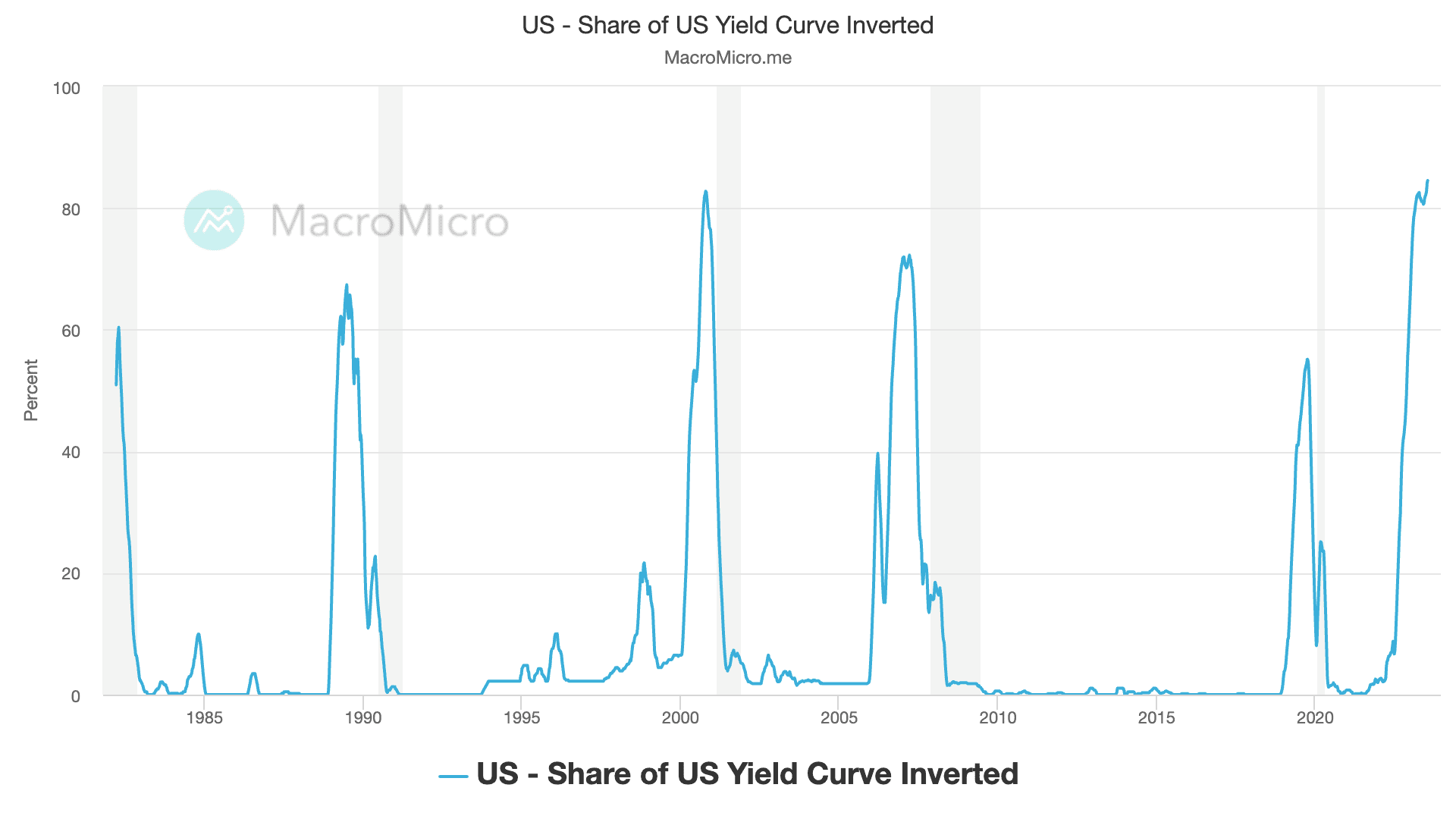
Since July 2022, the 10Y / 2Y yield spread has been inverted for over a year, reaching a new high since the 1980s at -108 basis points. When looking at the broader inversion ratio (percentage of the U.S. yield curve showing inversion), it currently stands at 87%, surpassing the levels last seen during the 2008 GFC. Over the past three decades, recessions in 1990, 2000, 2008 (and even in 2020) were all preceded by yield curve inversion, the most well-known leading indicator of economic downturns for market participants. This is mainly due to the Federal Reserve raising interest rates and causing an increase in the short-term rates (sensitive to changes in monetary policy). Meanwhile, longer-term bonds experience a decline in interest rates to reflect an expected slowdown in economic growth. As a result, the yield spread between short-term and long-term rates narrows and even turns negative, leading to an inverted yield curve.
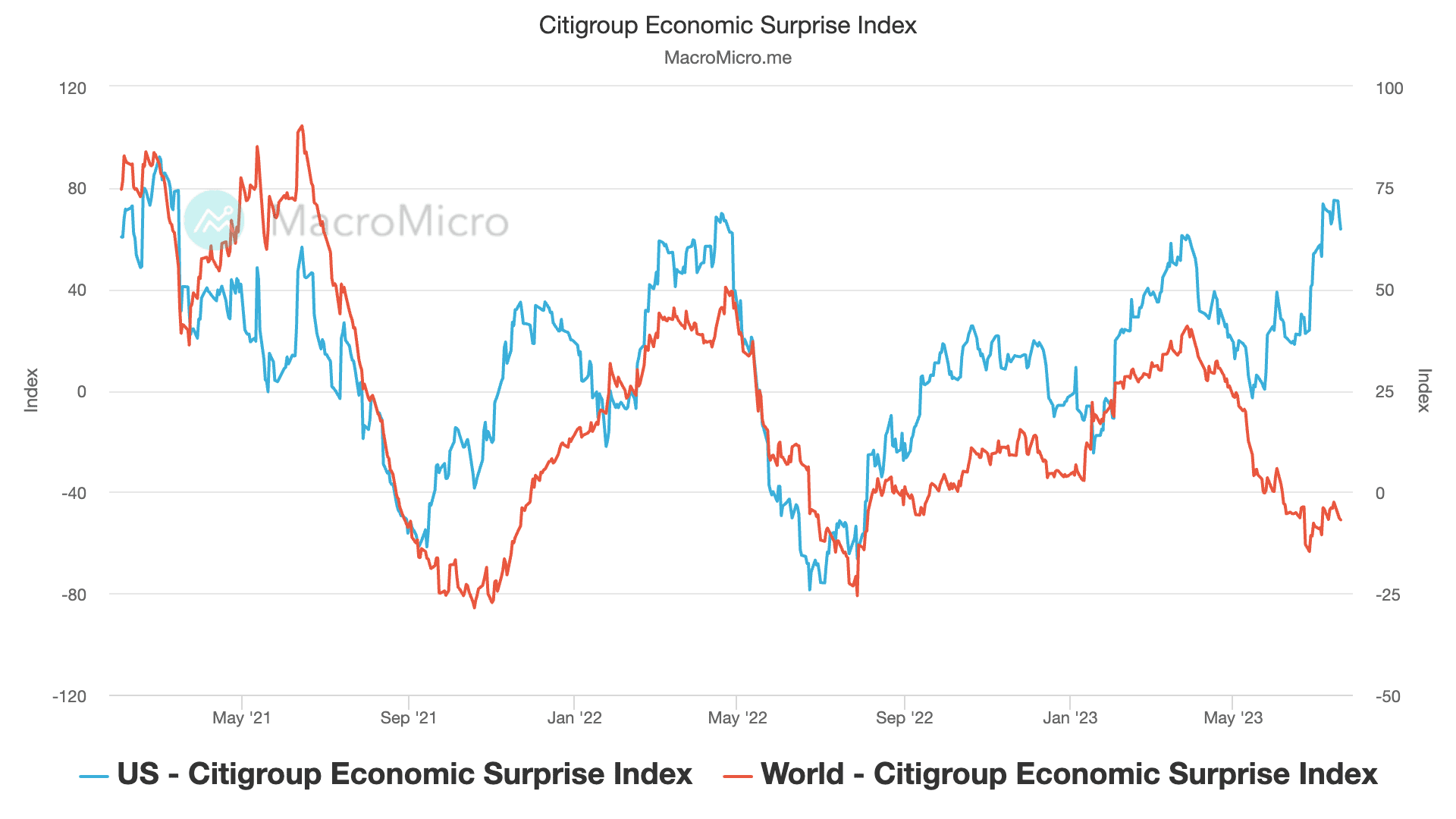
However, despite the prolonged and significant inversion this time, the US economy has surprisingly remained robust. The US Atlanta GDP Growth Nowcast for Q2 is estimated at 2.4%, and the US Citigroup Economic Surprise Index has also reached a new high, surpassing levels last seen in March 2021. Consequently, the belief that 'This time is different' is gaining traction among financial analysts.
Three Reasons Why This Time Is Different
Will the U.S. economy experience a soft landing or hard landing? Our research team highlights three key factors to explain why the possibility of a soft landing may be higher this time.
1. Post-Pandemic Labor Market: A Demand-Supply Shift
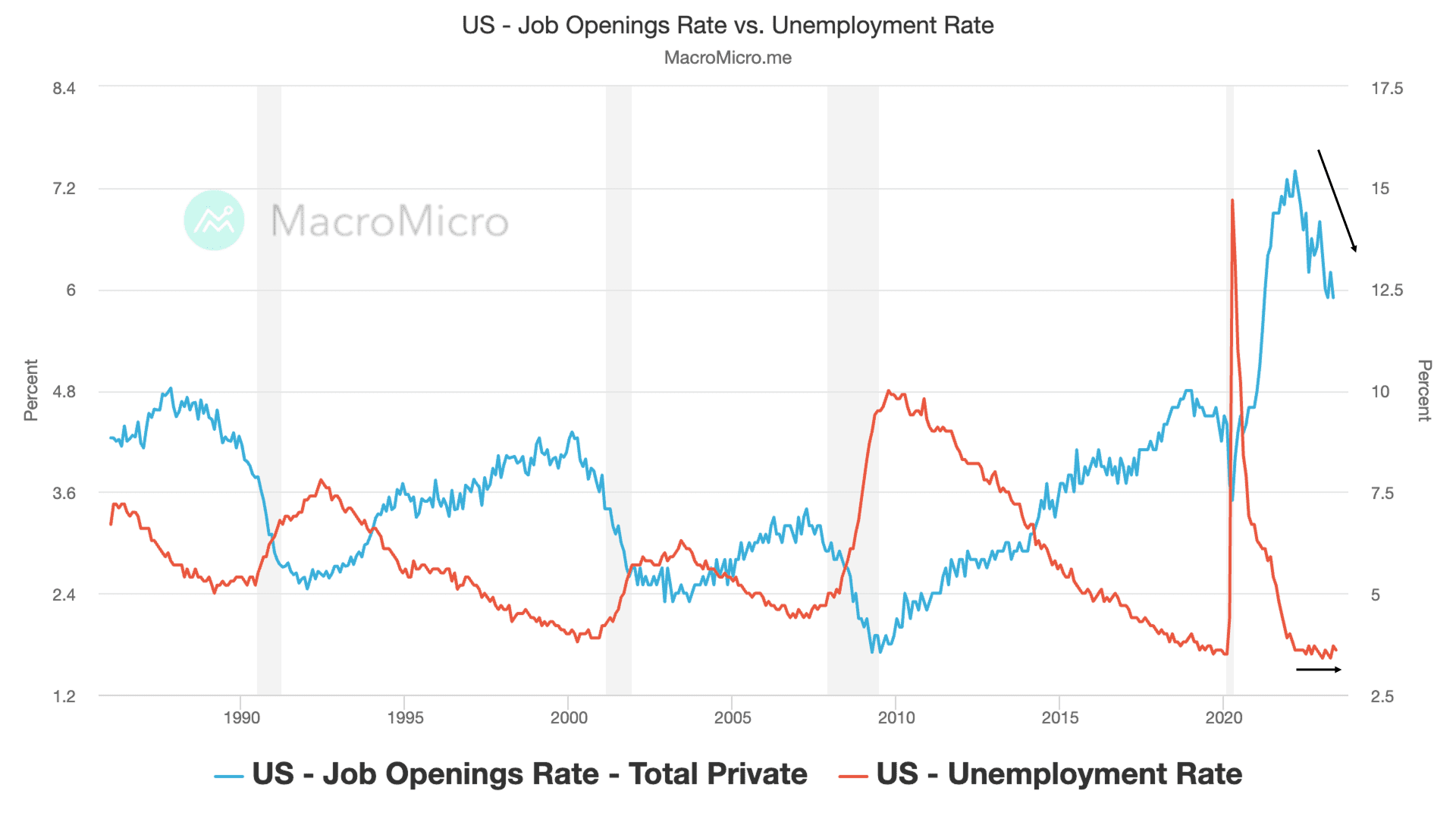
Post-pandemic labor market displays strong resilience and excess demand, enabling rapid job placements and effectively mitigating economic slowdowns. Despite tech industry recent layoffs, these workers typically experience shorter unemployment durations because of their highly valued skillsets.
Interestingly, while job vacancy rate declines from a historical high of 7.4% to 5.9%, unemployment rate remains at a record low. This indicates that a reduction in labor demand has not led to increased unemployment, clearly distinguishing the current environment from past episodes.
2. Consistent Core Inflation Deceleration: A Breather for Economic Pressure
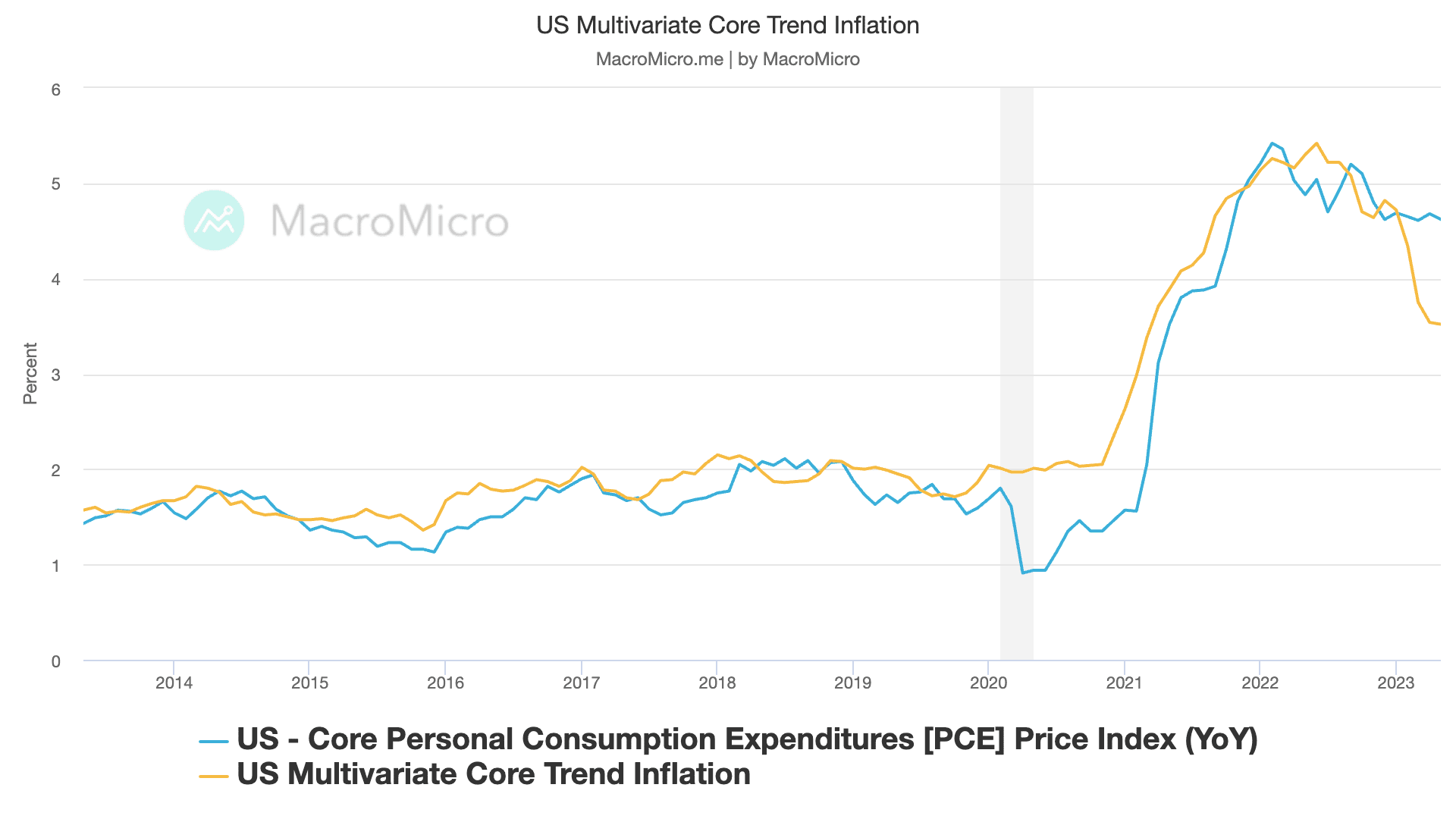
The normalization of an inverted yield curve and the alleviation of economic pressure hinges heavily on whether core inflation in the U.S. can continue its broad-based slowdown. As per the Multivariate Core Trend (MCT) model recently released by the Federal Reserve Bank of New York, the year-over-year (YoY) growth rate for May has decelerated to 3.52%. Given the anticipated slowdown in rental price growth and a continued rebalance in labor supply and demand, the MCT predicts a further, broader downward trend in core inflation.
3. Declining Financial Stress: A Sign of Economic Improvement
Already a subscriber? Click here to log in.
Full Access to Our Services

Comprehensive data at your service
with key indicators for investment insights

Exclusive flash reports
on key events and data

Create your own charts and analysis
including performance backtesting

Hub of professionals to engage
in meaningful discussions and insights
