Last week, although Trump said negotiations were already underway and making progress, the Strait of Hormuz remained under effective disruption, pushing oil prices higher and equities lower. The immediate concern is no longer just military escalation in the Middle East, but whether elevated oil prices begin to generate second-round effects through inflation expectations, real yields, and broader risk sentiment. In this environment, the US 10-year Treasury yield near 4.5% has become a critical threshold for both markets and politics, while the Trump–Xi meeting may emerge as an important marker of whether external tensions are beginning to de-escalate. This week’s WEFC examines the key questions.
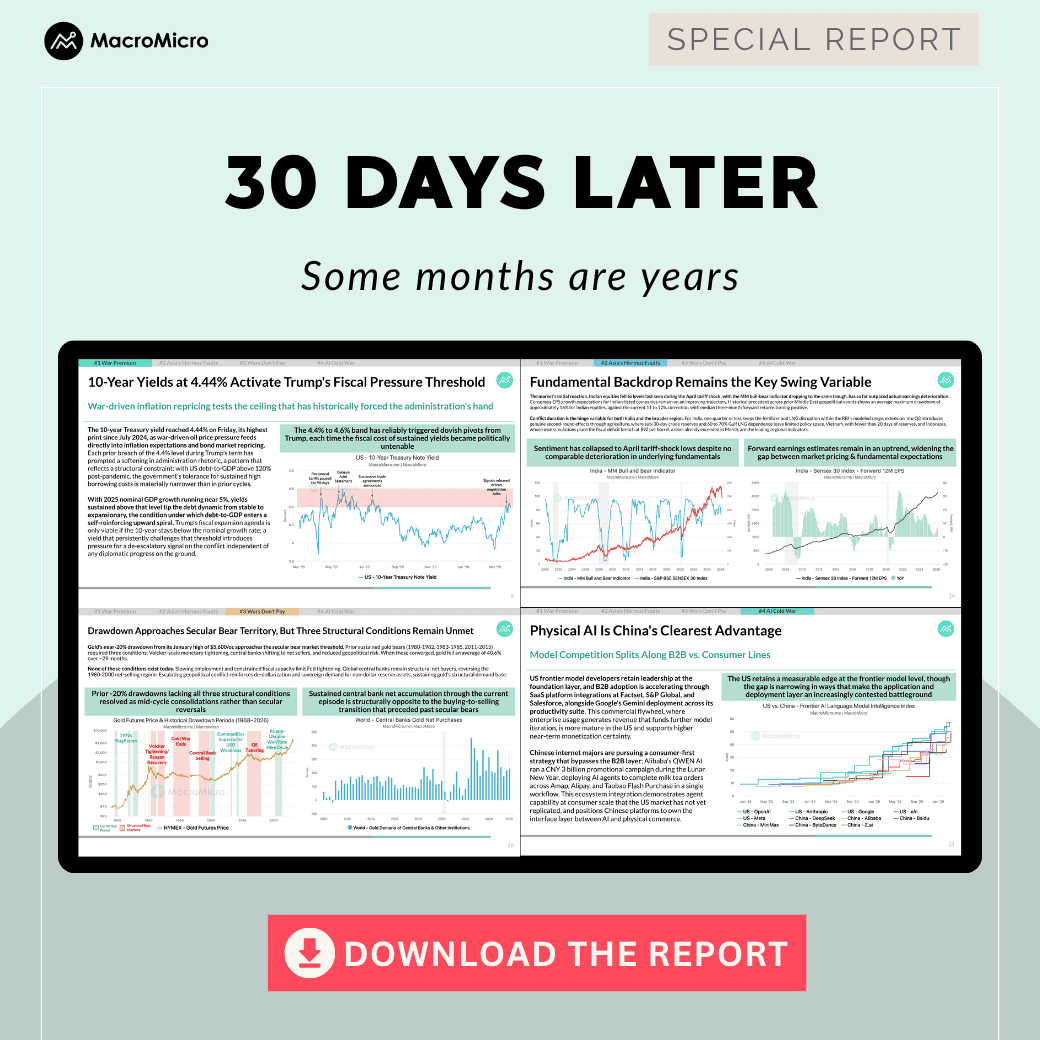
Why the 4.5% US Treasury Yield Zone Is Trump’s Political Red Line
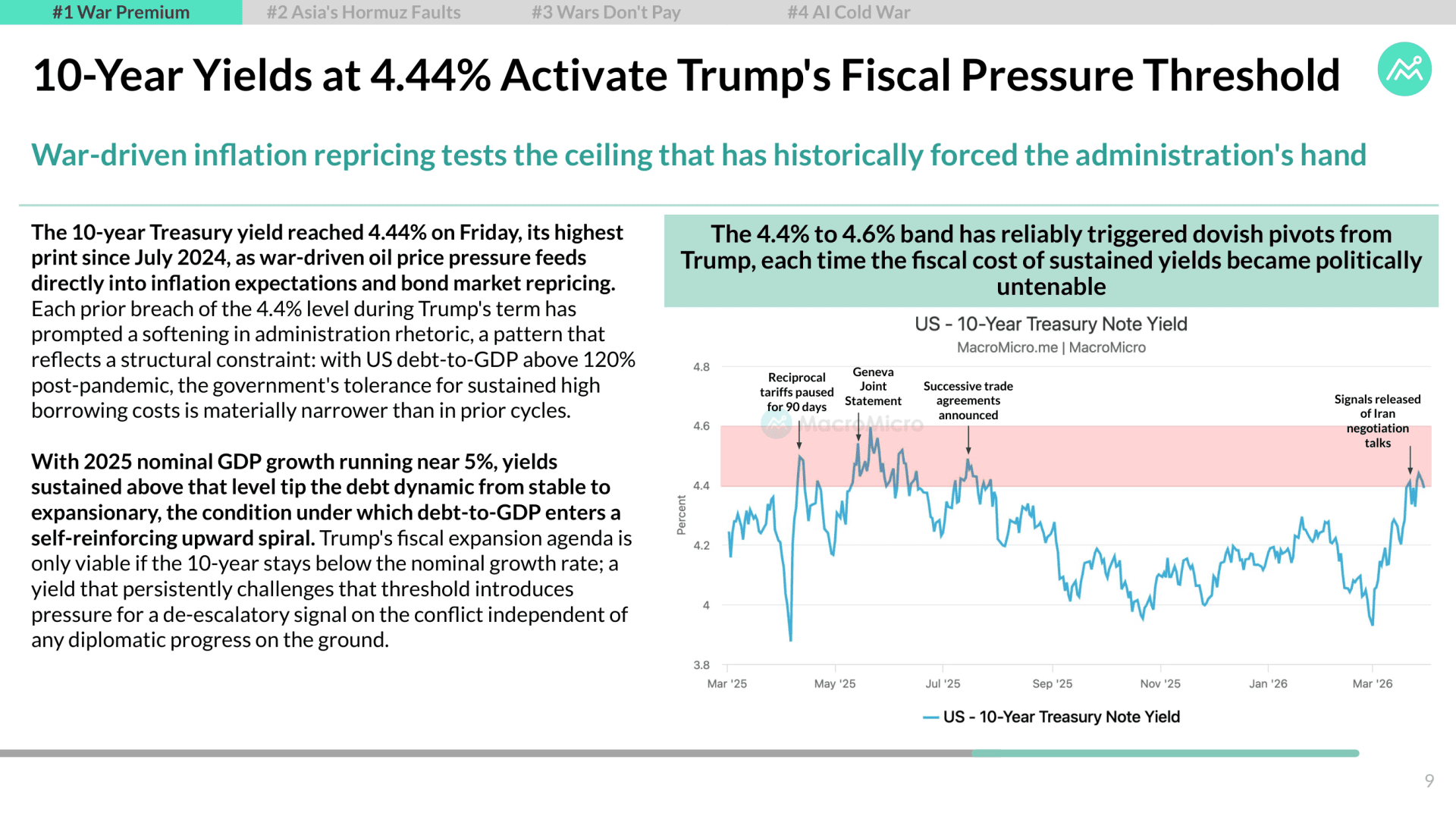
Looking back over the past year, the US 10-year Treasury yield has become Trump’s key red line, with 4.4% to 4.6% acting as the danger zone. Since returning to office, Trump has consistently pushed for aggressive rate cuts and fiscal expansion. What he wants to avoid most is a rise in yields that blocks easing, tightens fiscal conditions, and worsens inflation and labor-market risks. That is why whenever the 10-year yield moves above 4.4%, Trump tends to release more market-friendly signals and soften his stance to calm investors.
Iran–US War: Military Escalation Persists Despite Mixed Ceasefire Signals
Military and diplomatic developments regarding the US-Iran conflict remain highly contradictory. While Trump claims Iran accepted a 15-point ceasefire, Tehran publicly denies this, insisting on retaining sovereignty over the Strait of Hormuz. Currently, the strait is essentially closed to Western shipping, with Iran only permitting passage for vessels from nations like China and Russia. This has forced Saudi Arabia to rapidly expand its Red Sea oil exports via Yanbu. With the Pentagon simultaneously preparing for potential ground operations, the severe supply disruption has pushed oil prices dangerously close to $100 per barrel, threatening widespread economic demand destruction.
Why Gold Is Crashing: Oil Shock, Rising Real Yields, and Vanishing Fed Easing Bets
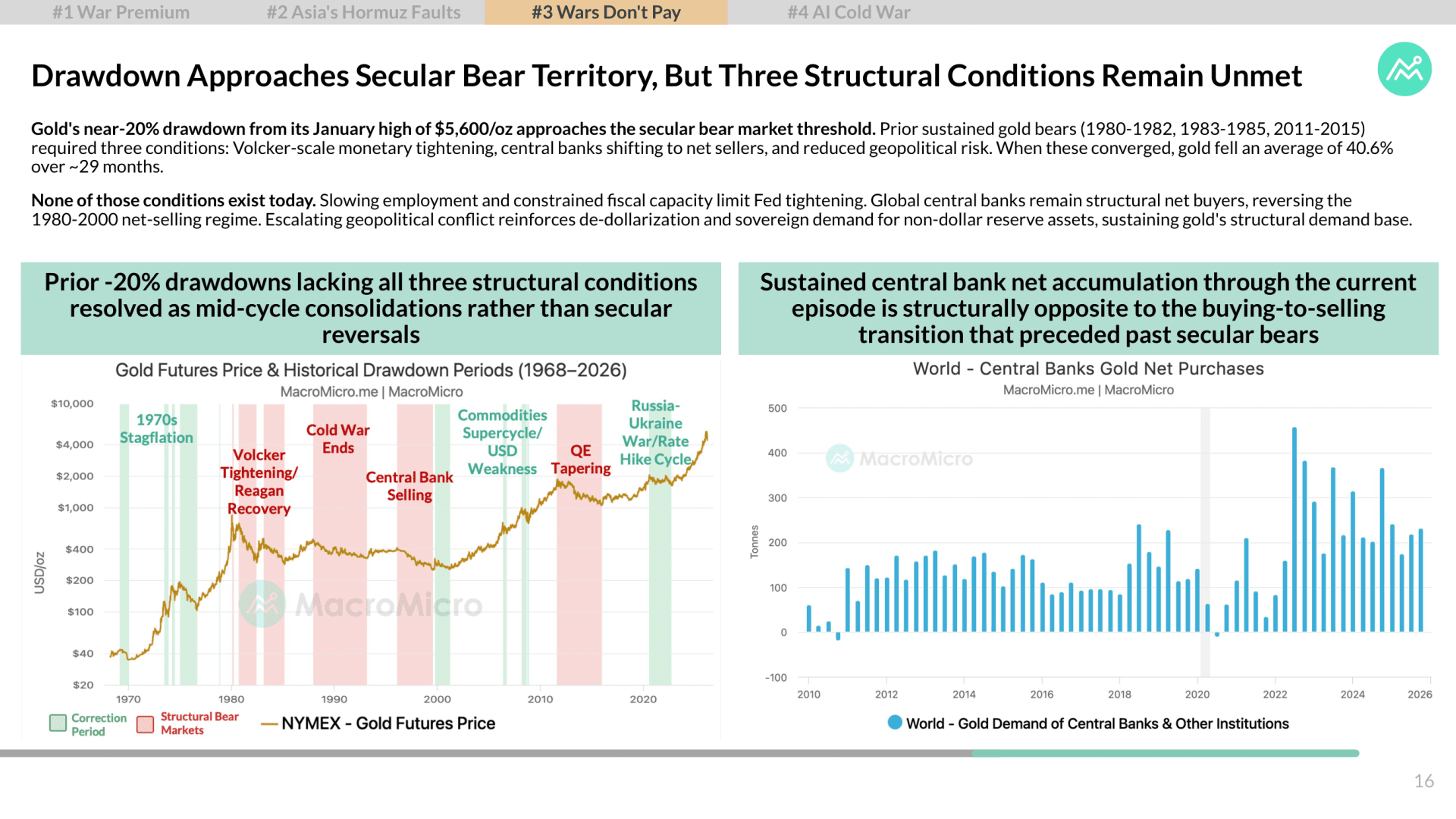
Gold fell not because geopolitics ceased to matter, but because the war changed the rate backdrop in the wrong direction for bullion. The surge in oil prices raised inflation risk, compressed Fed easing expectations, and pushed US real rates to a nine-month high while lifting the dollar. That combination overwhelmed gold’s normal safe-haven support and triggered its worst weekly drop since 1983. The report argues that wartime gold performance depends less on conflict itself than on whether the conflict is inflationary or disinflationary. This episode falls into the inflationary camp. Still, the broader secular bull case is not fully broken because central banks remain net buyers and a Volcker-style tightening regime is still absent.
US–China Tech War: Power Infrastructure Strength Meets a Persistent Chip Bottleneck
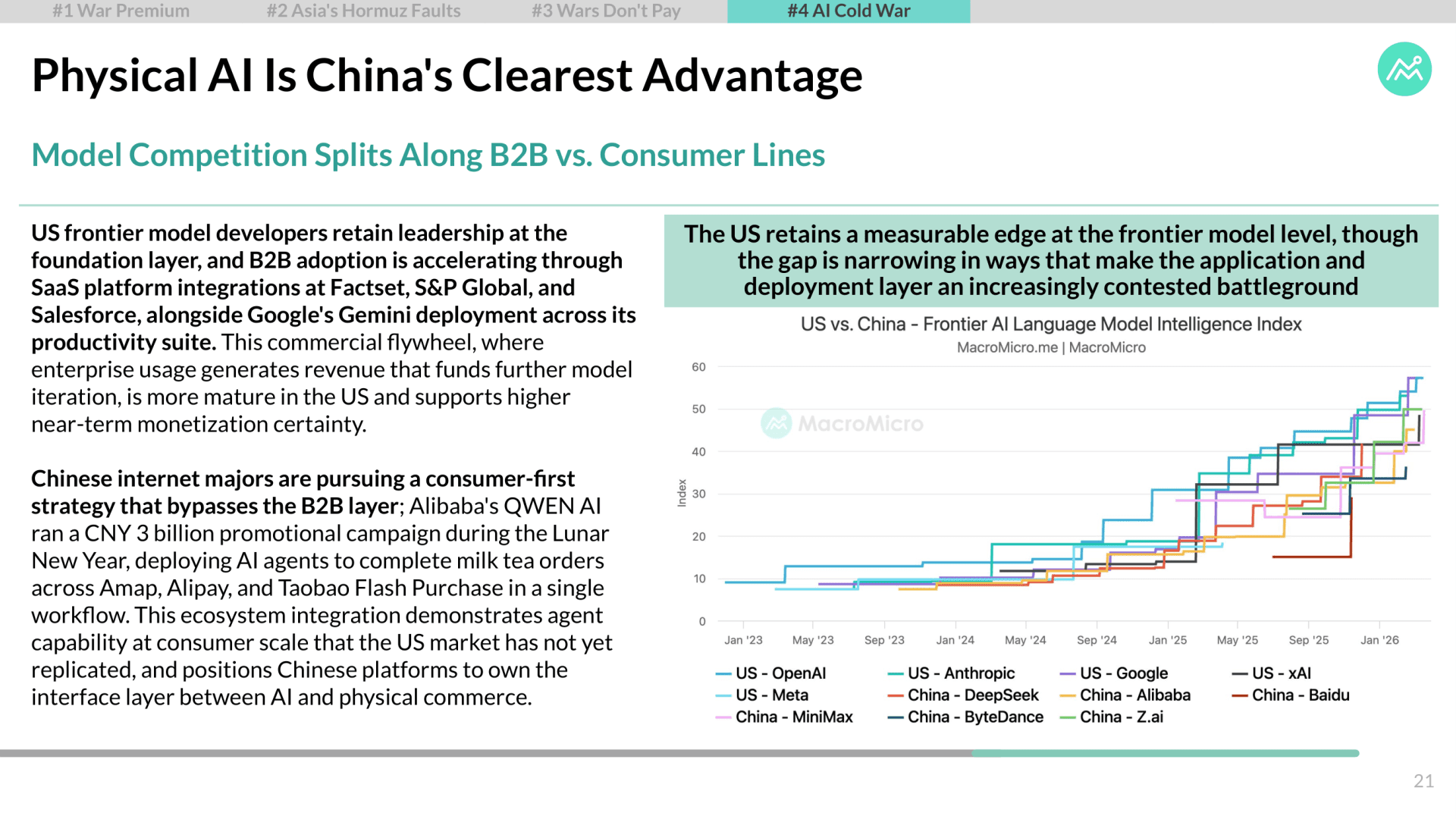
The US-China tech war is increasingly defined by an uneven balance between power and compute. China holds clear advantages in electricity buildout, renewable capacity, data-center land, PCB production, optical components, liquid cooling, and physical AI deployment. However, its biggest constraint remains advanced chips and high-end compute, where US export controls continue to limit access. The US still leads in frontier models, advanced semiconductors, and enterprise monetization, while China is moving faster in consumer AI integration and robotics. In the medium term, the core question is whether China can narrow its chip bottleneck quickly enough to fully convert its infrastructure and industrial scale into AI leadership.
Trump–Xi Meeting as a Key Watchpoint for a Middle East Ceasefire
A key event to watch is President Trump’s planned visit to China on May 14–15. Trump is highly likely to seek a resolution or at least a containment of military action in the Middle East before meeting Xi, allowing him to focus on negotiations with China. If so, the recent oil price spike would more likely prove temporary and reverse quickly. By contrast, if the meeting is cancelled or delayed again, oil prices would likely face more sustained upward pressure.
Why Indian Equities Sold Off Sharply
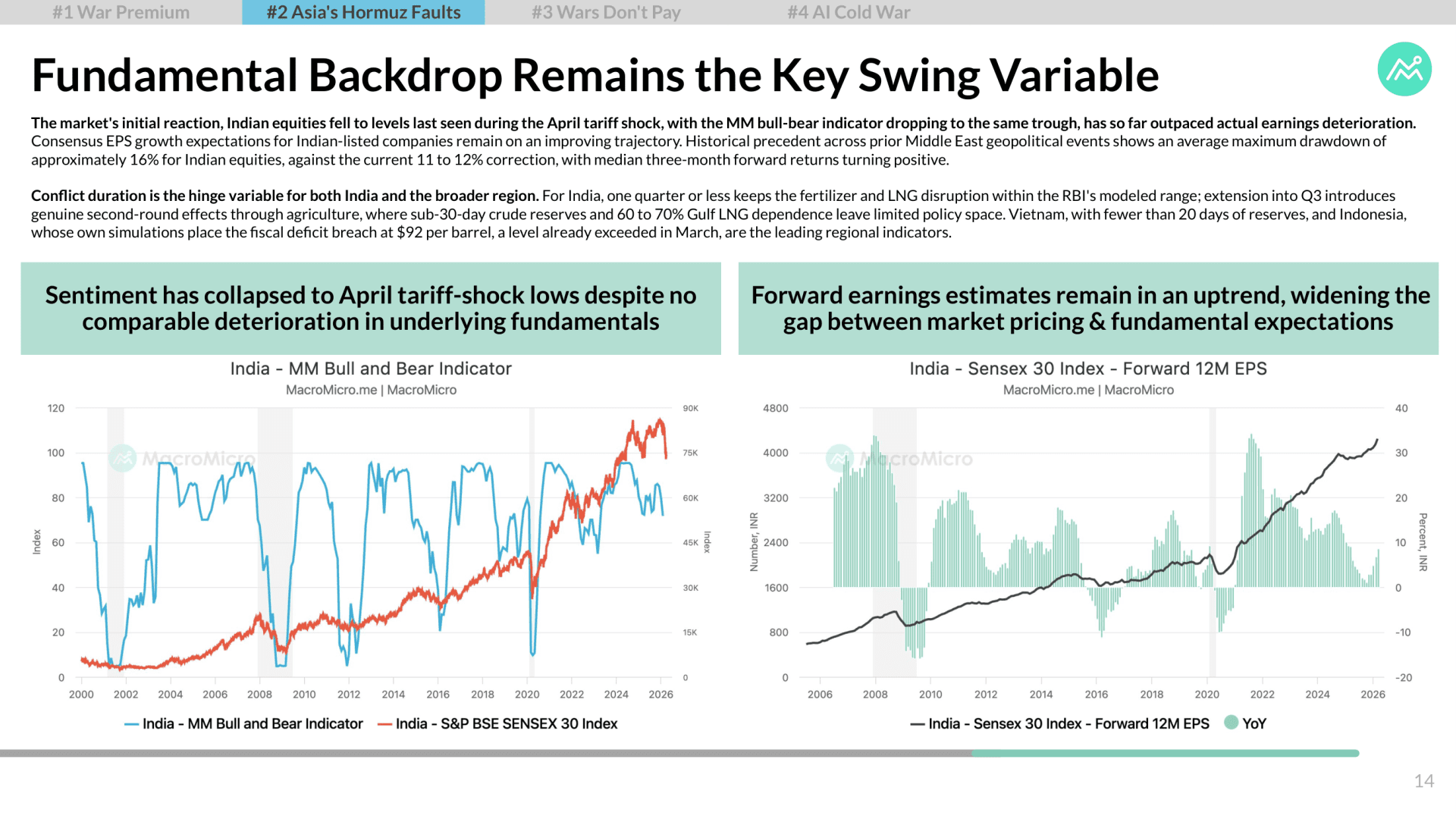
Indian equities fell sharply as the Middle East shock created both physical and financial risks for the economy. India remains heavily exposed to Gulf energy, with around 60% of crude and more than half of LNG imports linked to the region, while part of its LNG contracts are also Brent-indexed. This means a Hormuz-driven oil spike raises both oil and gas import costs at the same time, worsening inflation and growth risks. The pressure extends beyond energy: higher LNG costs also threaten fertilizer production and agricultural output. Although markets have already priced in significant stress, a prolonged conflict would leave India increasingly vulnerable.
About Weekly Economic and Financial Commentary (WEFC)
The MacroMicro WEFC cuts through the noise, delivering rigorous analysis and in-depth insights on the most critical market-moving events. These topics cover equities, foreign exchange, bonds, commodities, global central banks, international political economy, and more.
At the core of WEFC is a concise Chart Pack, enabling you to grasp market trends at a glance.
 Get answers from MM AI.
-
Why does the 4.5% US 10-year Treasury yield represent a political red line for Trump?
💡The 4.5% US 10-year Treasury yield, specifically the 4.4% to 4.6% range, represents Trump's political red line because a rise in yields in this range blocks easing, tightens fiscal conditions, and worsens inflation and labor-market risks. Trump consistently advocates for aggressive rate cuts and fiscal expansion, thus he tends to release market-friendly signals and soften his stance whenever the 10-year yield exceeds 4.4% to calm investors and avoid these negative economic outcomes, which would undermine his policy goals.
-
Why did gold prices fall despite ongoing geopolitical tensions?
💡Gold prices fell despite ongoing geopolitical tensions not because the conflict was insignificant, but because the war altered the interest rate environment in a way detrimental to bullion. The surge in oil prices increased inflation risks, reduced expectations for Fed easing, and pushed US real rates to a nine-month high, simultaneously strengthening the dollar. This combination overwhelmed gold's traditional safe-haven appeal, leading to its sharp decline.
-
What factors caused gold's worst weekly drop since 1983 during the oil shock?
💡Gold experienced its worst weekly drop since 1983 during the oil shock due to a confluence of factors: the surge in oil prices elevated inflation risk, which compressed Fed easing expectations and consequently pushed US real interest rates to a nine-month high. Concurrently, the dollar strengthened. This combination of rising inflation, diminished rate cut hopes, higher real yields, and a stronger dollar undermined gold's safe-haven status, triggering a significant sell-off.
-
Where does China hold advantages in AI deployment and power infrastructure compared to the US?
💡China holds significant advantages in AI deployment and power infrastructure compared to the US, specifically excelling in electricity buildout, renewable capacity, data-center land, PCB production, optical components, liquid cooling, and physical AI deployment. Furthermore, China is progressing faster in consumer AI integration and robotics. These strengths position China to convert its substantial infrastructure and industrial scale into AI leadership, provided it can address its chip bottleneck.
-
What is China's biggest constraint in achieving AI leadership amid US export controls?
💡China's biggest constraint in achieving AI leadership amid US export controls remains advanced chips and high-end compute. US export restrictions continue to limit China's access to these critical components, creating a bottleneck that hinders its ability to fully leverage its strong power infrastructure, renewable capacity, and physical AI deployment capabilities. The core question is whether China can rapidly narrow this chip deficit to convert its industrial scale into AI leadership.
-
What role does the upcoming Trump-Xi meeting play in a potential Middle East ceasefire?
💡The upcoming Trump-Xi meeting, scheduled for May 14–15, plays a crucial role in a potential Middle East ceasefire as Trump is highly likely to seek a resolution or containment of military action in the region before meeting Xi. This would allow him to focus on negotiations with China without the distraction of escalating Middle East tensions, making the meeting a key watchpoint for de-escalation signals in the global political landscape.
-
How do rising oil and LNG import costs from the Gulf impact India's inflation and growth risks?
💡Rising oil and LNG import costs from the Gulf significantly impact India's inflation and growth risks because India relies on the region for around 60% of its crude and over half of its LNG imports, with some LNG contracts being Brent-indexed. A Middle East conflict-driven oil spike simultaneously raises both oil and gas import expenses, fueling inflationary pressures and hindering economic growth. Furthermore, higher LNG costs also threaten fertilizer production and agricultural output, intensifying economic vulnerabilities.
