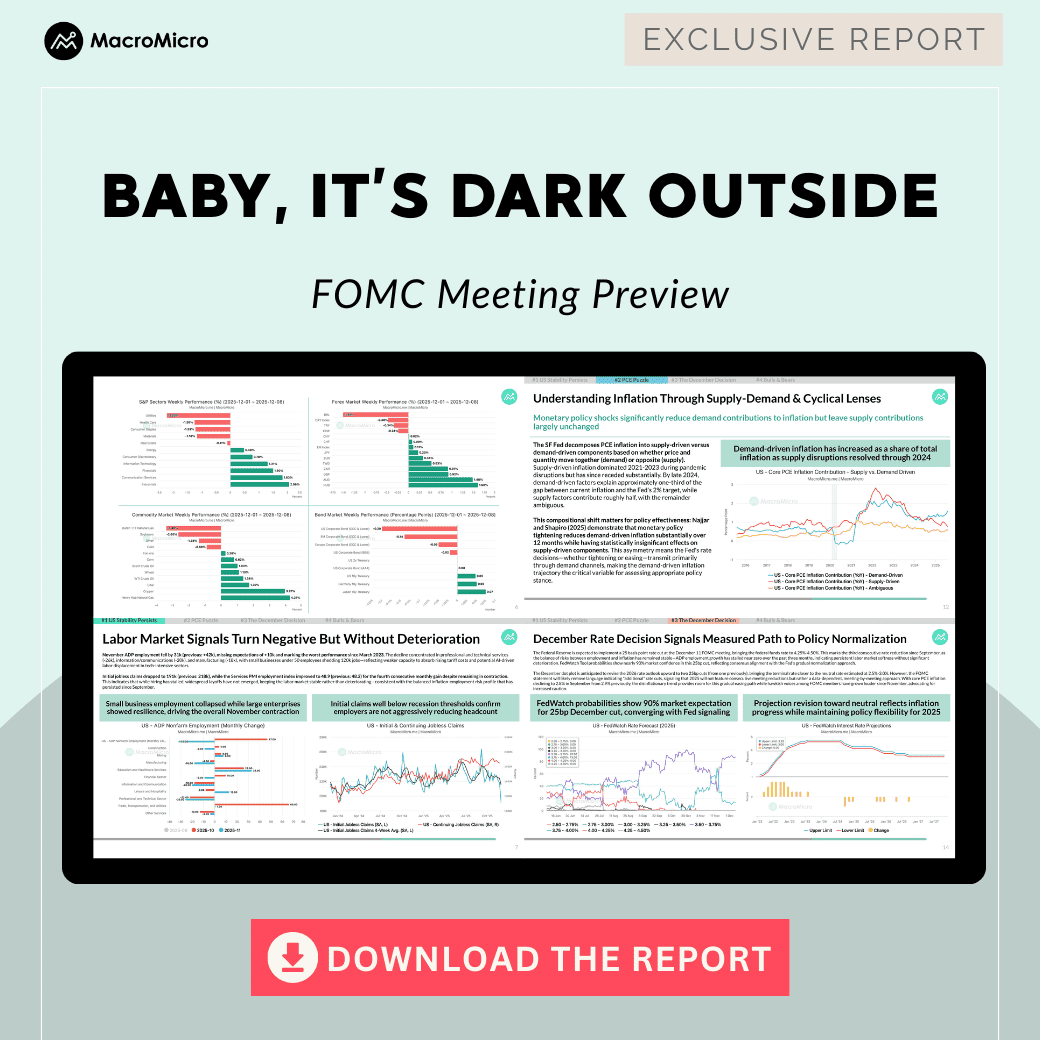
The Fed will hold its policy meeting this week, but visibility is unusually limited — it’s dark outside. With months of missing labor-market and inflation data, the SEP and dot plot will play an outsized role in guiding market expectations.
At the same time, the White House has begun the nomination process for the next Fed Chair, with Kevin Hassett now leading the race and adding another layer of policy uncertainty.
We dive into these developments in this week’s report.
1. Labor Softness Without Stress: Hiring Stalls but Layoffs Stay Low
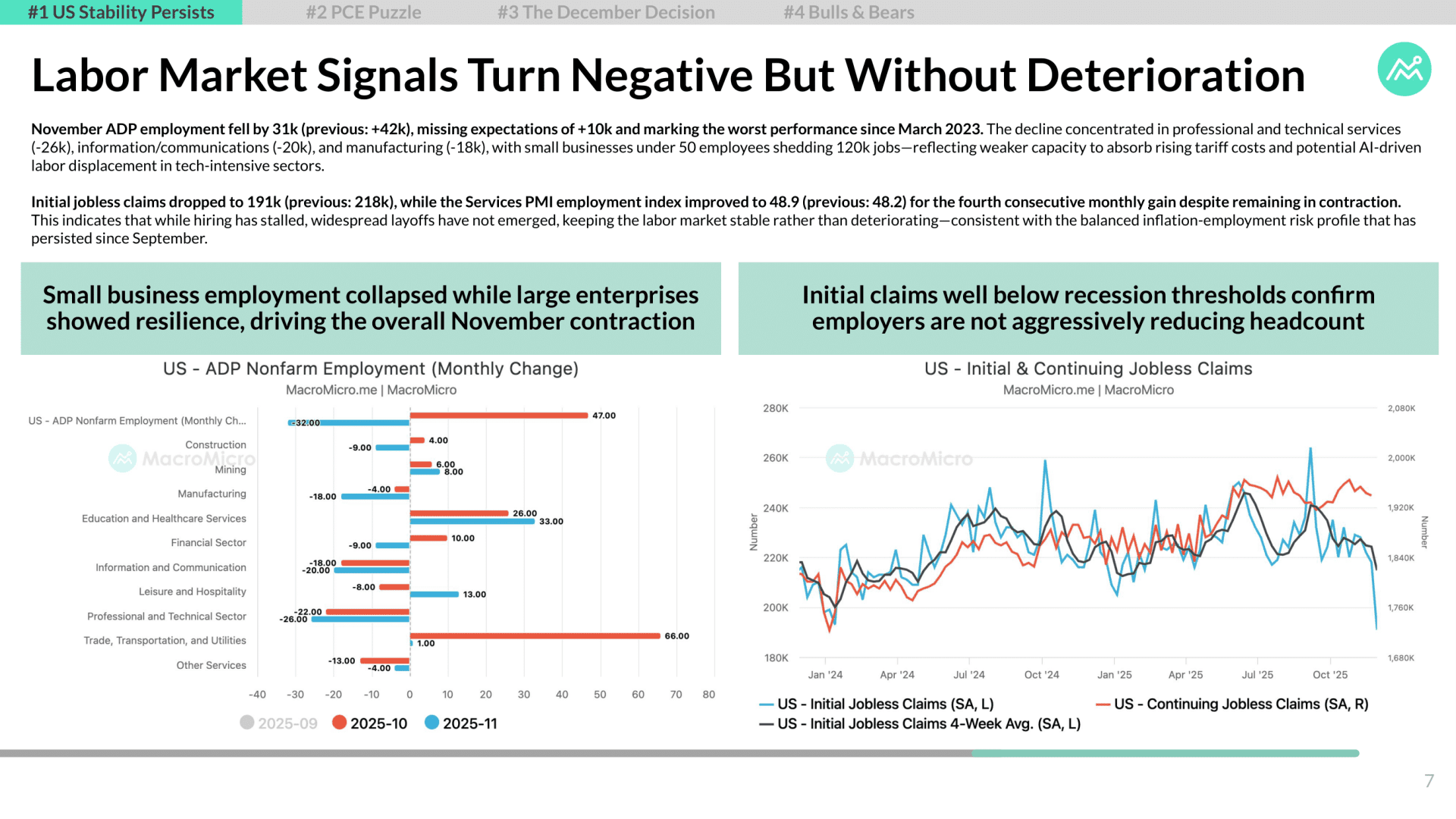
U.S. labor market signals turned mixed in November, with ADP employment falling 31k—the weakest since March 2023—driven by sharp losses in small businesses facing tariff pressures and AI-related restructuring. Professional services, information, and manufacturing posted the largest declines. Yet initial jobless claims dropped to 191k, well below recessionary levels, indicating employers remain reluctant to cut headcount. Services PMI employment continued to improve, though still below 50. Overall, hiring has stalled but layoffs have not accelerated, suggesting the labor market is softening without deterioration and continues to support a balanced inflation-employment backdrop ahead of the December FOMC meeting.
2. Kevin Hassett Leads Fed Race, Injecting Policy Uncertainty
Kevin Hassett has emerged as the leading candidate to succeed Jerome Powell as Fed Chair in May 2026, with prediction markets assigning an 86% probability to his nomination. Known for his dovish views, Hassett has advocated immediate rate cuts and endorsed Trump’s push toward a 1% policy rate, arguing technological progress and deregulation reduce inflation risks. Markets reacted cautiously, with 10-year Treasury yields rising 11 bps on concerns that premature easing could reignite price pressures. While Hassett’s influence would be constrained by the FOMC’s voting structure, his potential appointment introduces meaningful policy uncertainty as the Fed navigates above-target inflation.
3. Core PCE Cools: Broad Services Disinflation Reinforces Fed Easing Path
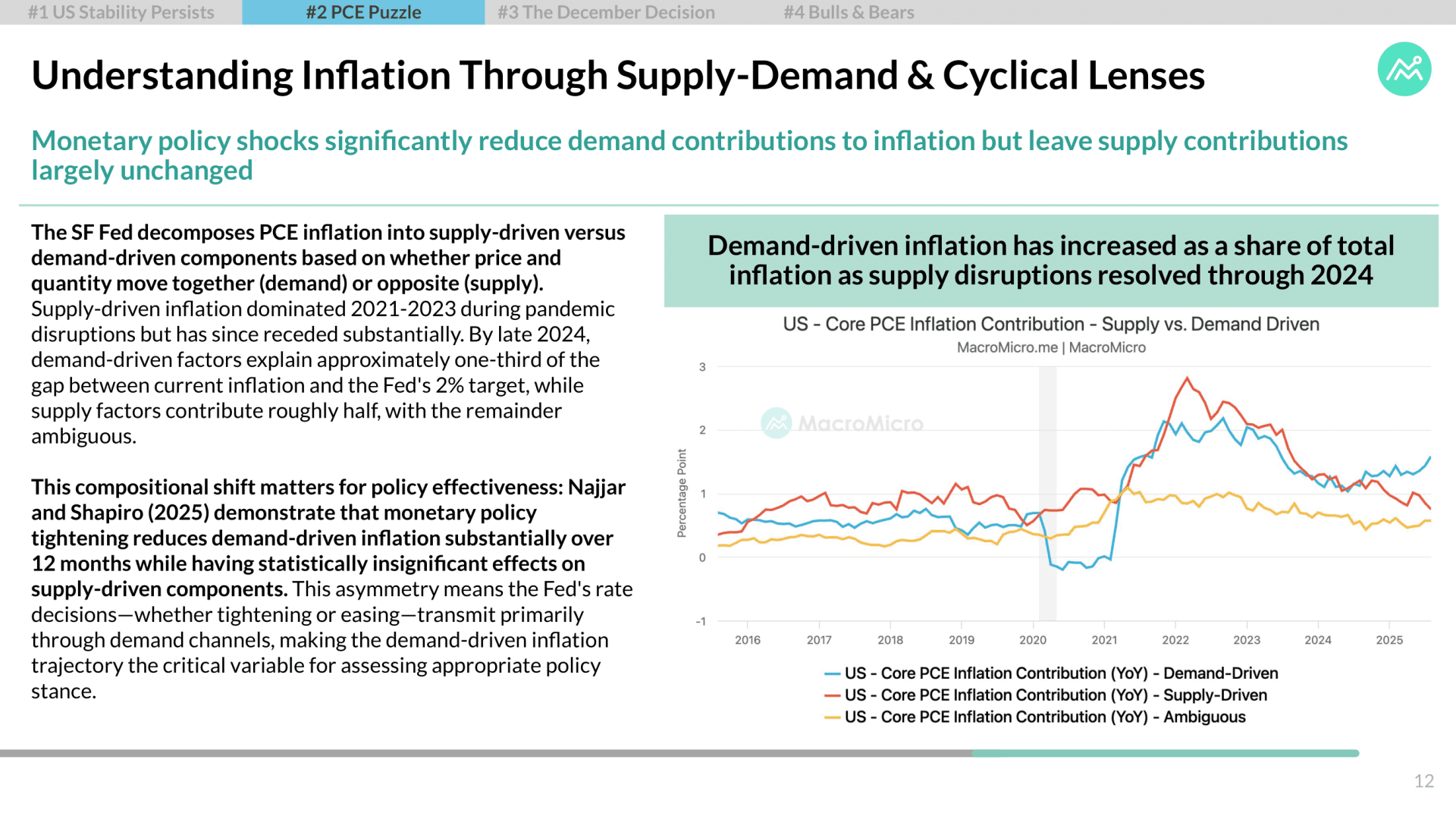
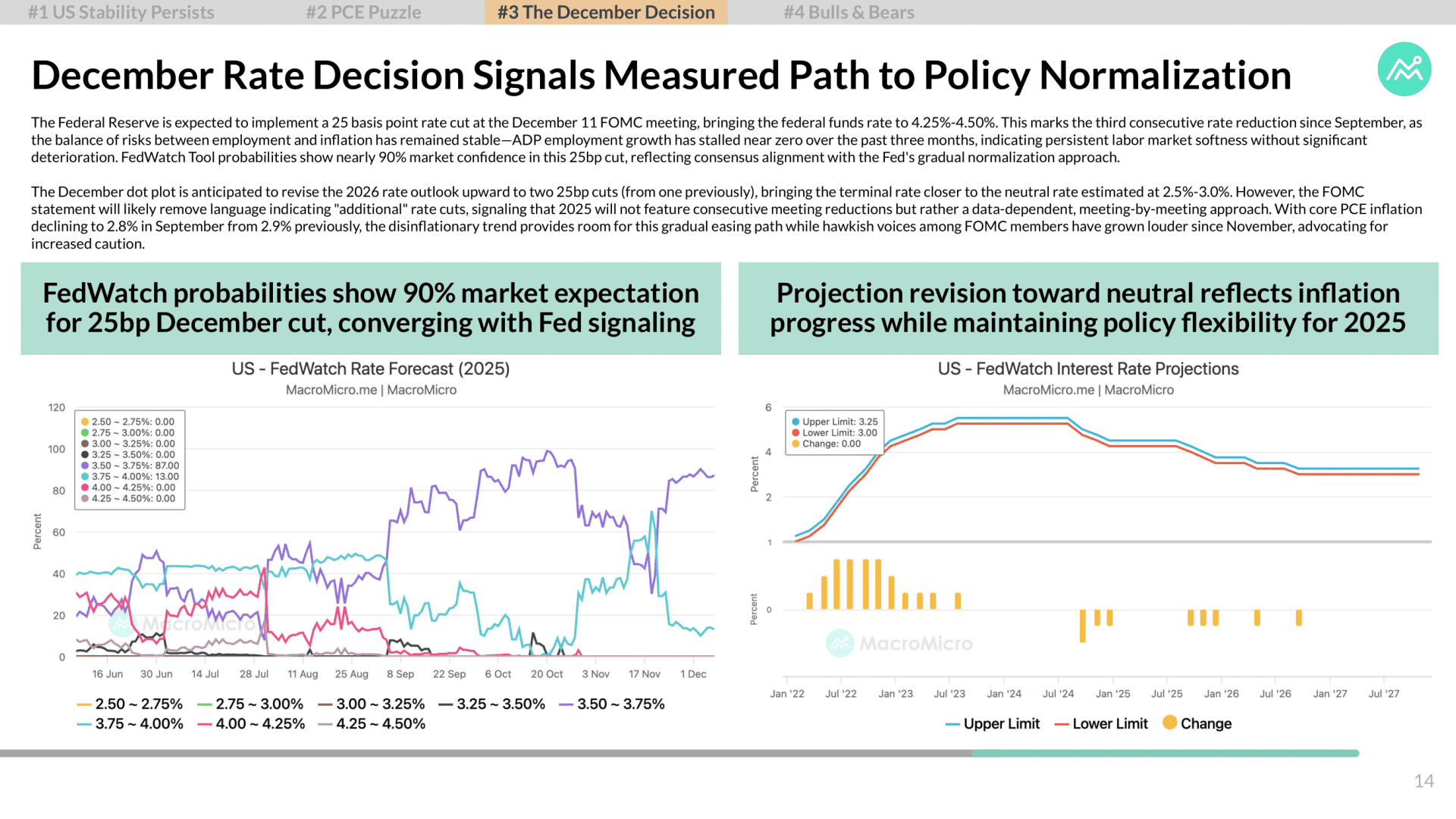
Core PCE inflation eased to 2.83% year-over-year in September, the first deceleration in five months and below expectations. Monthly core PCE rose just 0.20%, while headline PCE increased 2.79% annually, broadly in line with forecasts. The moderation was driven by broad-based services disinflation—housing, transportation, and financial services all slowed—offsetting gasoline-driven increases in goods prices. Market reaction was dovish, with FedWatch showing nearly 90% probability of a December rate cut and expectations for continued easing through 2026. The data supports the Fed’s gradual normalization path, indicating underlying inflation pressures are cooling while demand remains resilient.
Already a subscriber? Click here to log in.
Full Access to Our Services

Comprehensive data at your service
with key indicators for investment insights

Exclusive flash reports
on key events and data

Create your own charts and analysis
including performance backtesting

Hub of professionals to engage
in meaningful discussions and insights

