Global equities mostly fell last week as strong Google earnings were overshadowed by concerns over rising capex and negative cash flow. The S&P 500 slipped 0.61%, the Nasdaq dropped 2.13%, and South Korea’s KOSPI fell 1.91%. Middle East tensions briefly pushed Brent crude above $100, lifting July Fed hike odds to 33% and sending the 10-year Treasury yield above 4.7%. The dollar rose to 101, while gold stayed volatile ahead of this week’s FOMC decision.
Subscribe Now to Download the Full Report
This Week's WEFC Preview
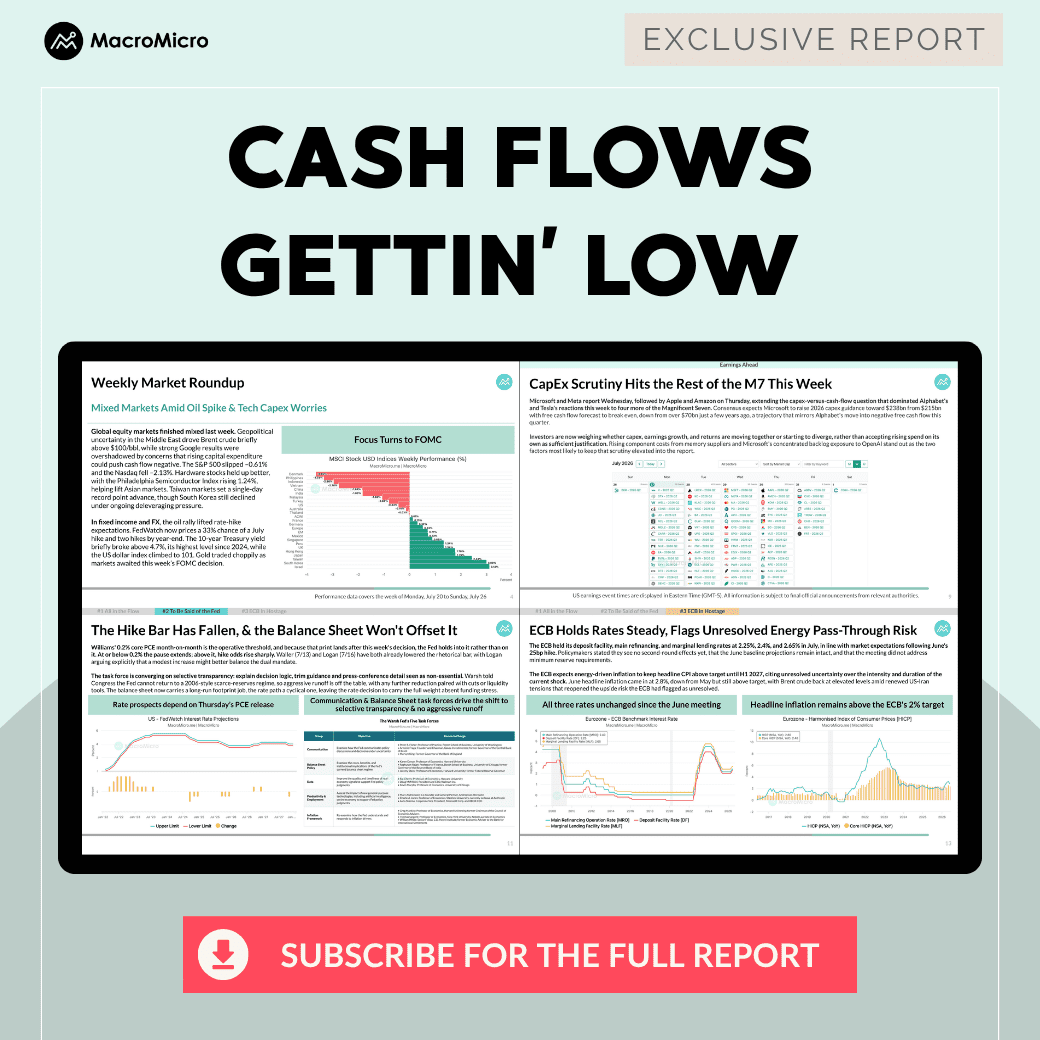
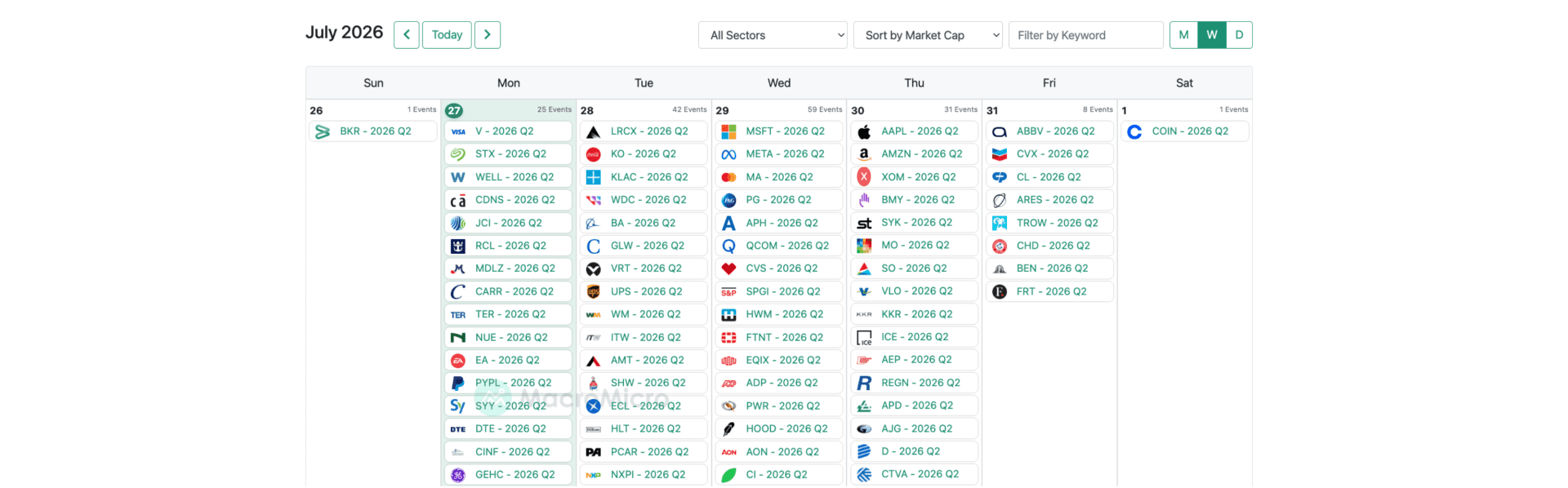
Google’s negative free cash flow makes this week’s tech earnings a test of AI discipline, not demand:
- Alphabet’s share price fell even after strong revenue growth because investors are now focused on the cash cost of AI infrastructure. Free cash flow turned negative as quarterly capex surged, raising concern that the AI buildout may pressure margins before returns become visible. This is not a story of weak demand: Google Cloud backlog expanded sharply, and enterprise AI usage remains strong. The risk is credibility.
- Markets want proof that hyperscalers can convert backlog, tokens, and capacity into durable earnings without burning through cash for too long. That is why this week’s Microsoft, Meta, Apple, and Amazon reports matter. Investors will look beyond headline revenue beats and ask whether AI capex, margin resilience, and future cash generation are still moving together, or beginning to diverge.
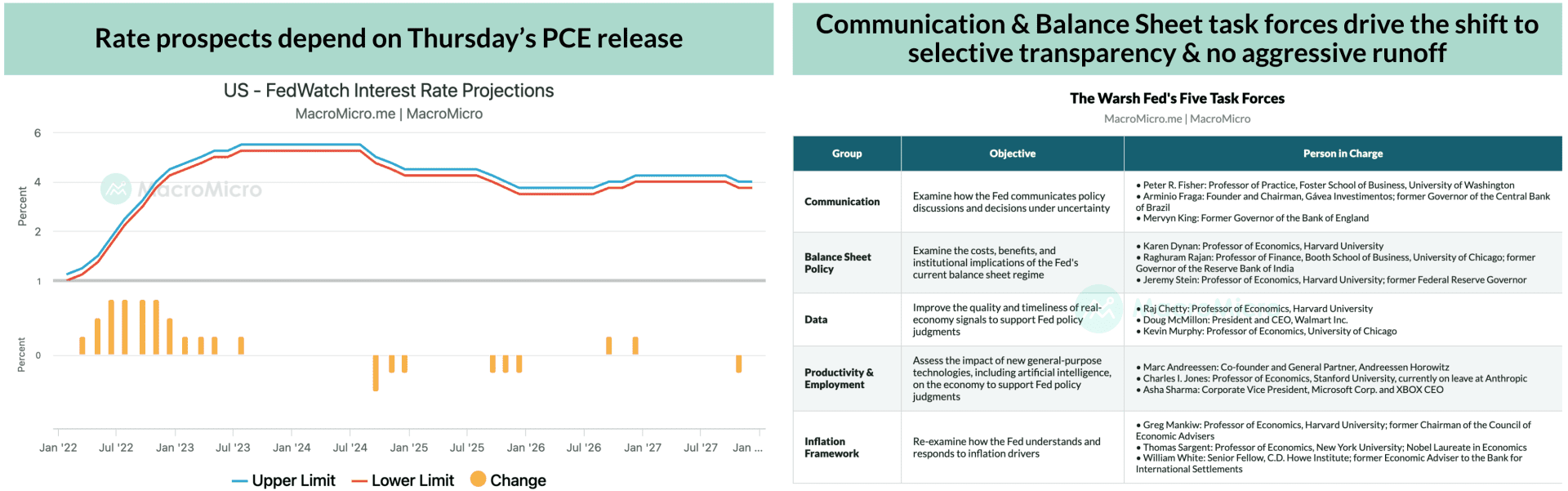
The Fed is expected to hold rates steady as renewed Middle East conflict lifts inflation risks:
- The Fed is likely to wait because the decisive inflation data arrives after the meeting, but the real risk sits in oil transmission. Williams’ 0.2% monthly core PCE threshold has become the market’s policy trigger: at or below it, the pause can extend; above it, hike odds rise quickly.
- With Hormuz commodity vessel traffic still thin and inventories tight, energy could decide whether disinflation remains intact or the Fed is forced back into a more hawkish posture.
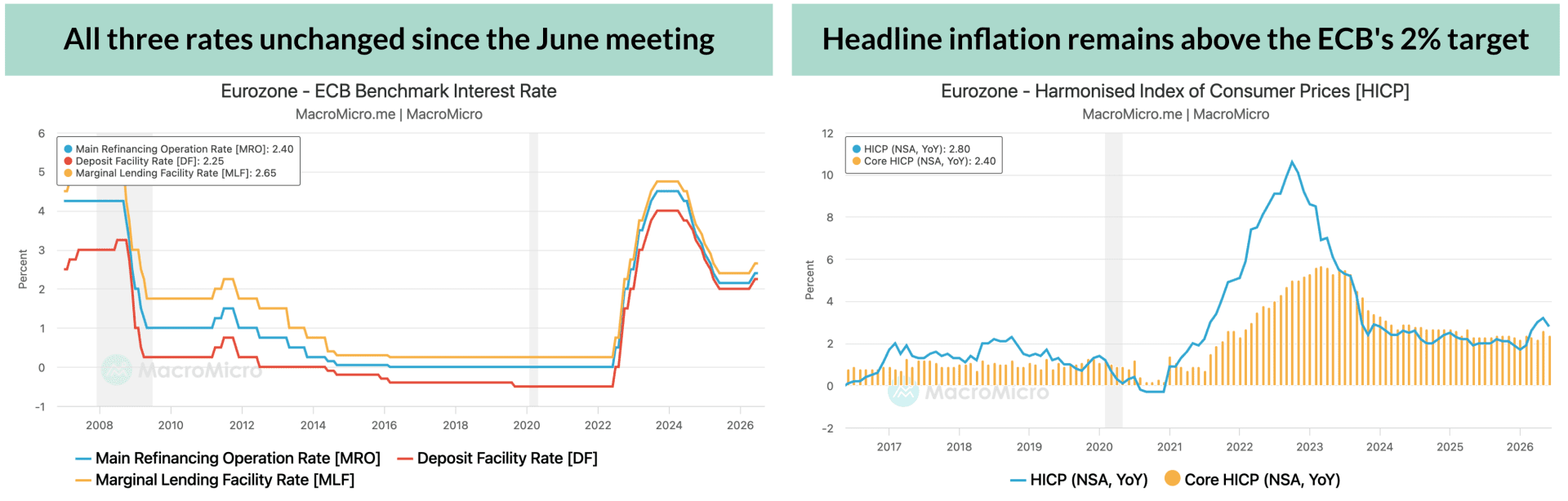
The ECB can stay patient only if oil stops rewriting the inflation path:
- The ECB’s July hold was not a dovish pivot; it was a conditional pause. Core inflation and wages are moving in the right direction, but energy pass-through remains the unresolved risk that could keep headline inflation above target into 2027.
- Markets are already pricing further hikes, even though underlying data has softened. That disconnect means Brent crude, not Lagarde’s latest guidance, may determine whether the ECB is forced to abandon its wait-and-see stance later this year.
Subscribe Now to Download the Full Report
About Weekly Economic and Financial Commentary (WEFC)
The MacroMicro WEFC is published weekly, delivering rigorous analysis and in-depth insights on the most critical market-moving events. Coverage spans equities, foreign exchange, bonds, commodities, global central banks, geopolitics, and the international political economy.
At its core is a concise, roughly 20-page Chart Pack designed to help you grasp market trends at a glance. Subscribe Now » to download the full PDF report, lock in the current offer before prices rise and secure your future upgrade to Max AI with full AI access.
Already a subscriber? Click here to log in.
Full Access to Our Services

Comprehensive data at your service
with key indicators for investment insights

Exclusive flash reports
on key events and data

Create your own charts and analysis
including performance backtesting

Hub of professionals to engage
in meaningful discussions and insights
 Get answers from MM AI.
-
Why did Alphabet's share price fall despite strong revenue growth in their recent earnings report?
💡Alphabet's share price fell because investors are now focused on the cash cost of AI infrastructure, even with strong revenue growth. Free cash flow turned negative as quarterly capital expenditure surged, raising concerns that the AI buildout may pressure margins before generating visible returns.
-
What is the key investor focus for upcoming Microsoft, Meta, Apple, and Amazon earnings reports?
💡The key investor focus for upcoming Microsoft, Meta, Apple, and Amazon earnings reports is on whether AI capital expenditure, margin resilience, and future cash generation are still moving together or beginning to diverge. Investors will look for proof that hyperscalers can convert backlog, tokens, and capacity into durable earnings without excessively burning through cash.
-
What threshold has Federal Reserve Governor Williams set for monthly core PCE to extend the pause?
💡Federal Reserve Governor Williams has set a 0.2% monthly core PCE threshold as the market's policy trigger. If the core PCE is at or below this level, the pause in rate hikes can extend; if it is above, hike odds will rise quickly, influencing the Fed's future monetary policy decisions.
-
Why is the European Central Bank's July hold considered a conditional pause, not a dovish pivot?
💡The European Central Bank's July hold is considered a conditional pause, not a dovish pivot, because while core inflation and wages are moving in the right direction, energy pass-through remains an unresolved risk. This risk could keep headline inflation above target into 2027, preventing a full dovish shift and indicating a readiness for future adjustments if conditions change.
-
How might Brent crude prices influence the European Central Bank's wait-and-see stance?
💡Brent crude prices might significantly influence the European Central Bank's wait-and-see stance, potentially forcing them to abandon it later this year. If oil prices continue to rise due to factors like Middle East conflict, the resulting energy pass-through could rewrite the inflation path and keep headline inflation above target, despite underlying data softening and markets already pricing further hikes.

