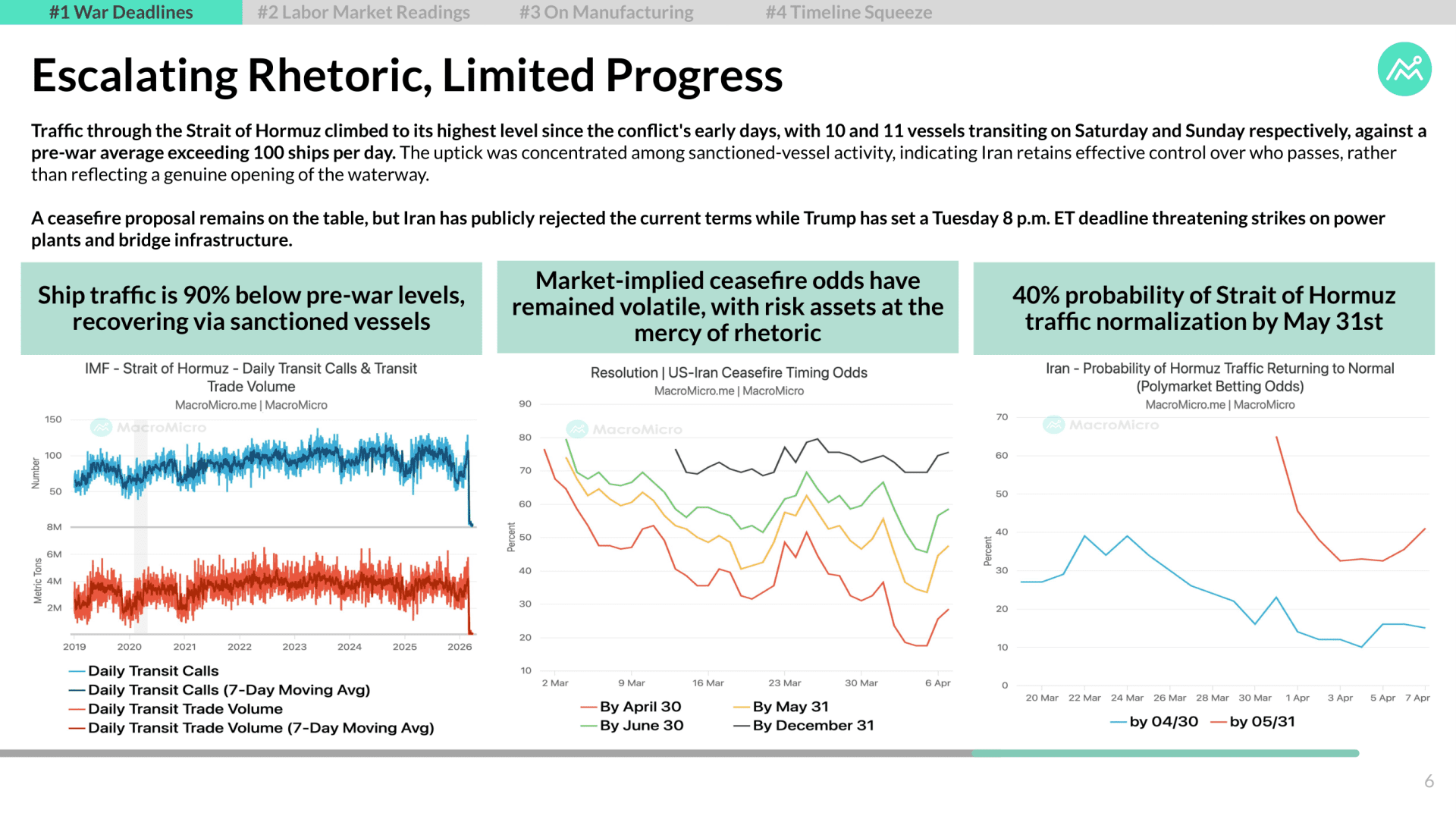
As the US–Iran ceasefire deadline approaches, President Trump has made clear that 8:00 p.m. ET marks the final cutoff. If no agreement is reached, he warned that the US will launch its largest strikes to date on Iranian bridges and power plants, while reiterating that any ceasefire must include the reopening of the Strait of Hormuz. With verbal threats and military pressure escalating in parallel, the sense of urgency around this deadline has intensified once again. How the US–Israel–Iran conflict evolves this week, and how markets choose to price that risk, will be the key focus of this week’s WEFC.
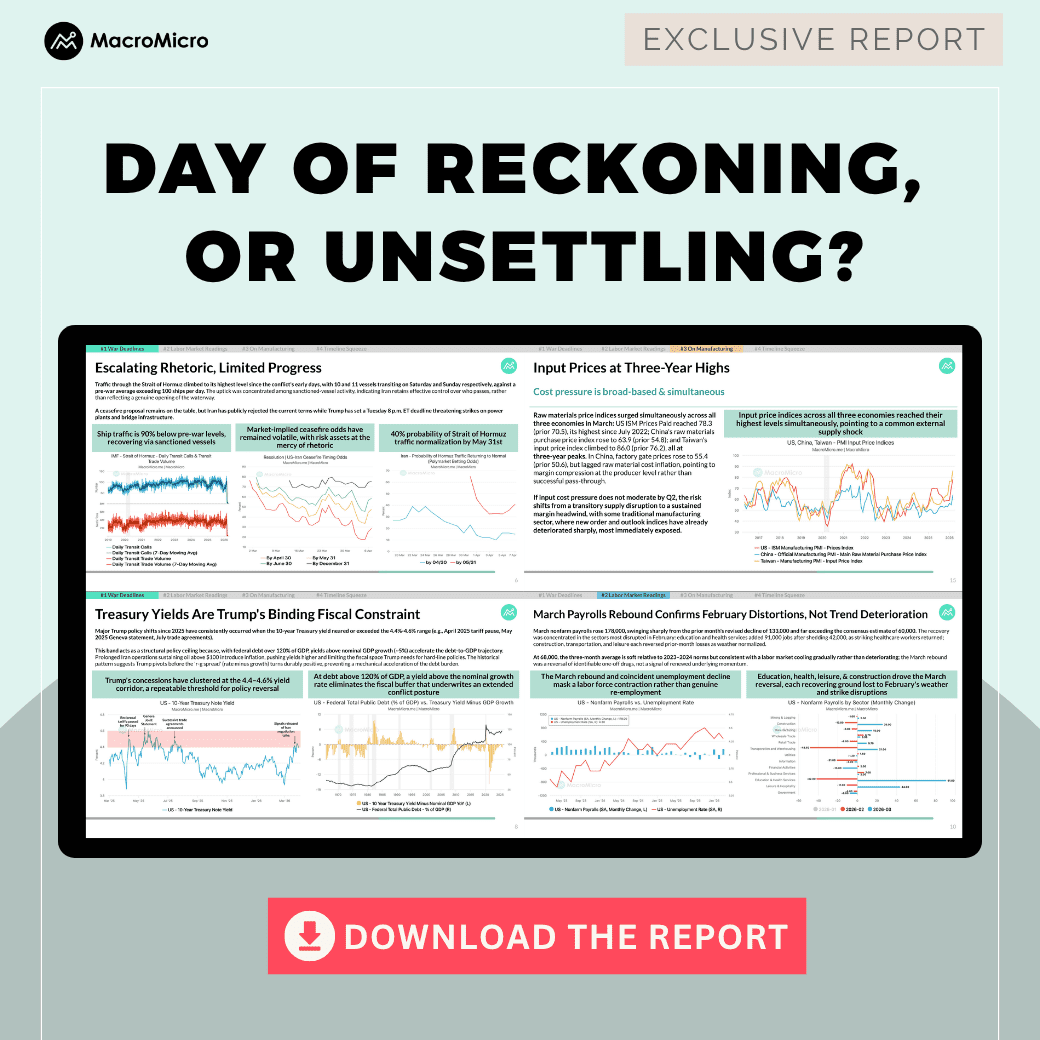
Payrolls Beat Expectations as Strike and Weather Distortions Fade
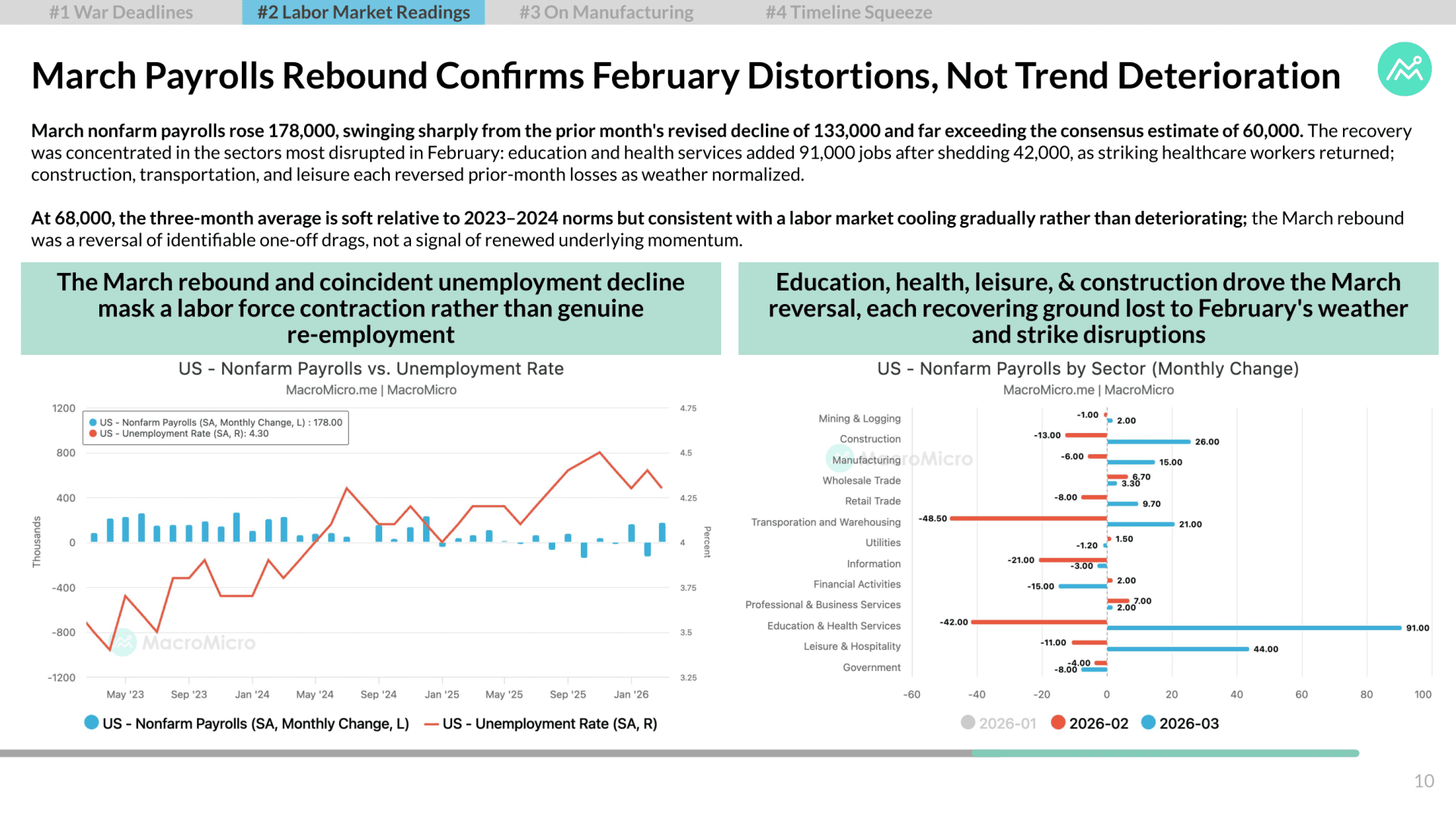
The US March employment report delivered a significant upside surprise, with nonfarm payrolls surging by 178,000 against a consensus estimate of 60,000. This sharp rebound largely reversed February's weather and strike-induced distortions, particularly in the healthcare, education, and construction sectors. Consequently, the three-month average settled at 68,000, aligning with the expected post-distortion baseline. Despite the headline job gains, underlying labor market dynamics reflect a continued cooling trend. Average hourly earnings grew by just 0.2% month-over-month, pulling the annual rate down to a multi-year low of 3.5%, indicating well-contained wage inflation. Furthermore, the slight decline in the unemployment rate to 4.3% was entirely driven by a labor force contraction of 396,000 workers, dropping the participation rate to 61.9%. With structural shifts like reduced immigration compressing the breakeven pace of job creation near zero, this report reinforces a stable, albeit decelerating, labor market that supports the Federal Reserve's current policy stance.
Trump's National Address & US-Israel-Iran Updates
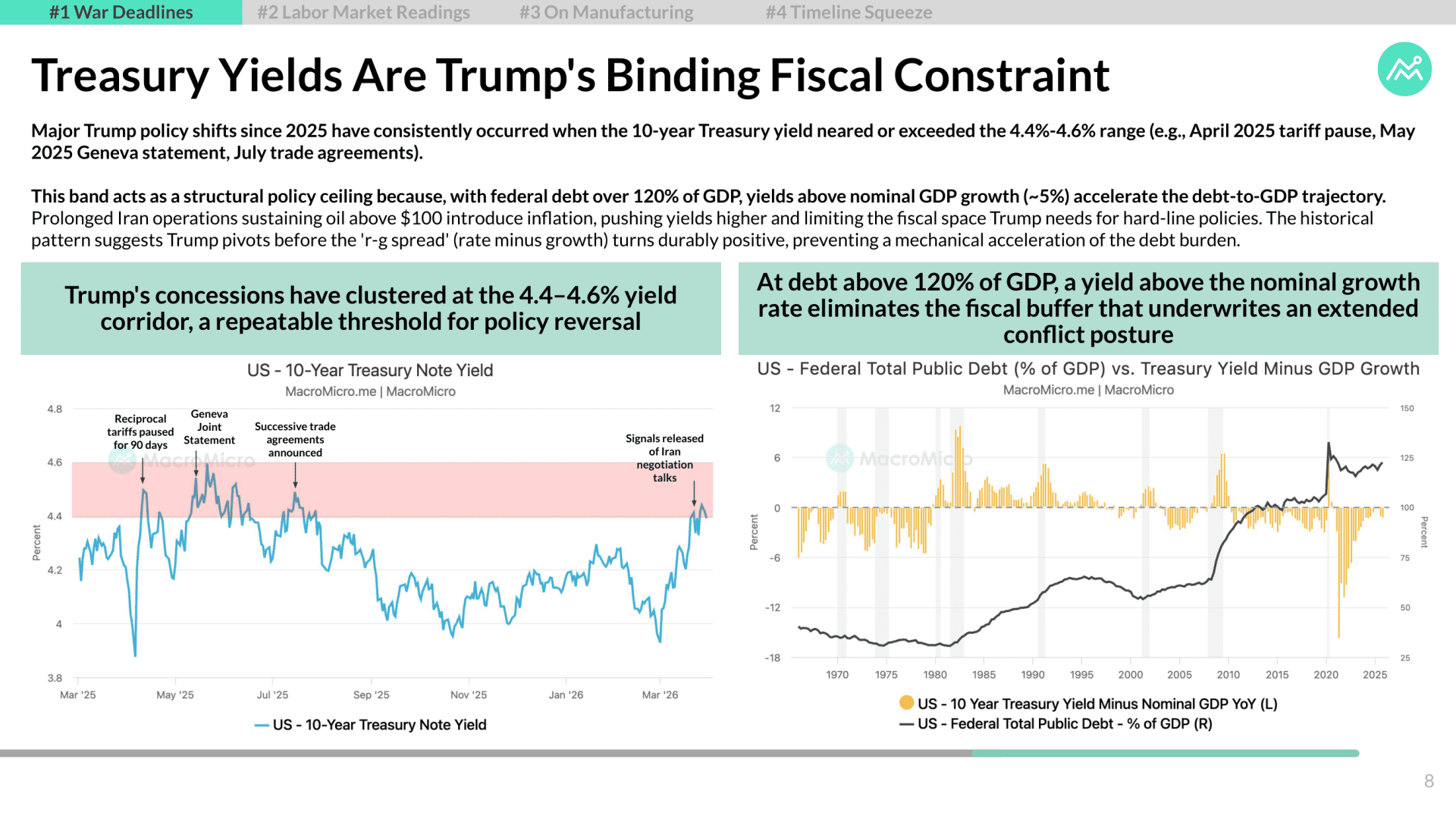
In his recent national address, President Trump provided a comprehensive update on the Middle East conflict, signaling that Operation Epic Fury is nearing its conclusion. He announced the severe degradation of Iran's military capabilities, including its navy, air force, and critical nuclear facilities targeted under Operation Midnight Hammer. Crucially, Trump walked back his previous threat to directly seize Iranian oil infrastructure, citing insufficient domestic political support for a ground invasion. While traffic through the Strait of Hormuz has slightly recovered, it remains heavily restricted and controlled by sanctioned Iranian vessels. The geopolitical situation remains extremely tense as Iran rejected current ceasefire terms, prompting Trump to issue a strict Tuesday deadline threatening strikes on Iranian power and bridge infrastructure. However, rising US Treasury yields and an upcoming pivotal May summit with China serve as powerful structural constraints, incentivizing the administration to secure a diplomatic off-ramp and regional stabilization shortly.
US, China, Taiwan PMI: Strong AI Demand & Rising Prices
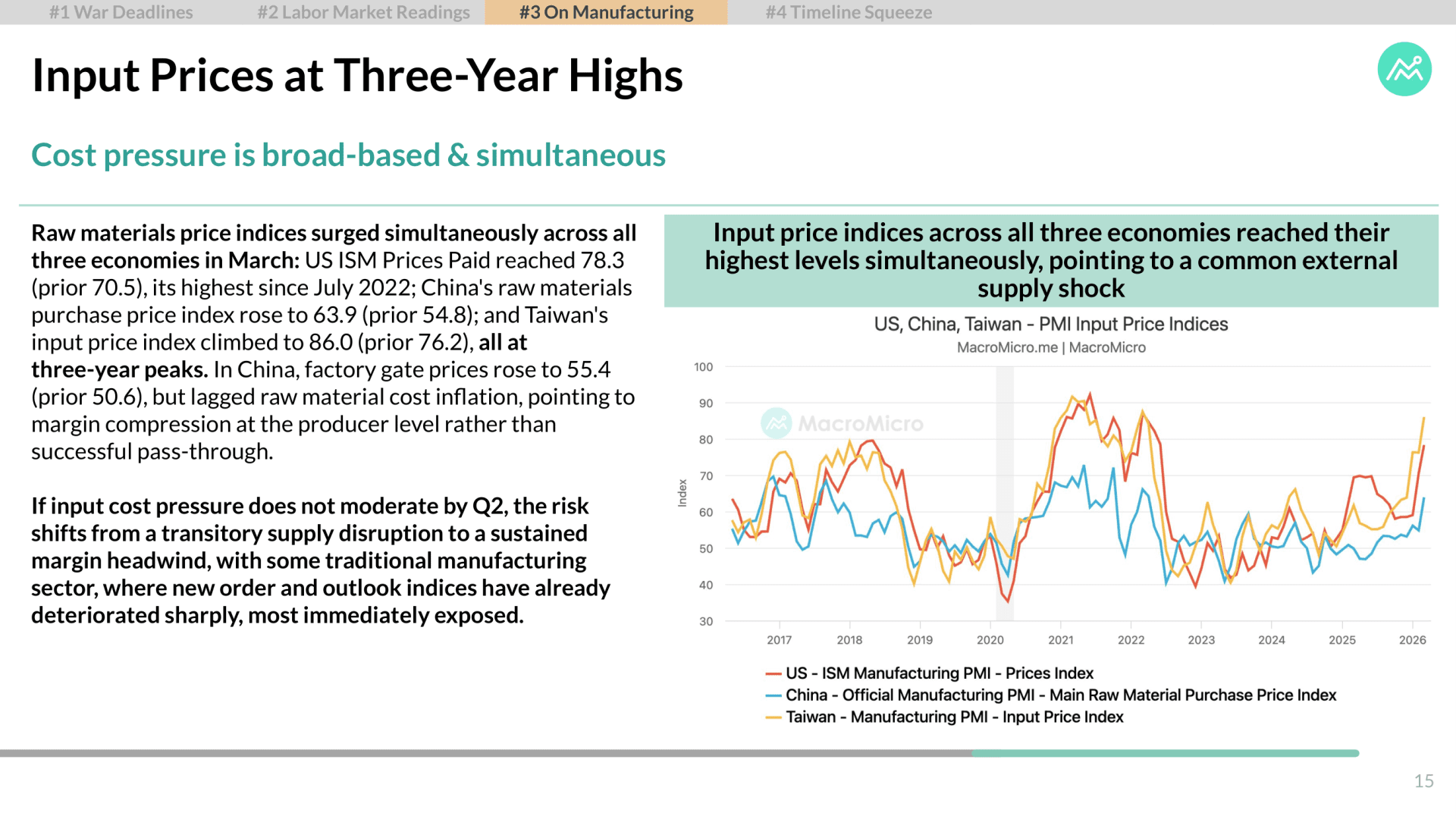
March PMI data across the United States, China, and Taiwan indicates resilient global manufacturing, largely insulated from Middle East disruptions due to explosive demand in the artificial intelligence sector. All three economies reported expansionary headline figures, pushing the overarching manufacturing cycle index to its highest level since 2021. Taiwan’s technology-heavy electronics and optical sectors recorded a robust surge, completely offsetting the noticeable weakness in traditional sectors like transportation and chemicals that are suffering from shipping delays and energy volatility. However, the most critical underlying trend is a simultaneous, severe spike in raw material input prices across all three nations, reaching decisive three-year highs. This universal surge in production costs threatens significant margin compression for manufacturers if they cannot pass these expenses onto consumers. Consequently, markets are closely monitoring whether this intense cost pressure will transform from a transitory supply chain shock into durable, widespread global inflation in the coming months.
Inflationary Risks Re-emerge: Oil Prices and the March CPI Preview
The upcoming April 10 release of the United States March Consumer Price Index is the most critical macroeconomic data point for markets, serving as the first true test of the Middle East conflict's inflationary transmission. The Cleveland Fed Inflation Nowcast is already actively tracking the swift pass-through of elevated oil prices, revising near-term CPI estimates aggressively upward. Analysts project the March headline annual inflation rate could reach roughly 3.5%, heavily driven by a massive thirty percent surge in domestic gasoline prices.
About Weekly Economic and Financial Commentary (WEFC)
The MacroMicro WEFC cuts through the noise, delivering rigorous analysis and in-depth insights on the most critical market-moving events. These topics cover equities, foreign exchange, bonds, commodities, global central banks, international political economy, and more.
At the core of WEFC is a concise Chart Pack, enabling you to grasp market trends at a glance.
Already a subscriber? Click here to log in.
Full Access to Our Services

Comprehensive data at your service
with key indicators for investment insights

Exclusive flash reports
on key events and data

Create your own charts and analysis
including performance backtesting

Hub of professionals to engage
in meaningful discussions and insights
