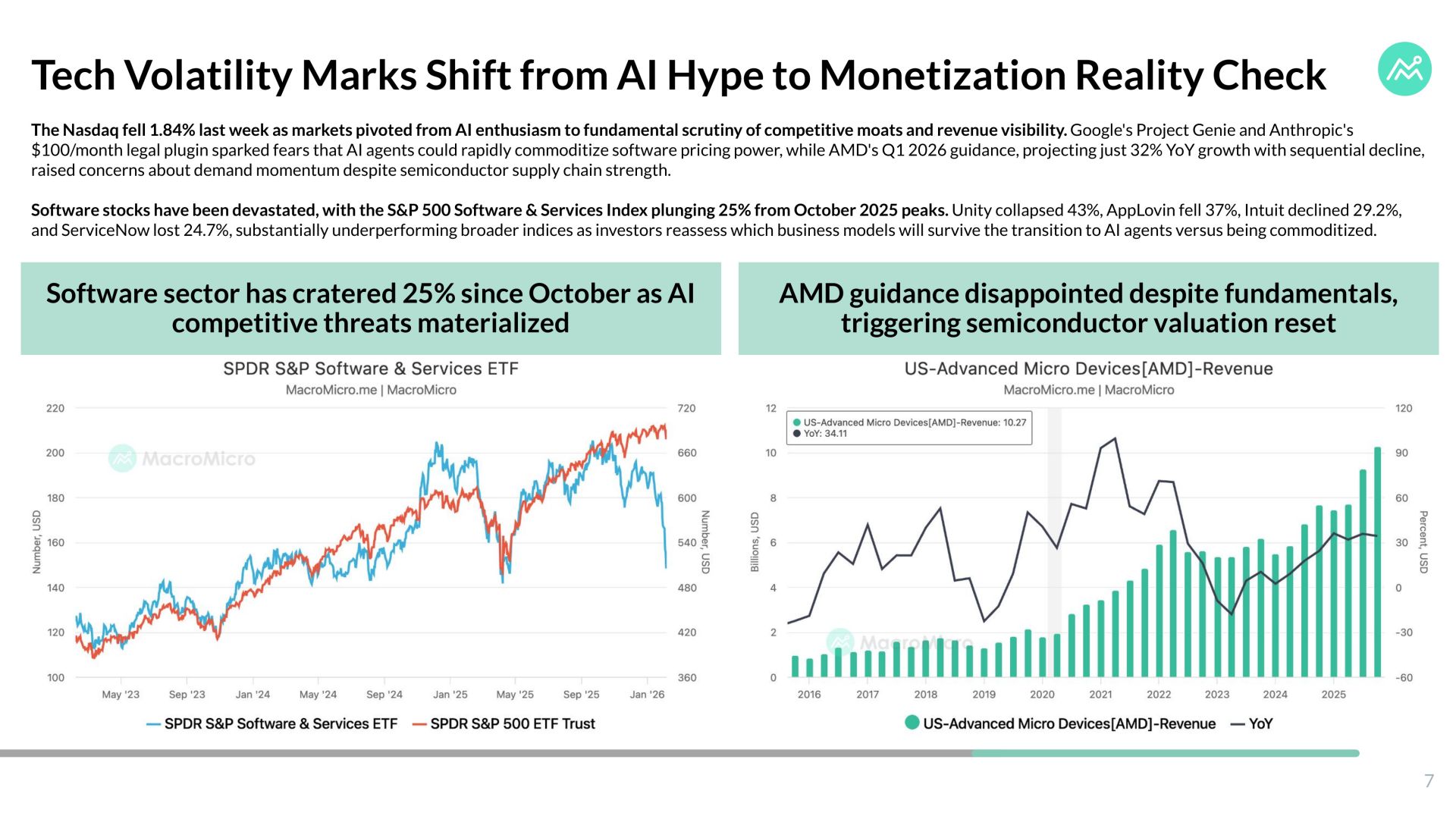
Markets were rocked by sharp volatility last week as a heavy slate of tech earnings collided with fresh uncertainty around AI. AMD’s forward guidance came under intense scrutiny, while new AI tools unveiled by Google and Anthropic reignited fears of mounting pressure on software business models. Against this backdrop, two critical questions came to the forefront: Is AI eroding the competitive moat of software companies? And is end-user demand for AI beginning to cool—calling for greater caution ahead? This week’s WEFC dives into these topics.
ETF Strategy for 2026: Core Stability with Thematic Upside
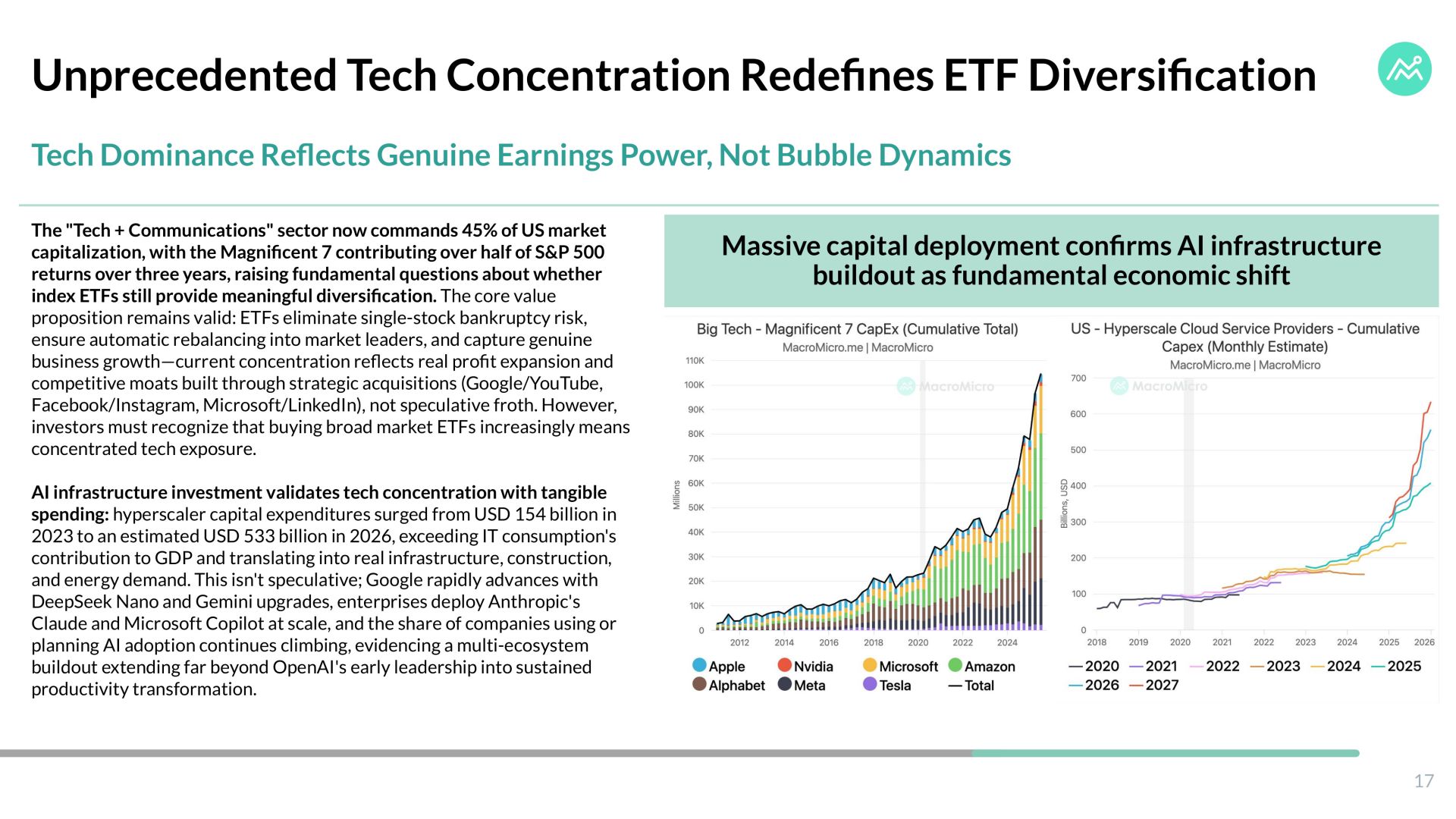
US equities should stay the portfolio anchor, supported by AI-driven earnings growth and stable economic momentum, with low-cost ETFs like VOO or IVV as core holdings. To improve diversification, global exposure via VT and selective allocations to Europe, Japan, or emerging markets can capture rebalancing opportunities.
Bond upside is limited, but US Treasuries still help manage volatility. Short-duration funds such as VGSH or SHY, combined with broad bond ETFs like AGG or BND, offer stability. Satellite themes can focus on AI semiconductors, power infrastructure, defense, and critical minerals.
AI Buuble Concerns Are Overstated—But Software Moats Are Being Tested
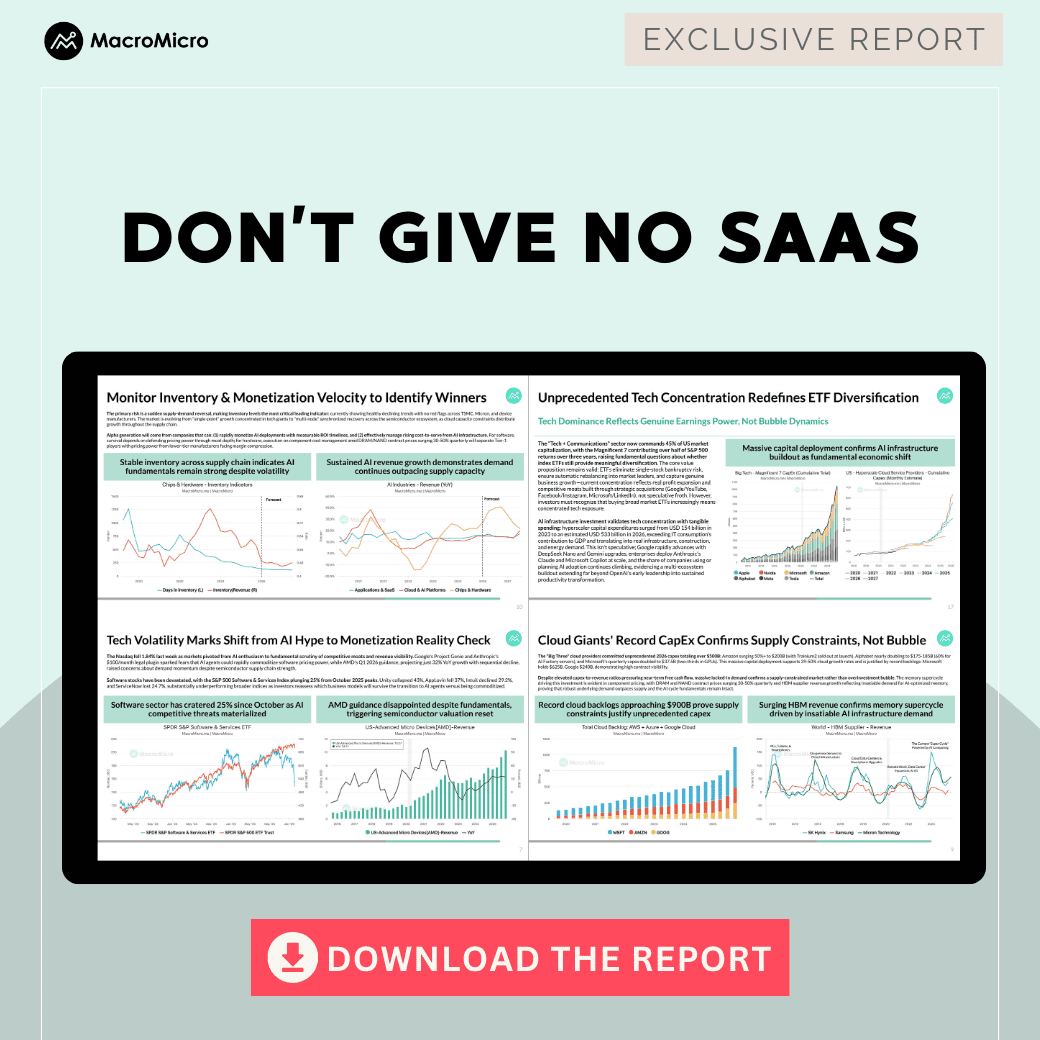
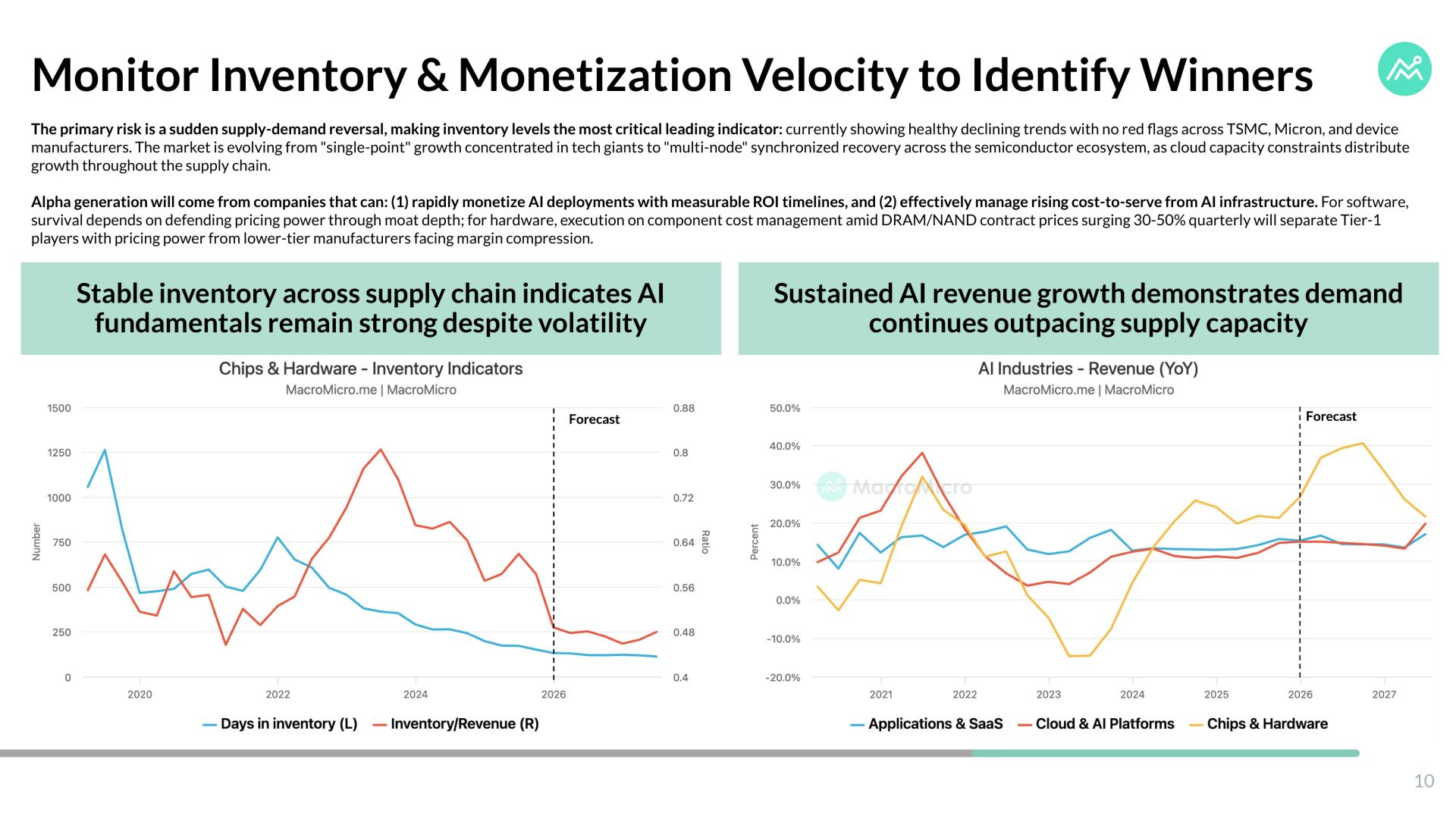
AI market volatility has raised bubble concerns, but fundamentals remain solid. Hyperscalers’ record capex and large backlogs indicate demand still exceeds supply, pointing to a capacity-driven expansion rather than overinvestment.
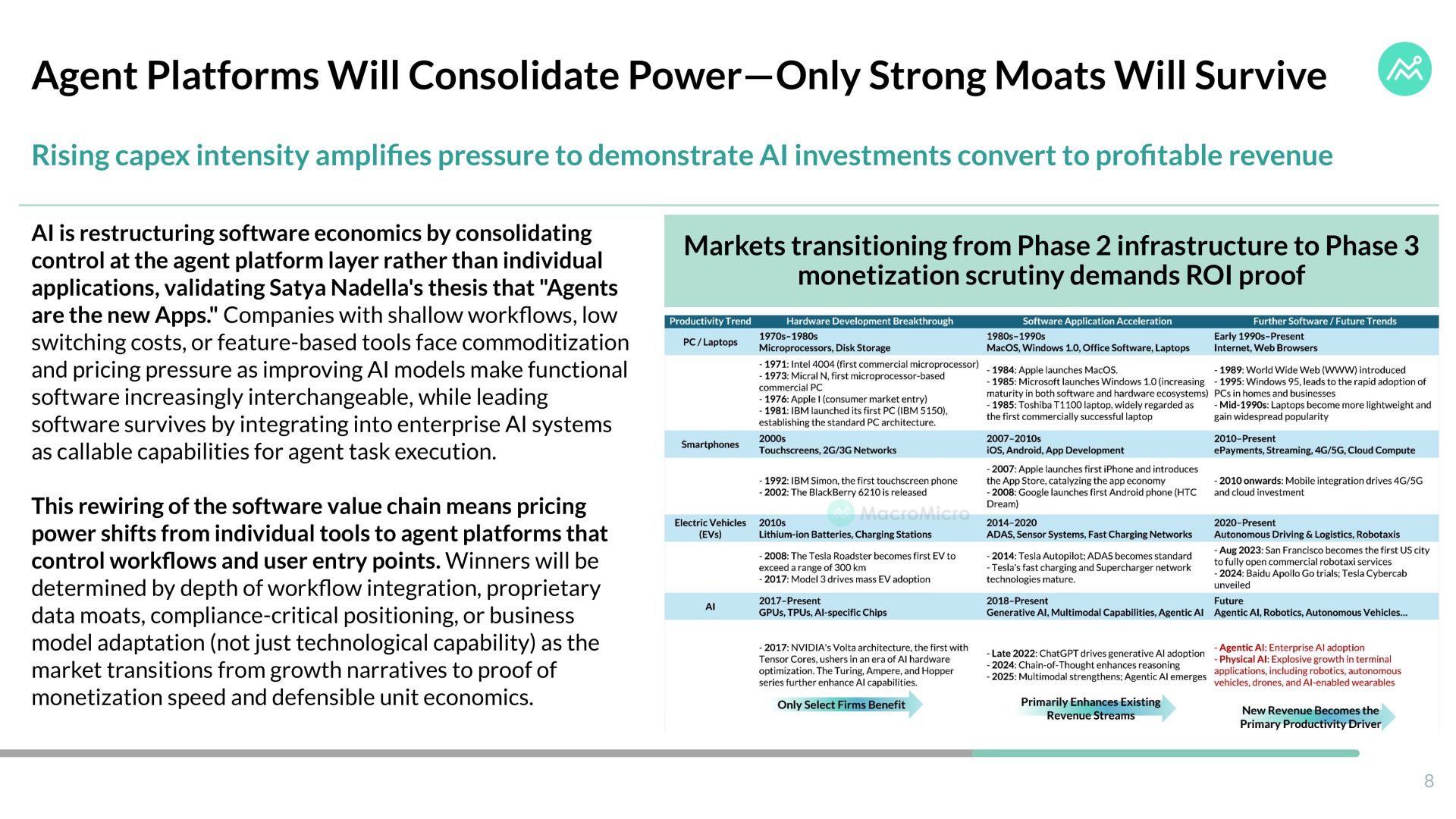
What is breaking down is not AI itself, but parts of the software sector. AI is commoditizing weak-moat software—feature-based tools with low switching costs—leading to pricing pressure and valuation resets. Meanwhile, value is shifting toward AI agent platforms that control workflows and distribution. The market focus has moved from vision to execution, ROI, and monetization speed.
Gold’s Long-Term Bull Case Remains Intact Despite Volatility
Recent sharp swings in gold prices reflect short-term liquidity stress rather than a structural reversal. Margin changes, policy shifts, and forced deleveraging triggered rapid corrections, typical of speculative cleanouts.
Over the long term, gold continues to benefit from rising sovereign debt and persistent fiat currency debasement. Limited policy flexibility increases reliance on inflation tolerance and financial repression, supporting gold’s role as a store of value. Beyond a safe haven, gold is increasingly treated as a strategic reserve asset amid currency competition and de-dollarization trends, anchoring its long-term outlook despite ongoing volatility.
Notice: WEFC will be suspended next Tuesday (Feb 16) due to a holiday. Special Reports will continue as scheduled and will be published via direct email and on our blog.
Already a subscriber? Click here to log in.
Full Access to Our Services

Comprehensive data at your service
with key indicators for investment insights

Exclusive flash reports
on key events and data

Create your own charts and analysis
including performance backtesting

Hub of professionals to engage
in meaningful discussions and insights
 Get answers from MM AI.
-
How can global exposure be achieved to improve portfolio diversification?
💡Global exposure to improve portfolio diversification can be achieved via VT for broad market access, and selective allocations to Europe, Japan, or emerging markets. This strategy allows investors to capture rebalancing opportunities and mitigate region-specific risks, aligning with a diversified approach that leverages international growth while maintaining core US equity stability. The VT ETF provides comprehensive global coverage.
-
What thematic satellite investments are recommended for upside potential?
💡Thematic satellite investments recommended for upside potential focus on AI semiconductors, power infrastructure, defense, and critical minerals. These areas are poised for significant growth, leveraging long-term trends and technological advancements to deliver enhanced returns. Allocations to these sectors provide strategic exposure to high-growth segments of the global economy, complementing core stability with targeted growth opportunities.
-
Are current AI market concerns indicative of an actual bubble?
💡Current AI market concerns are not indicative of an actual bubble; instead, fundamentals remain solid. The market is experiencing volatility, which is typical of speculative cleanouts, but underlying demand indicators suggest a capacity-driven expansion. Record capital expenditure by hyperscalers and substantial backlogs confirm that demand continues to outpace supply, indicating healthy growth rather than overinvestment. The issue is commoditization in software, not AI itself.
-
How is AI impacting the traditional software sector?
💡AI is impacting the traditional software sector by commoditizing weak-moat software, which includes feature-based tools with low switching costs. This commoditization is leading to pricing pressure and valuation resets within this segment, as AI-powered solutions offer more efficient and accessible alternatives. The shift is prompting a re-evaluation of business models that rely on proprietary features that are easily replicated by AI.
-
What factors caused recent short-term volatility in gold prices?
💡Recent short-term volatility in gold prices was caused by short-term liquidity stress, reflecting margin changes, policy shifts, and forced deleveraging. These factors triggered rapid corrections, which are typical characteristics of speculative cleanouts within the market. Such movements are viewed as temporary disruptions rather than structural reversals, indicating that the underlying long-term drivers for gold remain intact despite these fluctuations. The market experienced rapid adjustments.
-
What long-term trends support gold's bull case?
💡Long-term trends supporting gold's bull case include rising sovereign debt and persistent fiat currency debasement. Limited policy flexibility increases reliance on inflation tolerance and financial repression, solidifying gold's role as a store of value. These macroeconomic pressures enhance gold's appeal as a hedge against currency devaluation and fiscal instability, cementing its importance in global financial systems and supporting its intrinsic value. Gold is increasingly seen as a strategic reserve asset.
-
Why is gold considered a strategic reserve asset amidst de-dollarization?
💡Gold is considered a strategic reserve asset amidst de-dollarization due to increasing currency competition and its established role as a safe haven. Central banks and sovereign wealth funds are diversifying their reserves away from traditional fiat currencies, recognizing gold’s intrinsic value and its stability during geopolitical and economic uncertainties. This strategic positioning reinforces gold’s long-term outlook as a critical component of national financial security. It provides an anchor against currency volatility.
