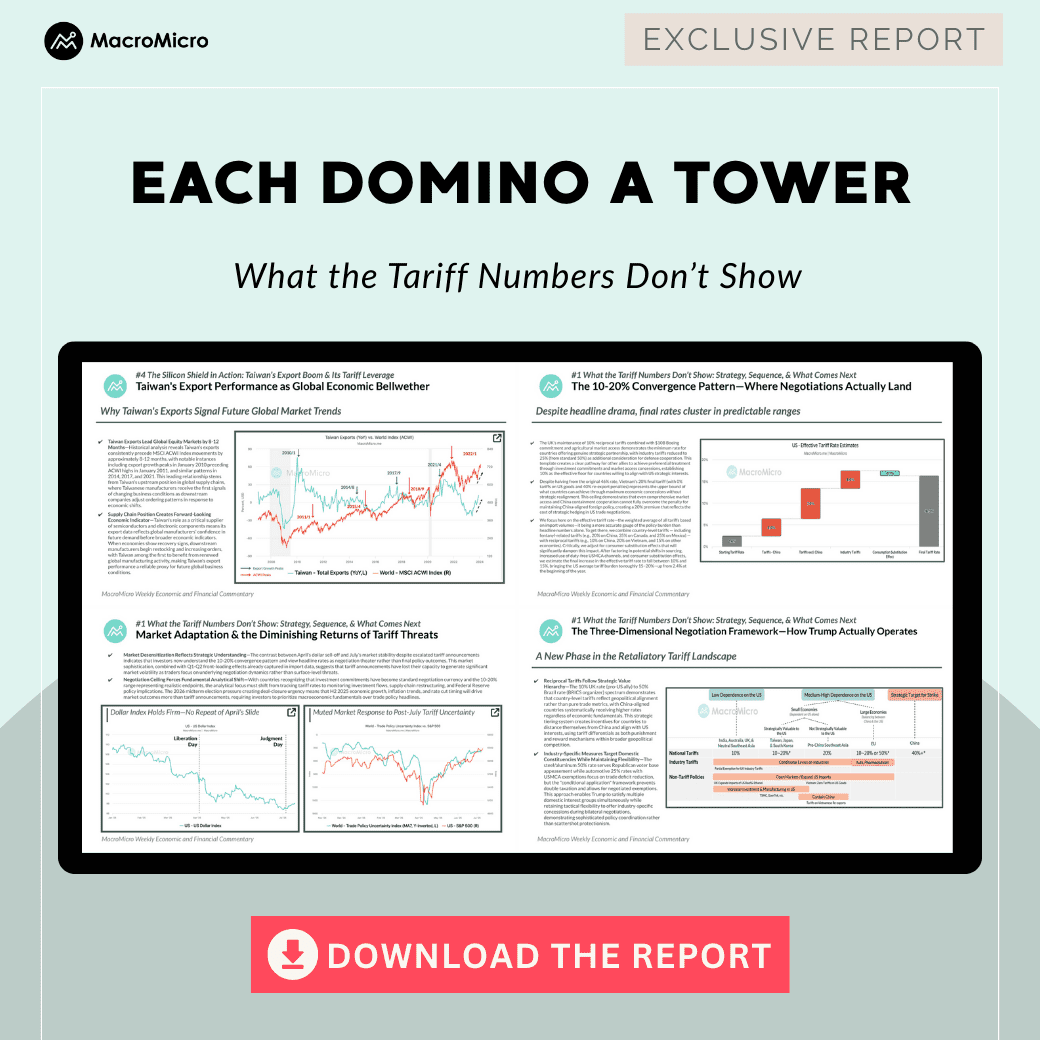
Trump has expanded its tariff campaign to the EU, Mexico, and Japan—using trade pressure to extract investment deals and geopolitical alignment. While tariffs grab headlines, Taiwan is quietly winning: AI-driven exports are surging, and its semiconductor dominance is deepening ties with the US. In contrast, Japan faces rising bond yields and tariff threats, caught between US demands and domestic fiscal strain. This week’s WEFC unpacks Trump’s tariff tactics, Taiwan’s export momentum, and Japan’s policy dilemma—offering a snapshot of how trade, tech, and geopolitics are colliding in H2 2025.
1. Trump Expands Tariff Front to EU and Mexico
On July 12, the US formally imposed 30% tariffs on imports from both the European Union and Mexico, capping a four-round escalation targeting 24 trade partners.
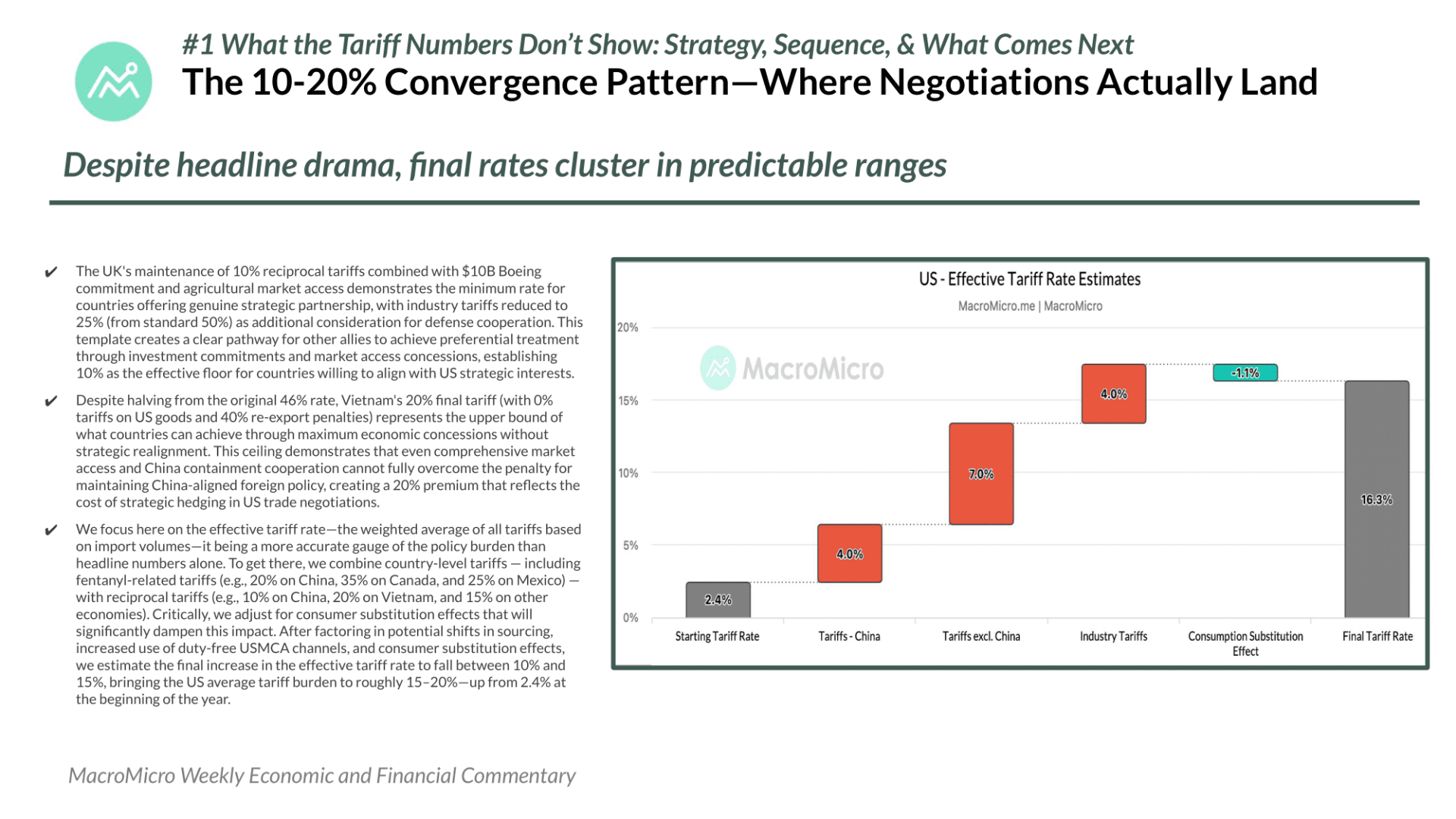
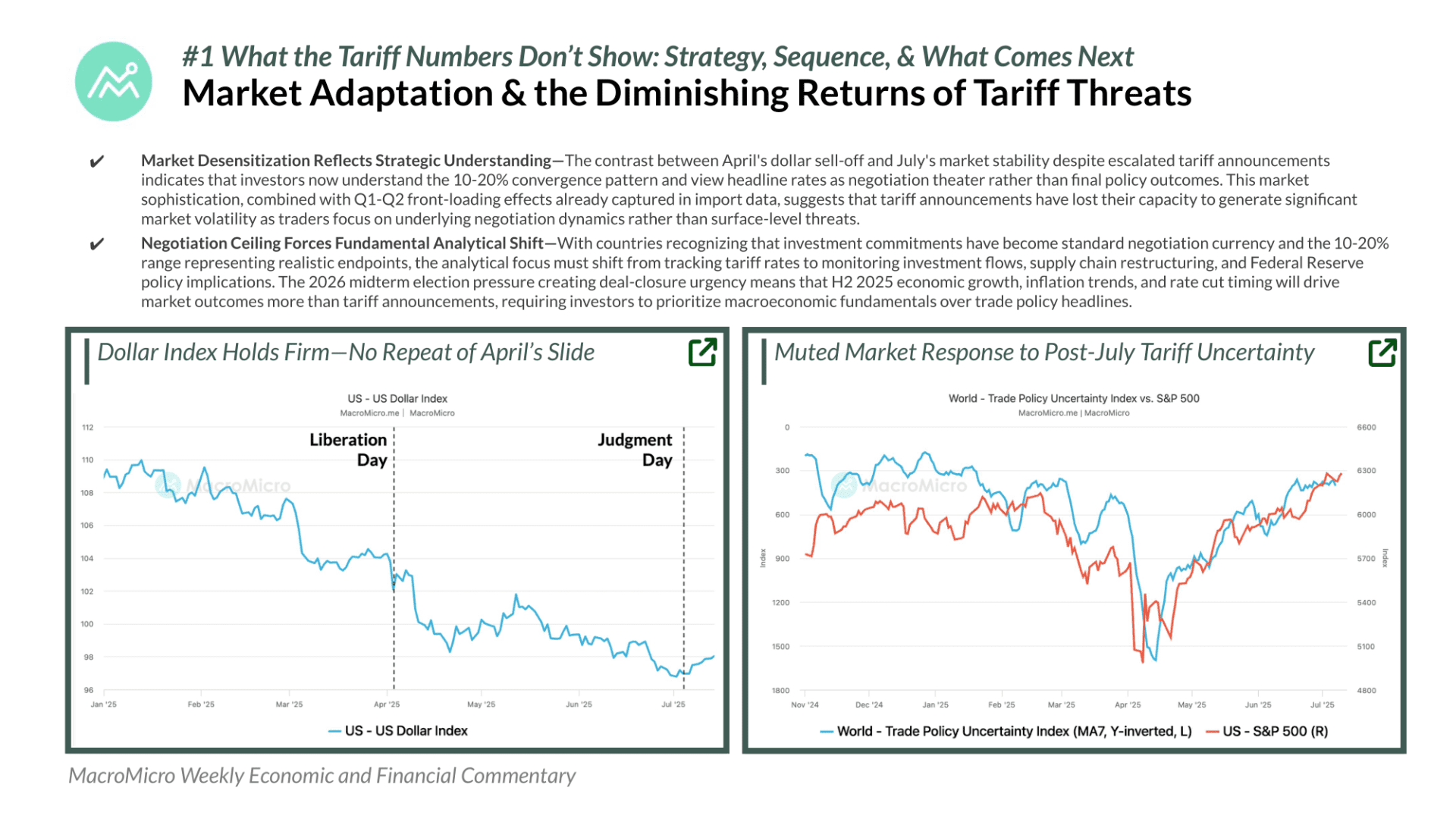
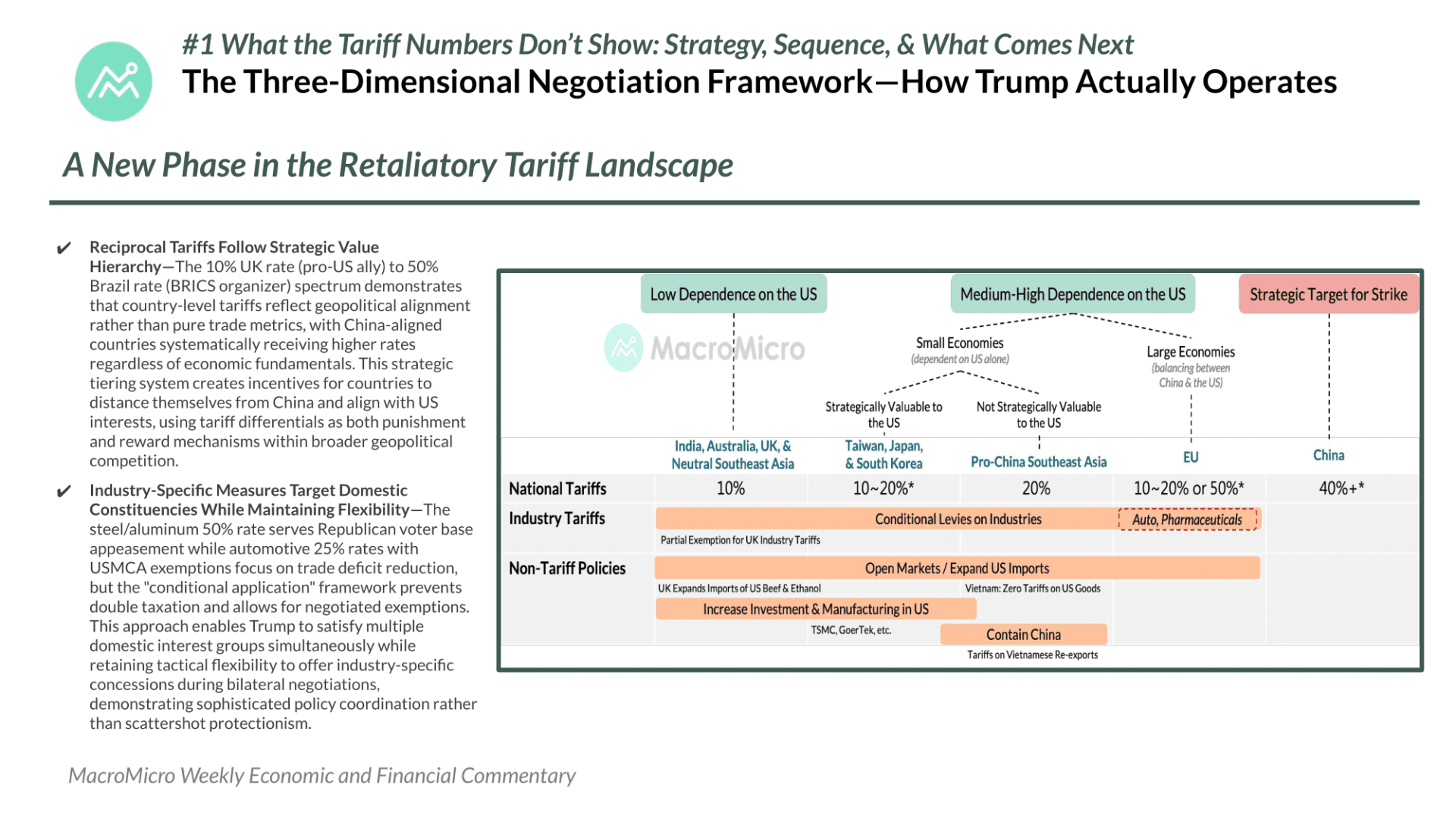
Despite aggressive announcements targeting 24 countries, Trump’s tariffs function primarily as negotiation leverage rather than permanent economic policy. The August 1st deadline extension, paired with moderate tariff rates (mostly 25–35%), shows a calculated effort to pressure foreign governments into offering investment commitments, market access, and anti-China alignment. Industry-specific measures remain conditional to protect US supply chains and voter-sensitive sectors. Ultimately, the administration enforces a “moderate tariff ceiling” to avoid inflation, support Fed rate cuts, and prevent economic backlash. Tariffs generate headlines—but the true objective is strategic realignment and economic concessions without derailing US macro stability.
2. Taiwan Rides AI Wave to Record Export Growth, Strengthens US Ties Through Tech Leverage
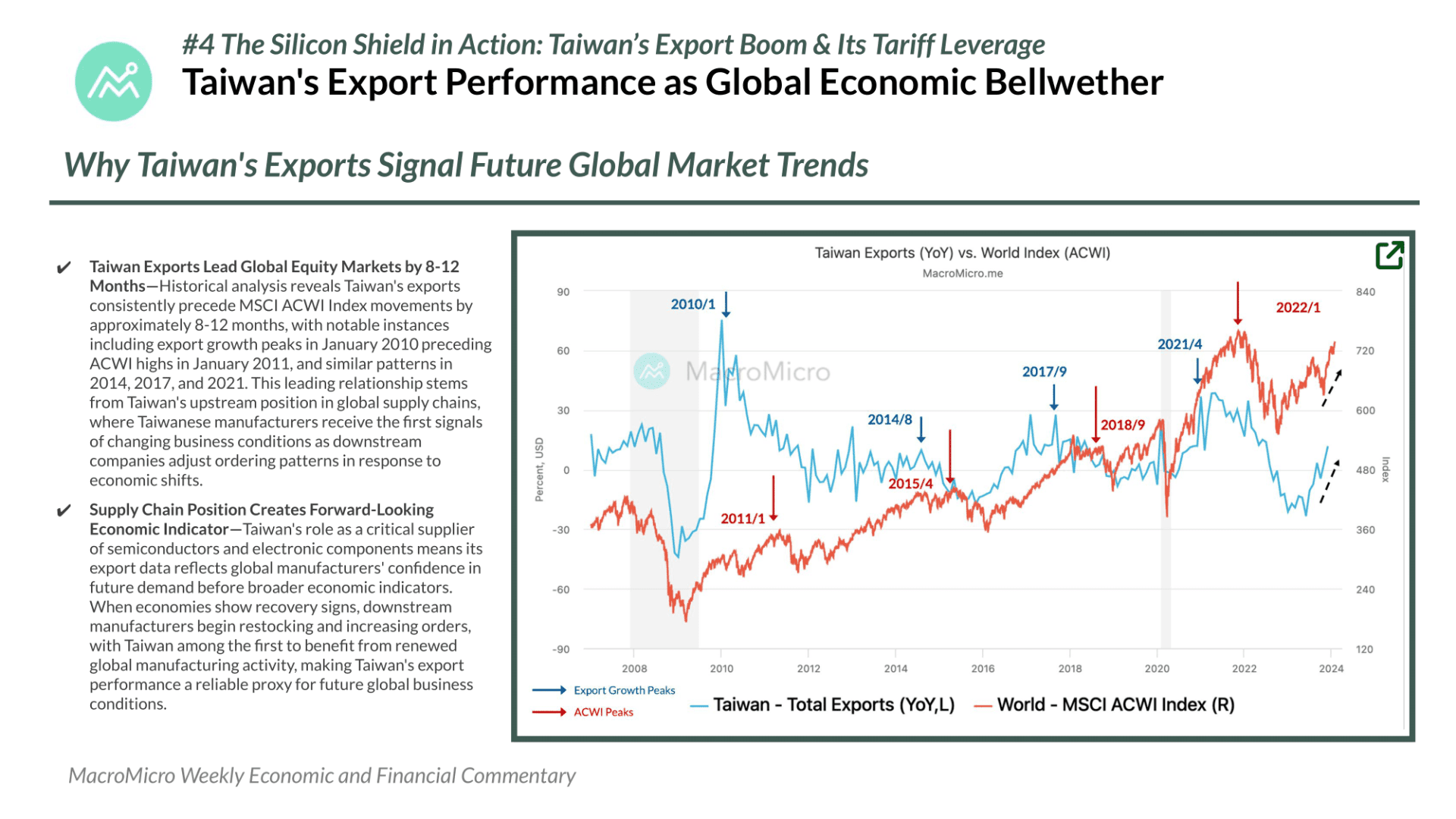
Taiwan’s exports jumped 33.7% YoY in June 2025, fueled by record shipments of electronic components and AI servers. The surge was driven by early procurement, strong AI demand, and closer alignment with US policy.
With a 60% share of the global semiconductor market—and 90% of the most advanced chips through TSMC—Taiwan’s “Silicon Shield” gives it strong leverage. As the US remains reliant on Taiwan’s tech supply chain and reshoring efforts are still years away, Taiwan is using investment diplomacy to secure long-term advantages, going beyond short-term trade deals.
3. Japan Faces Rising Tariff Pressure Amid Domestic Bond Market Volatility
Japan is now under intensified US tariff pressure—with a 25% tariff on exports starting August 1—while simultaneously experiencing surging government bond yields. This reflects a dual challenge: externally, Japan must navigate Trump’s demand for greater investment or concessions to avoid trade penalties; internally, fiscal concerns are growing as opposition parties push for tax cuts and spending, driving bond yields to 20-year highs. These pressures are compounded by the Bank of Japan’s accelerated quantitative tightening and potential rate hikes, creating a volatile environment where Japan must balance economic stimulus, inflation control, and strategic alignment with US demands.
Already a subscriber? Click here to log in.
Full Access to Our Services

Comprehensive data at your service
with key indicators for investment insights

Exclusive flash reports
on key events and data

Create your own charts and analysis
including performance backtesting

Hub of professionals to engage
in meaningful discussions and insights

