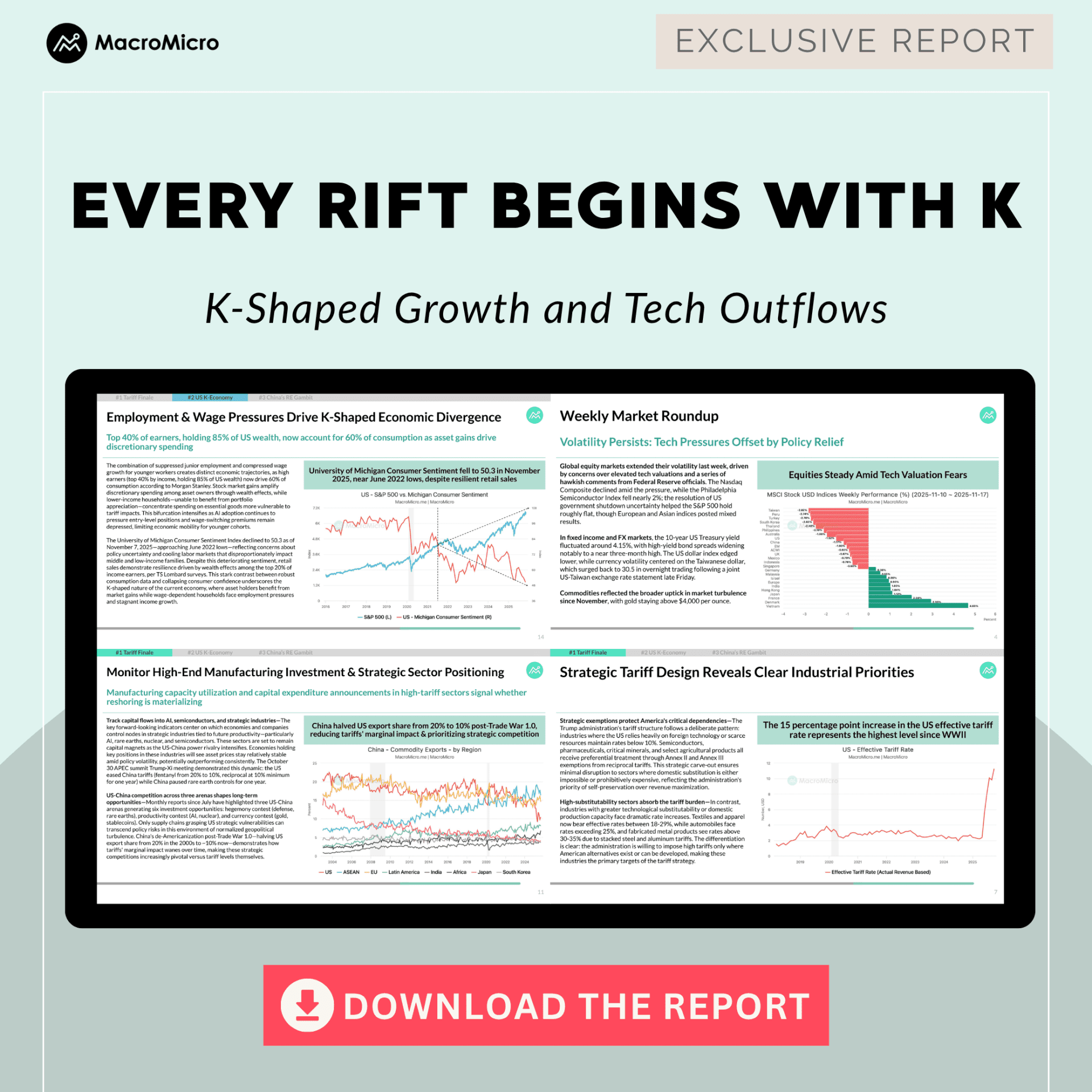
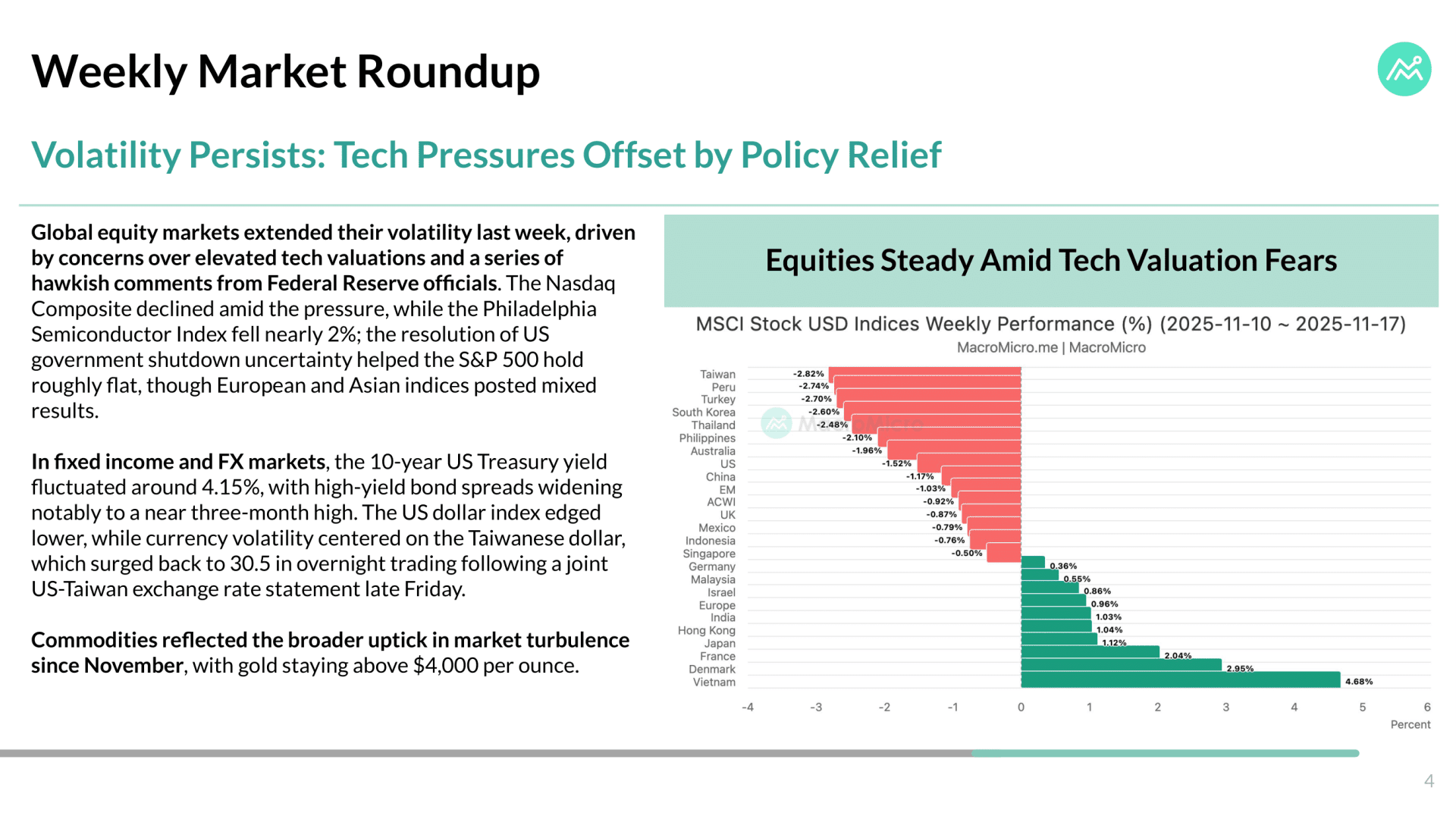
Markets are increasingly worried about the growing signs of a K-shaped economy. The rise of generative AI has led many firms to scale back entry-level hiring, driving up youth unemployment and slowing wage growth—especially for low-income workers, who continue to lag behind higher earners. What risks does this uneven recovery pose to the U.S. economy? And how should the Fed respond? At the same time, major funds have begun pulling back from tech stocks, sparking renewed debate over whether valuations in the sector have run too far. Full insights are in this week’s WEFC report.
This article is exclusive to subscribers. If you're not a subscriber yet, take advantage of our biggest deal of the year — save 50% on MM Max Annual and gain full access to all our charts, reports, including the 2026 market outlook, and more. Subscribe Now»
AI Reshapes Entry-Level Jobs as the K‑Shaped Economy Widens
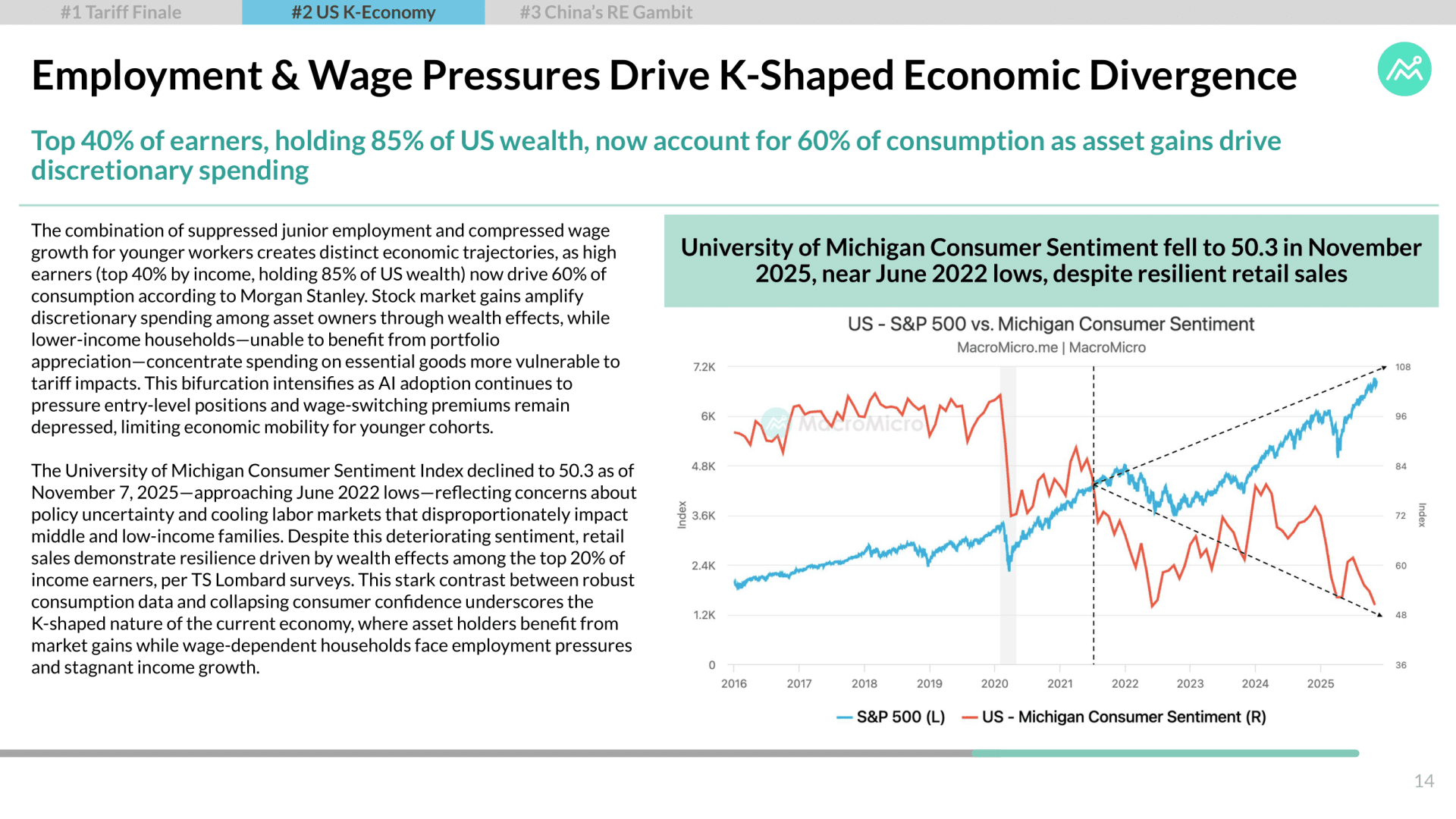
Since 2023, generative AI has led firms to cut entry-level hiring early. Companies using AI now employ 9% fewer junior staff than non-adopters, mainly due to paused hiring. Jobs with high AI exposure—often held by young workers and mid-tier grads—are hit hardest. Youth wage growth has slowed to 5.2%, a decade low. The job-switching premium dropped from 20% to 7%, signaling weaker mobility. Low-income earners saw wage growth fall to just 3.5%. As a result, the K-shaped economy is widening: top earners keep spending thanks to asset gains, while younger and lower-income groups cut back.
Hedge Funds Begin Rotating Out of Tech
Latest 13F filings show diverging fund strategies on tech. Bridgewater is trimming exposure and rotating capital elsewhere. Berkshire Hathaway opened a new position in Alphabet, signaling a shift as Buffett nears retirement. Scion filed for liquidation, while Soros and Appaloosa are still buying tech. Funds are no longer aligned—some see value, others see risk. Most are quietly reallocating to other sectors, suggesting a broader rotation away from Big Tech.
Trump Tariffs – The Final Chapter
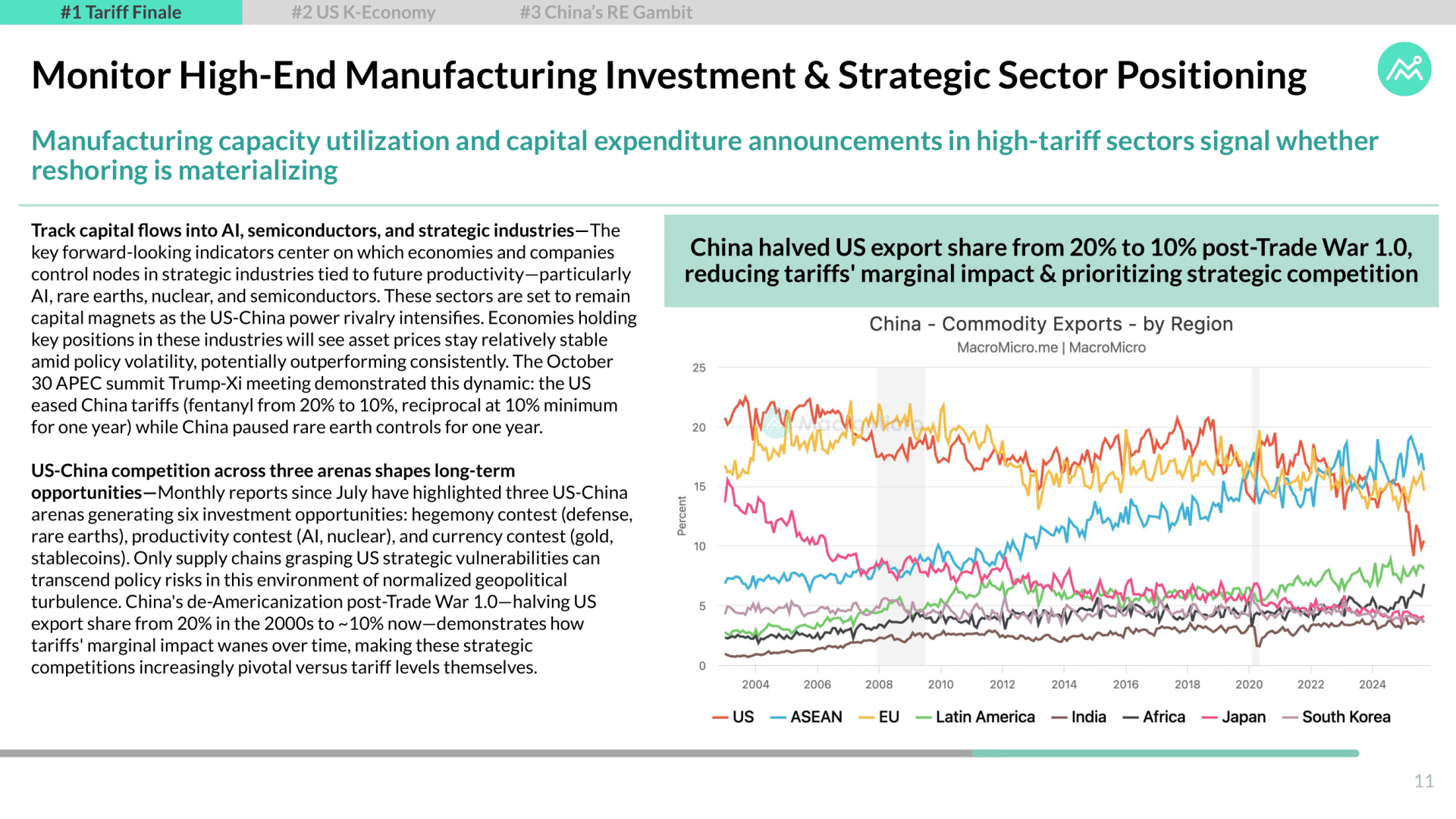
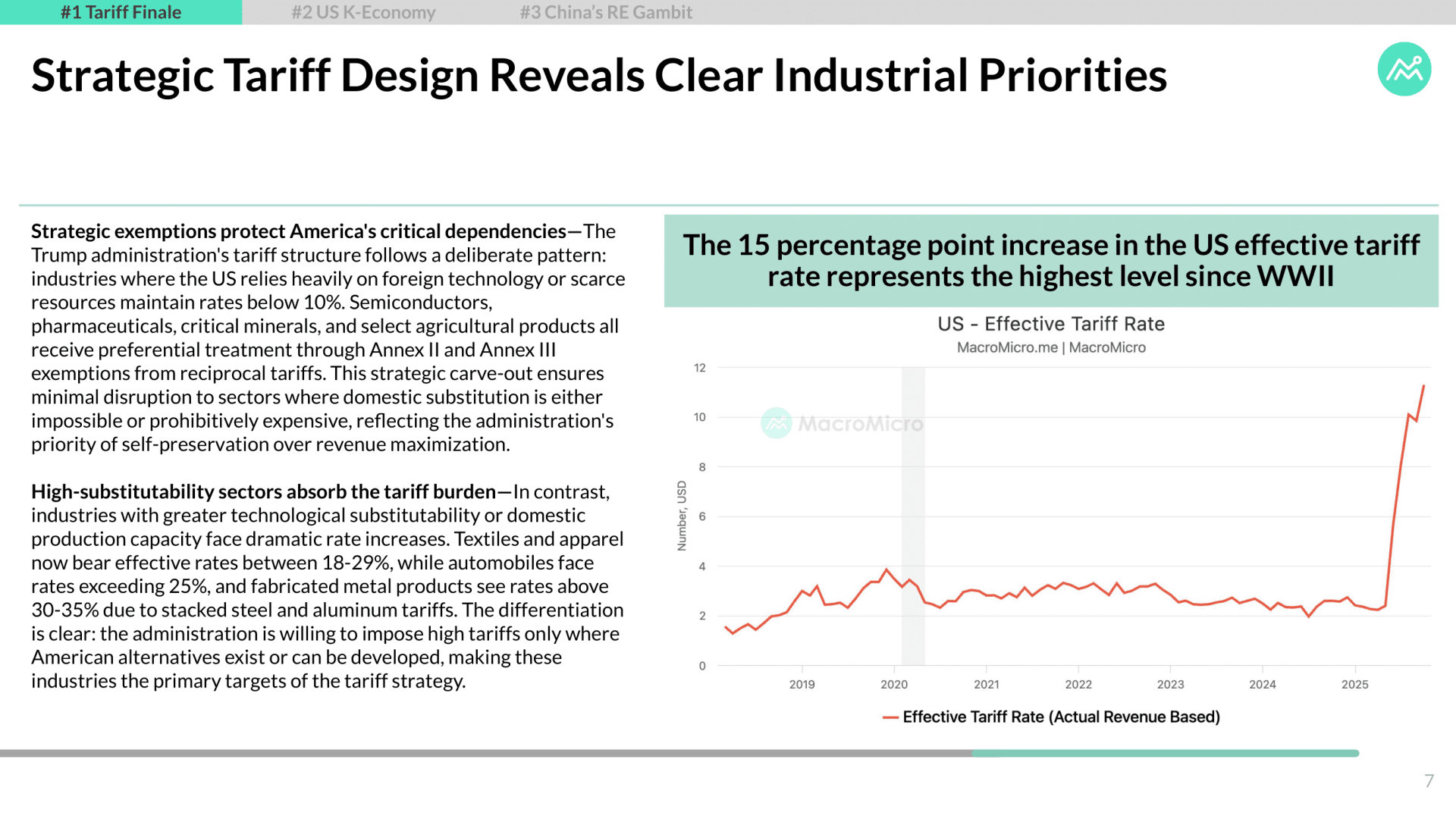
Trump’s 2025 tariffs started with a bang but settled into a more focused strategy. Final rates mostly range from 10–15%, avoiding U.S.-dependent sectors like chips and pharma. Friendly nations like Taiwan, Canada, and Mexico secured lower effective tariffs through deals. U.S. firms are absorbing most costs, keeping inflation stable near 3%. While low-end manufacturing remains hard to shift, high-end supply chains tied to AI and semiconductors are splitting into separate U.S.–China ecosystems. Longer term, control of critical tech and resources will shape capital flows.
China Bets Big on AI and Self-Reliance
China’s 2025 five-year plan focuses on tech, trade, and domestic reform to reignite growth. The government is pushing AI, domestic chips, and productivity as core engines. Breakthroughs in AI models and memory chips mark progress in the U.S.–China tech race. Hainan’s free trade port opens this year with zero tariffs and freer capital flows, supporting yuan internationalization. Domestically, reforms are underway but wage inequality, tax structure, and weak safety nets limit demand. China is shifting from regulation-heavy policies to restoring confidence.
Already a subscriber? Click here to log in.
Full Access to Our Services

Comprehensive data at your service
with key indicators for investment insights

Exclusive flash reports
on key events and data

Create your own charts and analysis
including performance backtesting

Hub of professionals to engage
in meaningful discussions and insights
