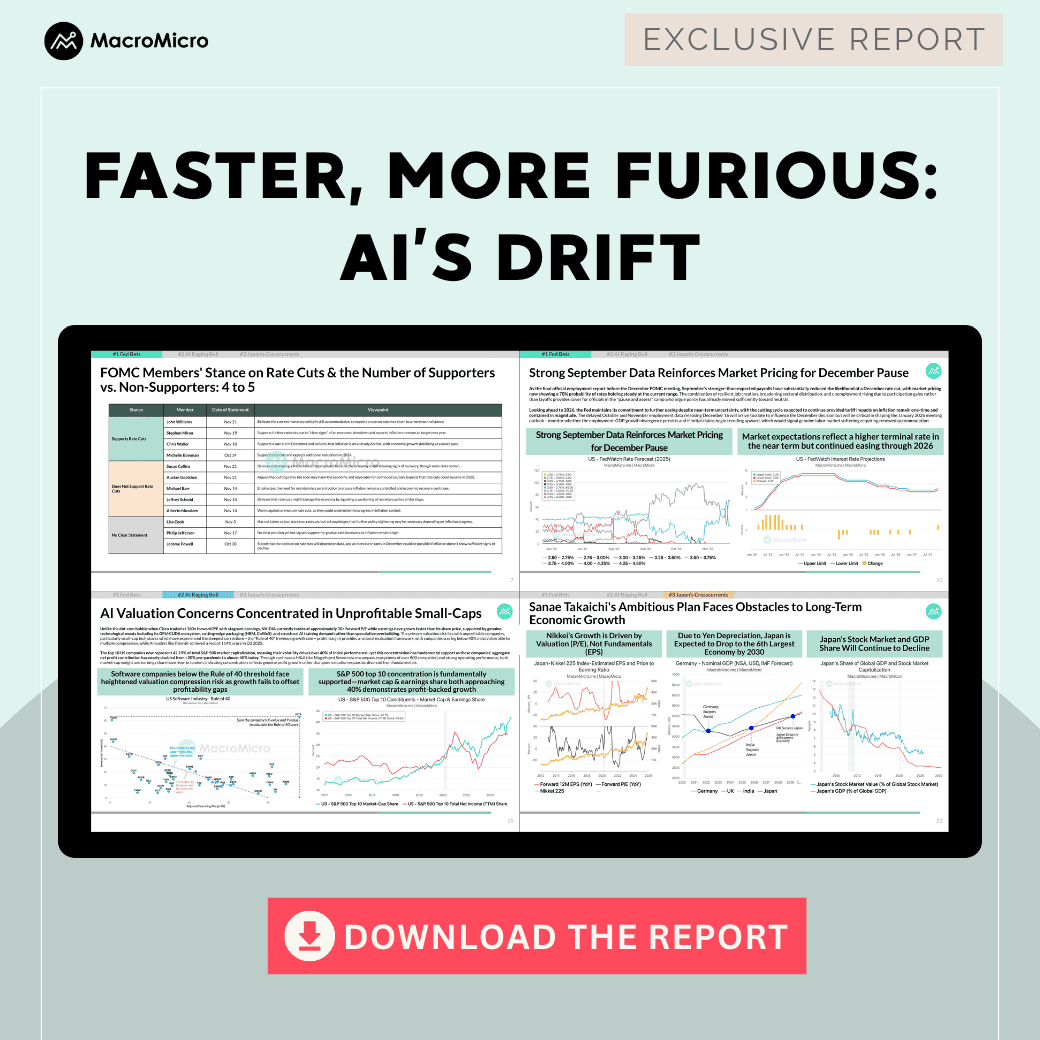
The global economy is dominated by the AI race, where tech giants are engaging in unprecedented CapEx. This "Faster, More Furious" pursuit, while attracting investor attention, is now showing signs of strain, triggering a tech stock selloff.
Concurrently, the Federal Reserve officials' recent hawkish commentary suggests a high probability that the anticipated December rate cut may be delayed. Adding to market uncertainties, Japan unveiled a major fiscal stimulus package. This week's WEFC analyzes these critical market dynamics to assess the financial stability of the AI boom, the Fed’s policy shift, and whether Japan’s stimulus is a catalyst or a looming debt risk.
This article is exclusive to subscribers. If you're not a subscriber yet, take advantage of our biggest deal of the year — save 50% on MM Max Annual and gain full access to all our charts, reports, including the 2026 market outlook, and more. Subscribe Now»

Beyond the Bubble: Scrutinizing AI's Core Metrics
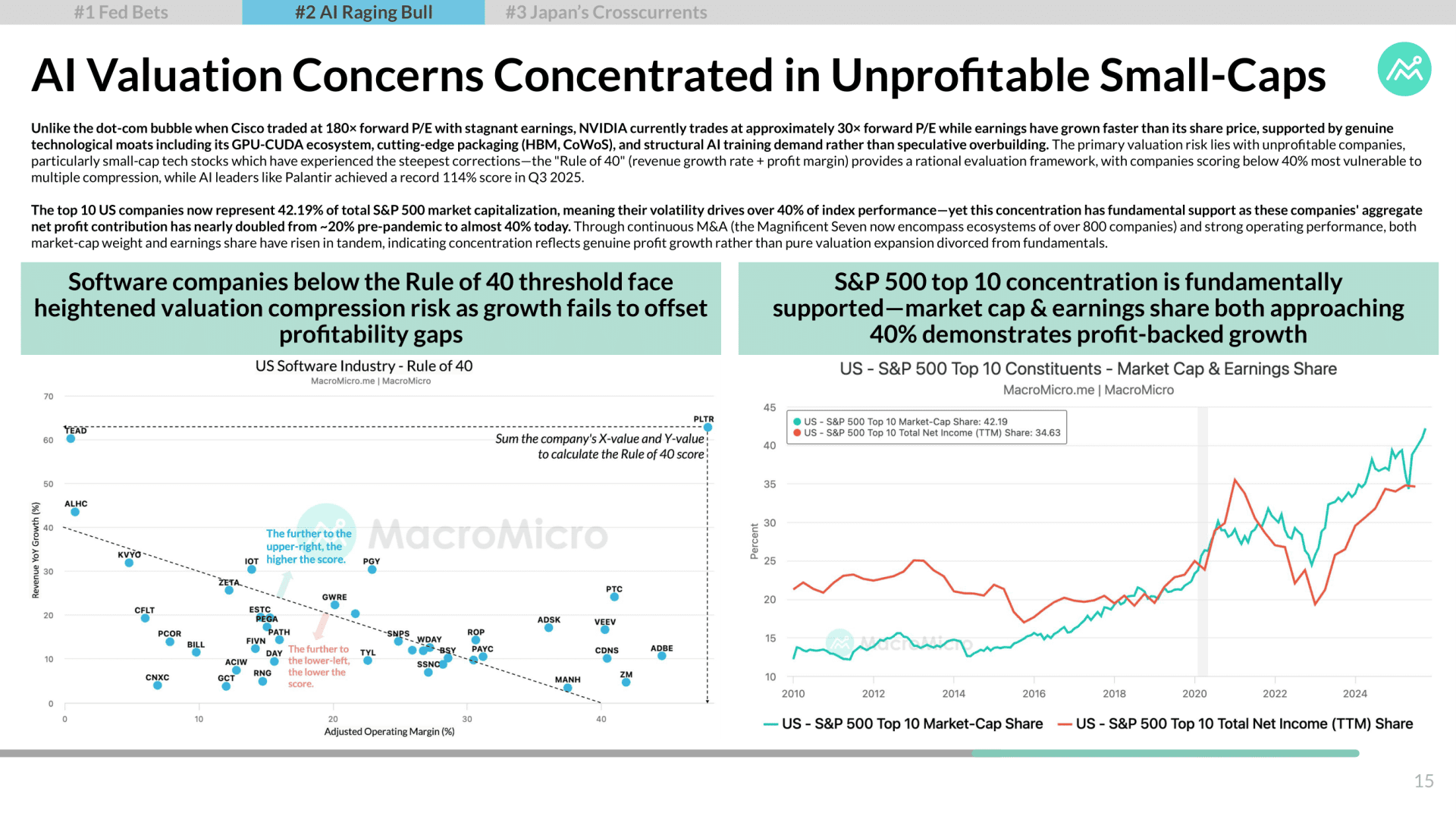
Global equities experienced an AI-driven pullback, with the S&P 500 falling nearly 2% and the Philadelphia Semiconductor Index plunging 5.94%, reflecting extended AI-related concerns across major indices worldwide. Despite this selloff, key metrics suggest the AI growth story differs fundamentally from the 2000 dot-com bubble. AI leader NVIDIA trades at a comparatively rational approximately 30 times forward P/E, with earnings growth surpassing share price appreciation, indicating support from genuine technological moats and structural demand. The most concentrated valuation risk is found among unprofitable small-cap tech stocks, which have faced the steepest corrections. However, two factors require close monitoring: the massive projected $400 billion hyperscaler capex in 2025, and NVIDIA's rising inventory turnover days (from 91 to 103 days). While NVIDIA justifies this increase by building supply for its $500 billion order book, continued rises without corresponding revenue conversion would signal potential over-investment and future demand-supply misalignment across the AI infrastructure value chain.
Fed's December Dilemma: Division, Jobs, and the Data Blackout
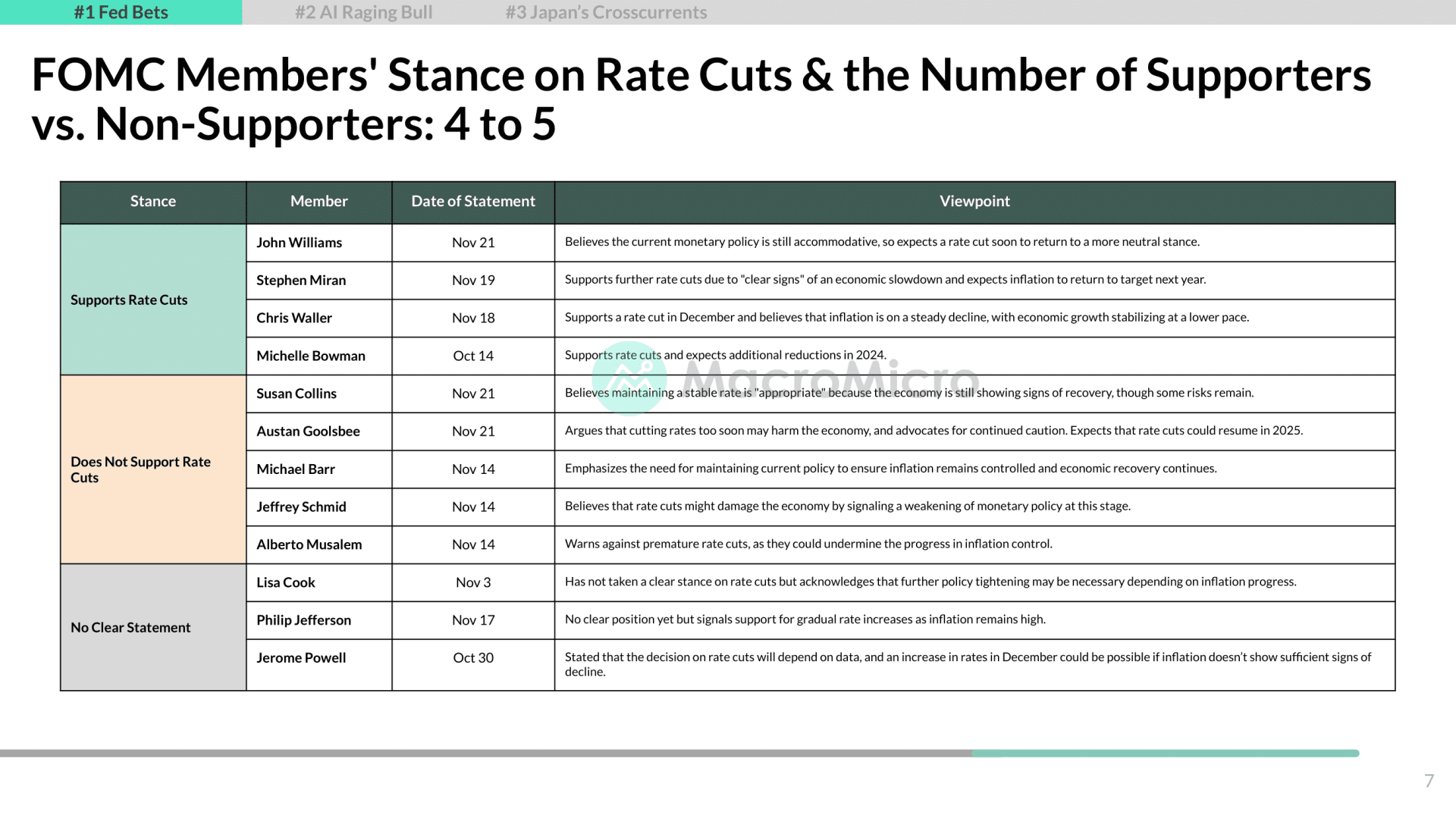
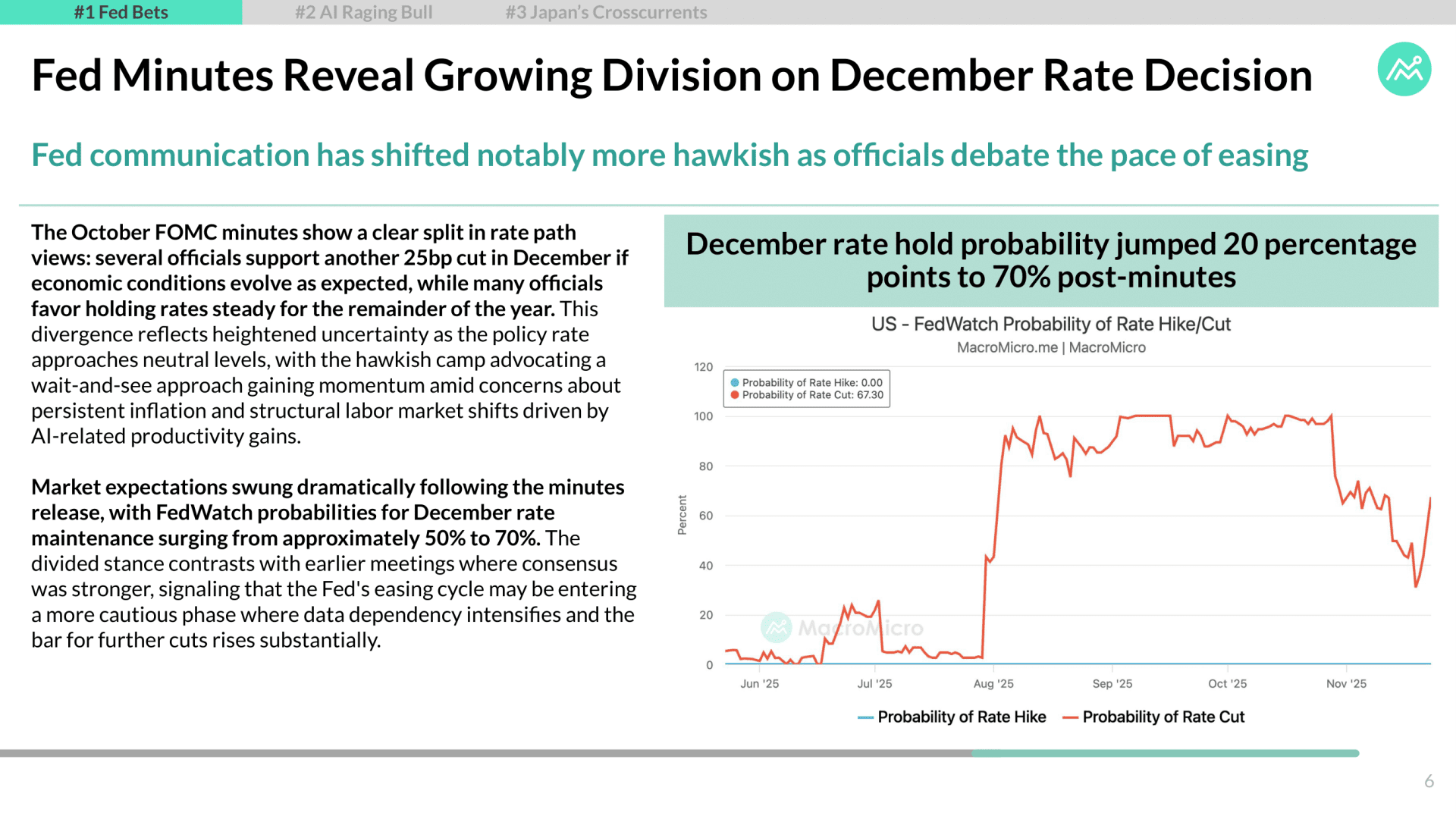
The probability of the Federal Reserve maintaining current rates in December—effectively canceling the anticipated rate cut—surged to 70%, driven by both the hawkish tone of the October FOMC minutes and stronger economic data. The minutes revealed a growing division among officials, with many favoring a steady hold due to concerns over persistent inflation and structural labor market shifts potentially caused by AI-related productivity gains, advocating for a cautious wait-and-see approach. Furthermore, the delayed September nonfarm payrolls report delivered a significant upside surprise of 119,000 jobs, strengthening the case for a pause. Crucially, the rise in the unemployment rate to 4.4% was attributed to labor force expansion (supply inflows) rather than job losses, suggesting underlying labor market resilience. This strong data, coupled with an unprecedented data blackout—where policymakers lack official October and November employment/inflation updates before the decision—reinforces the cautious "pause and assess" camp, substantially raising the bar for further rate cuts in December.
Japan's Fiscal Gamble: Stimulus vs. Debt Anxiety
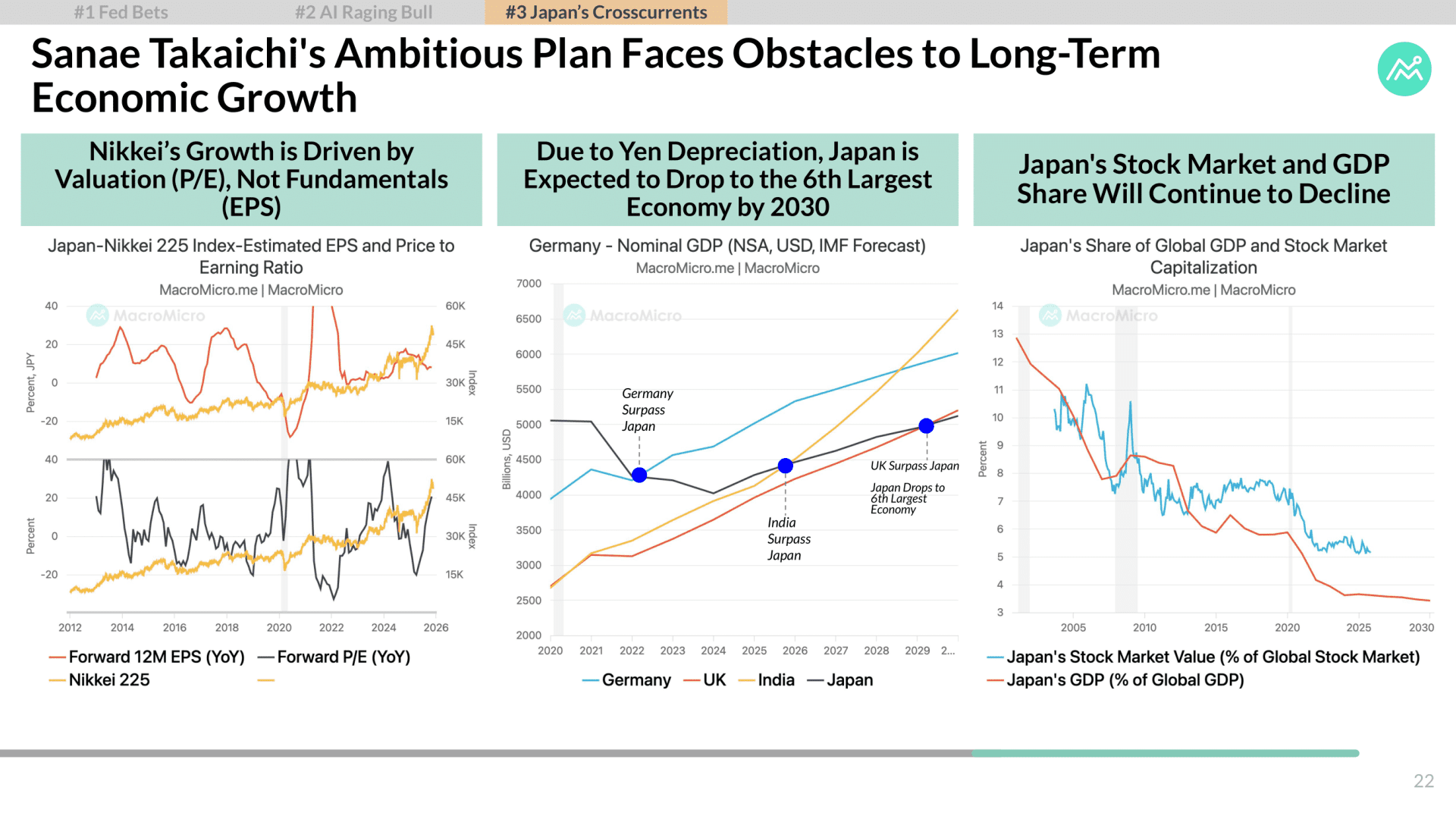
Japan’s cabinet approved its largest post-pandemic supplemental spending package totaling 21.3 trillion yen, aiming to mitigate the rising cost of living through large tax cuts, energy subsidies, and cash allowances, alongside investments in strategic sectors like semiconductors. Initial market reaction to the substantial borrowing required was negative: the yen fell past 157, and Japanese Government Bond (JGB) yields hit a high last seen in 2008. While nominal GDP growth of 3.9% YoY comfortably exceeds bond yields, providing a buffer against immediate debt spiral fears, the long-term outlook remains vulnerable. The core challenge is that the fiscal measures must translate into a material pickup in real economic growth. Without this shift, the government will fail to establish a virtuous economic cycle of simultaneous inflation and growth, making the long-term fundamental outlook vulnerable despite the short-term stimulus intended to alleviate price pressures.
Already a subscriber? Click here to log in.
Full Access to Our Services

Comprehensive data at your service
with key indicators for investment insights

Exclusive flash reports
on key events and data

Create your own charts and analysis
including performance backtesting

Hub of professionals to engage
in meaningful discussions and insights
