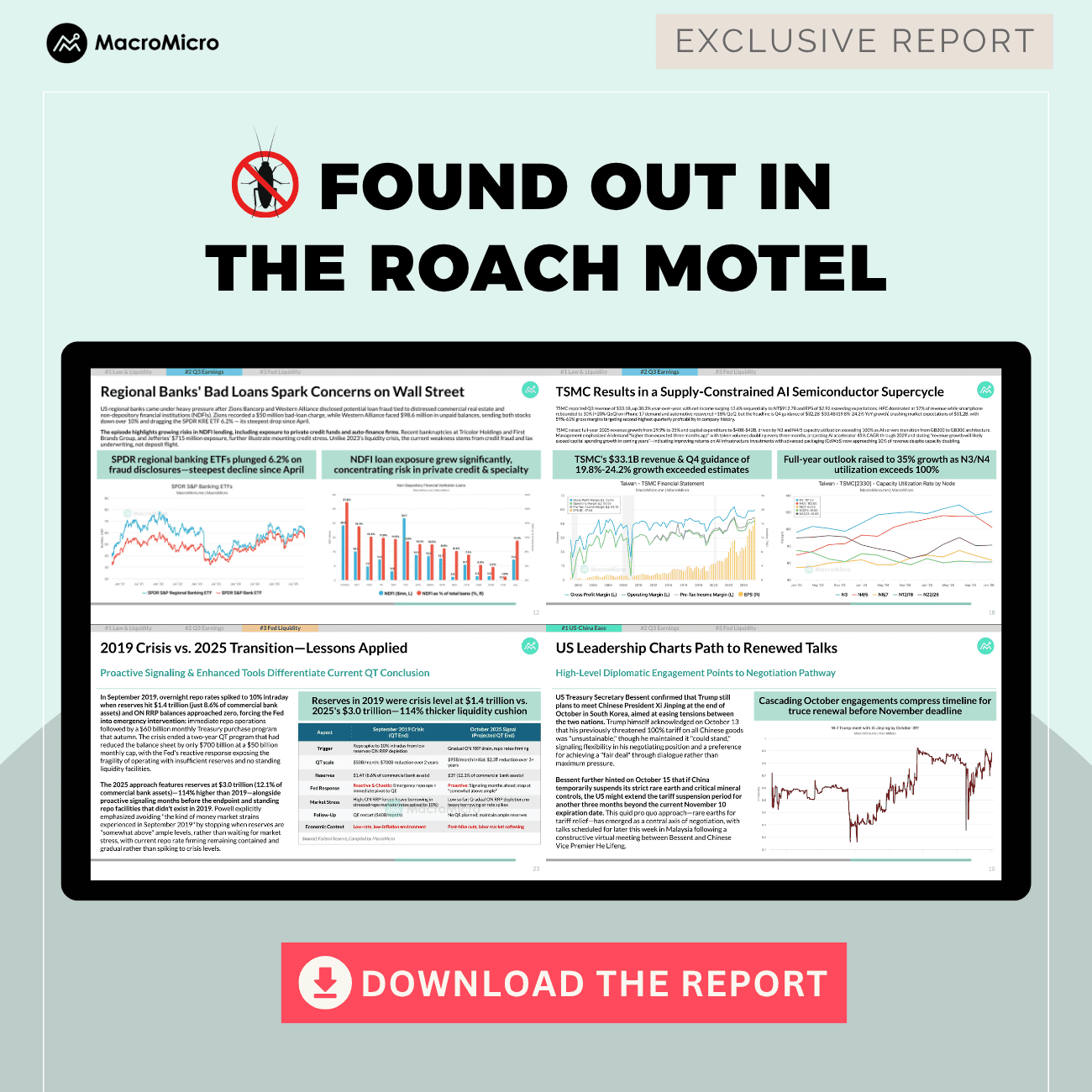
Recent small bank failures have exposed deeper issues lurking in the credit market. As JPMorgan CEO Jamie Dimon famously warned, "When you see one cockroach, there are probably many more." This raises a critical question: Is the US economy truly in jeopardy? Are markets overreacting, or is a bigger crisis brewing? We've been analyzing overall corporate earnings reports for clues.
In this week's report, we're setting up our "Roach Motel" to identify and track the credit risks hidden beneath the surface.
Q3 Earnings Season Opens with Exceptional Momentum
The Q3 2025 earnings season began with strong momentum as 58 S&P 500 firms reporting through mid-October posted 15.4% EPS growth and 8.0% revenue gains, with 86% beating earnings and 79% topping revenue estimates. This marks a sharp rebound from the first half, reflecting solid cost control, resilient demand, and a favorable macro backdrop that continues to support positive earnings revisions.
Banking Split: Regional Strains vs. Big Bank Strength
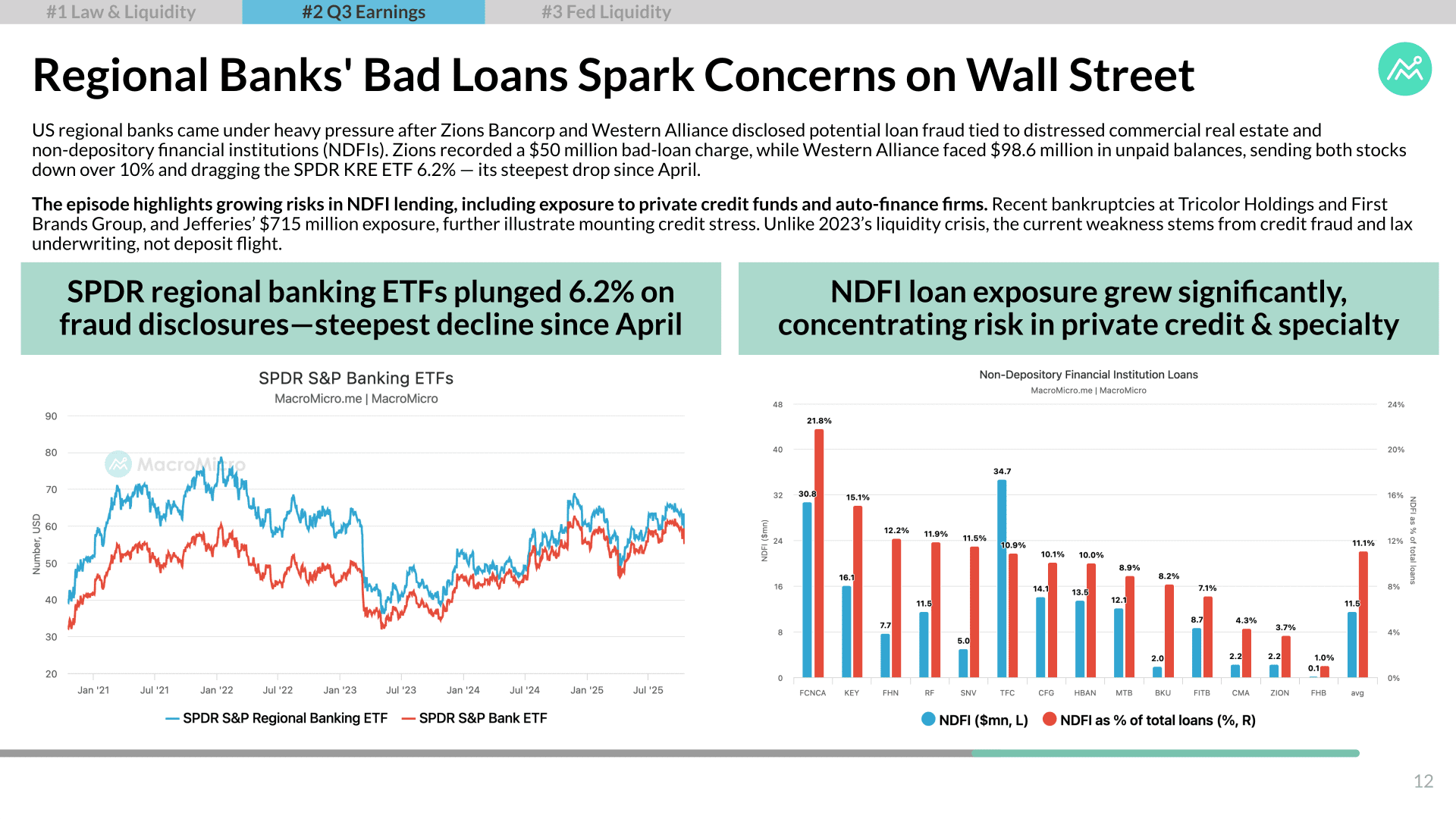
U.S. regional banks faced renewed stress after Zions and Western Alliance revealed loan fraud tied to distressed real-estate funds, dragging KRE ETF down 6.2%. Yet large banks delivered strong results: the top five earned $41B (+19% YoY), led by JPMorgan and Goldman Sachs. Robust investment-banking fees (+16–43% YoY) show capital-markets activity is reviving after a two-year lull.
Tech Titans Power Through: AI and Semiconductors Drive the Cycle
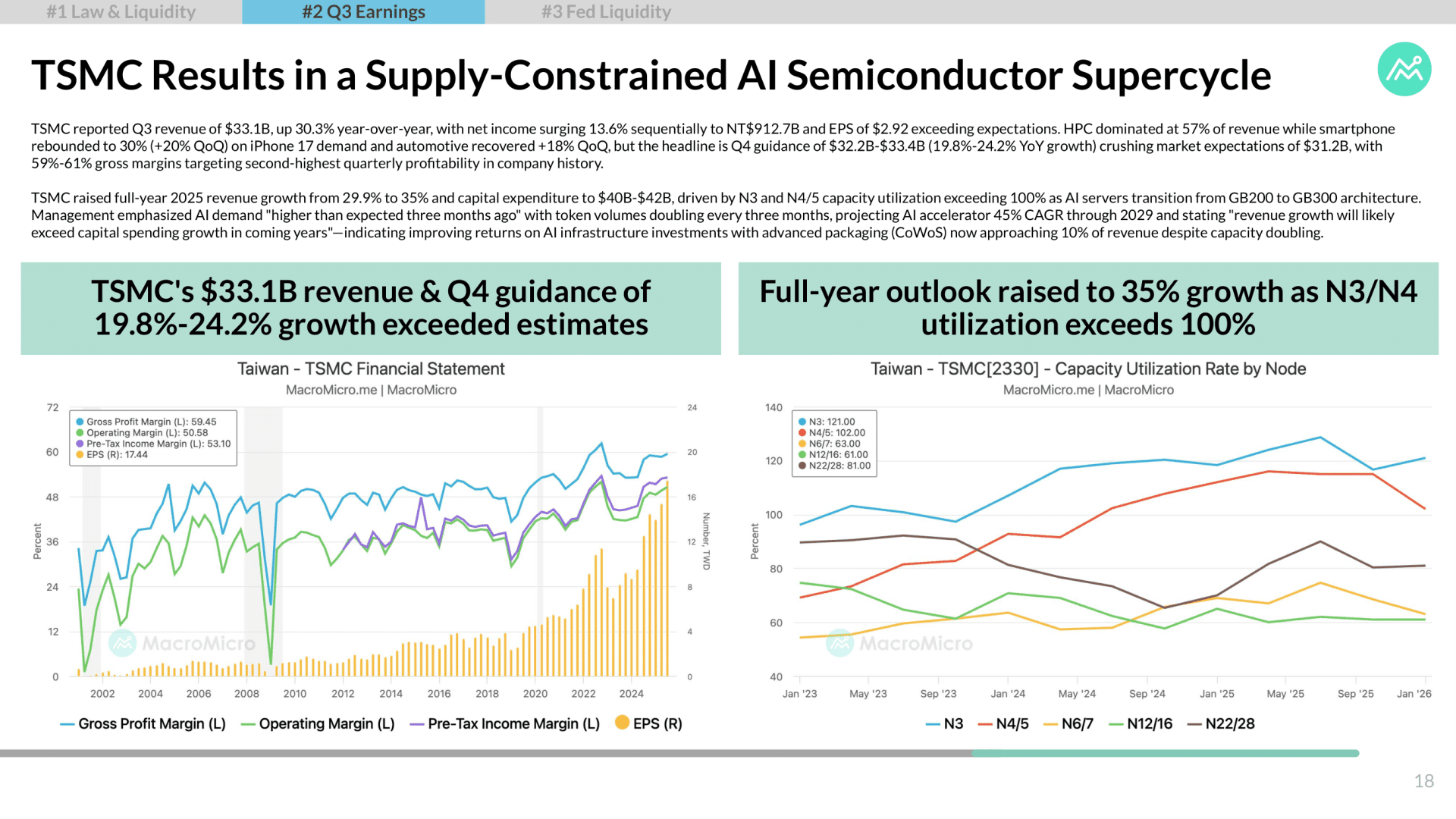
TSMC’s revenue jumped 30% YoY with AI-driven HPC at 57% of sales and record gross margins, while ASML sustained €7.5B sales amid strong EUV demand. Broader semiconductor recovery is emerging as smartphone, industrial, and automotive segments stabilize. With capex expansion and AI demand still accelerating, tech earnings continue to outperform, driving multi-sector optimism into 2026.
Powell Signals QT Curtain Call: The Fed Nears Its Balance Sheet Endpoint
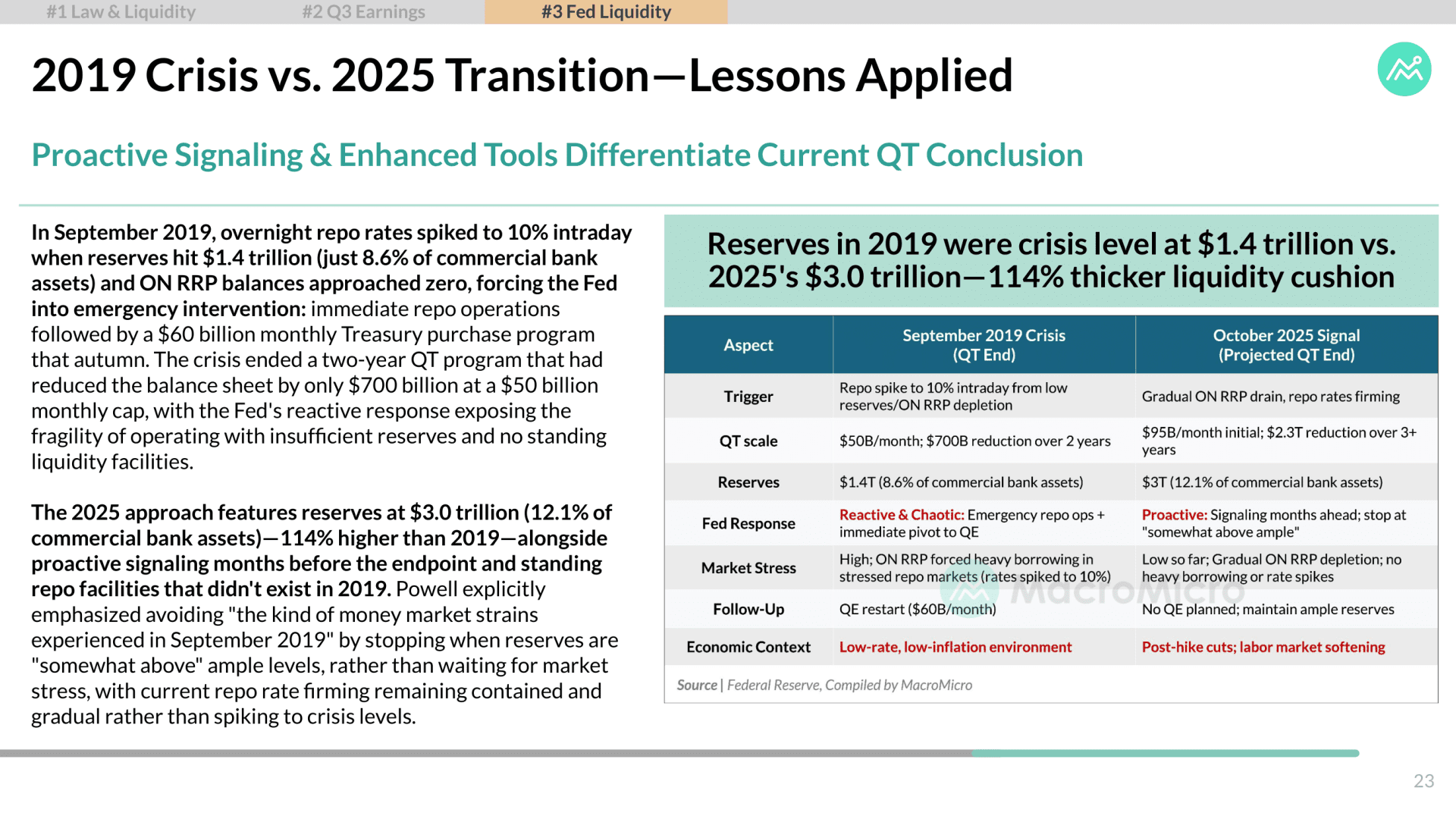
Fed Chair Jerome Powell indicated the U.S. central bank may soon end its quantitative tightening (QT) program, saying it is “approaching that point in coming months.” The Fed’s $6.5T balance sheet, now down $2.2T since 2022, will likely stop runoff once reserves remain “somewhat above ample levels.” Unlike the 2019 liquidity crunch, current reserves—at $3T—provide a larger cushion. Powell emphasized a controlled exit supported by the standing repo facility to prevent money-market strain, signaling that the Fed’s next phase will focus on maintaining ample liquidity while aligning QT’s conclusion with ongoing rate-cut calibration.
Already a subscriber? Click here to log in.
Full Access to Our Services

Comprehensive data at your service
with key indicators for investment insights

Exclusive flash reports
on key events and data

Create your own charts and analysis
including performance backtesting

Hub of professionals to engage
in meaningful discussions and insights
