US President Donald Trump has once again raised tensions with European allies over Greenland. On Saturday (Jan 17), he warned that the US will impose an additional 10% tariff from February 1 on imports from eight European countries unless Washington is allowed to purchase Greenland, with tariffs rising to 25% on June 1 if no agreement is reached.
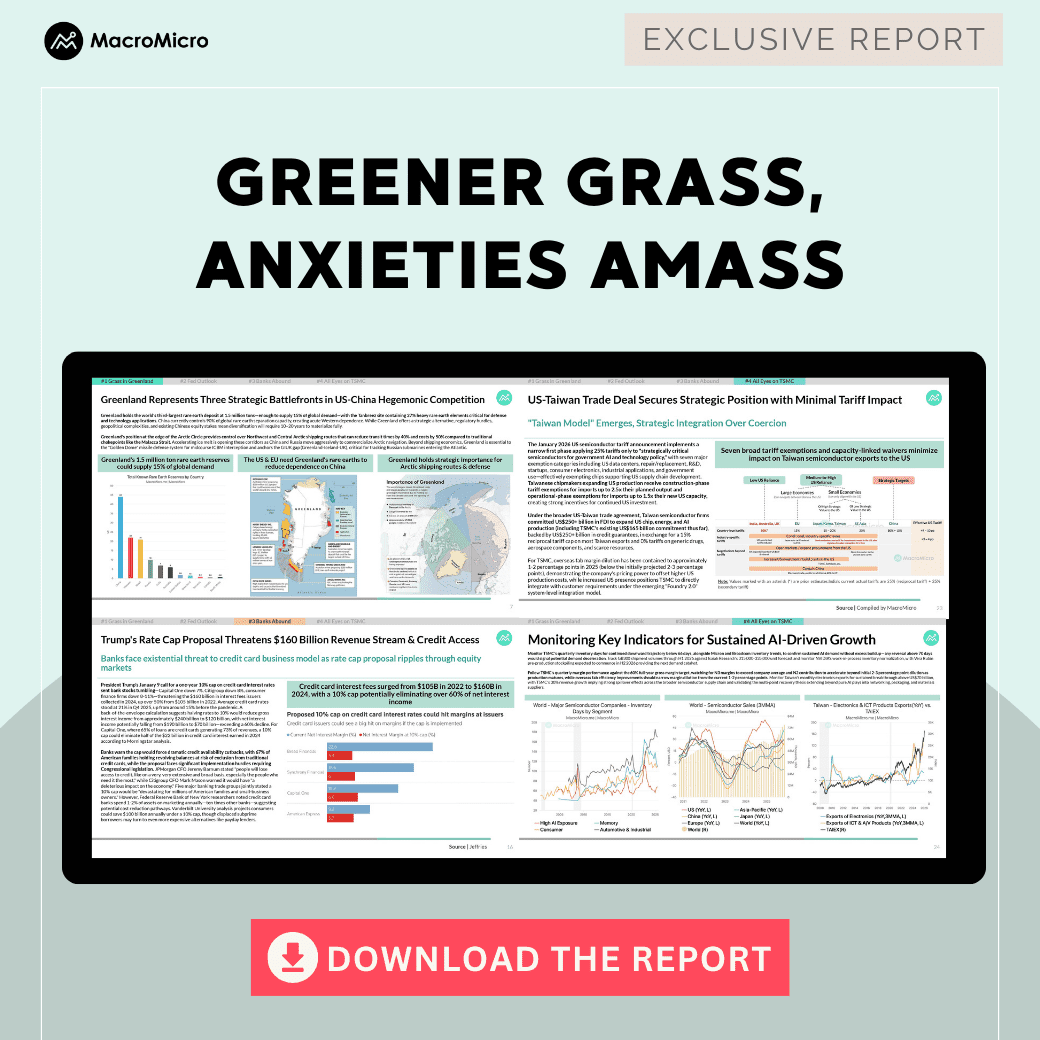
While the move appears abrupt, it reflects deeper strategic calculations that could reshape global geopolitics, economic dynamics, and investment trends. These key points are covered in this week's WEFC.
Greenland, Tariffs, and Power: Trump’s Strategic Pressure Campaign
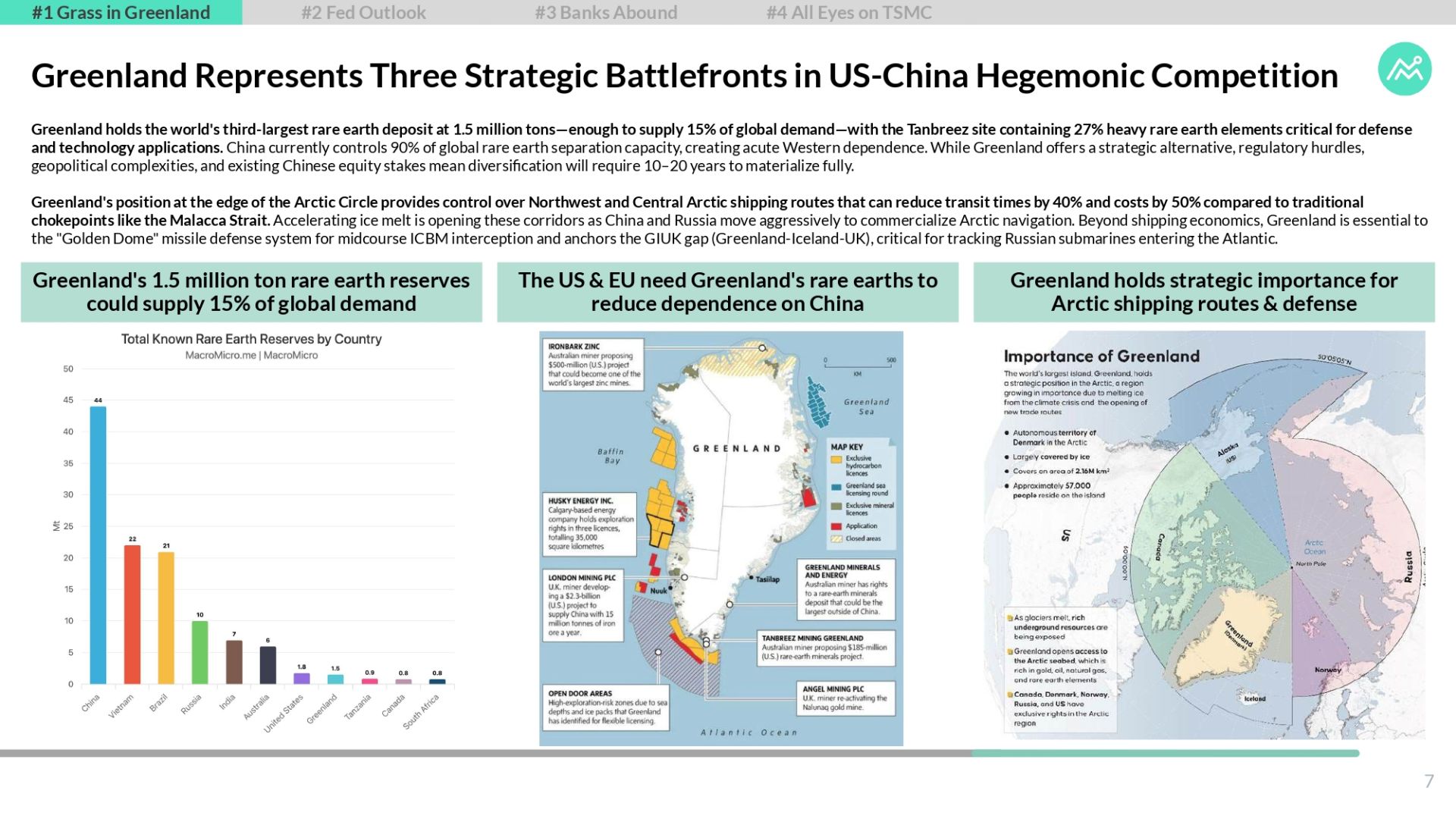
Trump’s push for Greenland is driven by strategic leverage rather than outright territorial ambition. By threatening tariffs on eight European nations, the US is using trade as a bargaining tool to secure long-term geopolitical interests. Greenland is critical on three fronts: rare earth resources that could reduce Western dependence on China, control over emerging Arctic shipping routes, and its role in missile defense and North Atlantic security through the GIUK gap. While full sovereignty is unlikely, the US can still achieve its objectives through NATO cooperation, defense agreements, and multinational resource deals, making Greenland a strategic asset in long-term hegemonic competition.
Big Banks Surge as Trading Booms, Policy Risks Linger
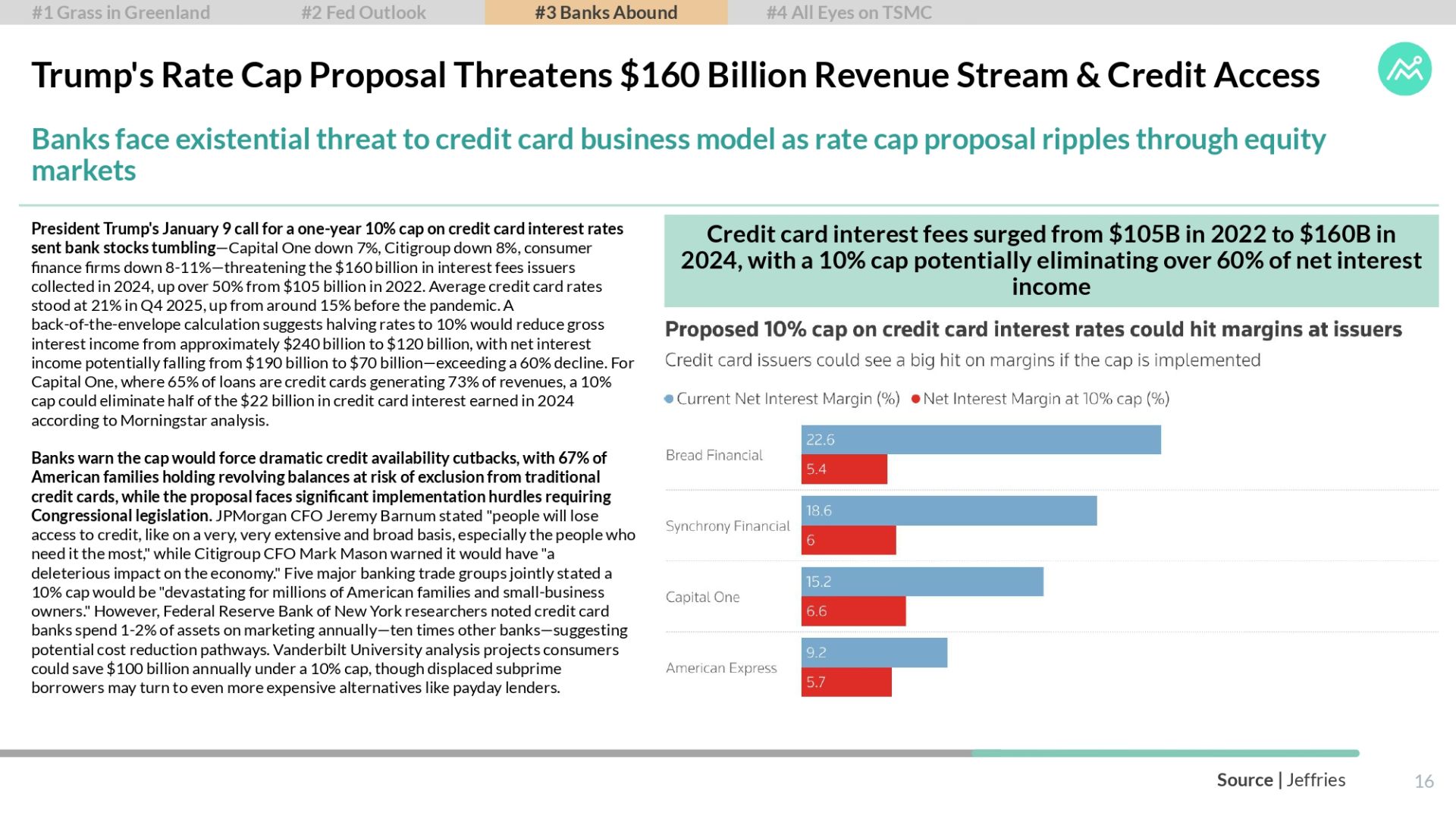
US large banks posted their strongest results since 2021, driven by a rebound in M&A, debt underwriting, and record trading revenues amid policy-driven market volatility. Performance diverged, with firms strong in investment banking and advisory gaining market share. Consumer fundamentals remained resilient, with stable credit quality, rising card spending, and recovering mortgage activity. However, risks are increasing. Proposed caps on credit card interest rates threaten a major profit source and could restrict credit availability. While executives remain optimistic about sustained capital markets growth, regulatory and political uncertainty remain key downside risks.
TSMC Anchors the AI Cycle Amid US-Taiwan Trade Realignment
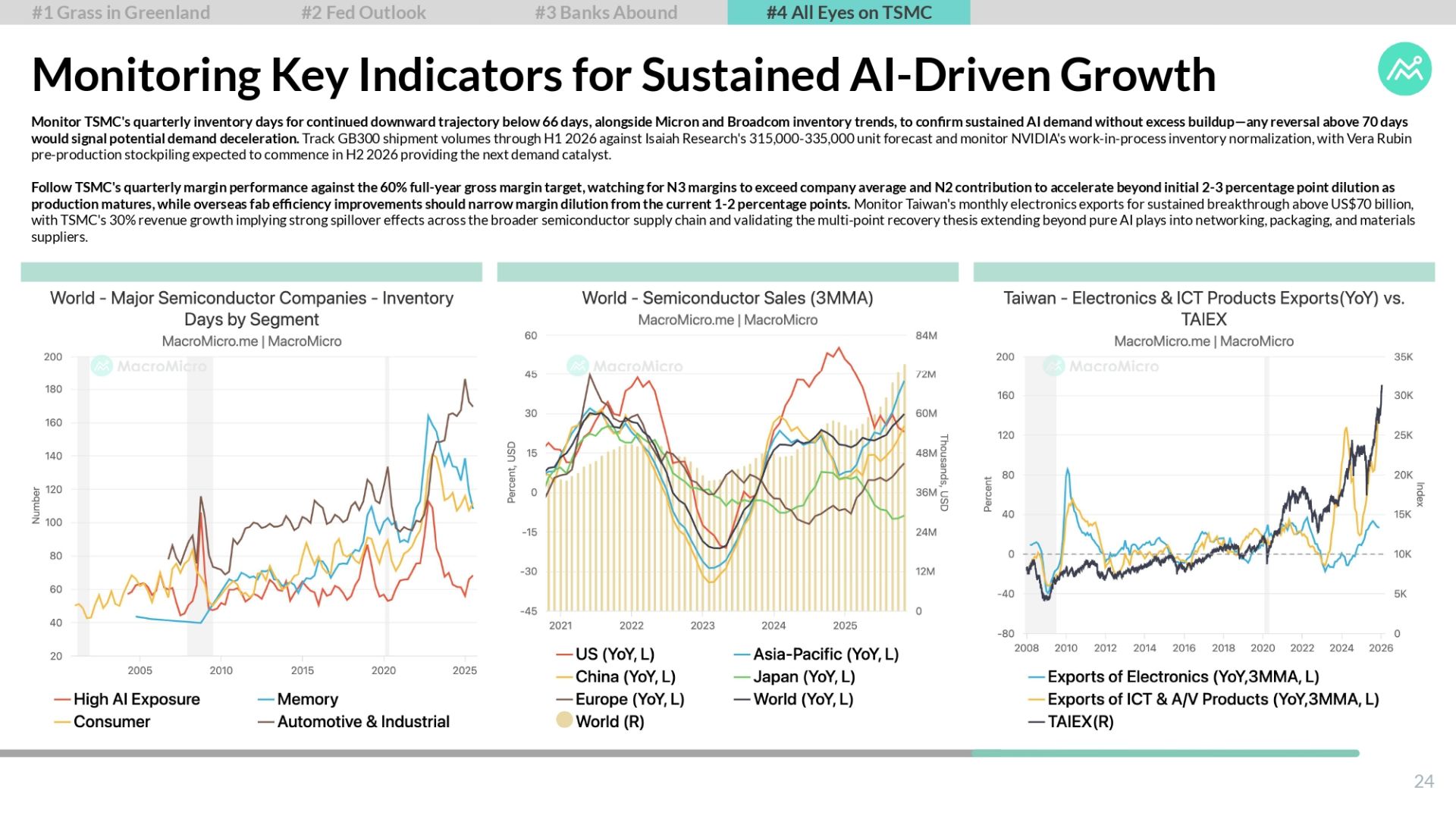
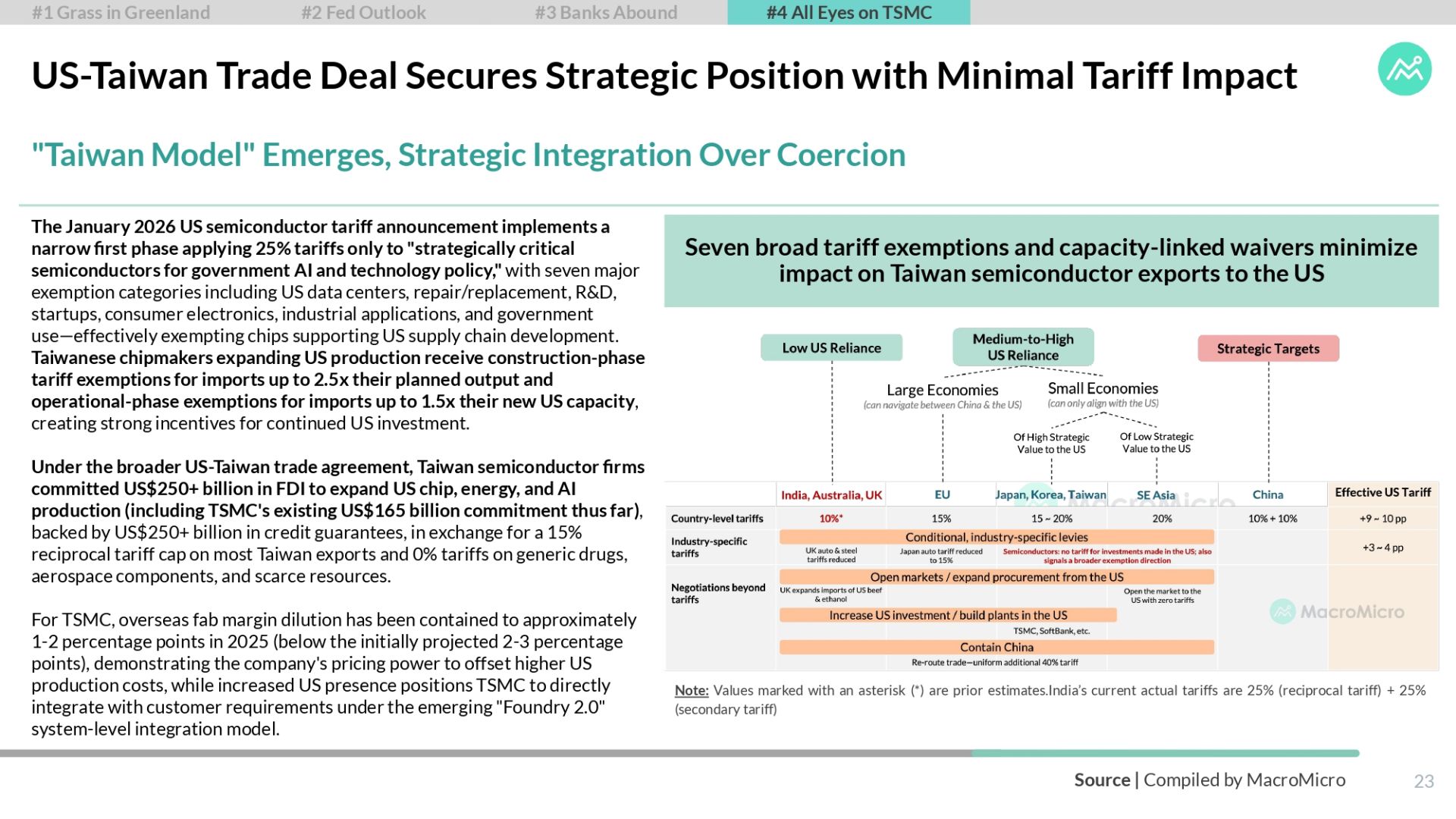
TSMC’s record earnings confirm AI as the core driver of the semiconductor upcycle. Strong demand for AI servers and advanced nodes pushed revenue and margins well above expectations, with momentum expected to continue into 2026. US-Taiwan trade arrangements have largely insulated Taiwanese chipmakers from tariff risks through targeted exemptions tied to US investment commitments. For TSMC, overseas expansion has caused limited margin dilution, offset by pricing power and advanced process migration. With AI accelerator demand projected to grow over 50% annually, TSMC sits at the center of a durable, multi-year AI-driven growth cycle.
About Weekly Economic and Financial Commentary (WEFC)
The MacroMicro WEFC cuts through the noise, delivering rigorous analysis and in-depth insights on the most critical market-moving events. These topics cover equities, foreign exchange, bonds, commodities, global central banks, international political economy, and more.
At the core of WEFC is a concise Chart Pack, enabling you to grasp market trends at a glance.
Already a subscriber? Click here to log in.
Full Access to Our Services

Comprehensive data at your service
with key indicators for investment insights

Exclusive flash reports
on key events and data

Create your own charts and analysis
including performance backtesting

Hub of professionals to engage
in meaningful discussions and insights
