The U.S. government has been in shutdown for over 40 days, halting federal funding and disrupting key operations—including the release of official economic data. Yet there’s finally a glimmer of hope: the Senate has made significant progress on a temporary funding bill, offering a much-needed “resuscitation” for the government.
As Washington inches closer to reopening, investors are asking what the market impact might be once the shutdown ends. In the absence of official U.S. data, what alternative indicators can help us assess trends in AI demand and the labor market? This week’s report explores these questions in detail.
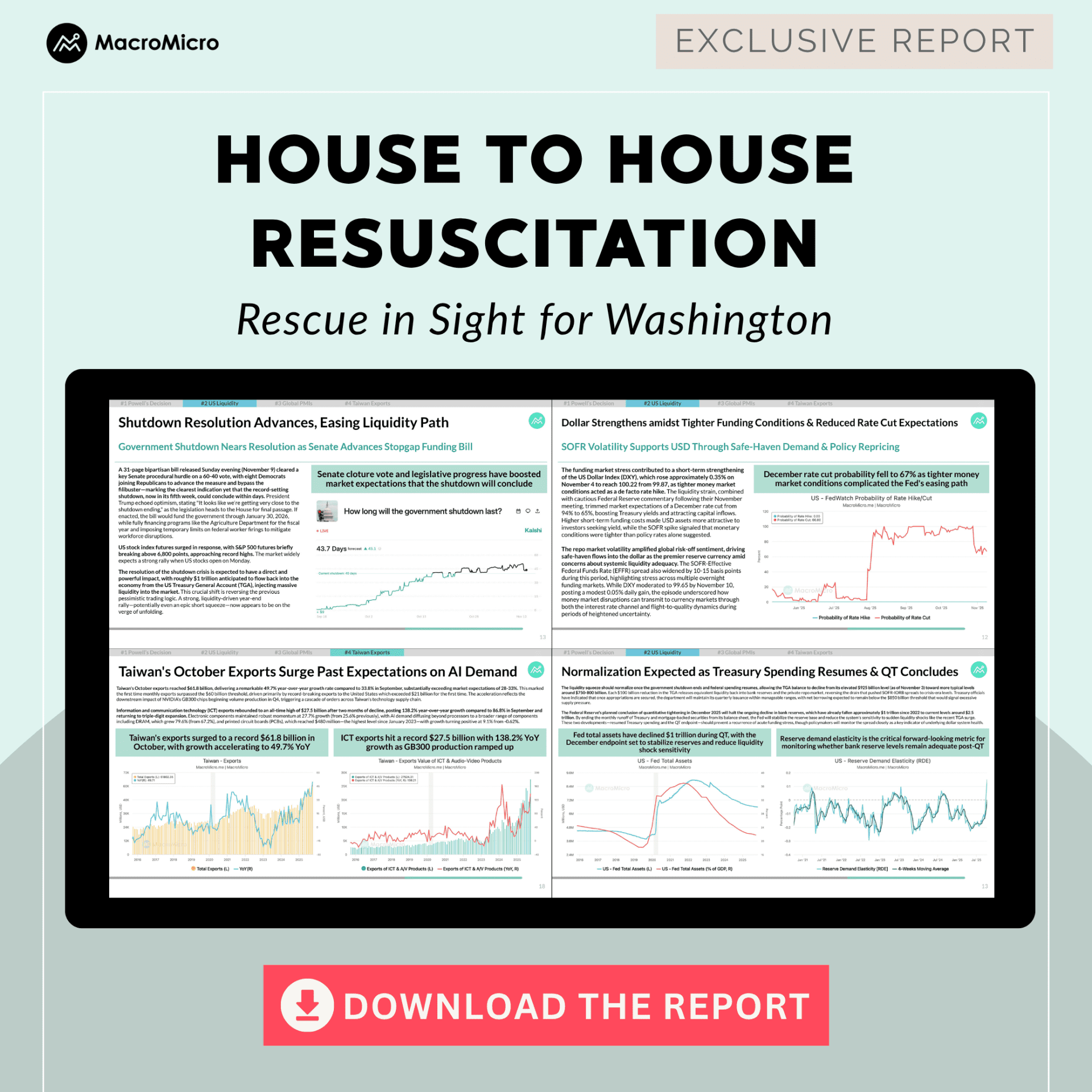
1. Government Shutdown Nears Resolution, TGA Liquidity Boost on Horizon
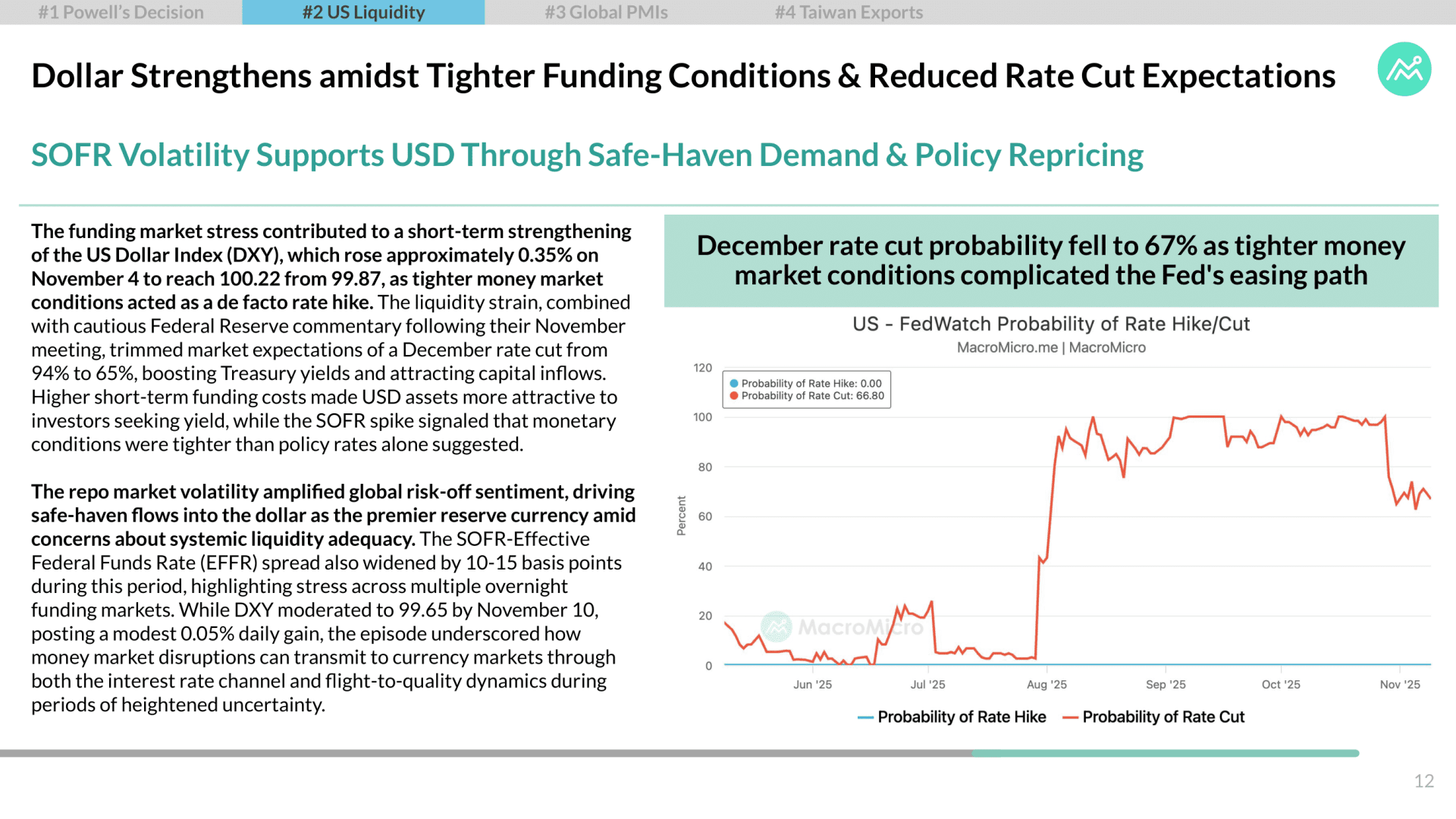
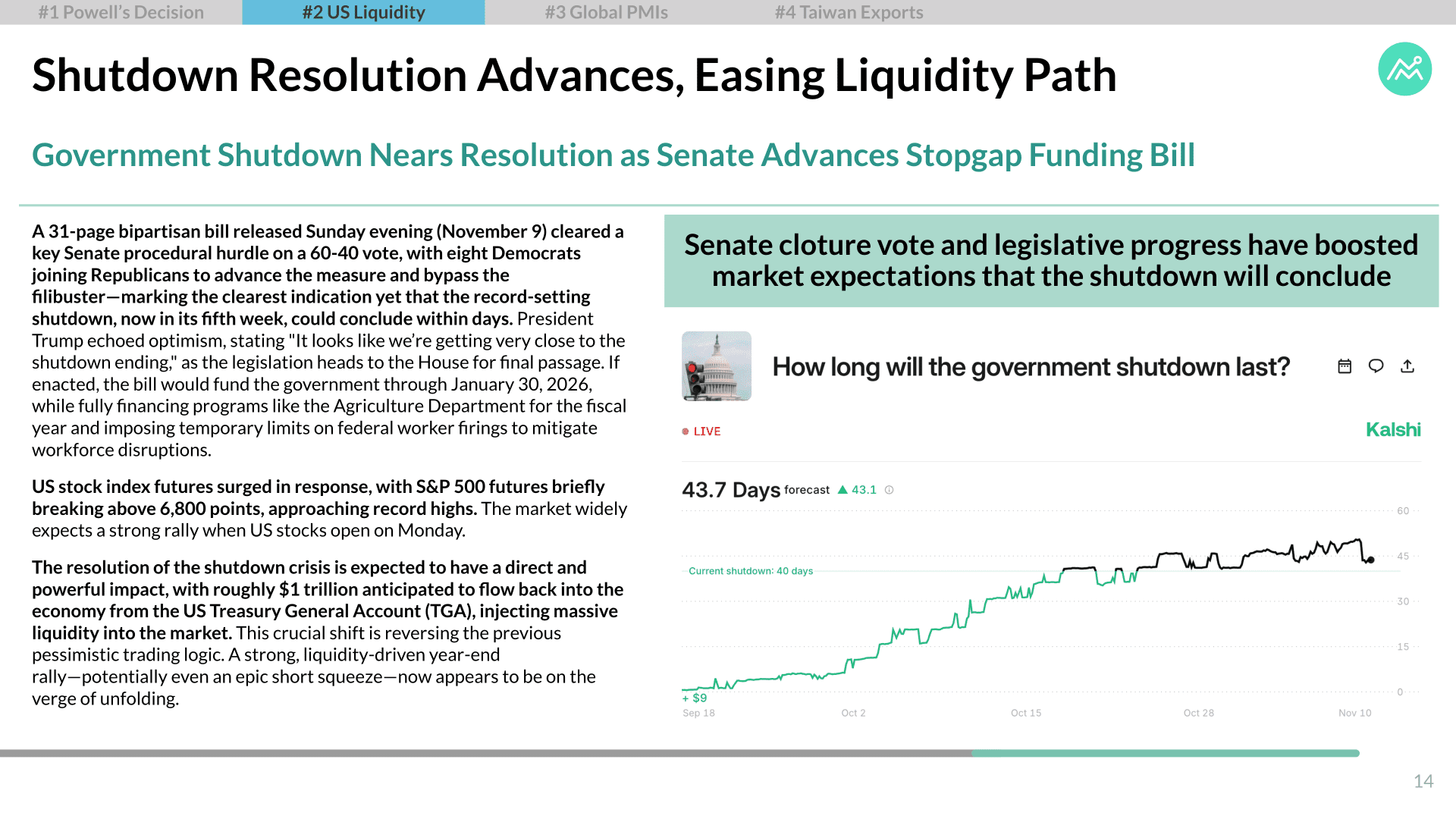
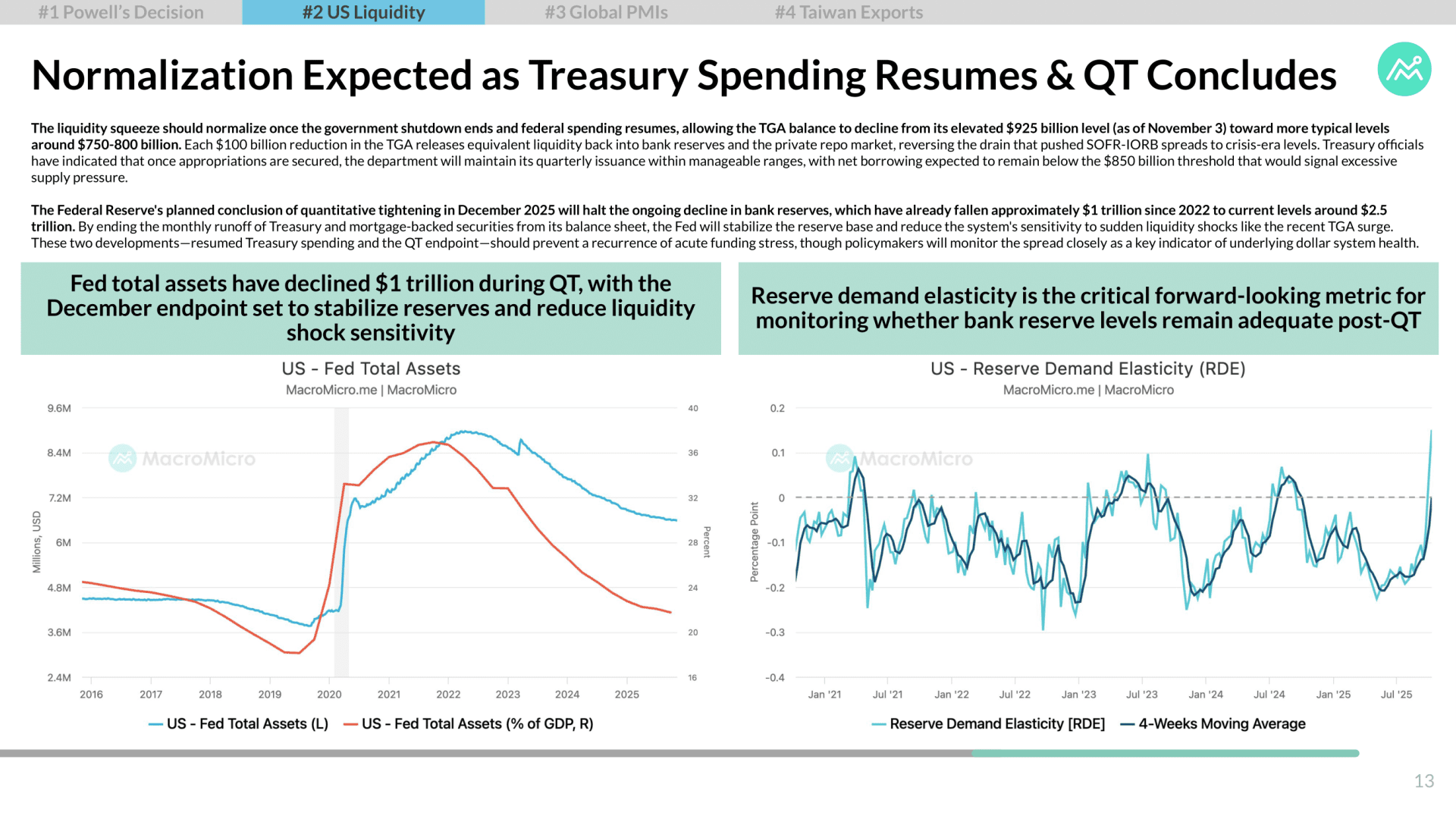
The U.S. government shutdown crisis appears close to resolution after Senate negotiations signaled a breakthrough. Markets reacted swiftly, with futures surging as optimism returned. A potential reopening would release roughly $1 trillion from the Treasury General Account (TGA) back into the financial system, easing the liquidity shortage that had driven overnight funding rates to crisis levels. The liquidity return is expected to stabilize repo markets, narrow SOFR spreads, and restore balance to short-term funding. With fiscal flows resuming and quantitative tightening set to conclude in December, systemic liquidity pressures are likely to subside, supporting a year-end equity rebound.
2. Global Manufacturing Diverges, Taiwan’s Exports Highlight AI Strength
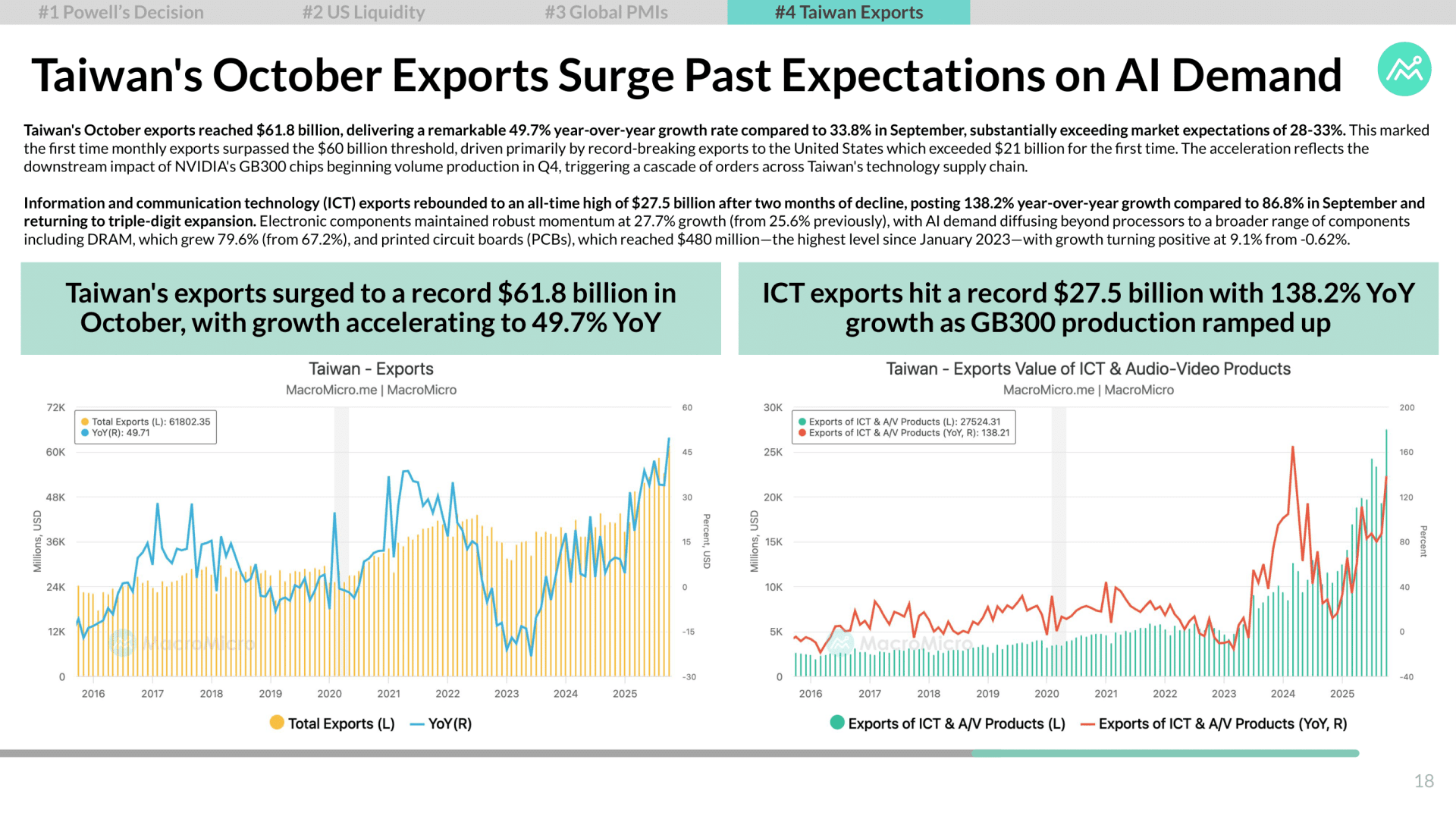
Global manufacturing signals remain mixed, with U.S. and China PMIs slipping further into contraction while Taiwan’s manufacturing sector rebounded into expansion. Taiwan’s October exports surged nearly 50% year-over-year to a record $61.8 billion, driven by soaring demand for AI-related components. Information and communication technology (ICT) exports jumped 138%, fueled by the ramp-up of NVIDIA’s GB300 chips and broad-based supply chain restocking. This performance underscores the resilience of AI hardware demand even amid global trade uncertainty and tariff pressures. Lean inventories and rising new orders suggest Taiwan’s export momentum could extend into early 2026, reinforcing its leadership in the AI supply chain.
3. Weak U.S. Labor Data Expands Fed’s Room for Rate Cuts
Recent private employment data show a softening U.S. labor market, with October job gains modest and layoffs increasing, though overall stability persists. ADP reported 42,000 new jobs, while Challenger announced a sharp rise in layoff intentions. The moderation aligns with the St. Louis Fed’s estimate that monthly job growth of 32,000–82,000 is sufficient to maintain stable unemployment. This subdued pace reduces inflation risks and broadens the Federal Reserve’s flexibility to continue rate cuts in coming months. As AI adoption slows hiring rather than triggering widespread job losses, the Fed can sustain gradual easing to support growth without overheating the labor market.
Already a subscriber? Click here to log in.
Full Access to Our Services

Comprehensive data at your service
with key indicators for investment insights

Exclusive flash reports
on key events and data

Create your own charts and analysis
including performance backtesting

Hub of professionals to engage
in meaningful discussions and insights

