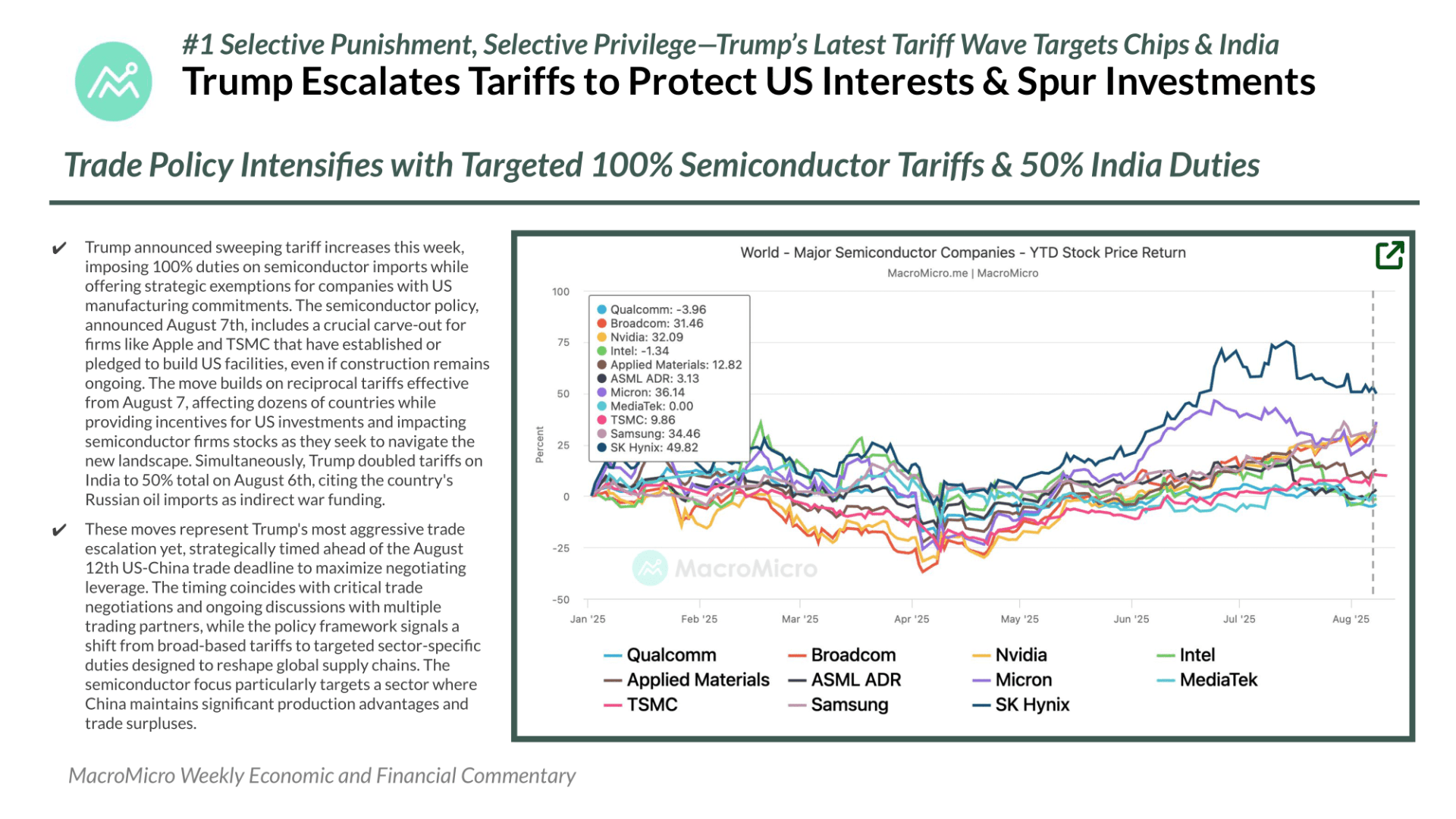
Last week, Trump announced sweeping tariffs on semiconductor imports, imposing 100% duties while offering strategic exemptions for companies committed to US manufacturing. This marks a significant escalation in trade policy, focusing on key sectors like semiconductors and increasing tariffs on India. These moves are part of a broader strategy to reshape global supply chains, attract investments to the US, and apply pressure on trading partners. Meanwhile, economic indicators point to a managed slowdown in the US, with weakening consumption and labor market trends, raising concerns about the potential trajectory of the economy.
In this week's report, we explore and analyze these developments, examining the implications of the tariff actions, the ongoing shift in US economic fundamentals, and the Federal Reserve's likely path under new leadership.

Trump's Tariff Escalation: Aimed at Chips and India
Trump's recent tariff measures target semiconductors and India, with 100% duties on semiconductor imports and a 50% tariff on Indian goods. The semiconductor tariffs are strategically designed to push US companies, like Apple and TSMC, to build domestic manufacturing capacity. This creates a selective privilege for those who commit to US production while offering punitive tariffs for those not aligned with US interests. The timing of these moves is strategically aligned with trade deadlines and aims to reshape global supply chains, particularly affecting the US's technology competition with China .
Semiconductor Manufacturing in the US: Unrealistic Expectations?
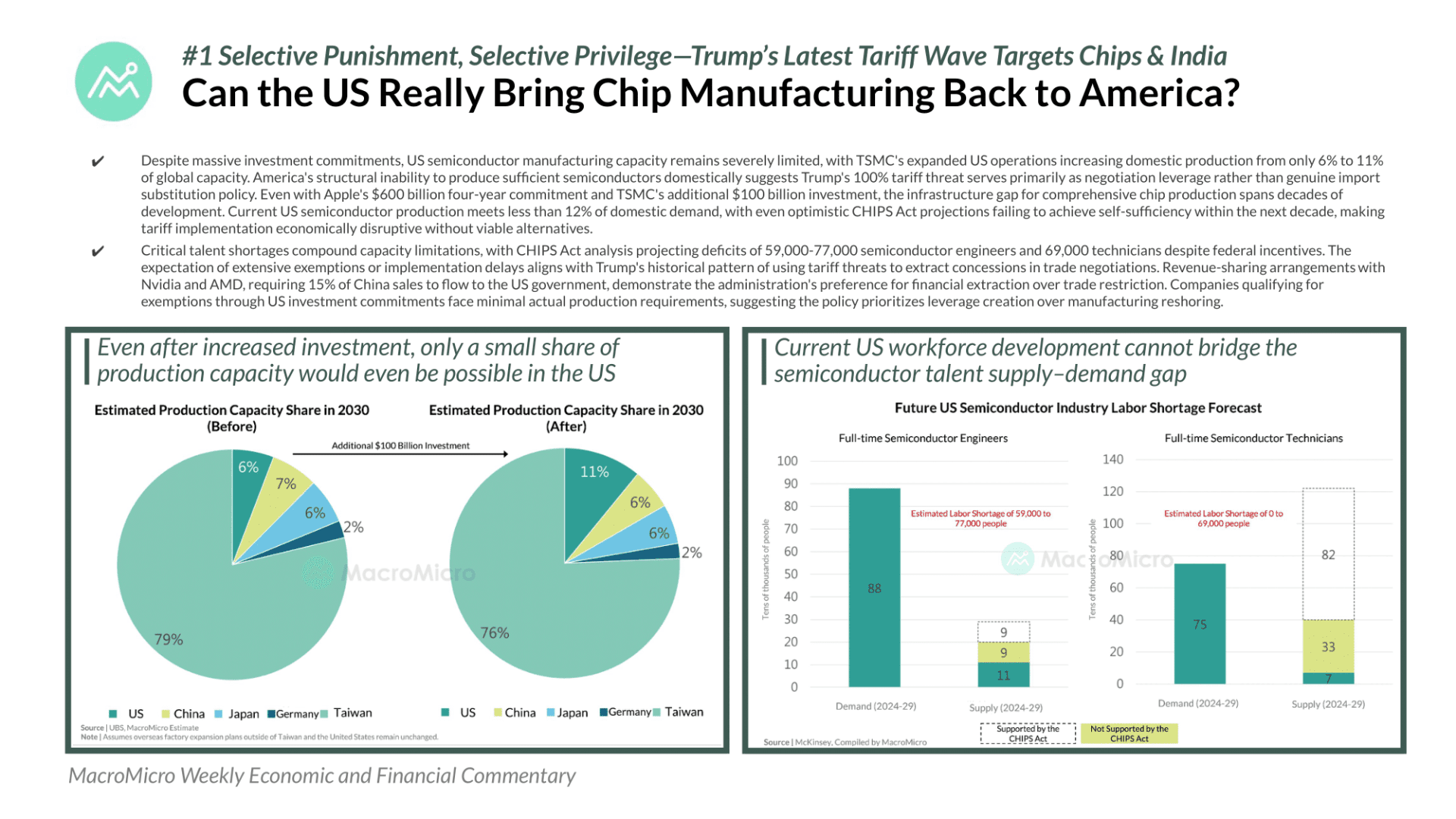
Despite significant investments by companies like Apple and TSMC to expand US semiconductor manufacturing, the US still faces a considerable gap in its production capacity. With the US currently producing less than 12% of the semiconductors it needs, the push to reshore production faces significant obstacles. Critical talent shortages and the slow pace of infrastructure development add to the challenge, with analysts predicting that even with federal incentives, achieving self-sufficiency in semiconductor production may take decades. The tariff measures may thus serve more as leverage in negotiations than as an actual solution to domestic production issues .
US Economic Fundamentals: Slowdown Without Recession
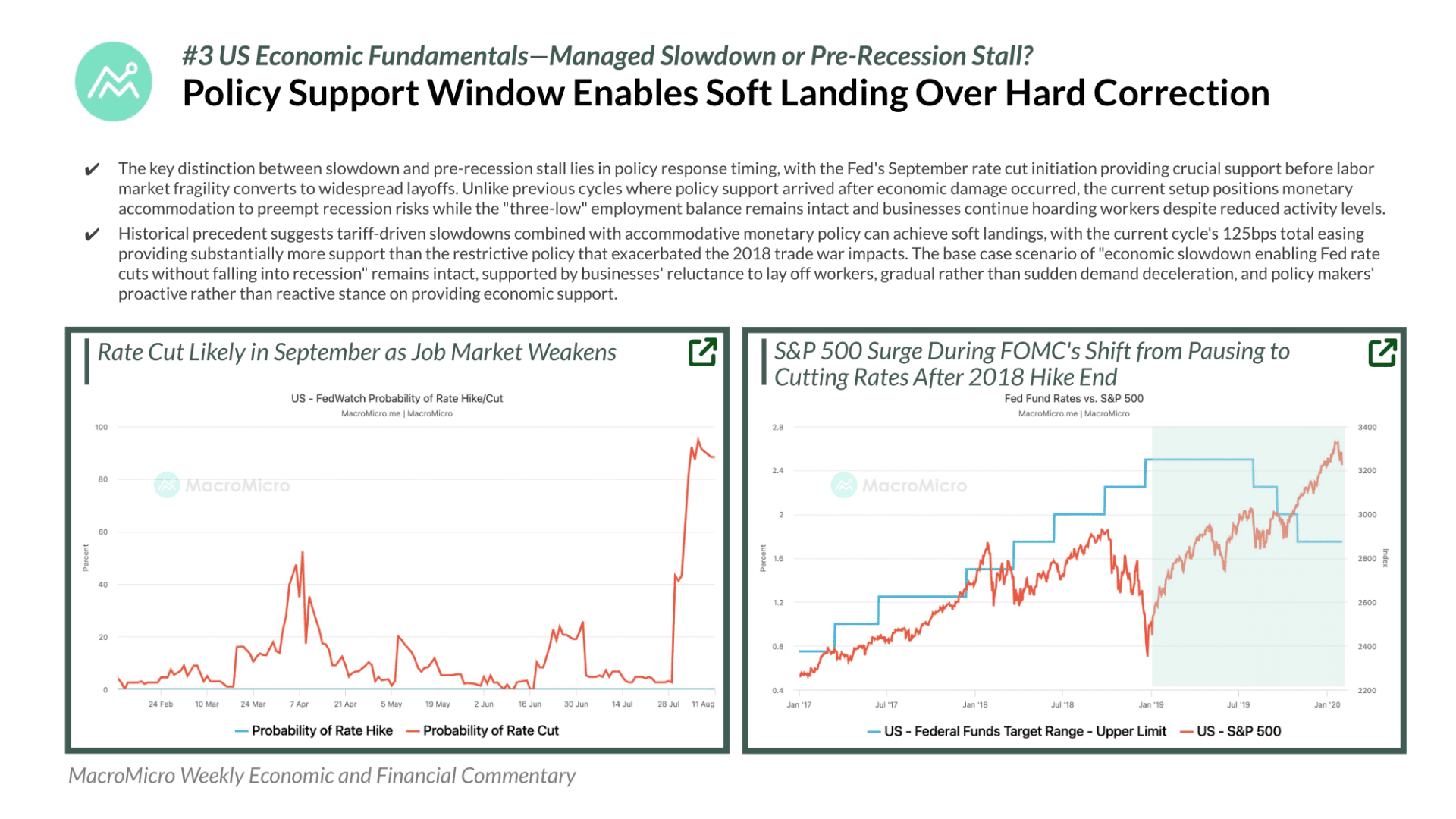
The US economy is experiencing a gradual slowdown, marked by weakened consumer spending and a cooling labor market, but it is not yet in a full-blown recession. Key economic indicators such as services consumption and employment data show signs of deceleration, with services growth falling below the 2% threshold. Despite these concerns, the labor market is not in a typical recession pattern, as layoffs remain low and businesses hesitate to reduce their workforce. The likelihood of a soft landing is high, with the Fed's anticipated rate cuts expected to cushion the economic slowdown, preventing a deeper recession .
Already a subscriber? Click here to log in.
Full Access to Our Services

Comprehensive data at your service
with key indicators for investment insights

Exclusive flash reports
on key events and data

Create your own charts and analysis
including performance backtesting

Hub of professionals to engage
in meaningful discussions and insights
