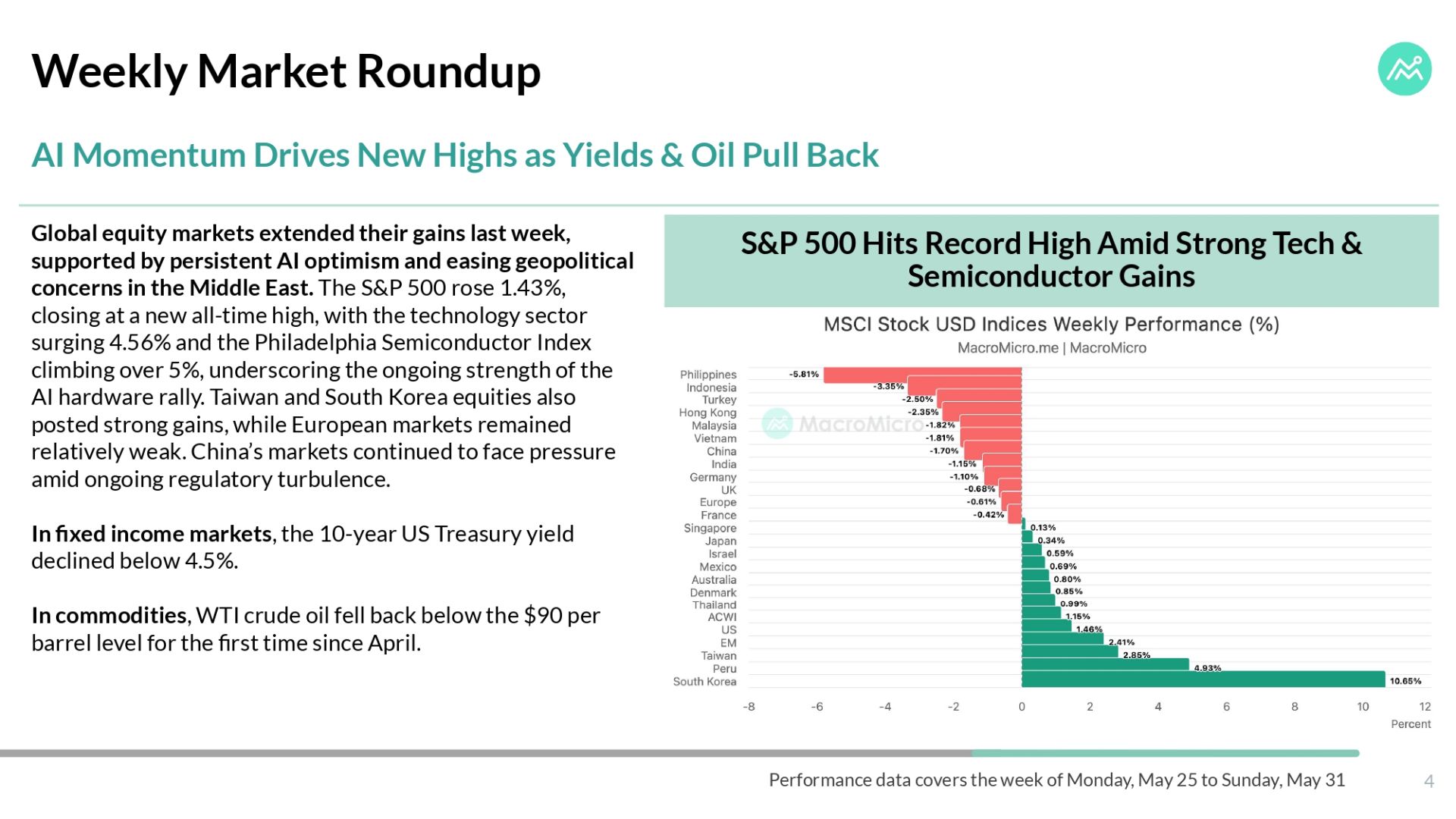
Although the U.S.–Iran conflict has yet to fully end, markets have begun to price in a further easing of geopolitical risk. WTI crude fell below USD 90 per barrel for the first time since April, while the 10-year U.S. Treasury yield also slipped below 4.5%, suggesting that the risk premium from Middle East tensions is starting to fade. But only some chips are down: while oil and yields are retreating as geopolitical fears ease, AI-related chip stocks continue to move higher. Read more in this week’s article.
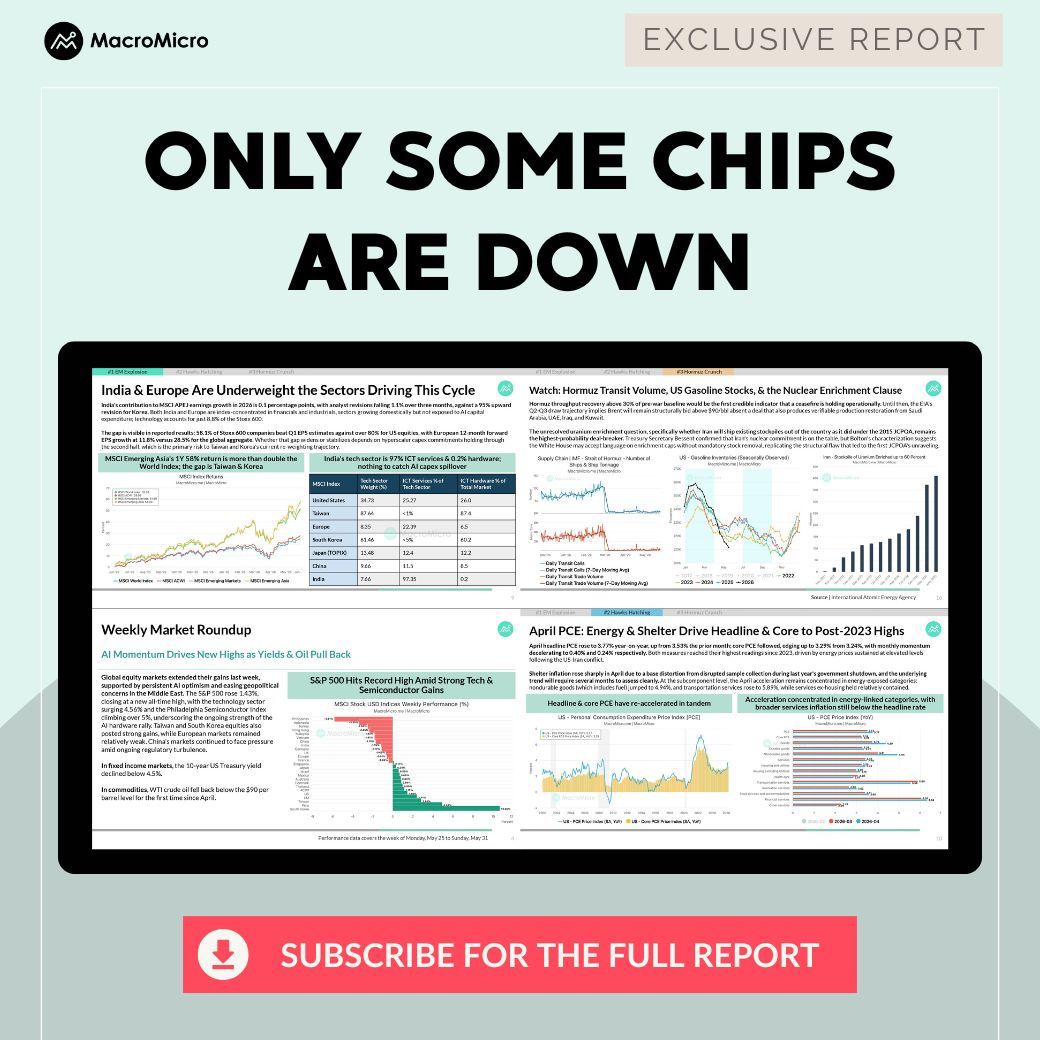
Key Focus of This Week’s Report
-
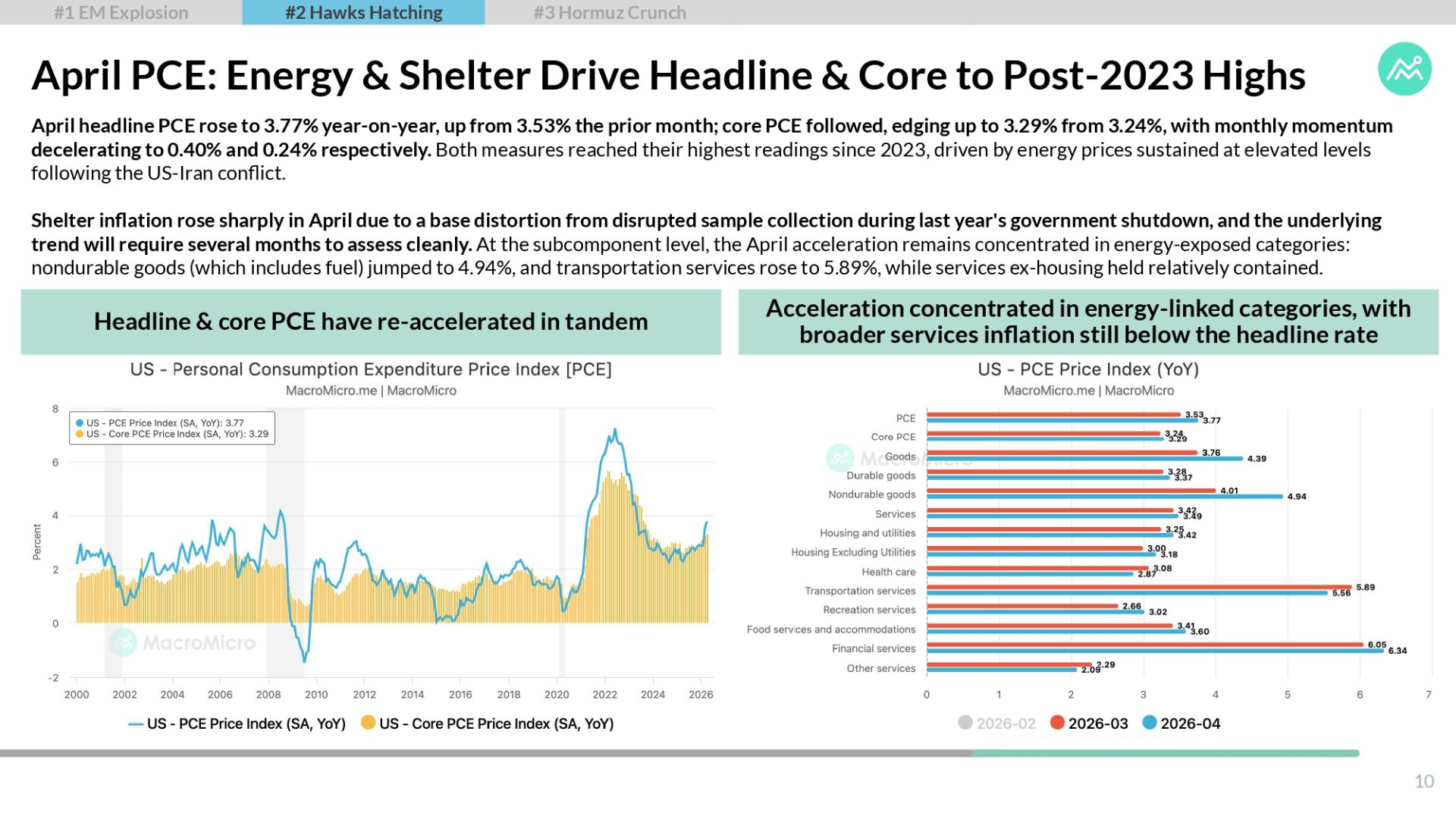
US Inflation Is Hotter, but Still Not Broad-Based: April PCE inflation came in above expectations, but the signal is more nuanced than the headline suggests. Price pressure appears concentrated in energy-related categories and shelter distortions rather than spreading across the full consumption basket. That matters because narrow inflation shocks are easier for policymakers to look through than persistent, economy-wide acceleration. The risk is whether higher energy costs begin feeding into transport, services, wages, and inflation expectations, turning a contained shock into a more durable Fed problem.
-
Taiwan and Korea Are Capturing Asia’s AI Earnings Upside While India Lags: Asia’s equity leadership is increasingly being defined by direct exposure to AI capital expenditure. Taiwan’s semiconductor supply chain and Korea’s memory cycle are benefiting from stronger earnings revisions, export momentum, and hardware demand tied to global AI infrastructure. India remains a strong structural growth market, but its technology sector is still dominated by IT services rather than AI hardware. In this cycle, sector composition is becoming more important than broad macro growth, leaving India behind the AI earnings leaders.
-
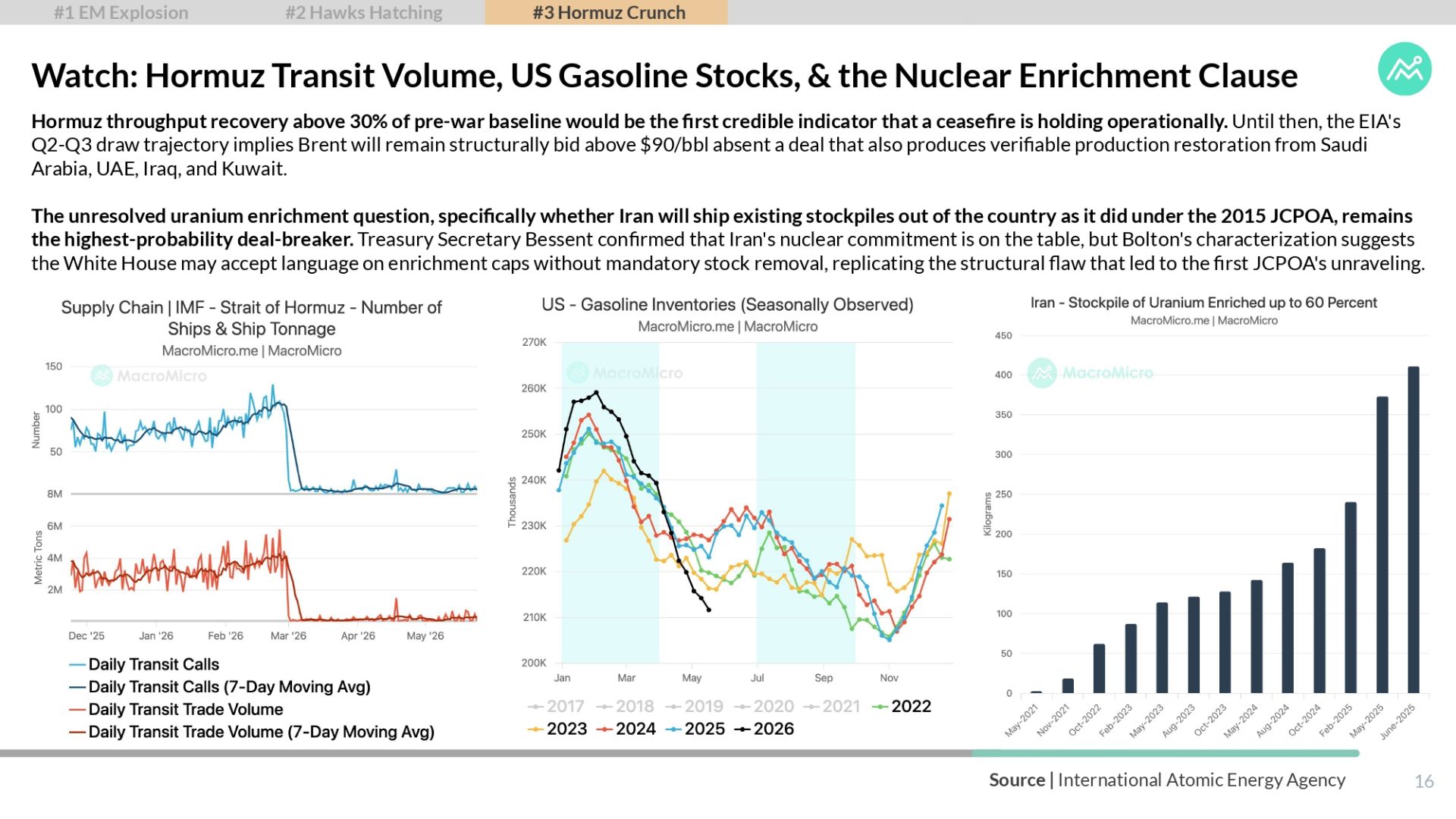
Oil Prices Are Pricing Supply Recovery Before the Physical Market Confirms It: Crude’s sharp decline suggests investors are already pricing an eventual easing of US-Iran tensions and a recovery in disrupted supply. Yet the underlying physical market still looks fragile, with inventory draws, constrained transit routes, and uncertain production restoration creating a gap between market pricing and operational reality. If diplomatic progress does not quickly translate into actual barrels returning to the market, oil could reverse higher and revive the inflation pressure that investors are now assuming will fade.
About Weekly Economic and Financial Commentary (WEFC)
The MacroMicro WEFC is published weekly, delivering rigorous analysis and in-depth insights on the most critical market-moving events. Coverage spans equities, foreign exchange, bonds, commodities, global central banks, geopolitics, and the international political economy.
At its core is a concise, roughly 20-page Chart Pack designed to help you grasp market trends at a glance. Subscribe Now » to download the full PDF report.
Already a subscriber? Click here to log in.
Full Access to Our Services

Comprehensive data at your service
with key indicators for investment insights

Exclusive flash reports
on key events and data

Create your own charts and analysis
including performance backtesting

Hub of professionals to engage
in meaningful discussions and insights
