As the US–Iran conflict enters its second week, tensions continue to escalate rather than ease. Brent and WTI crude futures have surged above $100 per barrel, reigniting inflation concerns and putting pressure on global equity markets. Despite the sharp rise in oil prices, the US government has signaled no immediate plan to release oil from the Strategic Petroleum Reserve (SPR). Following last week’s analysis in our WEFC and Special Report, this week we update the latest developments in the conflict. Drawing comparisons with the 2022 Russia–Ukraine war, we assess the potential implications for inflation and interest rates while highlighting the key events and risks investors should monitor.
1. Hormuz Disruption Drives Oil Above $100, Reviving Inflation Risks
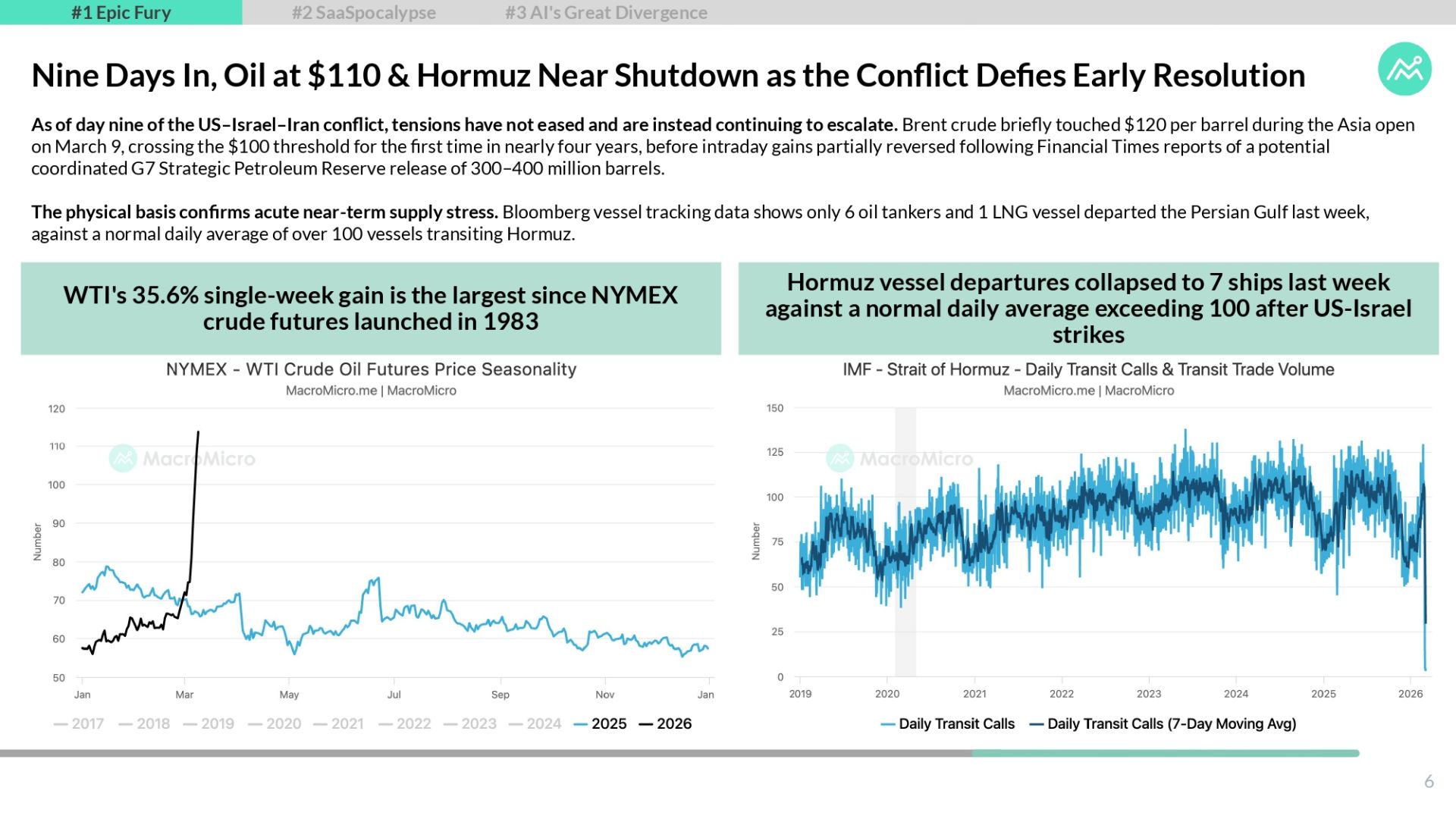
The US–Israel–Iran conflict has entered its second week with no signs of de-escalation, pushing global oil markets into a severe supply shock. Brent and WTI crude prices have surged above $100 per barrel, with WTI recording a 35.6% weekly gain—its largest since oil futures began trading on NYMEX in 1983.
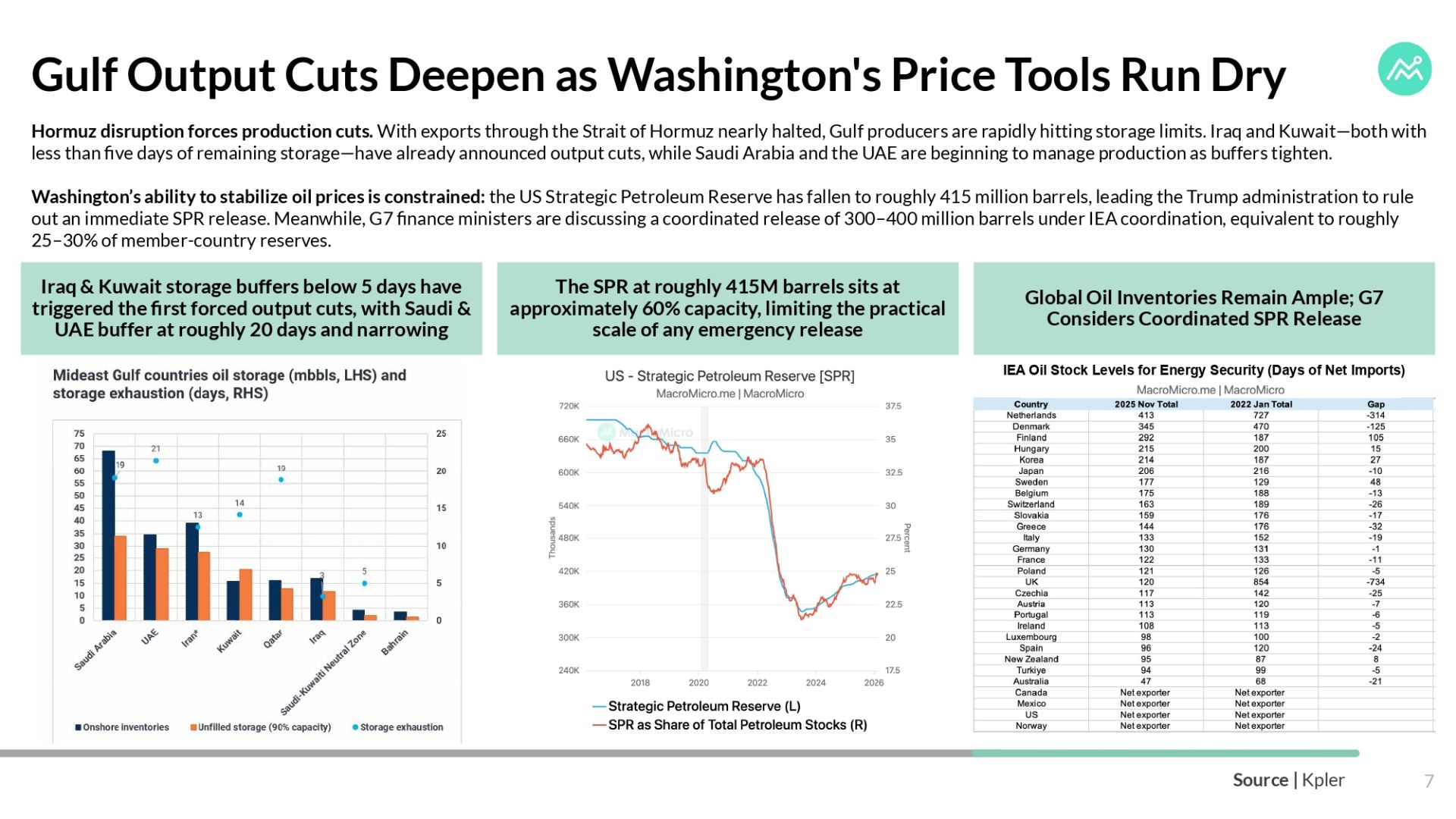
The key driver of the price surge is the near shutdown of the Strait of Hormuz, a chokepoint responsible for more than 20% of global seaborne oil trade. Normally over 100 vessels transit the strait daily, but only seven ships departed the Persian Gulf last week. With exports disrupted, Gulf producers are rapidly filling storage capacity. Iraq and Kuwait have already announced production cuts, while Saudi Arabia and the UAE are beginning to manage offshore output to prevent storage overflow. Unlike the 2022 Russia–Ukraine war—when commodities were hit by both supply shocks and extreme supply chain stress—the current conflict begins from a relatively loose oil market. Still, any disruption to the Strait of Hormuz could quickly reignite global inflation and constrain the Fed’s easing path.
2. Labor Market Softens Slightly While Manufacturing Momentum Holds
February’s US labor market data showed temporary weakness, largely driven by one-off disruptions. Nonfarm payrolls fell by 92,000 and the unemployment rate rose slightly to 4.4%. The decline was mainly due to a large healthcare strike involving Kaiser Permanente workers and weather-related disruptions. Private-sector payrolls, however, still grew by about 63,000 according to ADP, suggesting the underlying labor market remains stable.
Meanwhile, manufacturing activity continued to expand. The ISM Manufacturing PMI registered 52.4, above expectations and firmly in expansion territory. Strong new orders and low customer inventories indicate resilient demand, but the prices-paid index surged to 70.5—its highest level since 2022—highlighting renewed inflation pressure from rising energy and input costs.
3. China Sets 4.5–5.0% Growth Target as Policy Focus Shifts to Structural Reform
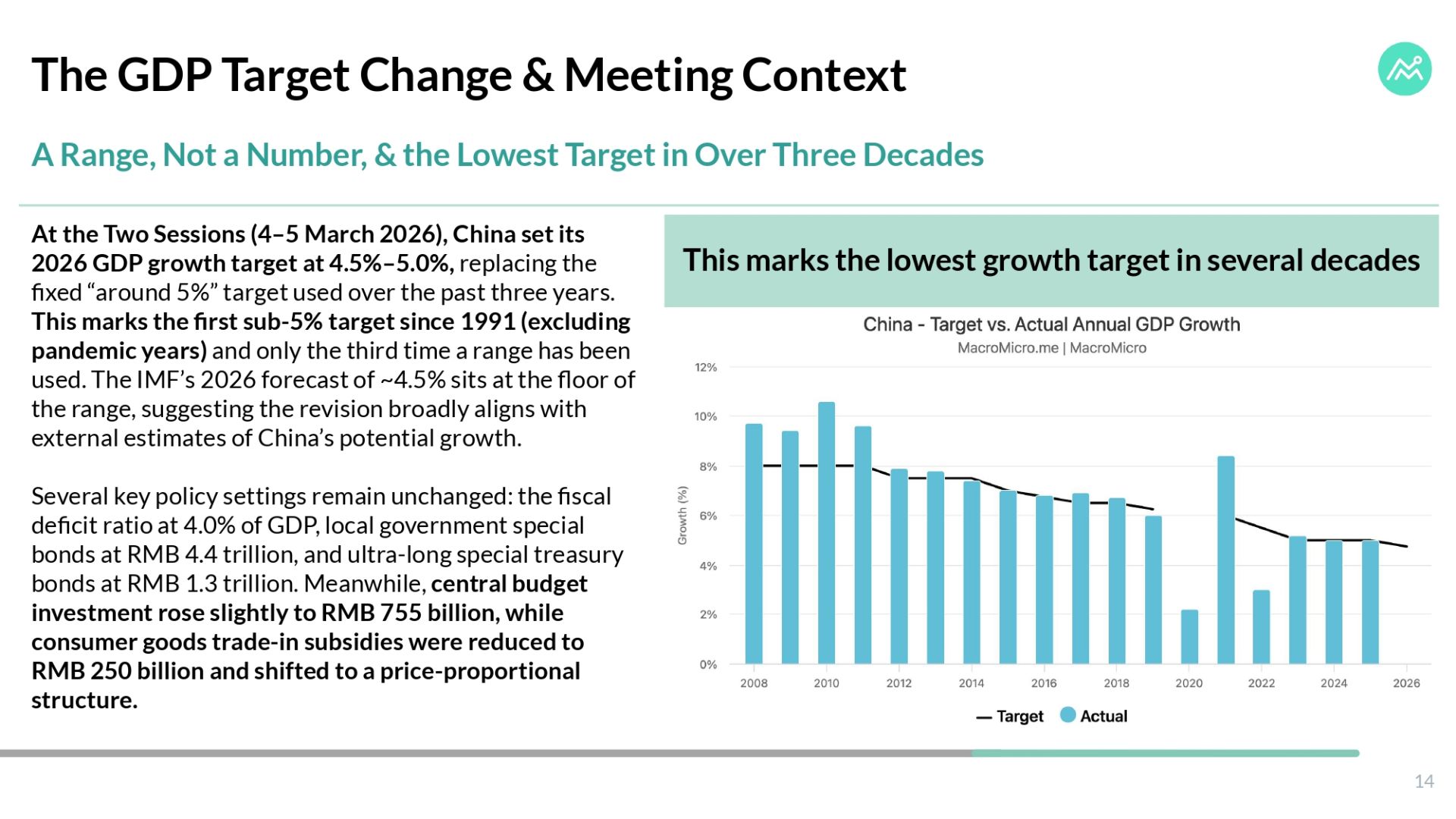
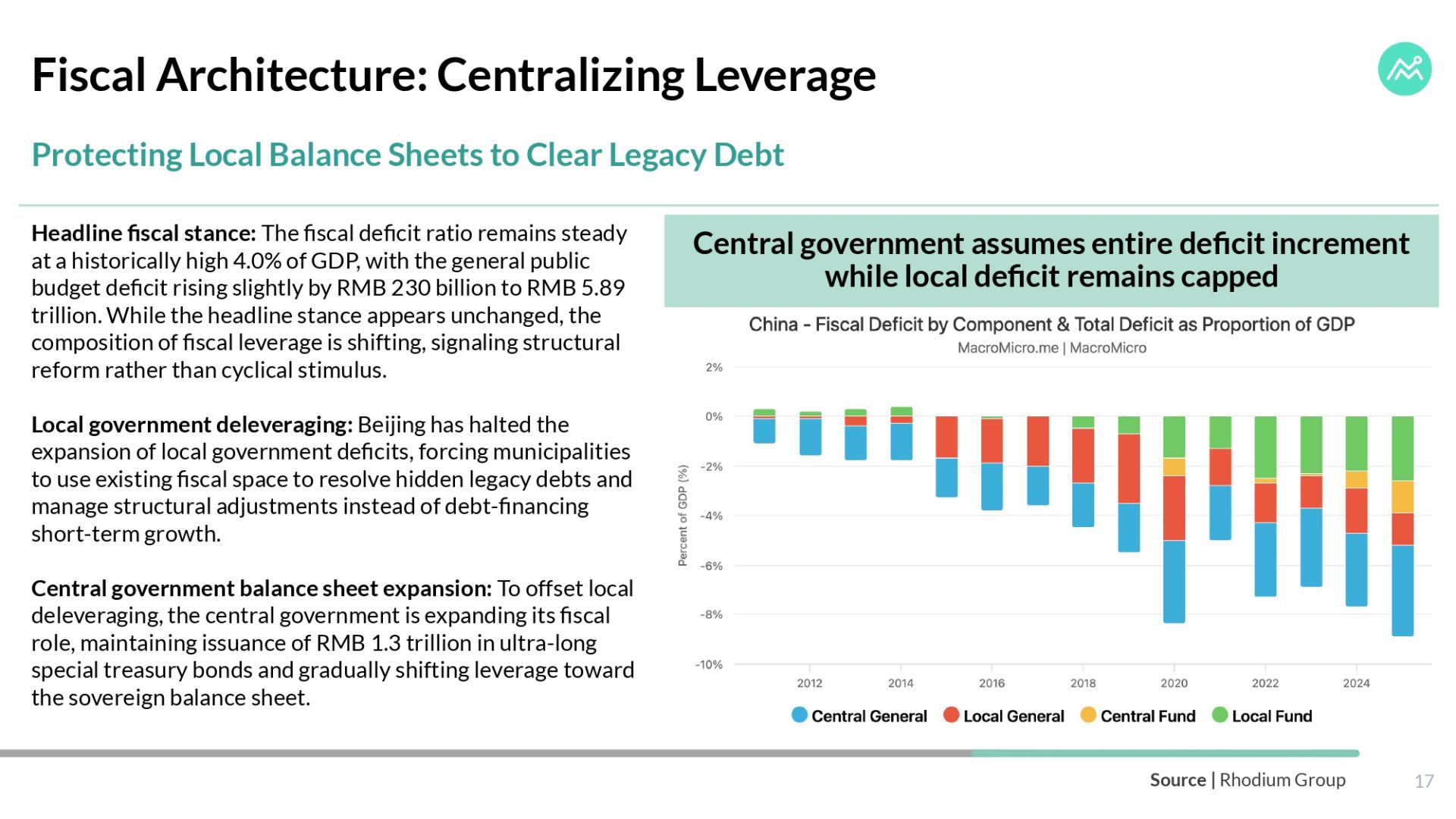
At the 2026 “Two Sessions,” China set its GDP growth target at 4.5%–5.0%, replacing the previous fixed “around 5%” target. This marks the first time the official goal has fallen below 5% in decades and reflects a shift toward more realistic expectations as structural challenges—such as an aging population, property sector adjustment, and local government debt—persist. Rather than maximizing headline growth, policymakers are emphasizing economic restructuring. A key objective is increasing the digital economy’s share of GDP from 10.5% to 12.5% under the upcoming Five-Year Plan. Fiscal policy remains supportive but stable, while reforms prioritize technology development, AI applications, employment stability, and longer-term consumption growth instead of short-term stimulus.
About Weekly Economic and Financial Commentary (WEFC)
The MacroMicro WEFC cuts through the noise, delivering rigorous analysis and in-depth insights on the most critical market-moving events. These topics cover equities, foreign exchange, bonds, commodities, global central banks, international political economy, and more.
At the core of WEFC is a concise Chart Pack, enabling you to grasp market trends at a glance.
Already a subscriber? Click here to log in.
Full Access to Our Services

Comprehensive data at your service
with key indicators for investment insights

Exclusive flash reports
on key events and data

Create your own charts and analysis
including performance backtesting

Hub of professionals to engage
in meaningful discussions and insights
 Get answers from MM AI.
-
How has the US-Iran conflict impacted crude oil prices and inflation risks?
💡The US-Iran conflict has pushed Brent and WTI crude futures above $100 per barrel, with WTI recording a 35.6% weekly gain, its largest since 1983. This surge in oil prices has reignited inflation concerns and will put pressure on global equity markets, also constraining the Fed's easing path as the global oil market experiences a severe supply shock.
-
How does the current oil market disruption compare to the 2022 Russia-Ukraine war?
💡The current oil market disruption, driven by the US-Iran conflict and the Strait of Hormuz shutdown, differs from the 2022 Russia-Ukraine war in that it begins from a relatively loose oil market. In contrast, the 2022 conflict impacted commodities through both supply shocks and extreme supply chain stress, whereas the current situation is more focused on direct supply disruption from a key chokepoint.
-
What are the implications of the Strait of Hormuz disruption for global oil supply?
💡The Strait of Hormuz disruption significantly impacts global oil supply by effectively shutting down a chokepoint responsible for over 20% of global seaborne oil trade. With only seven ships departing the Persian Gulf last week compared to over 100 daily, exports are severely disrupted. This forces Gulf producers like Iraq and Kuwait to announce production cuts and Saudi Arabia and the UAE to manage offshore output to prevent storage overflow, leading to a severe global supply shock and potential renewed inflation.
-
How did the US labor market perform in February, considering one-off disruptions?
💡The US labor market in February showed temporary weakness, with nonfarm payrolls falling by 92,000 and the unemployment rate rising slightly to 4.4%. This decline was largely driven by one-off disruptions, specifically a large healthcare strike involving Kaiser Permanente workers and weather-related issues. However, private-sector payrolls still grew by approximately 63,000 according to ADP, indicating the underlying labor market remains stable.
-
What is China's new GDP growth target for 2026, and what does it signify?
💡China's new GDP growth target for 2026 is set at 4.5%–5.0%, replacing the previous "around 5%" target. This marks the first time the official goal has fallen below 5% in decades, signifying a shift toward more realistic economic expectations as the country grapples with structural challenges like an aging population, property sector adjustments, and local government debt, prioritizing structural reform over maximizing headline growth.
-
What key objectives are driving China's economic restructuring under the Five-Year Plan?
💡Key objectives driving China's economic restructuring under the upcoming Five-Year Plan include increasing the digital economy's share of GDP from 10.5% to 12.5%. Policymakers are also prioritizing technology development, AI applications, employment stability, and fostering longer-term consumption growth, shifting focus away from maximizing headline growth in favor of addressing structural challenges like an aging population and property sector adjustments.
-
What is the US government's stance on releasing oil from the Strategic Petroleum Reserve?
💡The US government has signaled no immediate plan to release oil from the Strategic Petroleum Reserve (SPR) despite the sharp rise in Brent and WTI crude futures above $100 per barrel. This stance remains even as the US–Iran conflict enters its second week and global oil markets experience a severe supply shock, with WTI recording a 35.6% weekly gain.
-
How is the US-Israel-Iran conflict affecting global equity markets?
💡The US-Israel-Iran conflict is affecting global equity markets by reigniting inflation concerns due to the surge in Brent and WTI crude futures above $100 per barrel. This rise in oil prices creates pressure on global equity markets, leading to potential instability and investor caution as the conflict enters its second week with no signs of de-escalation.

