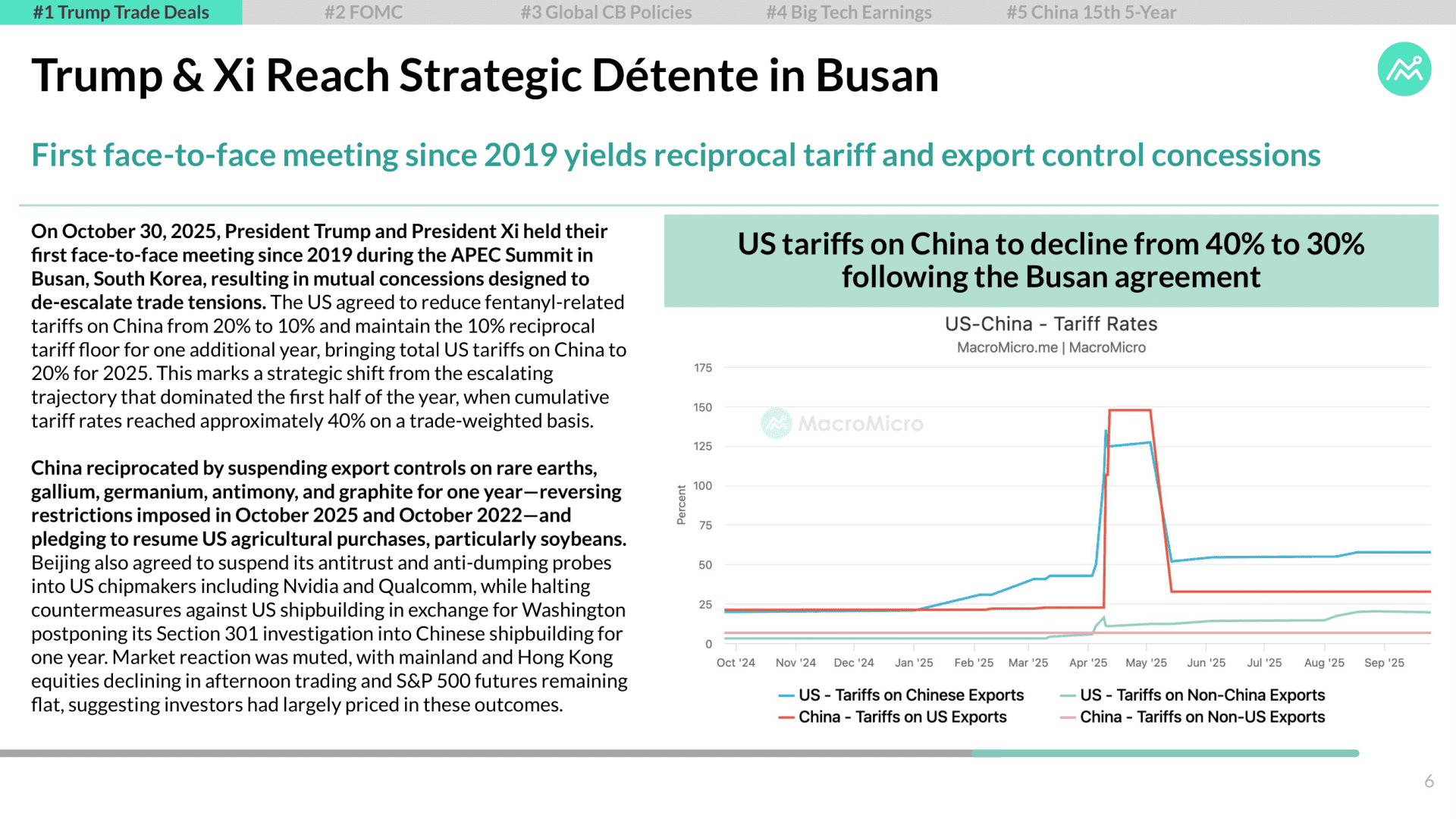
The Trump-Xi accord reached in Busan on October 30, 2025, is dubbed "somewhere between a ceasefire and a truce." It instantly eased trade tensions but leaves long-term conflict risk unresolved. The US side cut the fentanyl tariff in half to 10%, dropping the trade-weighted average tariff on Chinese goods from 40% to 30%. China countered by agreeing to resume US soybean imports and suspending export controls on critical minerals (rare earths, gallium, and germanium) for one year. This uncertain détente is the focus of this week's WEFC analysis: The Art of the Truce.
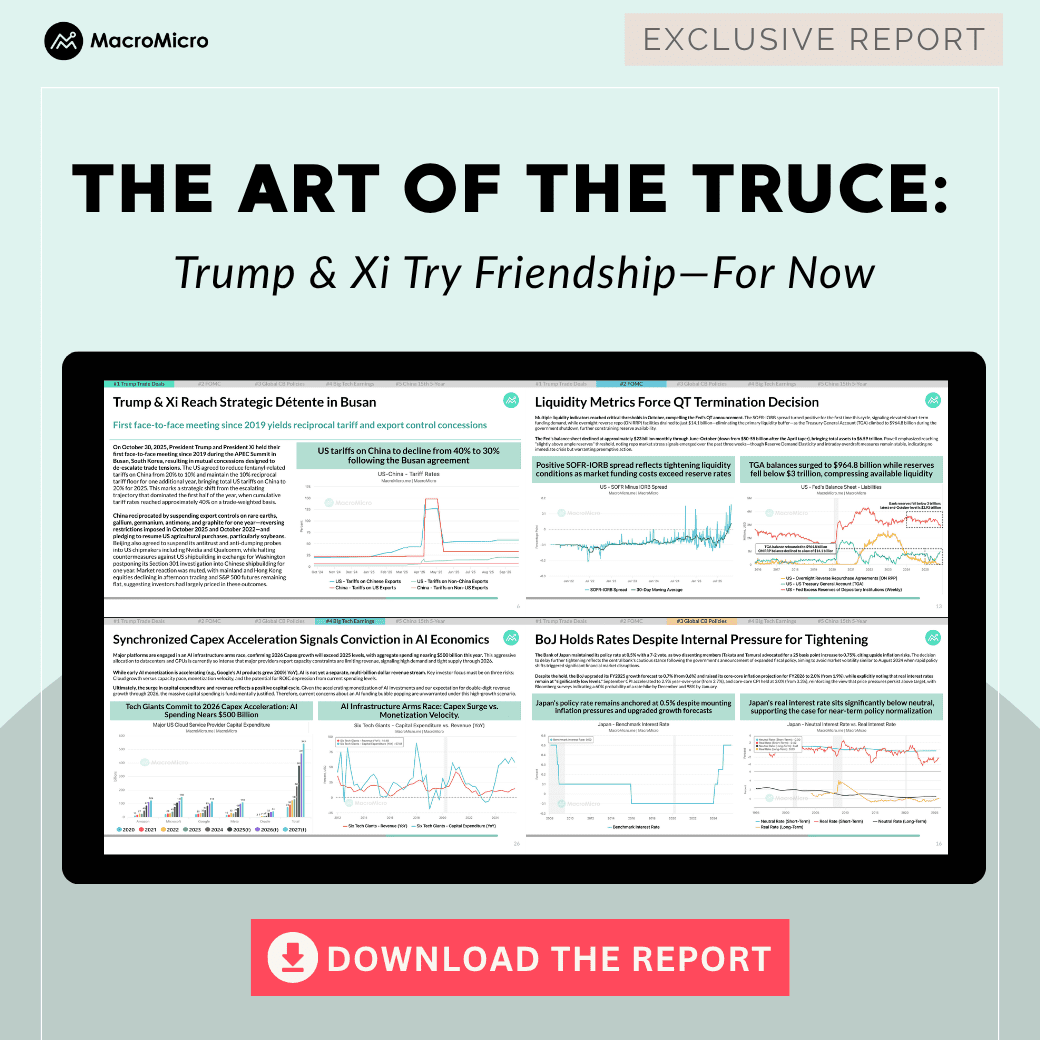
1. U.S.-China Trade Tensions Ease Tactically, But Structural Rivalry Remains
President Trump and President Xi met in Busan and reached a tactical trade truce. The U.S. agreed to cut tariffs on fentanyl-related imports from 20% to 10%, lowering China’s average trade-weighted tariff rate from ~40% to ~30%. In return, China paused export controls on critical minerals like rare earths, gallium, and germanium for a year, and pledged to resume buying U.S. agricultural goods—especially soybeans.
Markets rallied on the news, but the agreement is only a short-term ceasefire. Core strategic issues—like semiconductor export bans and Taiwan—remain unresolved. While lower tariffs may slow the shift of trade to Southeast Asia, supply chain realignments already in motion won’t fully reverse.
2. Fed Cuts Rates Preemptively, Ends QT Amid Liquidity Strain
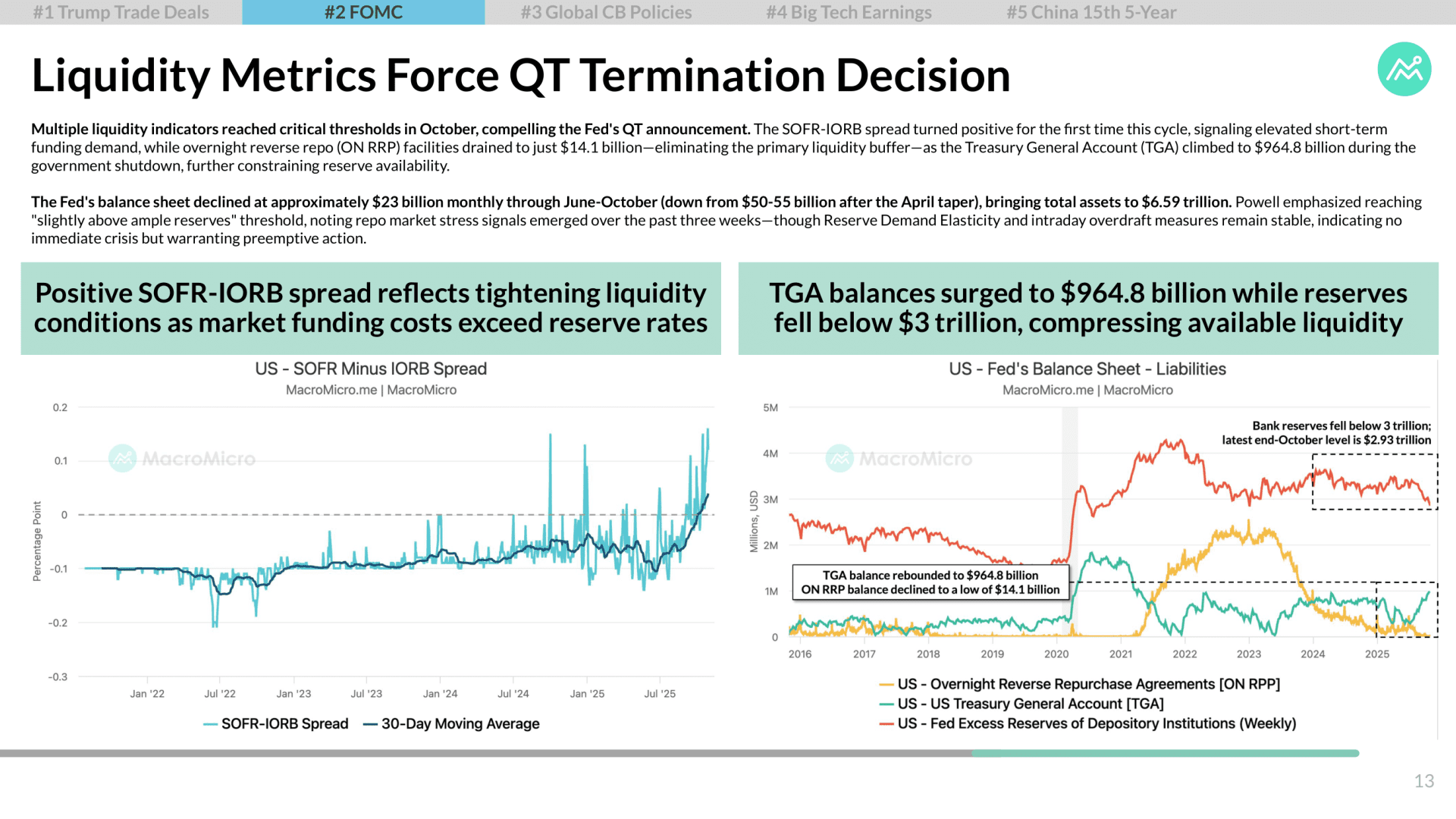
The Fed cut rates by 25 bps to 3.75%-4.00% in a 10-2 vote, framing it as a preemptive move—not a crisis response—to address labor market risks. More importantly, the Fed announced it will end quantitative tightening (QT) on December 1, 2025.
The shift was driven by tightening liquidity signals: bank reserves dropped below $3T, brushing the upper bound of the “ample reserves” range (12.32%); the SOFR-IORB spread turned positive; and ON RRP balances were depleted. These signs pointed to rising funding stress, prompting the Fed to act early to avoid a repeat of the 2019 repo crisis. Still, Chair Powell downplayed the odds of another rate cut in December.
3. Tech Earnings Strong; AI Capex Surge Becomes an Arms Race
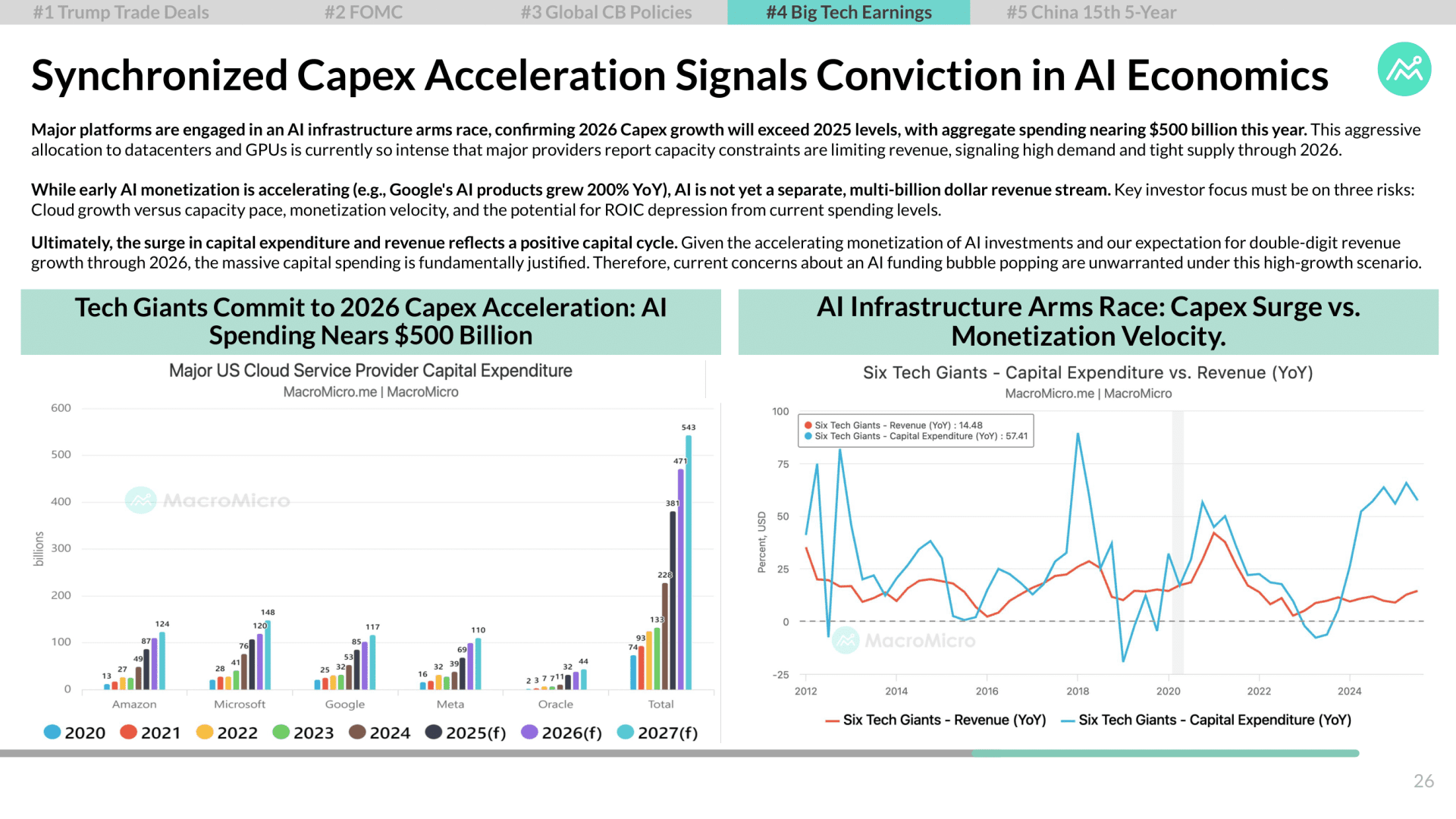
S&P 500 Q3 earnings rose 10.7%, led by Big Tech—Alphabet, Amazon, Microsoft, and Apple. All major tech firms signaled that 2026 capex growth will outpace 2025’s record levels. Microsoft’s Q3 capex jumped 60% to $34.9B, while Amazon raised its 2025 capex forecast to $125B.
Despite massive spending, firms like Microsoft and Alphabet are still facing capacity constraints, missing revenue opportunities. The scale and speed of investment marks the start of an AI infrastructure arms race—with no clear end—in pursuit of long-term dominance.
Already a subscriber? Click here to log in.
Full Access to Our Services

Comprehensive data at your service
with key indicators for investment insights

Exclusive flash reports
on key events and data

Create your own charts and analysis
including performance backtesting

Hub of professionals to engage
in meaningful discussions and insights

