Time has a curious way of compressing when the world holds its collective breath. As September unfolds, financial markets across the globe are fixated on a single moment—the Federal Reserve's policy meeting this week, which promises to deliver the first interest rate cut since December 2024.
Like autumn's approach that makes each day feel shorter as we anticipate winter's arrival, the universal expectation of monetary easing has created an atmosphere where every trading session carries outsized weight.
The anticipation runs deeper than typical Fed meetings: potential dissents from Committee members like Goolsbee and Schmid could inject drama, while President Trump's legal maneuvering to remove Fed Governor Lisa Cook before the vote adds an unprecedented political subplot. Meanwhile, if Stephen Miran's Senate confirmation proceeds on Monday, he could be sworn in just in time to potentially advocate for a more aggressive 50-basis-point reduction. The plot remains palpable to say the least.
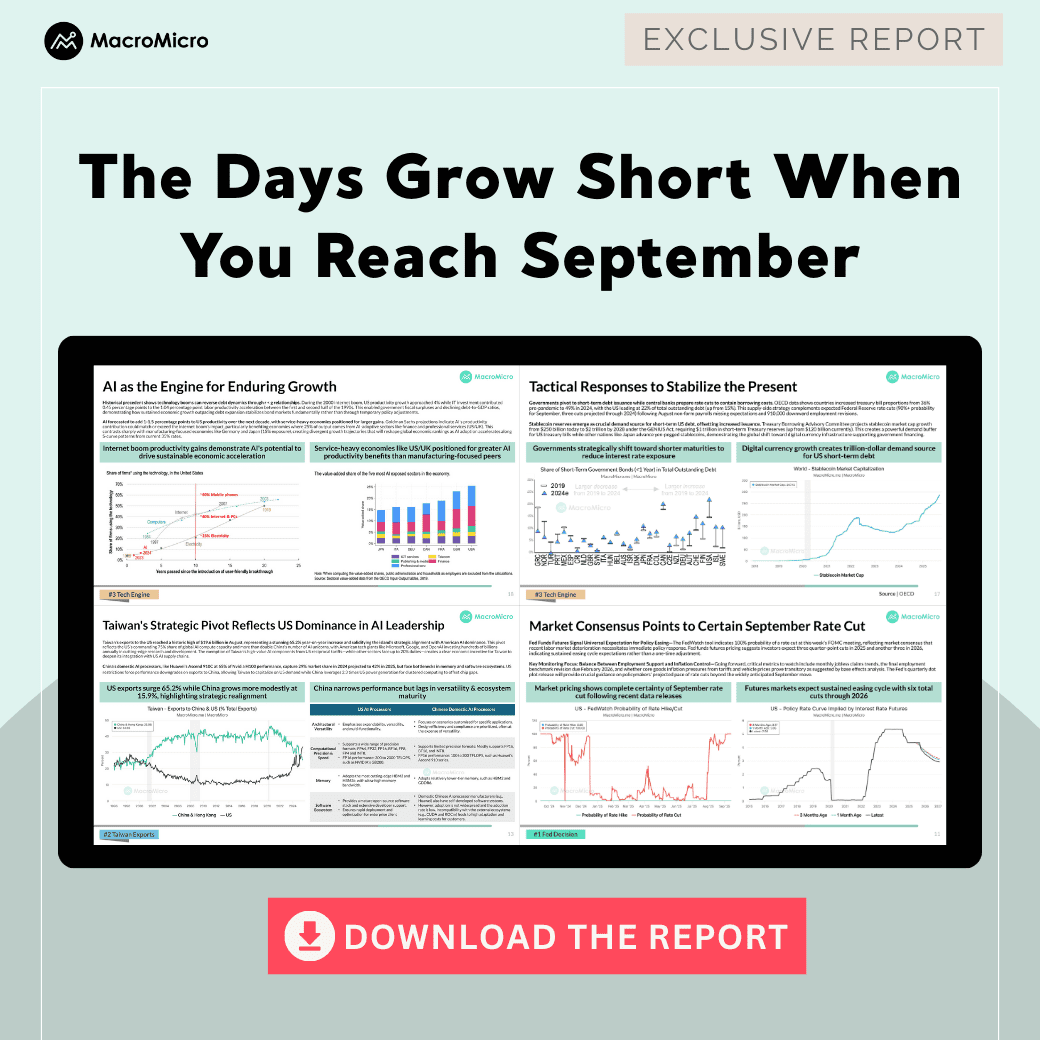
Labor Market Weakness Assures September Fed Rate Cut
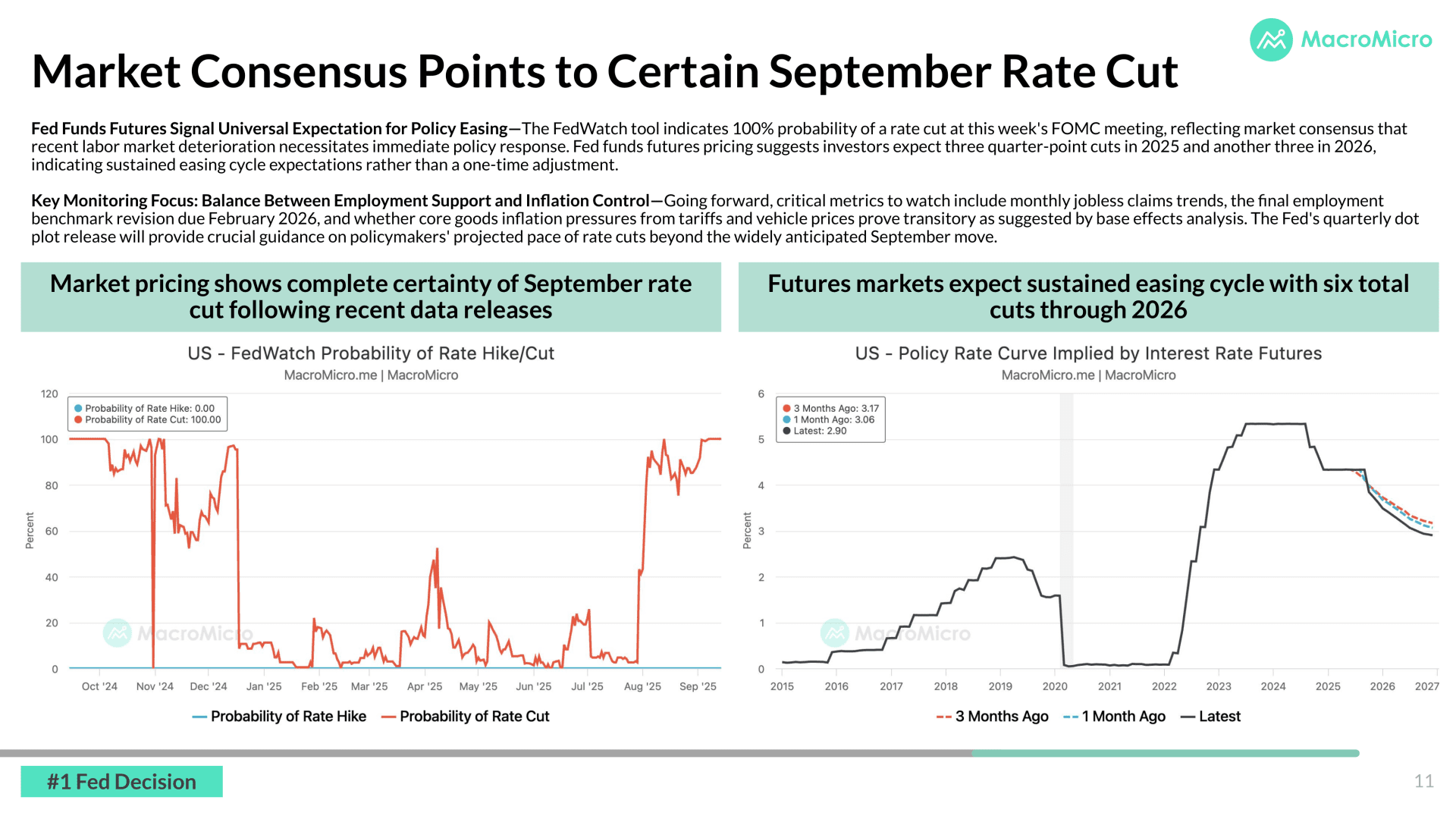
Recent labor data has all but guaranteed a September rate cut from the Federal Reserve. A historic downward revision of 911,000 jobs and a four-year high in jobless claims indicate a significant weakening of the labor market. While inflation remains a concern, the Fed’s focus has shifted toward supporting employment. Market consensus, reflected in futures pricing, points to a 100% probability of a rate cut, with expectations for a sustained easing cycle extending well into 2026.
Taiwan's Tech Export Surge Signals Strong Global AI Momentum
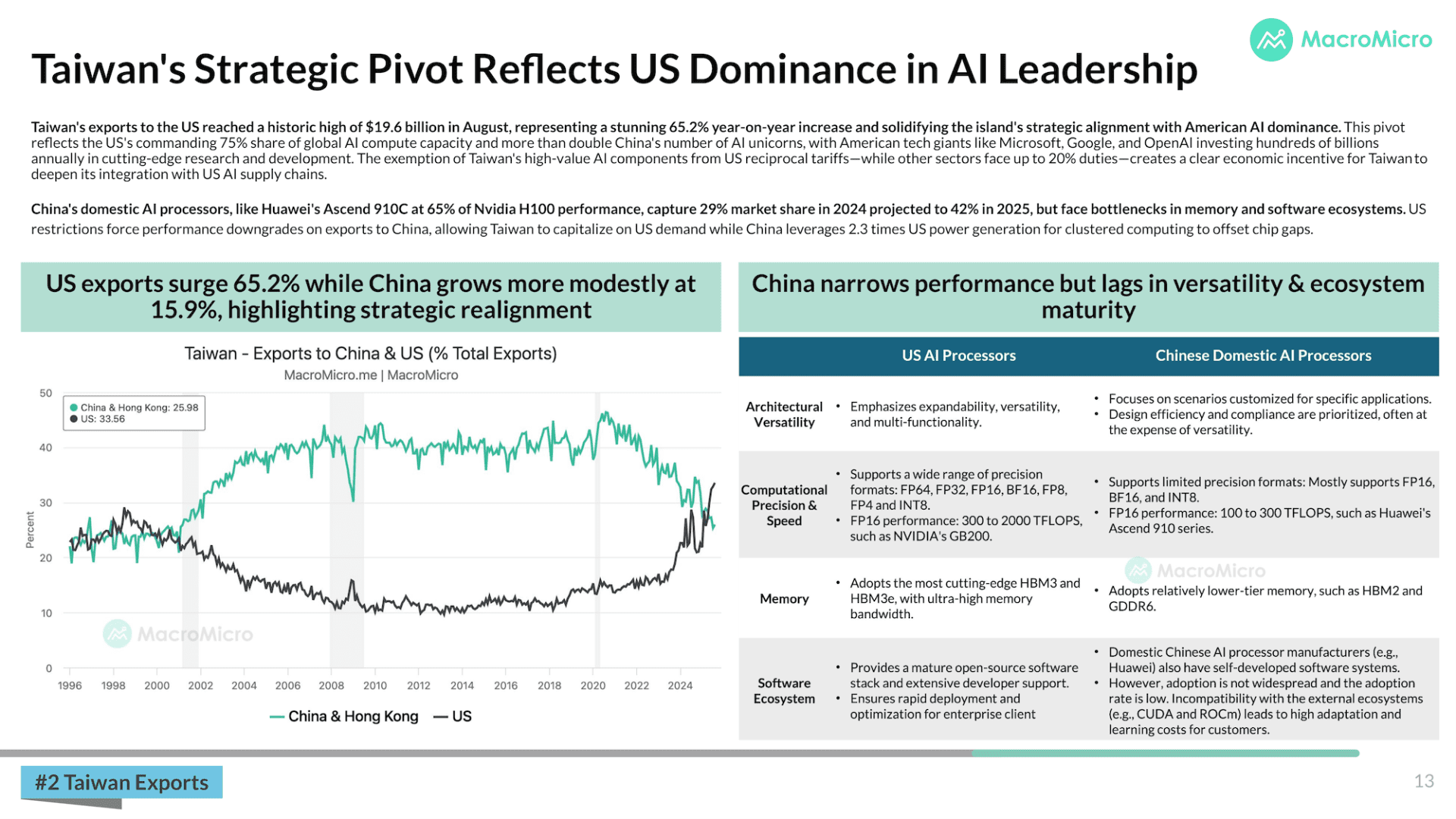
Taiwan's robust export growth, particularly a record-breaking August at $58.4 billion, is a powerful signal of sustained global demand for AI infrastructure. The surge is concentrated in ICT products, showing that the AI boom extends beyond just chips to include a wide range of hardware components. This pivot also reflects a strategic alignment with the U.S., as exports to the American market have jumped dramatically, solidifying Taiwan's role as a leading indicator of genuine tech sector momentum and giving it a competitive edge over regional rivals like South Korea.
Long-Term Bond Market Signals Fiscal Concerns Amid Rising Debt
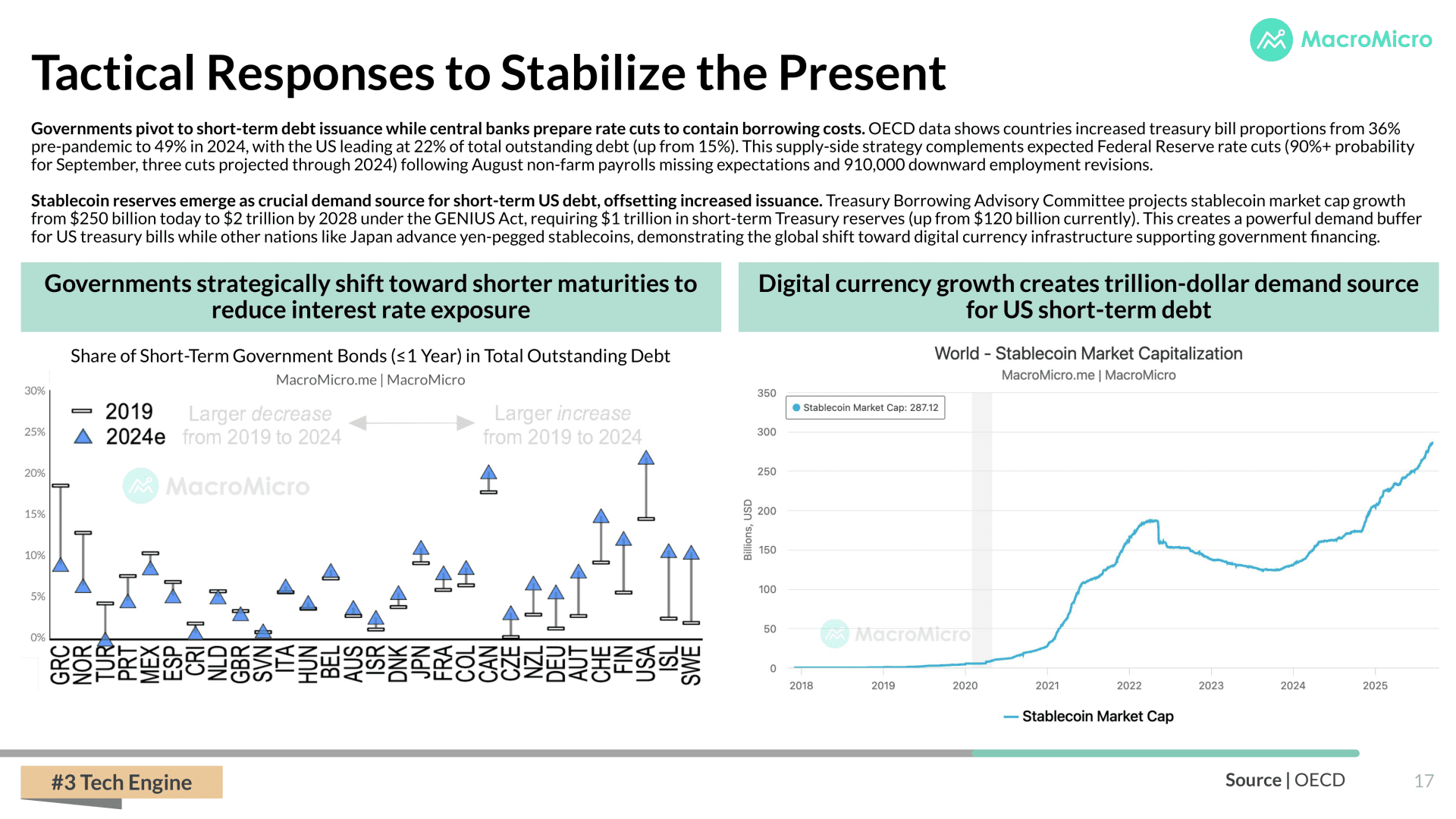
Global long-term government bond markets are signaling investor skepticism about fiscal sustainability. The surge in 30-year bond yields to decade-highs across major economies reflects mounting concerns over rising debt driven by deglobalization, increased defense spending, and aging populations. In response, governments are shifting to shorter-term debt to manage costs, while a new demand source is emerging from stablecoin reserves, which increasingly hold short-term U.S. debt. This dynamic highlights the growing pressure on traditional government financing.
Already a subscriber? Click here to log in.
Full Access to Our Services

Comprehensive data at your service
with key indicators for investment insights

Exclusive flash reports
on key events and data

Create your own charts and analysis
including performance backtesting

Hub of professionals to engage
in meaningful discussions and insights
