Global equities extended their rebound on optimism over a potential U.S.–Iran ceasefire, with the S&P 500 up 0.93% and tech stocks back in the lead. The Philadelphia Semiconductor Index hit a new high, while WTI crude fell below $80, its lowest since March. The Fed held rates as expected, but a higher dot plot and Warsh’s move to scale back forward guidance reinforced a hawkish tone. The dollar rebounded toward 101, and gold remained pressured by rate-hike expectations. This week’s WEFC takes a closer look at these developments.
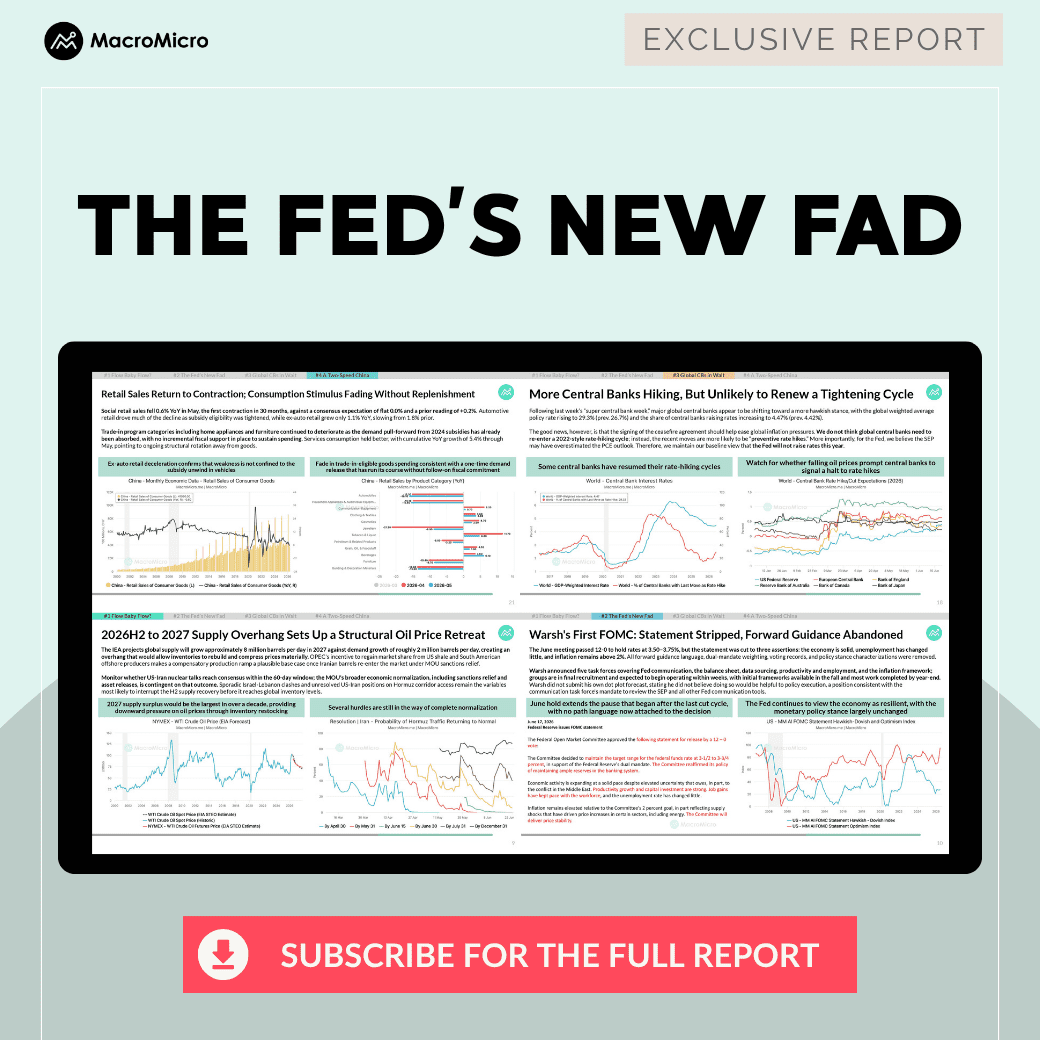
Key Focus of This Week’s Analysis
-
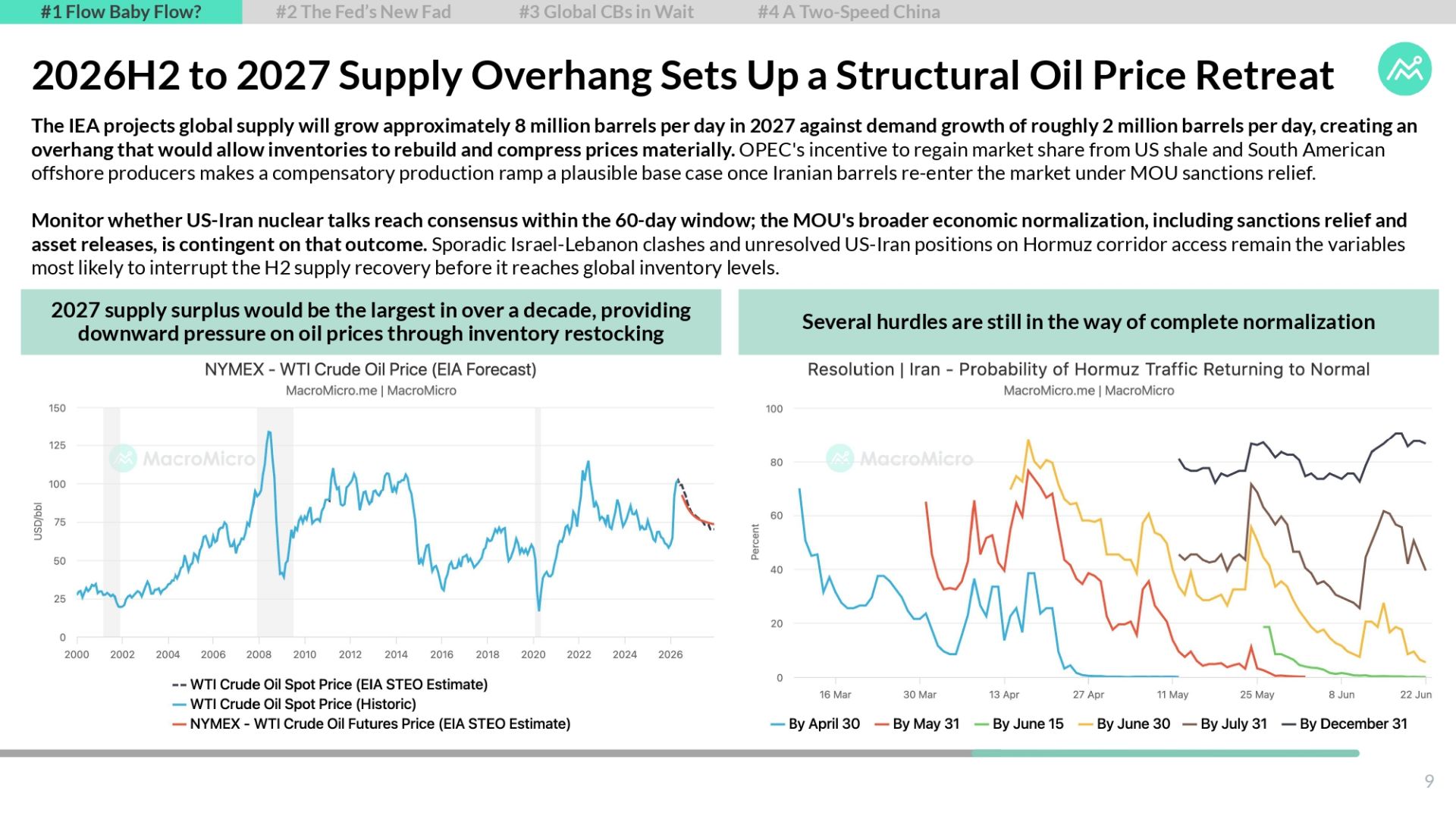
Oil Prices Are Pricing a Faster Recovery Than Fundamentals Suggest: The sharp pullback in crude looks more like a relief trade than proof that physical balances have normalized. Inventories are already near operational stress points, refinery utilization is stretched, and Hormuz transit confidence remains fragile despite observed tanker movement. The key market risk is that diplomacy improves faster than logistics.
-
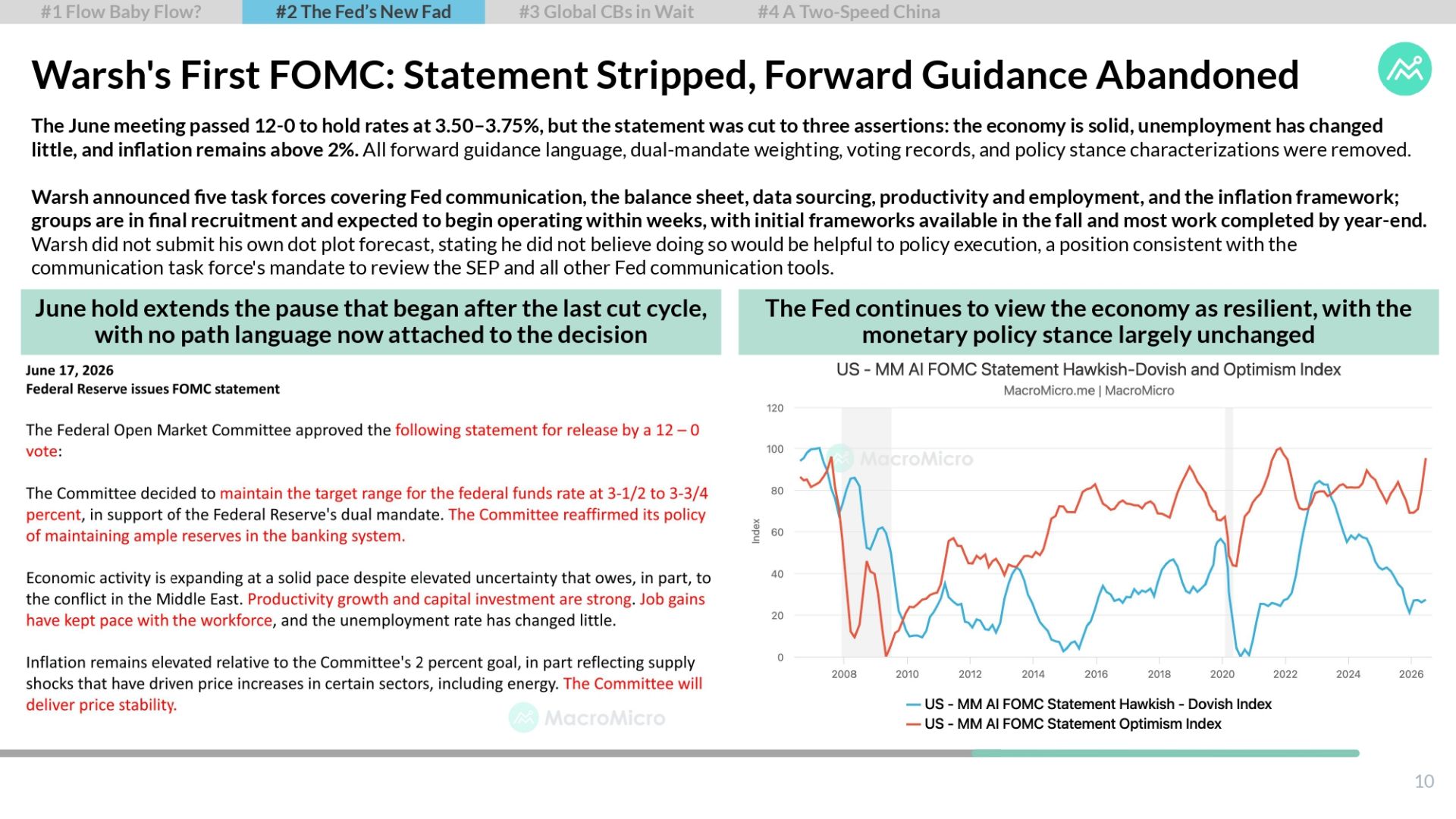
The Fed’s June Meeting Repriced Policy Risk Without Delivering an Immediate Hike: The June FOMC decision matters less for the hold itself than for the communication reset behind it. By stripping forward guidance, lifting the rate path, and allowing a near-majority of dots to imply hikes, the Fed shifted markets from a cuts debate to an inflation-risk debate. Yet the underlying shock may already be fading as oil stabilizes and Hormuz partially reopens. That makes the next PCE prints critical: they will decide whether the hawkish pivot becomes policy or remains defensive signaling.
-
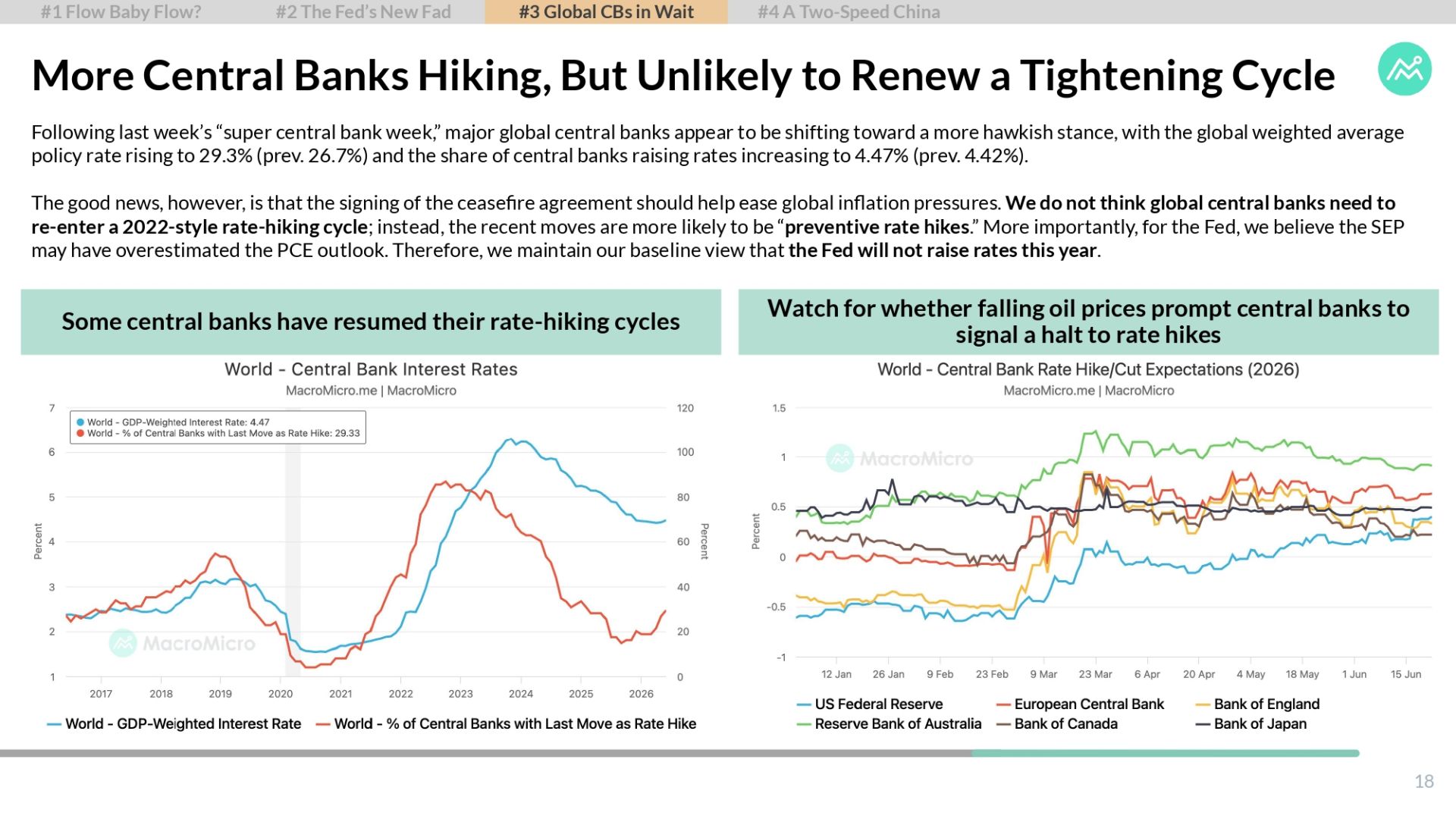
BOJ, BOE, and RBA Keep Further Tightening on the Table: The BOJ’s rate hike to 1.0% stands apart from the BOE and RBA holds, but all three central banks still face conditions that could justify additional tightening. Japan’s balance-sheet runoff and rising JGB supply keep pressure on yields, the UK remains exposed to energy-driven inflation and wage second-round effects, while Australia still has sticky trimmed-mean inflation despite slowing growth.
-
China’s Data Point to a Supply-Side Expansion Without a Demand-Side Recovery: China’s May figures expose a widening gap between industrial upgrading and domestic absorption. High-tech manufacturing remains strong, but fixed asset investment, retail sales, and state-owned capital spending all weakened at the same time. The widening PPI-CPI spread suggests upstream cost pressure is squeezing margins rather than passing through to consumers.
About Weekly Economic and Financial Commentary (WEFC)
The MacroMicro WEFC is published weekly, delivering rigorous analysis and in-depth insights on the most critical market-moving events. Coverage spans equities, foreign exchange, bonds, commodities, global central banks, geopolitics, and the international political economy.
At its core is a concise, roughly 20-page Chart Pack designed to help you grasp market trends at a glance. Subscribe Now » to download the full PDF report, lock in the current offer before prices rise and secure your future upgrade to Max AI with full AI access.
Already a subscriber? Click here to log in.
Full Access to Our Services

Comprehensive data at your service
with key indicators for investment insights

Exclusive flash reports
on key events and data

Create your own charts and analysis
including performance backtesting

Hub of professionals to engage
in meaningful discussions and insights
