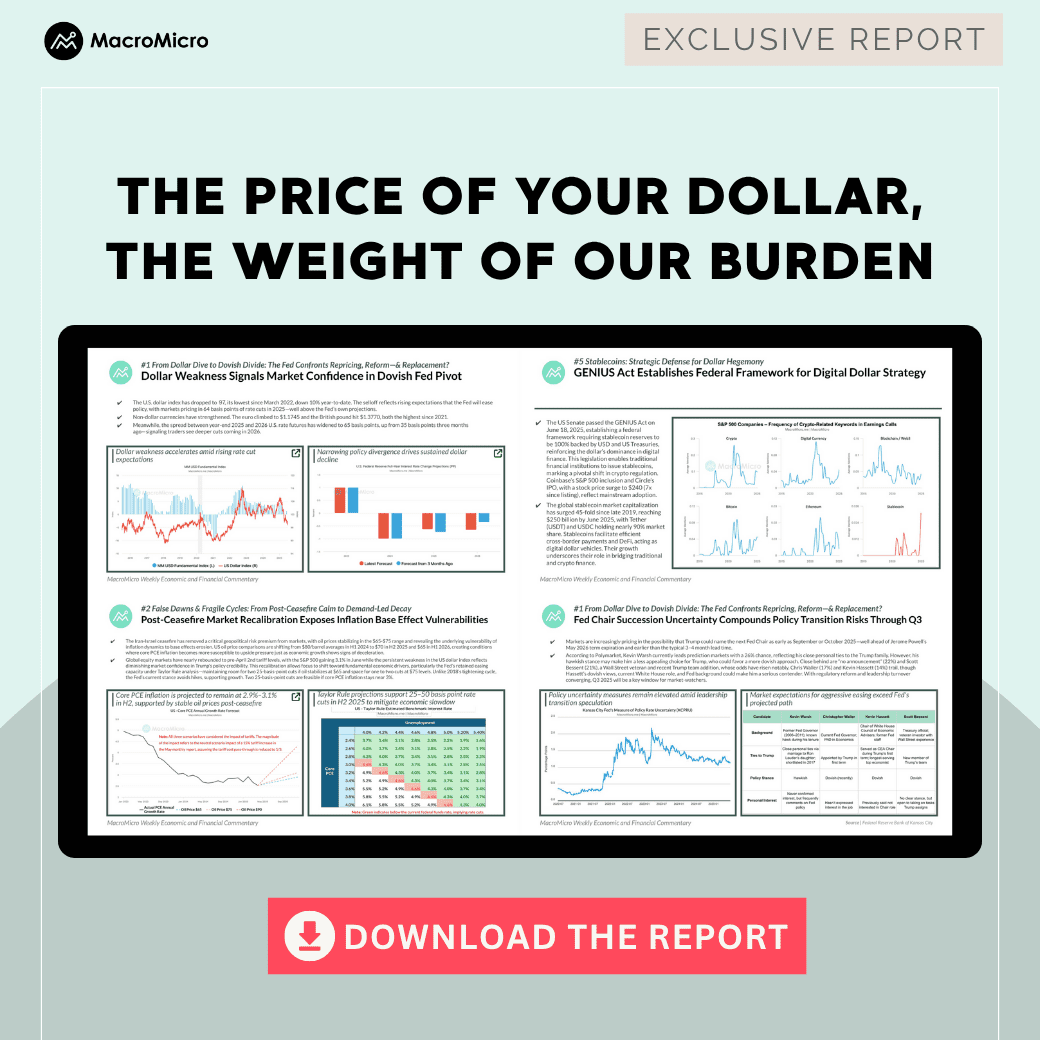
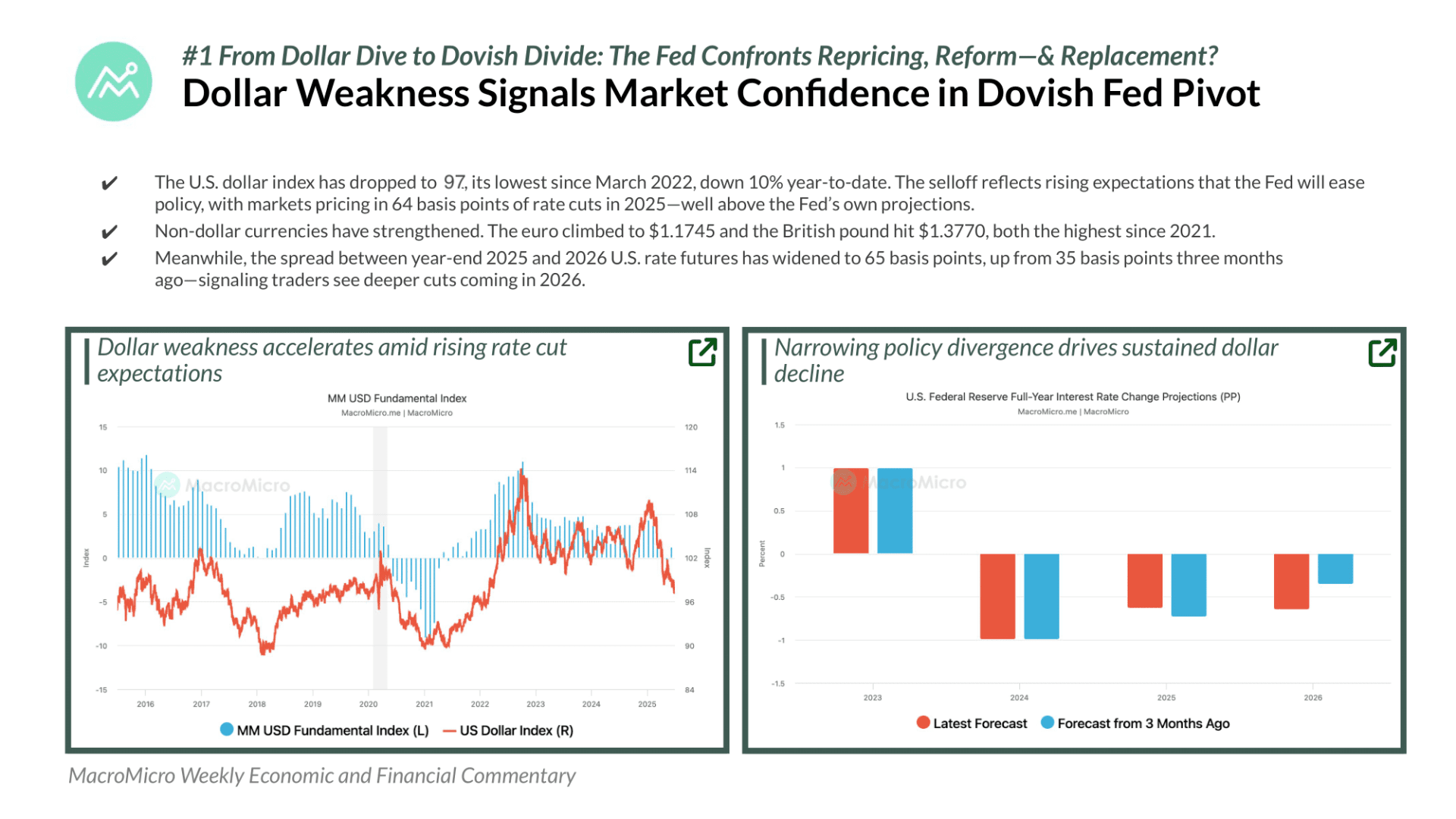
The US Dollar Index, at 97.2, its lowest since March 2022 and down 10% year-to-date, reflects expectations for aggressive Federal Reserve easing amidst its triple test: potential rate cuts, Supplemental Leverage Ratio (SLR) reforms, and political pressure to sideline Chair Powell.
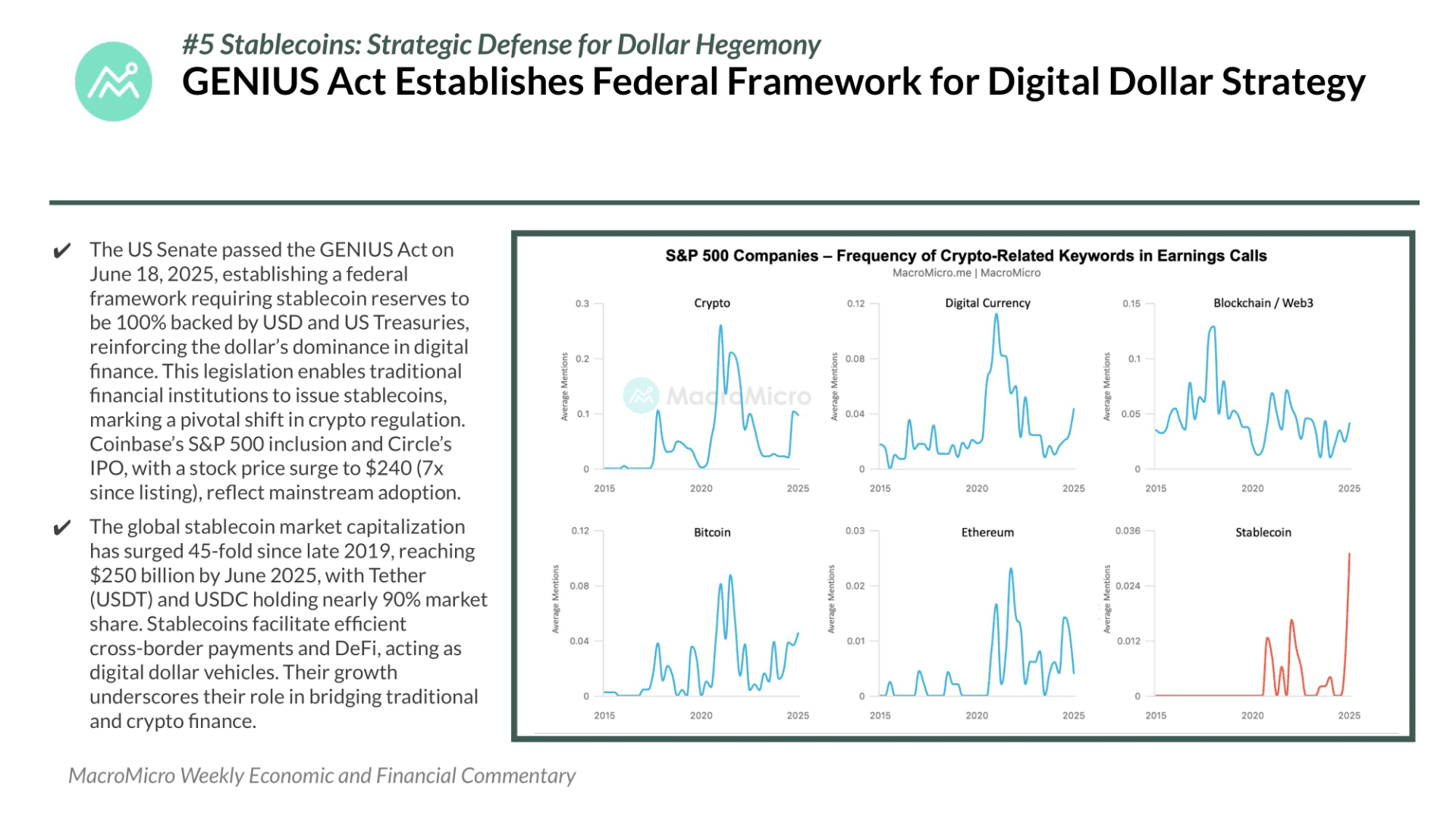
Stablecoins are concurrently emerging as vital U.S. financial pillars. Fully dollar- and Treasury-backed, they boost Treasury demand and reinforce dollar dominance despite the greenback's slide. Surpassing Visa in volume, stablecoins strategically extend U.S. monetary influence. This week's WEFC explores how these dual forces redefine risk across global bonds, currencies, and credit markets.
1. Fed at a Crossroads: Easing, Reform, and Uncertainty Ahead
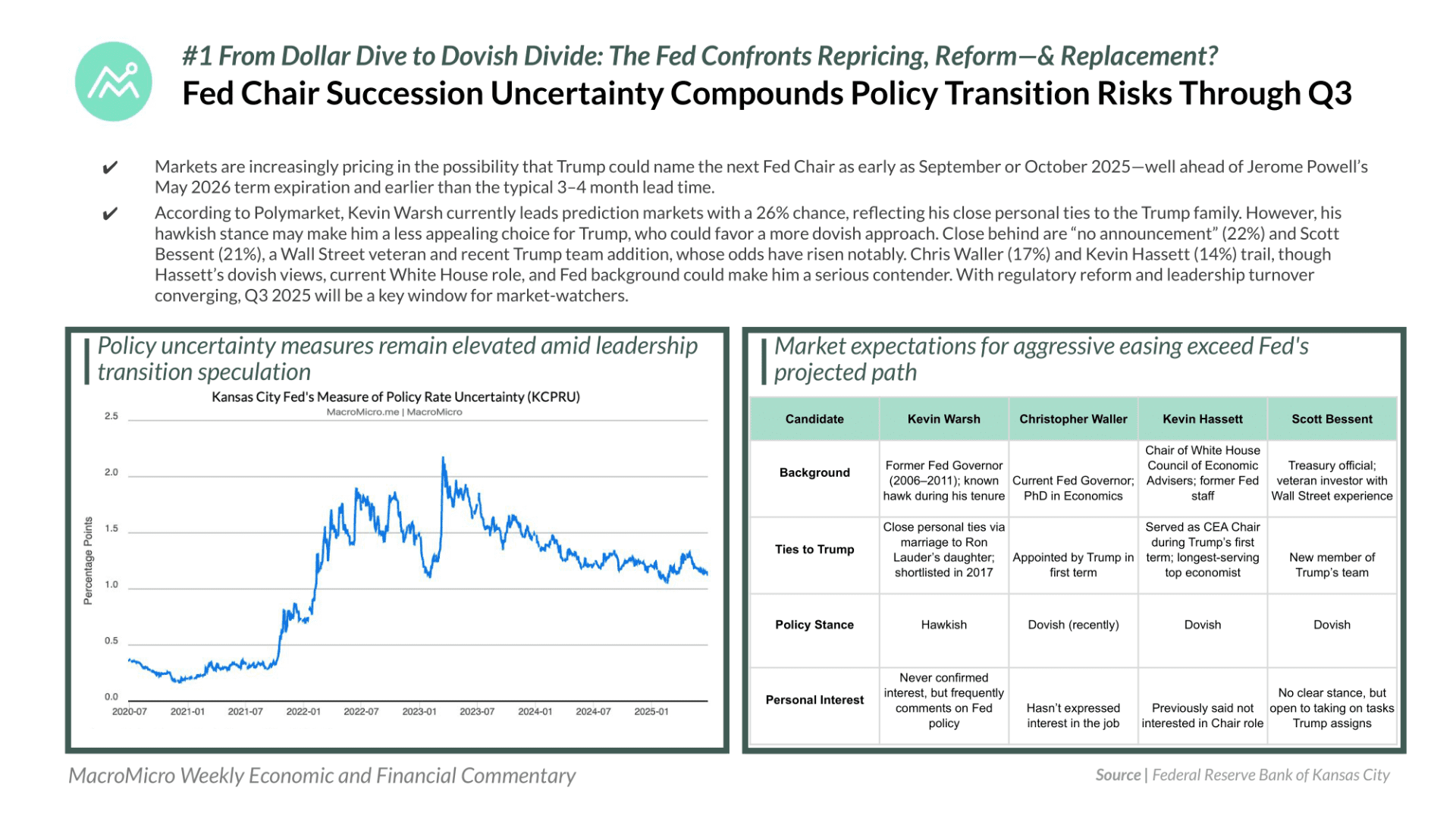
The Federal Reserve faces a triple test: potential early rate cuts, regulatory easing, and leadership succession. While markets expect more aggressive easing than the Fed projects, proposed SLR reforms could unlock $226 billion in bank capital, boosting Treasury liquidity. Meanwhile, speculation that Trump could announce Powell’s replacement by fall 2025 adds a political layer to monetary uncertainty. Together, policy direction, structural reform, and Fed Chair succession will define the Q3 2025 macro landscape—shaping risk sentiment across bonds, currencies, and credit markets.
2. Stablecoins Rise: Digital Dollars Reinforce U.S. Monetary Power
Stablecoins are evolving from niche crypto assets into pillars of the U.S. financial system. The GENIUS Act mandates fully dollar- and Treasury-backed reserves, turning stablecoins into engines of Treasury demand and reinforcing dollar dominance. With over $250 billion in market cap and $2 trillion in monthly transactions, stablecoins now exceed Visa in volume. Projections of $2 trillion in market size by 2028 could drive $1 trillion in short-term Treasury demand. As adoption grows in emerging markets and among U.S. institutions, stablecoins are shifting from a threat to a strategic tool for extending U.S. monetary influence.
3. HKD Liquidity Cycle: Peg Defense Shifts Market Risk
The HKMA’s defense of the HKD peg at 7.85 has triggered a shift in Hong Kong’s liquidity landscape. Ultra-low HIBOR rates previously fueled equity rallies and cross-border carry trades, but rising rates from HKMA intervention could reverse these flows. A rebound in HIBOR risks pressuring rate-sensitive stocks like real estate and utilities. Conversely, if the Fed begins cutting rates in late 2025, narrowing the HK-US interest rate spread, the HKD could re-strengthen—easing pressure. As policy diverges and capital flows realign, Hong Kong faces a potential turning point in its monetary cycle.
Already a subscriber? Click here to log in.
Full Access to Our Services

Comprehensive data at your service
with key indicators for investment insights

Exclusive flash reports
on key events and data

Create your own charts and analysis
including performance backtesting

Hub of professionals to engage
in meaningful discussions and insights

