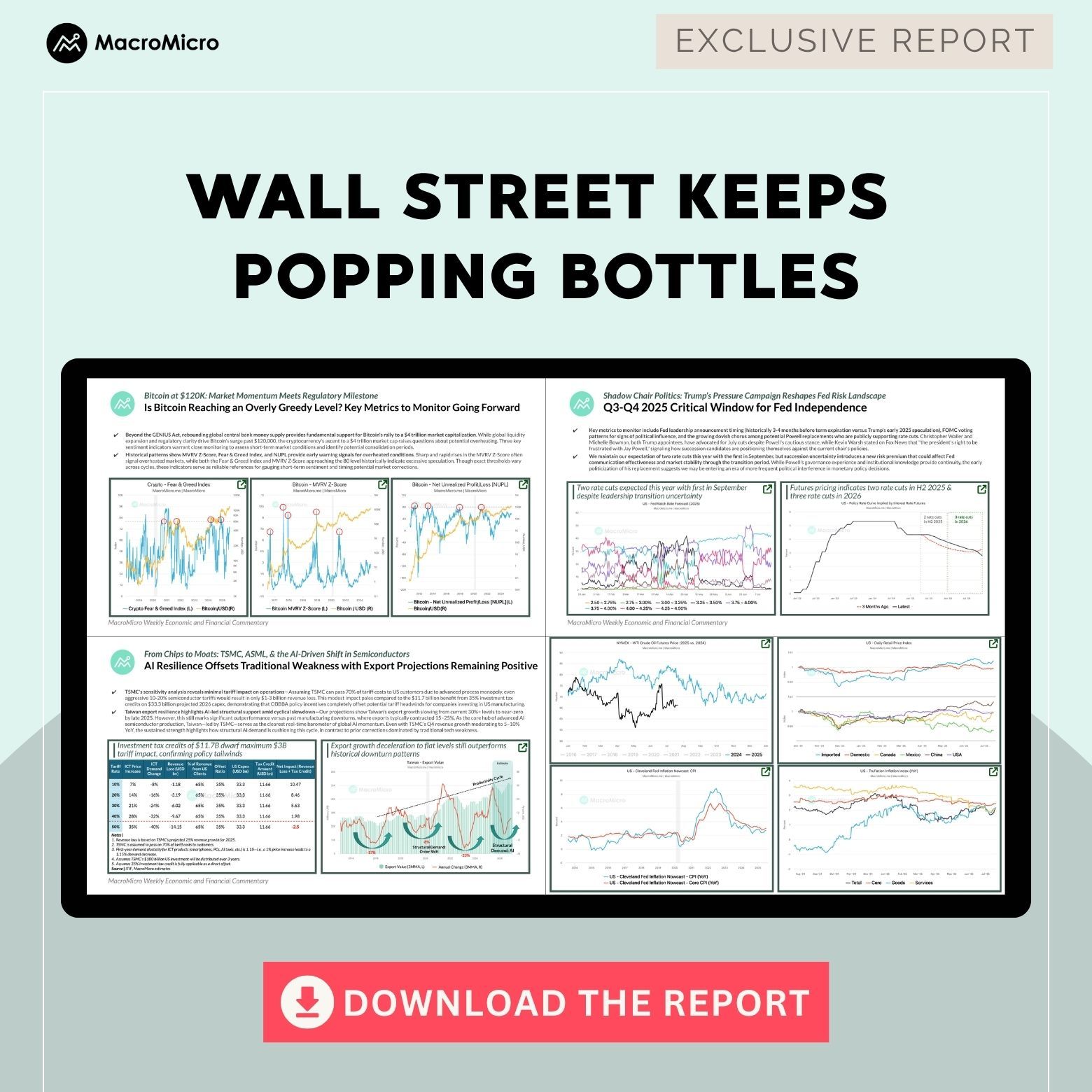
The US S&P 500 Index hit a record high last week. With monetary policy under fire, crypto on the rise, and AI transforming supply chains, the financial world is entering a pivotal phase. This week's WEFC examines the implications of Trump’s Fed pressure, robust U.S. bank earnings, Bitcoin’s breakout, and TSMC’s global expansion.
1. Political Pressure on the Fed Creates New Market Risks
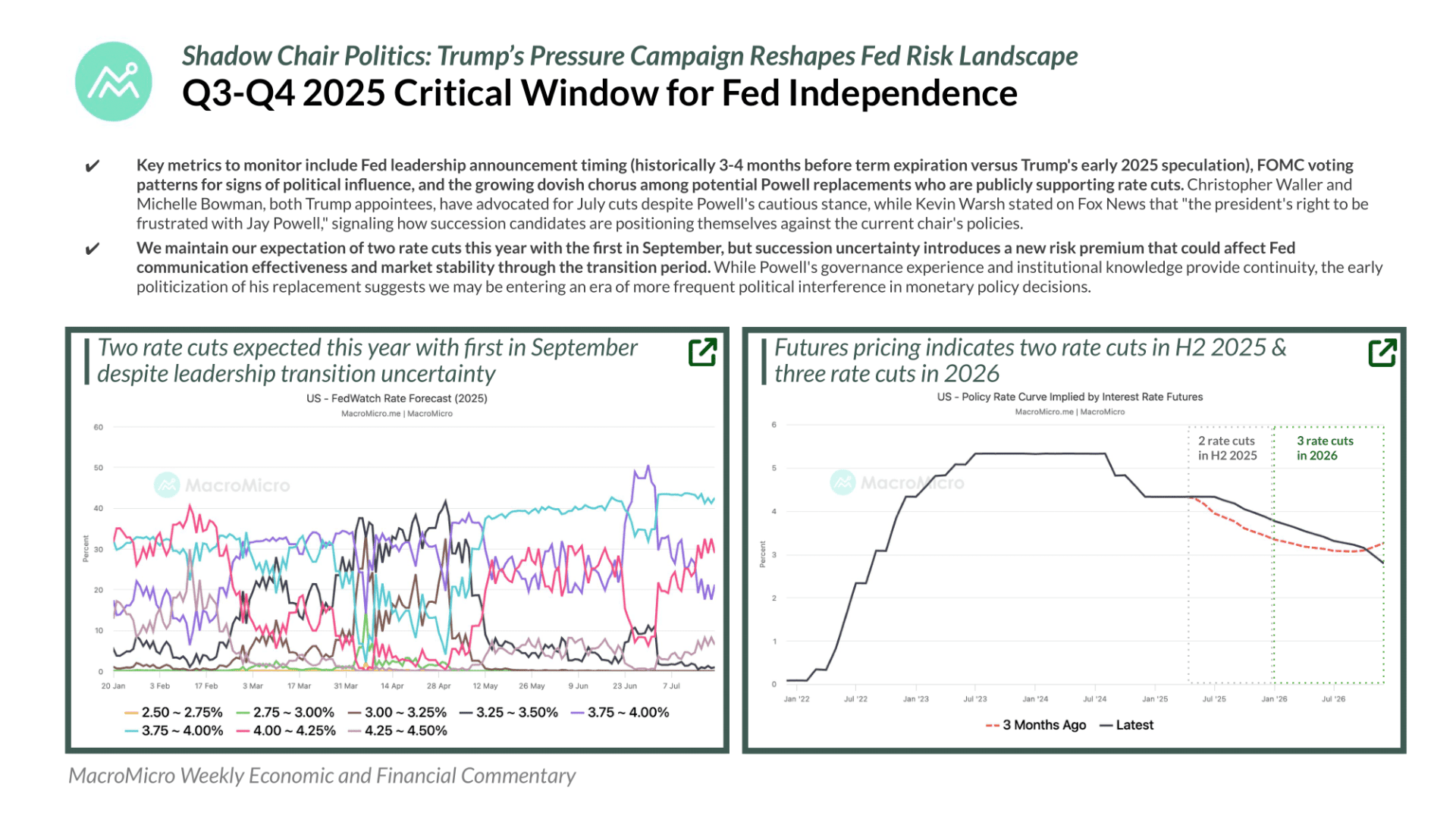
Donald Trump has intensified pressure on the Federal Reserve, directly criticizing Chair Jerome Powell and demanding a steep 300 basis point rate cut. His campaign has extended beyond monetary policy into personal attacks, including questioning the Fed’s $2.5 billion headquarters renovation. Markets reacted swiftly—when rumors of Powell’s potential dismissal surfaced, the U.S. Dollar Index dropped from 98.85 to 97.93 before rebounding. Meanwhile, Trump is actively shaping the Fed's future by publicly evaluating possible replacements nearly a year ahead of Powell’s term expiration in May 2026. With Trump-appointed Fed members like Waller and Bowman already advocating cuts, succession speculation is adding political risk to markets. The early politicization of Fed leadership threatens to undermine the central bank’s independence, weakening its credibility and destabilizing expectations around interest rate policy.
2. Financials Lead a Strong Start to U.S. Earnings Season
Q2 2025 earnings kicked off on a strong note, led by major U.S. banks outperforming in capital markets and wealth management. JPMorgan and Goldman Sachs saw sizable gains in investment banking and trading, boosted by policy changes, deregulation, and market volatility. Most S&P 500 financials beat EPS and revenue estimates, signaling solid corporate momentum. However, consumer lending lagged. Mortgage demand dropped as rates neared 6.9%, hurting banks like Wells Fargo and BofA. Rising deposit costs also pressured Net Interest Income at Wells and Citi.
So far, 12% of S&P 500 firms have reported. According to FactSet, 83% beat both EPS and revenue forecasts. Financials are leading, with 91% topping EPS and the sector beating estimates by 11.2% overall.
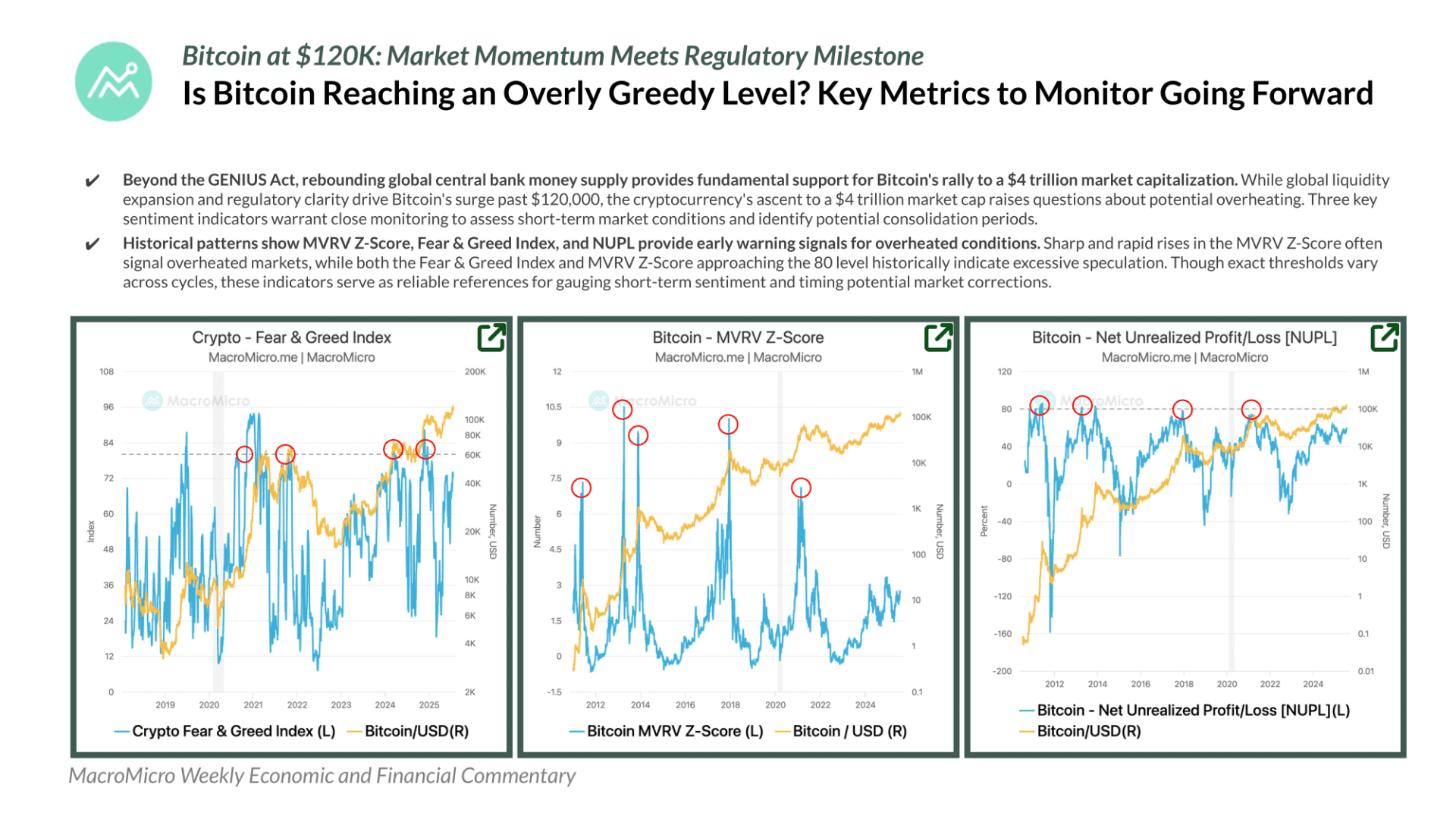
3. Bitcoin Rally Fueled by Liquidity and Regulation
Bitcoin’s surge past $120K is driven by rising global liquidity and improved regulatory clarity. Central bank M2 growth is lifting crypto markets, with Bitcoin seen as a hedge against fiat debasement. U.S. Bitcoin ETFs attracted $2.7B last week, and futures open interest hit $86.3B—clear signs of institutional demand.
New policy steps, like the GENIUS Act requiring fully USD-backed stablecoins, are helping legitimize crypto infrastructure. This is encouraging broader participation from traditional finance, supporting Bitcoin’s momentum as liquidity and policy trends stay favorable.
4. TSMC Rides AI Demand, Expands in U.S.
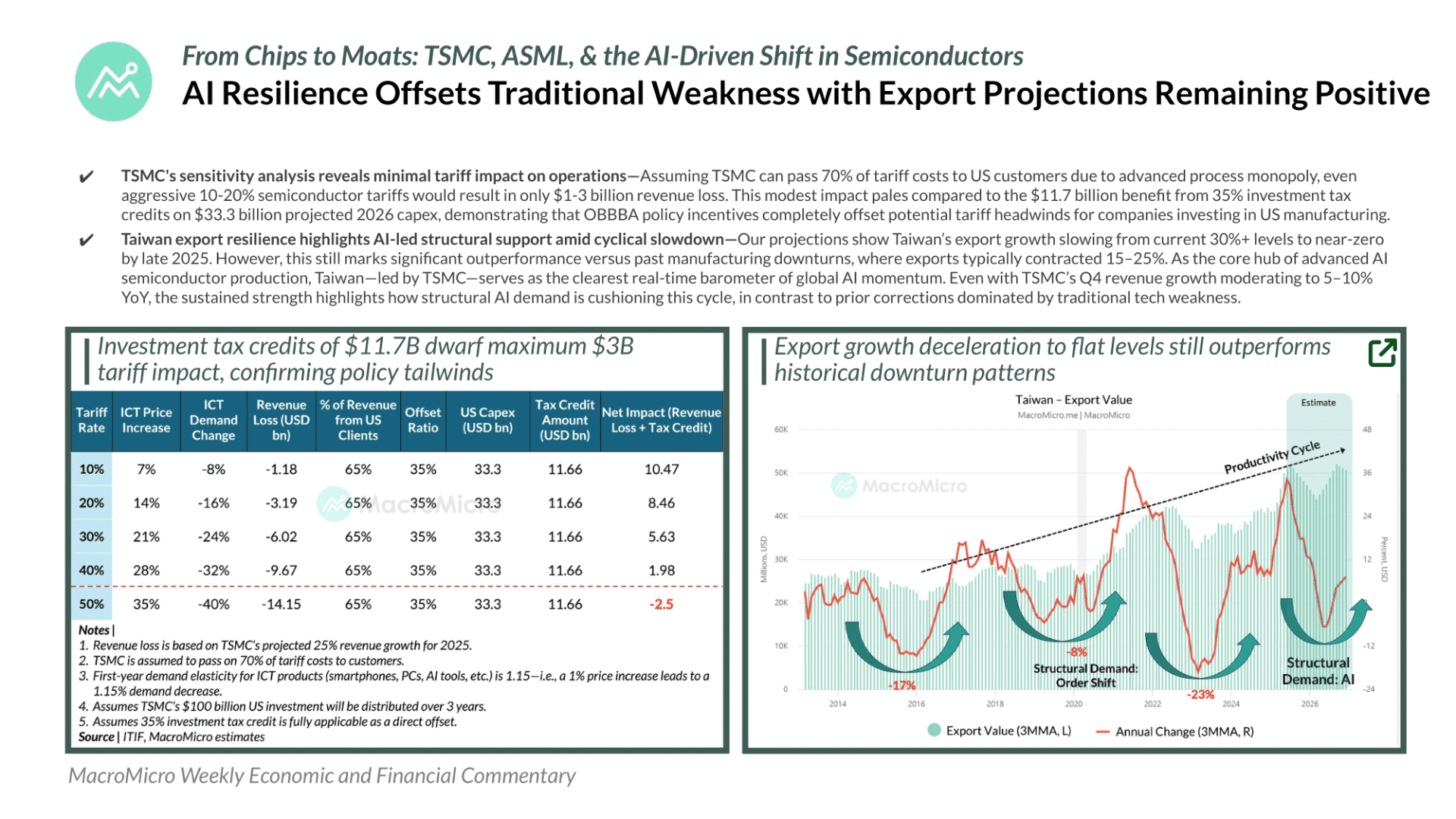
TSMC delivered strong Q2 results, driven by soaring AI chip demand. Revenue rose 38.6% YoY, with high-performance computing now 60% of its business, led by AI GPUs and ASICs. The company raised its full-year growth outlook to 30%, reflecting long-term AI tailwinds. Margins stayed firm despite FX headwinds, showing pricing power and tech leadership. TSMC is also scaling U.S. capacity—targeting 30% of advanced-node output—with support from robust demand and a 35% investment tax credit. The move lowers geopolitical risk and secures billions in tax benefits, reinforcing TSMC’s global AI edge.
Already a subscriber? Click here to log in.
Full Access to Our Services

Comprehensive data at your service
with key indicators for investment insights

Exclusive flash reports
on key events and data

Create your own charts and analysis
including performance backtesting

Hub of professionals to engage
in meaningful discussions and insights

