The U.S. job market is showing signs of strain. July’s employment report was weak, with only 73K new jobs added and major downward revisions of 258K for the previous two months. Political shake-ups followed: BLS Commissioner Erika McEntarfer was fired by Trump, and Fed Governor Adriana Kugler resigned as Trump increases pressure on the Fed. Fed Chair Jerome Powell is also under investigation by Republican lawmakers.
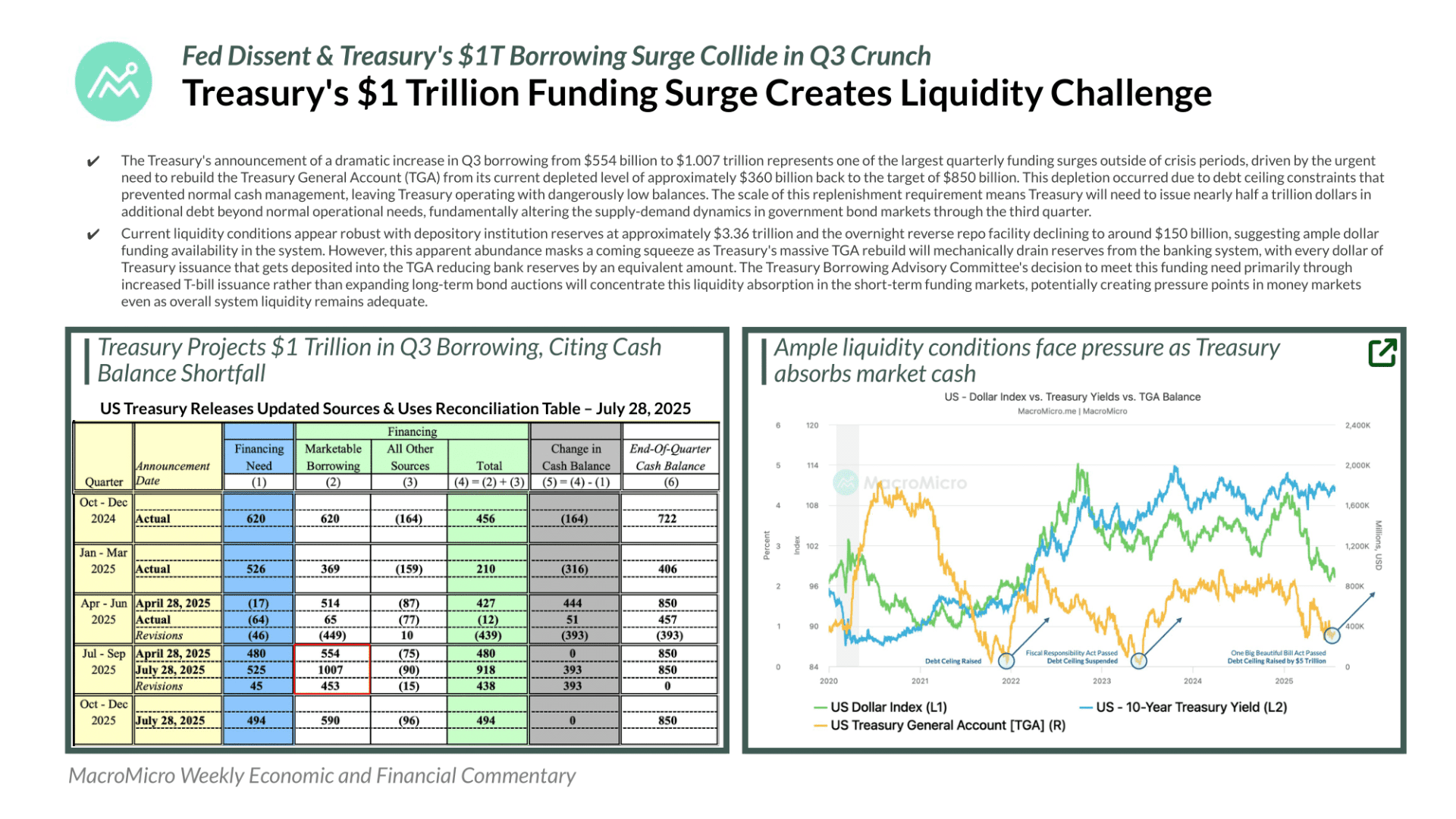
Beyond jobs data, this week’s WEFC also covered: earnings from the U.S. tech giants (the M7), developments in AI, a new round of Treasury bond issuance, and investment opportunities from China’s economic reforms.
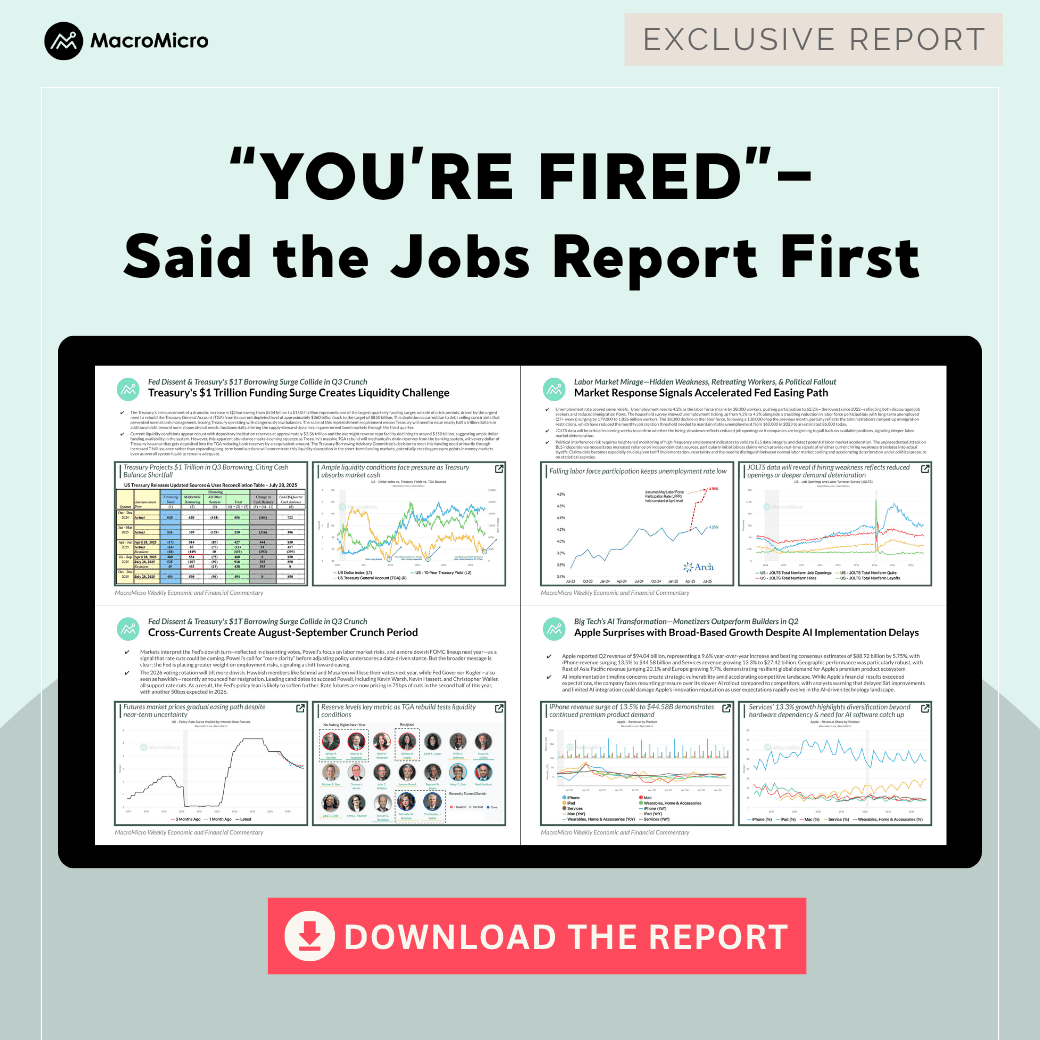
🟡 This report is available exclusively to MacroMicro Subscribers. If you're not yet a subscriber, you're welcome to use a 14-day access code "MAX14D" to download this report for free. Only 50 codes are available, so act quickly to secure your access.

Labor Market Weakness Exposes Broader Economic Fragility
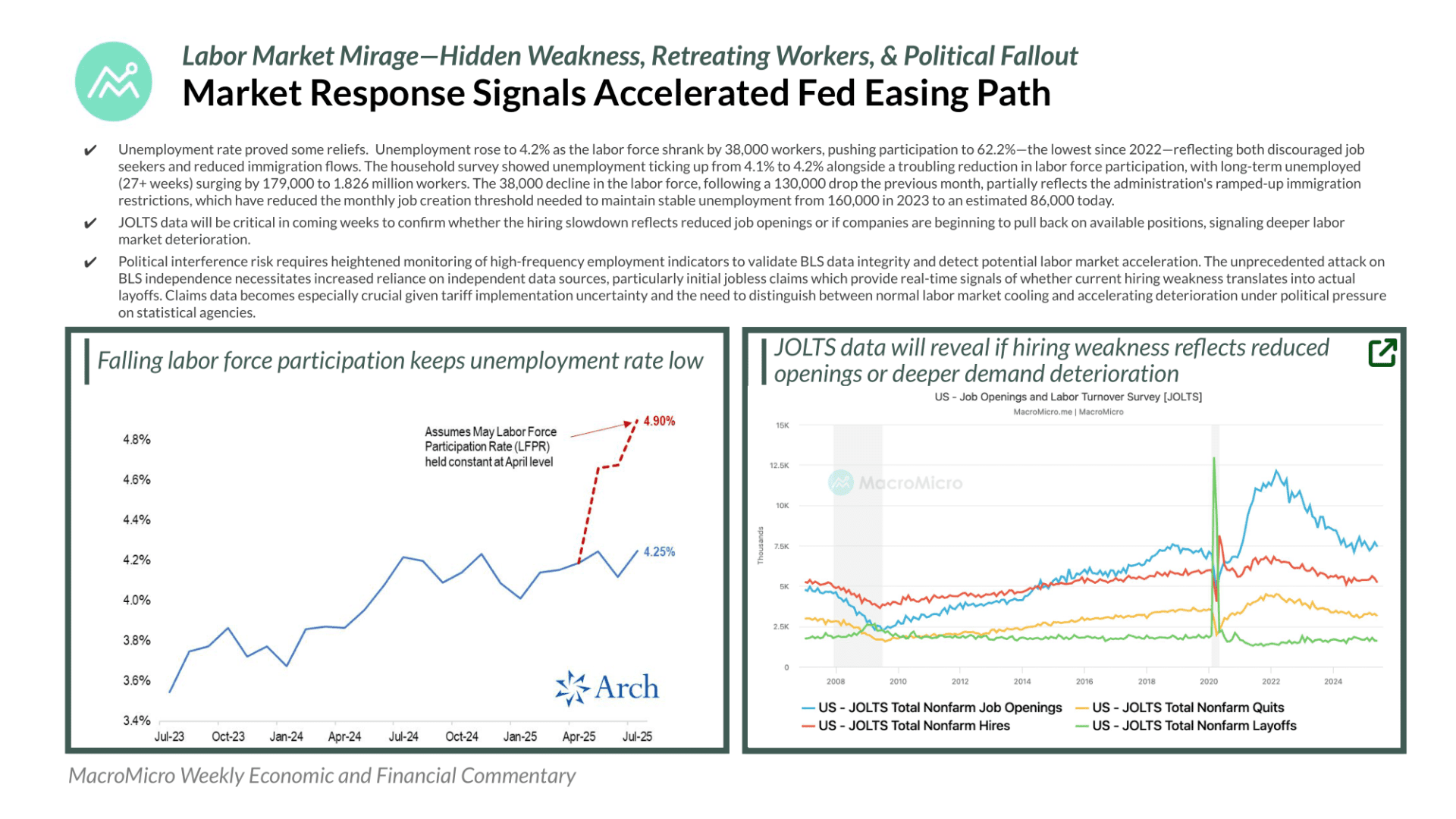
July’s employment report revealed both soft job creation (73K) and massive prior revisions (-258K), with gains narrowly concentrated in healthcare and education. Broader sectors like manufacturing and leisure showed stagnation or decline. Labor force participation dropped to 62.2%, and long-term unemployment surged—reflecting discouraged workers and tightened immigration. Political fallout was immediate, as Trump fired the BLS Commissioner, triggering concerns about data integrity. With unemployment rising to 4.2% and job growth slowing, the labor market appears increasingly vulnerable. This fragility heightens pressure on the Fed to pivot dovish and adds uncertainty to the post-tariff economic outlook.
FOMC Dissent Signals Monetary Policy Pivot Toward Easing
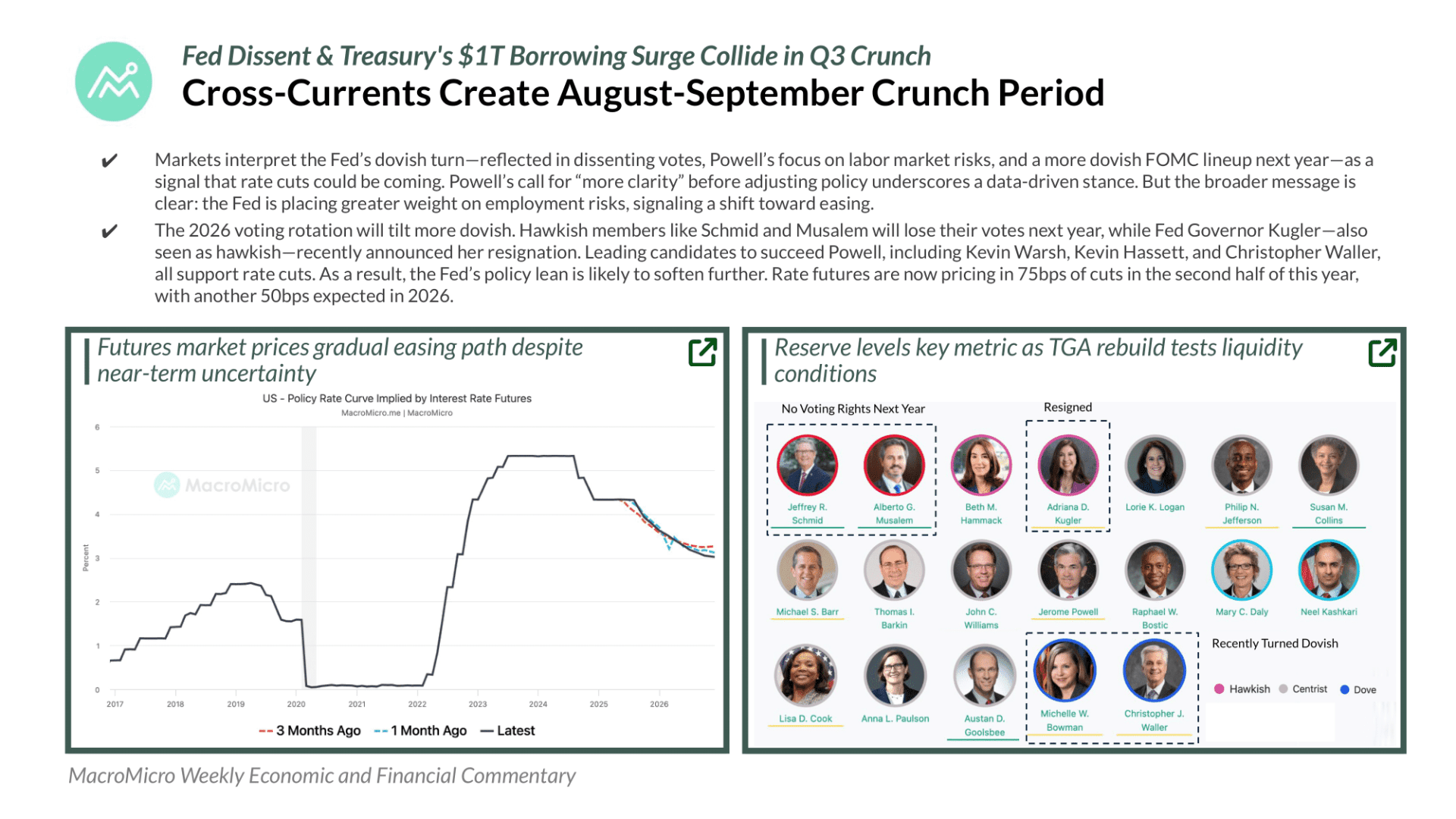
The July FOMC meeting marked a turning point with a 9–2 vote to hold rates, as dissenting members Bowman and Waller pushed for an immediate 25bps cut. The official statement dropped prior references to "diminished" uncertainty and described economic growth as "moderated" rather than "solid." Fed Chair Jerome Powell emphasized employment risks over inflation, signaling increased concern about a weakening labor market. With dovish governors set to rotate into voting positions in 2026—and hawkish voices losing influence—markets are now pricing in 75bps of cuts in H2 2025. This institutional shift marks a clear policy tilt toward preemptive easing.
Monetization Defines Winners in the AI Arms Race Across Big Tech
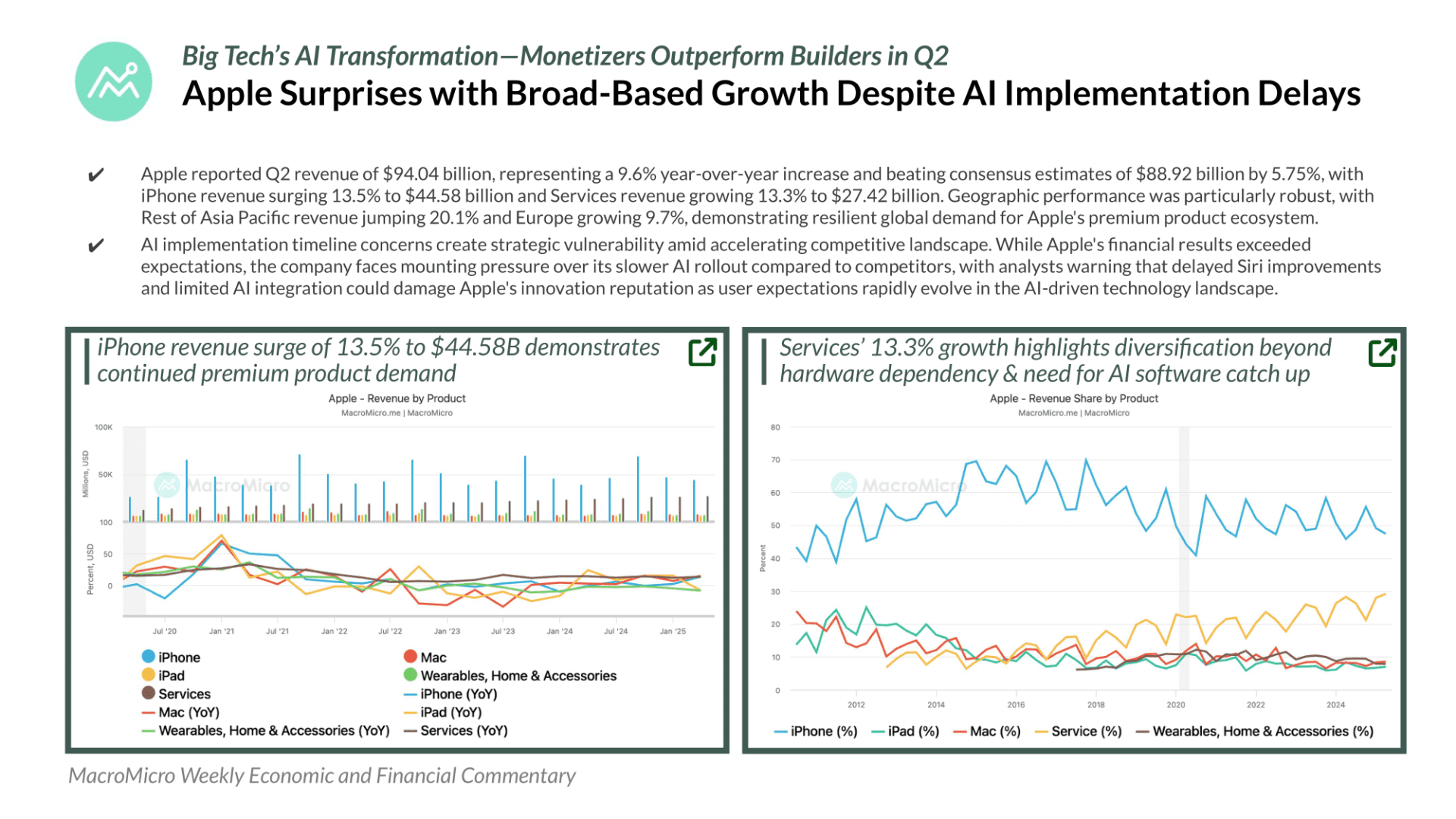
Q2 earnings confirmed that tech giants with direct AI revenue channels are outperforming. Meta and Microsoft led with superior monetization—Meta through AI-optimized advertising and Microsoft via enterprise AI cloud demand. But others also showed strategic divergence: Google reported strong 32% cloud growth, benefiting from AI tool integration in Workspace and Cloud; Amazon’s AWS, despite $100B in planned AI infrastructure, lagged at 17.5% growth, raising investor concerns over ROI timing. Apple, though beating revenue estimates, faces criticism over delayed AI rollout. This quarter made clear: success in the AI era hinges not on hype, but on immediate, scalable monetization.
🟡 This report is available exclusively to MacroMicro Subscribers. If you're not yet a subscriber, you're welcome to use a 14-day access code "MAX14D" to download this report for free. Only 50 codes are available, so act quickly to secure your access.
Already a subscriber? Click here to log in.
Full Access to Our Services

Comprehensive data at your service
with key indicators for investment insights

Exclusive flash reports
on key events and data

Create your own charts and analysis
including performance backtesting

Hub of professionals to engage
in meaningful discussions and insights

