Executive Summary:
The strength of May’s employment report surprised many, debunking the notion that the US labor market is mired in “low-hire, low-fire” stagnation. But it confirmed the views of Ed and Elias. They expect demand for labor to continue to improve and supply to remain structurally constrained. This should keep unemployment low, boost productivity, and sustain wage growth. That shouldn’t cause an inflationary wage-price spiral over the long term; the AI-sparked productivity boom should keep unit labor costs in check, in line with our longer-term Roaring 2020s hypothesis. But near-term risks remain: The AI buildout is inflationary, and higher wage growth could add price pressure before offsetting productivity gains materialize. … Also: Elias discusses five economic impacts of AI. … Check out the accompanying chart collection.
US Labor Market I: ‘Breakeven’ Jobless Rate Breaks Higher
Over the past few months, we’ve observed that labor market indicators were turning more positive. So we weren’t totally surprised when the Bureau of Labor Statistics (BLS) reported on Friday that the US economy added way more jobs in May than expected: 172,000, well above the 88,000 consensus and higher than any published forecast.
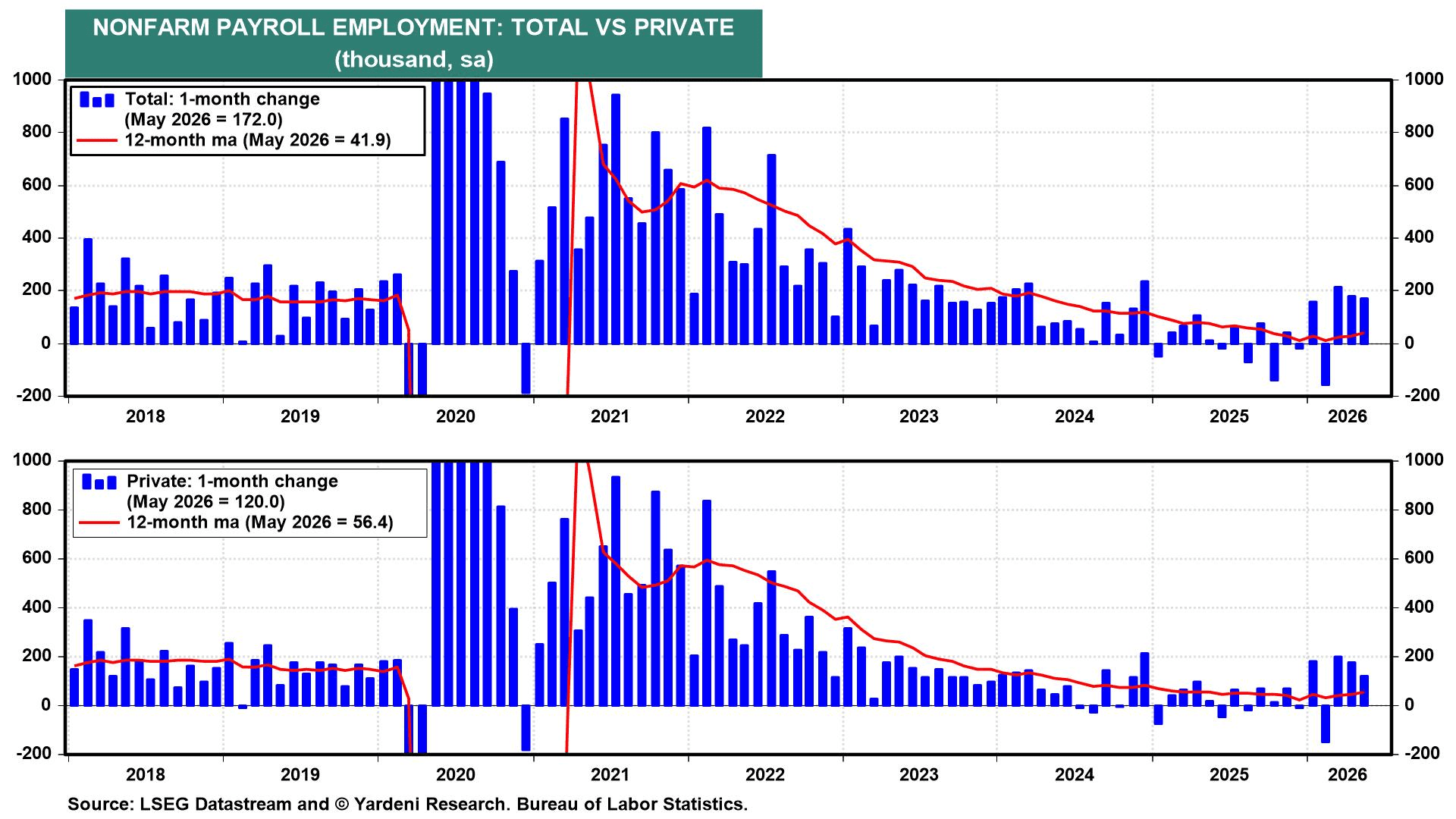 ▌View Related Live Charts: US - Nonfarm Payrolls vs. Unemployment Rate
We don’t buy the popular narrative that the US labor market is stuck in a “low-hire, low-fire” stagnation. We have been pushing against it since early last year, pointing to the JOLTS report; it consistently has shown monthly total hires north of...
