Executive Summary:
Fed Chair Kevin Warsh isn’t one to give the markets a heads-up. Investors are trying to translate what he says into what he would like the Fed to do. To that end, Ed and Elias parse Warsh’s remarks last week at the Jackson Hole symposium. While Warsh’s assessment of economic conditions is hawkish, is it just hawkish squawk or indicative of his vote at September’s FOMC meeting? Whether he backs raising or maintaining the current federal funds rate may hinge on whether August inflation data suggest persistent weakness. But Warsh’s Jackson Hole comments did give the FOMC’s hawks some support and did shed some light on his policy approach. … Check out the accompanying chart collection.
Warsh I: Hawkish Again
Fed Chair Kevin Warsh was hawkish earlier this summer, and he’s hawkish still. At the press conferences following the June 16-17 and July 28-29 FOMC meetings, Warsh stressed that the Fed’s number-one mission is to “deliver price stability.” His Jackson Hole speech on Friday, August 28, returned to the same theme. During June and July, Warsh declined to provide forward guidance about the monetary policy outlook. He reiterated that reluctance in his August 28 remarks but nevertheless offered enough guidance to push interest rates higher across the yield curve.
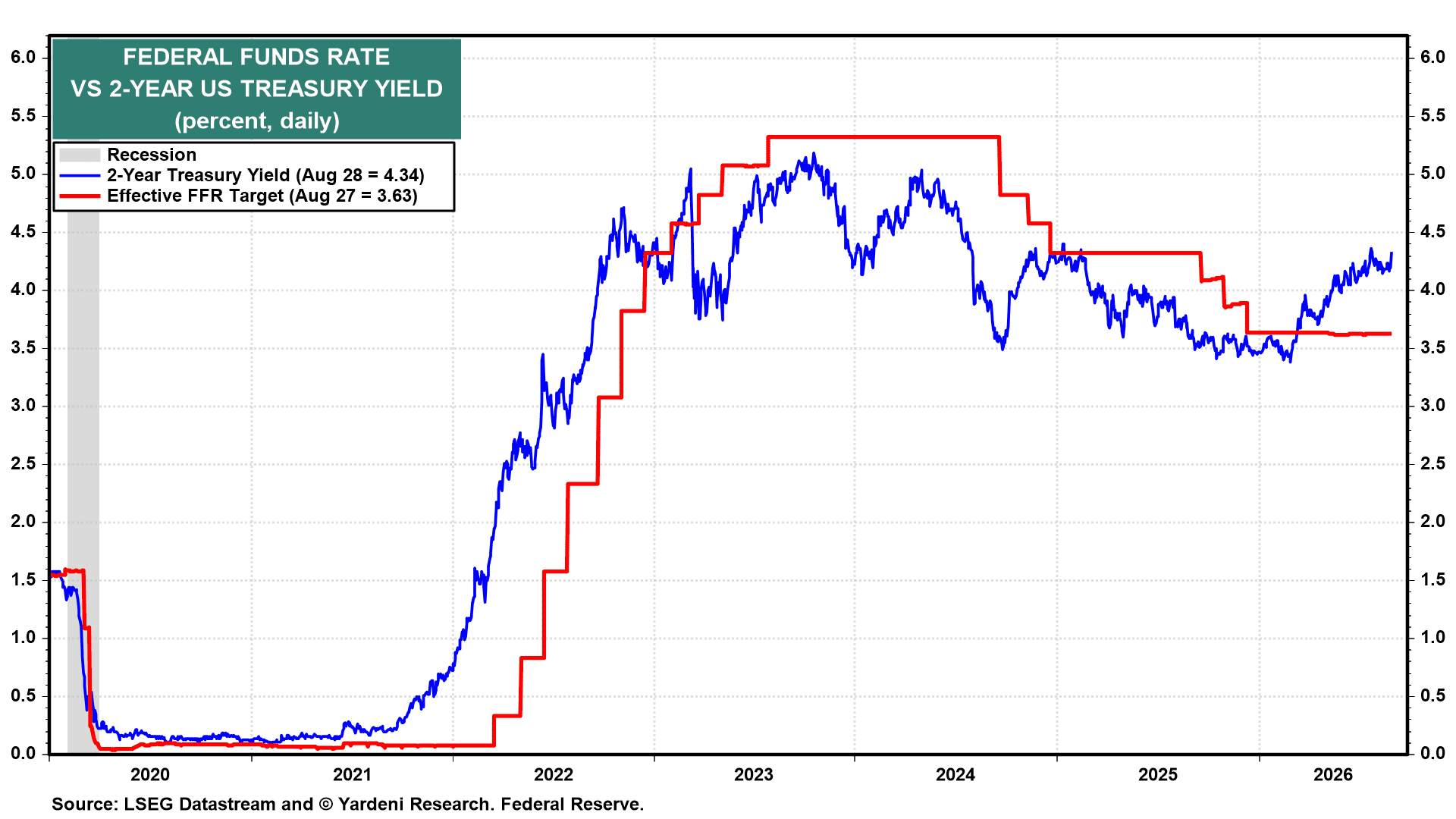
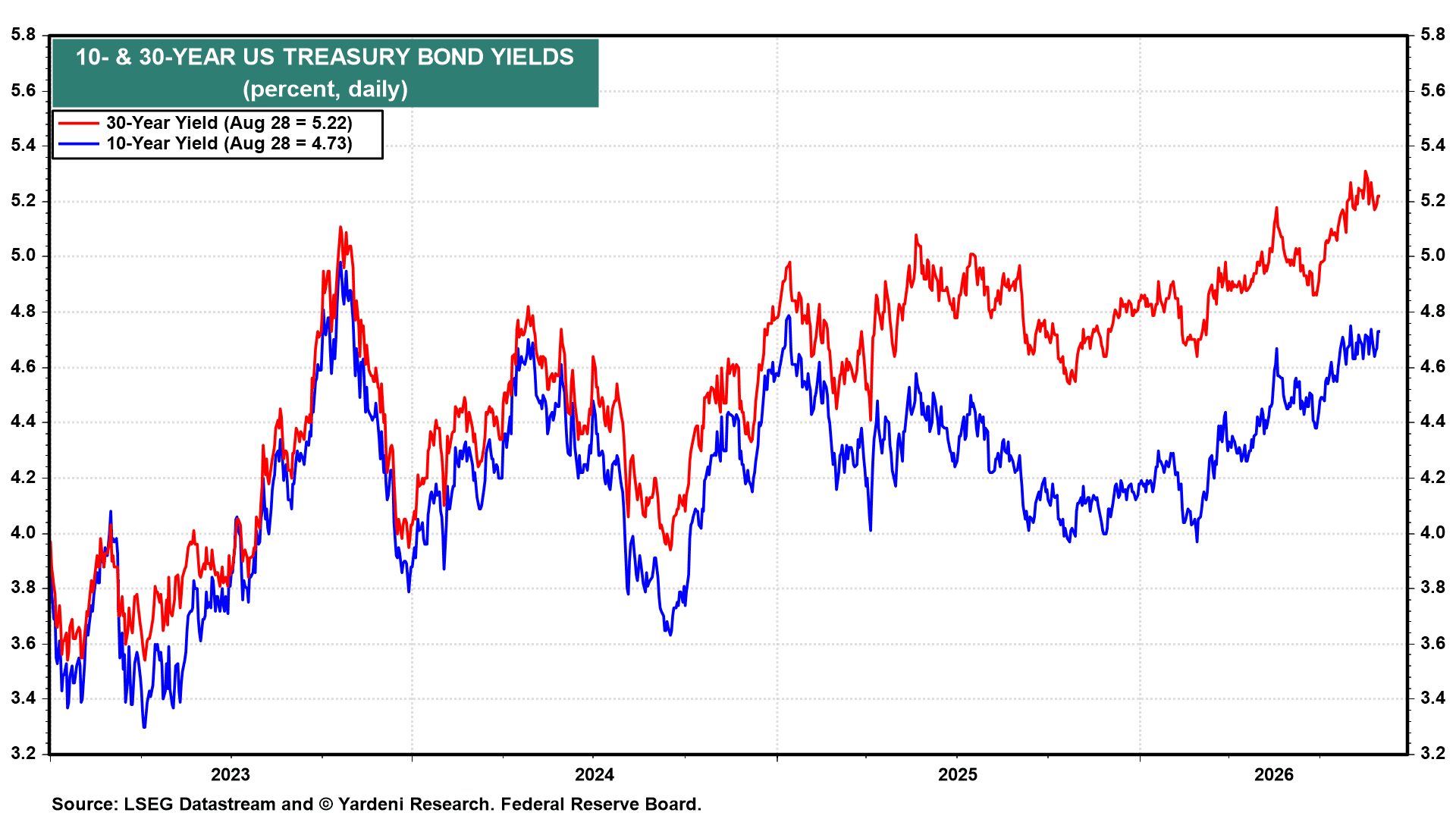
Warsh emphasized that the economy is resilient, the labor market is at full employment, financial conditions are not restrictive, and inflation remains too high. Unless underlying inflation moves toward 2.0% y/y “clearly and at sufficient speed,” he said, the Fed has more work to do. The implication: The Fed will need to raise the federal funds rate if underlying inflation remains sticky.
Here’s a closer look at the key points of Warsh’s Jackson Hole speech:
(1) Inflation: The Fed still has work to do. Warsh reaffirmed that 2.0% y/y inflation, as measured by the personal consumption expenditures deflator (PCED), is the Fed’s...
 Get answers from MM AI.
-
What is the primary mission of the Fed, according to Fed Chair Kevin Warsh?
💡The Fed's number-one mission, according to Fed Chair Kevin Warsh, is to "deliver price stability." This objective was consistently stressed in his remarks at press conferences following the June 16-17 and July 28-29 FOMC meetings, and again in his Jackson Hole speech on Friday, August 28. Warsh views price stability as paramount, reiterating that the Fed has more work to do unless underlying inflation moves towards 2.0% y/y "clearly and at sufficient speed."
-
Which inflation measure is the Fed's firm target, and what is its goal?
💡The Fed's firm, fixed target for inflation is 2.0% year-over-year, as measured by the personal consumption expenditures deflator (PCED). Fed Chair Kevin Warsh reaffirmed this target, noting that the Fed has missed it for 65 months. He also argued that progress in reducing inflation over the past two years has been modest, whether measured by PCED or the Consumer Price Index (CPI), emphasizing the need for underlying inflation to move towards this objective clearly and at sufficient speed.
-
What did Kevin Warsh indicate about the pace of disinflation at Jackson Hole?
💡At Jackson Hole, Kevin Warsh indicated that policymakers must consider both the direction and the pace of disinflation, emphasizing that they "must be confident that underlying inflation is moving to our objective, clearly and at sufficient speed." He stated that a few favorable monthly readings are unlikely to be sufficient to establish a meaningful improvement in the trend of underlying inflation, even if weaker June and July readings were encouraging. Warsh believes the Fed has more work to do if these conditions are not met.
-
How does Kevin Warsh view current financial conditions in the US economy?
💡Kevin Warsh views current financial conditions in the US economy as "not restrictive," despite some strains in the housing and agriculture sectors. He pointed to several indicators supporting this assessment, including narrow credit spreads, strong bond issuance, easier bank lending standards, rising commercial and industrial loan demand, and elevated equity prices. This assessment suggests that Warsh may consider the current federal funds rate's effect on economic activity to be neutral, potentially implying that it is insufficient to return inflation to the Fed’s 2.0% target without additional tightening.
-
How does Kevin Warsh's policy stance compare to the FOMC's hawkish and owlish camps?
💡Kevin Warsh's policy stance shares several elements of the FOMC's hawks' diagnosis regarding inflation, labor markets, economic activity, and financial conditions, but he stops short of fully endorsing their immediate policy conclusion. His test for a rate hike remains conditional: if underlying inflation is not moving toward 2.0% "clearly and quickly enough," the Fed may still have more work to do. For now, his stance on the rate outlook appears closer to the FOMC’s "owlish" majority, who agree inflation is above target but seek more evidence on its stickiness before raising rates, rather than the dissenters advocating an immediate hike.
-
How might August inflation data influence Warsh's vote at the September FOMC meeting?
💡August inflation data could significantly influence Warsh's vote at the September FOMC meeting. If the data provides convincing evidence of disinflation, it would support another hold on interest rates. Conversely, a disappointing report, particularly if underlying inflation is not moving towards 2.0% year-over-year fast enough, could move Warsh, along with a majority of the FOMC, into the rate-hike camp. Warsh's policy prescription remains dependent on incoming evidence, highlighting the critical role of these reports in shaping his decision.
-
What is the 'Bessent Twist,' and how does it relate to Treasury actions?
💡The 'Bessent Twist' refers to recent actions by Treasury Secretary Scott Bessent designed to support the long end of the yield curve through heavier reliance on short-term financing. These actions include supporting Japan’s efforts to stabilize the yen, doubling buybacks of 10- to 30-year securities to $4 billion per operation, and signaling a willingness to draw down the nearly $1 trillion Treasury General Account (TGA) to finance additional long-duration purchases. Replenishing the TGA would require more T-bill issuance, which Bessent expects will be absorbed by growing stablecoin demand and Fed purchasing.
-
Why might there be discord between the Fed and Treasury regarding market signals?
💡Discord might arise between the Fed and Treasury regarding market signals because the 'Bessent Twist' is intended to influence the shape of the yield curve through interventions, which Fed Chair Kevin Warsh appears to oppose. Warsh emphasized the value of "clear market signals, as unfiltered as possible" from financial markets' pricing and warned against a "hall-of-mirrors" dynamic where policymakers and markets primarily respond to each other rather than underlying economic fundamentals. This suggests Warsh is against interventions that distort market prices, creating a potential conflict with Bessent's actions aimed at yield curve manipulation.
-
How does Warsh believe AI's long-term effects should influence current policy decisions?
💡Warsh believes AI's longer-term effects on productivity and inflation "have no bearing on decisions we make in the current policy conjuncture." He stated that the Fed is not prepared to base today’s policy decisions on productivity gains that may arrive tomorrow. While the AI buildout is already supporting a large investment boom and strengthening demand, potentially adding to near-term inflation pressure, Warsh is not willing to assume its productivity dividend will prove disinflationary or arrive soon enough to assist the Fed in its current inflation fight.
-
What data will determine the FOMC's decision at the September 15-16 meeting?
💡The FOMC's decision at the September 15-16 meeting will be determined by the incoming inflation data, specifically whether the next inflation reports convince a majority of the FOMC that underlying inflation is not returning to 2.0% year-over-year fast enough. The August CPI and PPI reports are particularly crucial. If these reports point to sticky underlying inflation, a hike is likely; if they show clearer progress, at least part of the market's recent repricing could reverse. The Cleveland Fed’s Inflation Nowcasting model predicts a 0.27% month-over-month increase in August’s core PCED, which would reinforce the case for persistent underlying inflation.
