What You Should Know
As the first half of 2026 came to a close, global capital flows underwent a significant rotation. Emerging markets led global gains, with South Korea and Taiwan, two major AI hardware hubs, delivering the world's strongest equity returns. In contrast, US equities lagged global benchmarks for the second consecutive year, while India and China posted negative returns and experienced capital outflows.
At the same time, market risks have been building rapidly. In particular, the explosive growth in assets under management for single-stock leveraged ETFs has coincided with rising volatility. On July 7, South Korea's stock market triggered a market-wide circuit breaker once again. The mechanism has been activated only 12 times in history, with six of those occurrences taking place this year alone, highlighting a sharp increase in market volatility.
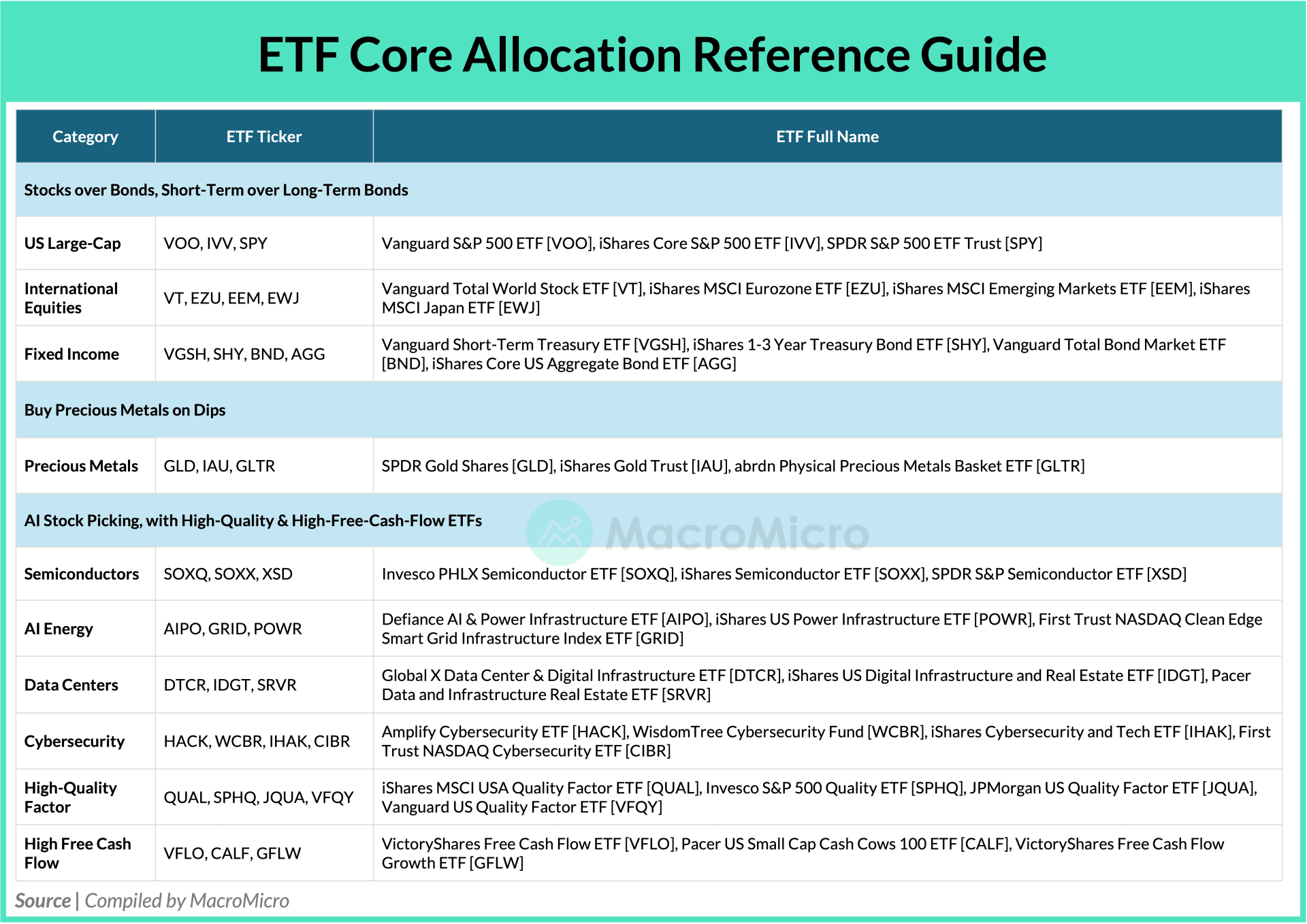
In this report, we examine the five major capital flow trends that defined the first half of the year. We also revisit and update the Three Investment Strategies and ETF allocation ideas introduced at the beginning of the year, helping investors navigate the opportunities and risks expected in the second half.
Key Takeaways
- The five trends: Although global markets appeared strong on the surface during the first half, significant internal divergence emerged. From the reshuffling of emerging markets and AI hardware leadership to the volatility fueled by leveraged ETFs, these developments warrant a fresh assessment.
- The three strategies: Equities remain more attractive than bonds in the second half. A globally diversified equity portfolio (including the US, Taiwan, and Japan) should remain the core allocation, complemented by precious metals, high free cash flow, and high-quality ETFs to better manage risk.
Trend 1: Divergence Across Global Equity Markets Reshapes Emerging Markets
Global equity markets showed clear divergence during the first half of 2026. The MSCI All Country World Index (ACWI), which tracks global equities, gained approximately 11.2% during the period, while US equities rose roughly 9.9%, slightly underperforming the global benchmark and extending the relative lag that began last year. This suggests that capital is becoming less concentrated in the US and increasingly diversified across other regions, consistent with one of the Three Investment Strategies we highlighted at the beginning of the year: global equity diversification.
Emerging markets were the primary beneficiaries of these capital inflows. The iShares MSCI Emerging Markets ETF (EEM) surged approximately 23.8% during the first half, significantly outperforming global equities. However, performance within emerging markets became increasingly polarized. South Korea and Taiwan gained approximately 118.6% and 62.4%, respectively, making them the top-performing markets globally. Both benefited substantially from their strong positions within the semiconductor and AI hardware supply chain. In contrast, Indonesia, India, and China posted declines, indicating that traditional emerging market themes such as...
From the transformation of emerging markets to the migration of AI profits from software to hardware, global capital is finding new winners while new risks quietly emerge. Explore the six trends shaping markets in 2026 and the ETF allocation strategies designed to navigate the opportunities and uncertainties ahead. Unlock full access to this report, proprietary macro data insights, and ongoing market coverage with MM Max. Subscribe Now»
Already a subscriber? Click here to log in.
Full Access to Our Services

Comprehensive data at your service
with key indicators for investment insights

Exclusive flash reports
on key events and data

Create your own charts and analysis
including performance backtesting

Hub of professionals to engage
in meaningful discussions and insights
 Get answers from MM AI.
-
What caused the increased market volatility in South Korea in the first half of 2026?
💡The increased market volatility in South Korea in the first half of 2026 was caused by the explosive growth in assets under management for single-stock leveraged ETFs, particularly those tied to Samsung Electronics and SK Hynix. This surge led to six market-wide circuit breaker activations in the KOSPI during the first half of 2026, out of only 12 historical occurrences, highlighting the amplifying effect of these products' procyclical trading mechanisms on price movements and market concentration.
-
How did capital flows shift between US equities and other regions in early 2026?
💡In early 2026, capital flows shifted away from US equities, which lagged global benchmarks for the second consecutive year with a 9.9% gain compared to the MSCI ACWI's 11.2%. This capital became increasingly diversified across other regions, primarily benefiting emerging markets, with the iShares MSCI Emerging Markets ETF (EEM) surging approximately 23.8%, indicating a broader global equity diversification trend.
-
Which specific countries significantly influenced the MSCI Emerging Markets ETF (EEM) composition?
💡Taiwan and China significantly influenced the MSCI Emerging Markets ETF (EEM) composition. Over the past five years, China's weighting in EEM fell by approximately 12.5 percentage points to around 19%, while Taiwan's weighting increased to about 27.3%, making it the largest country allocation in the index. This shift transformed EEM's investment profile from one focused on China's growth or India's domestic demand to an Asia-focused technology hardware and semiconductor supply chain ETF.
-
What drives the current performance of the MSCI Emerging Markets ETF (EEM)?
💡The current performance of the MSCI Emerging Markets ETF (EEM) is driven primarily by the AI capital expenditure cycle, semiconductor industry conditions, and demand for large-scale technology hardware. Its investment profile has reshaped to increasingly resemble an Asia-focused technology hardware and semiconductor supply chain ETF, moving away from traditional emerging market narratives of demographic growth and consumption upgrades, particularly given Taiwan's increased weighting to 27.3%.
-
What structural shift occurred within the technology sector regarding capital expenditure and free cash flow?
💡A structural shift occurred within the technology sector where capital expenditures among major cloud providers expanded rapidly, leading to a noticeable decline in their combined free cash flow. Simultaneously, suppliers of critical data center components and hardware experienced explosive free cash flow growth, indicating that AI spending is increasingly shifting from cloud hyperscalers to
-
Why did free cash flow and quality ETFs outperform in the first half of 2026?
💡Free cash flow and quality ETFs outperformed in the first half of 2026 due to investors' increasing preference for companies that have translated AI demand into tangible earnings and cash flow, particularly hardware, equipment, and infrastructure suppliers. Amid rising market volatility and concerns over technology giants' capital spending, quality ETFs, characterized by high ROE and low leverage, offered downside resilience and continued participation in economic expansion.
-
How do single-stock leveraged ETFs amplify market volatility, according to Nomura Securities?
💡According to Nomura Securities, single-stock leveraged ETFs amplify market volatility through their daily rebalancing mechanism. To maintain a constant leverage ratio, these ETFs must buy more after prices rise and sell after prices fall, reinforcing existing market trends through procyclical trading. Every 1% move in the underlying assets may require approximately $9 billion in rebalancing transactions, which, during periods of elevated volatility and declining liquidity, can significantly amplify price movements.
-
What risks do South Korean regulators identify with the boom in single-stock leveraged ETFs?
💡South Korean regulators identify significant risks with the boom in single-stock leveraged ETFs, including the amplification of market volatility due to their procyclical trading mechanisms and an increase in the structural concentration of the Korean equity market in a small number of semiconductor heavyweights. FSS Governor Lee Chan-jin expressed deep regret over approving these ETFs, following six market-wide circuit breaker activations in the KOSPI during the first half of 2026 alone.
-
Why are leveraged ETFs generally not suitable for long-term investment portfolios?
💡Leveraged ETFs are generally not suitable for long-term investment portfolios because they rely on daily compounding and daily rebalancing. During prolonged periods of sharp market declines, they can experience severe volatility drag, making it difficult for subsequent rebounds to fully recover previous losses. An extreme historical simulation showed that a 3x leveraged Nasdaq 100 strategy initiated in 2000 would still likely trail the unleveraged index after 26 years due to these compounding effects.
-
What updated investment strategies does MacroMicro recommend for the second half of 2026?
💡MacroMicro recommends three updated investment strategies for the second half of 2026: 1) Prefer equities over bonds, with greater exposure to the US, Taiwan, and Japan through global diversification; 2) Maintain a 10% to 15% allocation to precious metals, viewing corrections as buying opportunities; and 3) Emphasize stock selection and cash flow within technology, increasing allocations to companies with strong free cash flow (e.g., GFLW) and high quality (e.g., SPHQ) to manage valuation risk and avoid excessive leverage.

